Pacific Northwest Coast Button Blankets & Regalia 2026
The Enduring Legacy of Pacific Northwest Coast Regalia
The traditional garments of the Pacific Northwest Coast Indigenous peoples represent some of the most visually striking and technically complex textile arts in the world. From the temperate rainforests of Southeast Alaska down to Vancouver Island, nations such as the Haida, Tlingit, Kwakwaka'wakw, and Nuu-chah-nulth have developed distinct sartorial traditions that serve as vital markers of clan identity, spiritual authority, and cultural continuity. As we navigate the 2026 potlatch season and contemporary ceremonial gatherings, these garments are not mere historical artifacts; they are living, evolving expressions of Indigenous sovereignty and artistic mastery.
Understanding the regional variations and material innovations of Pacific Northwest Coast dress requires a deep dive into the specific techniques that define each nation. In 2026, a renaissance in traditional material sourcing, combined with modern archival preservation techniques, has empowered a new generation of Indigenous artisans to reclaim and innovate upon ancestral clothing traditions.
Haida and Tlingit Button Blankets: A Fusion of Trade and Tradition
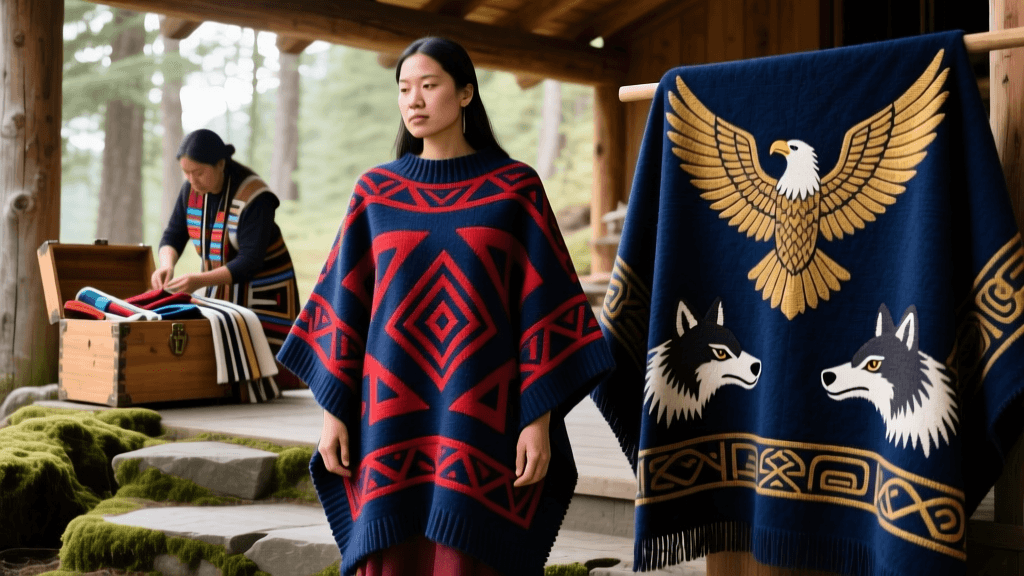
The button blanket is perhaps the most iconic garment of the Northern Pacific Northwest Coast, predominantly worn by the Haida, Tlingit, and Tsimshian peoples. Originating in the 19th century following increased contact with European and American maritime fur traders, the button blanket represents a brilliant adaptation of foreign materials into an Indigenous aesthetic framework.
Historically, these blankets were constructed using heavy wool trade blankets, most notably those from the Hudson's Bay Company. Artisans would appliqué red flannel or felt onto the dark wool base, cutting the fabric into the distinct 'formline' shapes—ovoids, U-shapes, and split U-shapes—that depict clan crests such as the Raven, Eagle, Bear, or Orca. The design was then outlined and filled with hundreds, sometimes thousands, of mother-of-pearl or glass trade buttons, creating a shimmering, percussive effect when worn during dances.
In 2026, the creation of button blankets has evolved to prioritize both cultural authenticity and material sustainability. While vintage trade blankets are still highly prized for their historical weight, many contemporary Haida and Tlingit artisans are sourcing custom-milled, heavyweight Melton wool from Indigenous-owned textile cooperatives in the Pacific Northwest. The appliqué process now frequently incorporates ethically harvested abalone shell and laser-cut acrylic elements for lightweight dance regalia, ensuring the garments remain comfortable during vigorous ceremonial performances while maintaining their brilliant visual impact.
Chilkat and Ravenstail Weaving: The Pinnacle of Textile Art
Before the introduction of trade cloth, the Northern Coast nations developed highly sophisticated weaving techniques using locally sourced animal fibers and plant materials. The two most prominent styles are Chilkat and Ravenstail weaving, both historically practiced by Tlingit and Haida weavers.
Ravenstail Weaving
Ravenstail is the older of the two traditions, characterized by stark, geometric patterns woven in black, yellow, and white. The garments, typically tunics or robes, feature horizontal bands of zig-zags, diamonds, and checkerboards. The preparation of the yarn is incredibly labor-intensive, involving the spinning of mountain goat wool around a core of twisted yellow cedar inner bark. This technique gives the garment a rigid, sculptural quality that flares out dramatically when the wearer spins during a dance.
Chilkat Weaving
Chilkat weaving represents a shift toward curvilinear formline designs, mirroring the painting and carving styles of the region. A Chilkat robe is a masterpiece of textile engineering, often requiring over 1,500 hours to complete. The process begins with a male artist painting a pattern board, which a female weaver then translates into the warp and weft of the loom. According to the Sealaska Heritage Institute, the 2026 apprenticeship cohorts have seen a surge in cross-gender participation, breaking historical norms and ensuring that the immense knowledge required for Chilkat weaving is preserved and expanded within the community.
Kwakwaka'wakw and Nuu-chah-nulth Cedar Bark Garments
Moving southward to the Central and Southern Coast, the environment shifts, and so do the primary materials used in traditional dress. For the Kwakwaka'wakw and Nuu-chah-nulth nations, the western red cedar and yellow cedar trees are the foundation of ceremonial regalia.
The inner bark of the cedar tree is harvested in the late spring when the sap is running, making it easiest to peel in long, continuous strips. The bark is then soaked, boiled, and beaten to separate the fibers, resulting in a soft, flexible material that can be spun into yarn or shredded into fine tassels. In 2026, sustainable harvesting protocols are strictly observed to protect old-growth forests, with artisans often working in tandem with tribal forestry departments to gather bark from recently felled trees or managed groves.
Cedar bark is woven into dance aprons, capes, and headbands. These garments are frequently paired with the region's famous transformation masks—complex, articulated wooden masks that open to reveal a second face inside. The combination of the rustling cedar bark garments and the mechanical transformation of the masks creates a deeply immersive theatrical experience during the Winter Ceremonies (Tseka). Institutions like the Museum of Anthropology at UBC continue to collaborate with Kwakwaka'wakw knowledge keepers in 2026 to digitize and repatriate ancestral patterns, allowing modern weavers to study the complex twining techniques of their predecessors.
Material Sourcing and Artisan Support in 2026
For collectors, museums, and tribal members looking to commission or support the creation of Pacific Northwest Coast regalia in 2026, understanding the shift in material sourcing is crucial. The modern market heavily favors ethical, locally sourced, and culturally appropriate materials.
| Garment Component | Historical Material (19th Century) | 2026 Contemporary / Sustainable Alternative | Primary Sourcing Region |
|---|---|---|---|
| Blanket Base | Hudson's Bay Company Point Blankets | Custom-milled 24oz Melton Wool (Indigenous Cooperatives) | Pacific Northwest / British Columbia |
| Appliqué Fabric | Stroud Cloth / Trade Flannel | High-grade, colorfast wool felt and broadcloth | Global (sourced via tribal arts guilds) |
| Adornment / Buttons | Mother-of-Pearl, Glass Trade Beads | Ethically harvested Abalone, Vintage Glass, Laser-cut Acrylic | Local coastal waters / Artisan networks |
| Weaving Warp/Core | Yellow Cedar Inner Bark | Managed-grove Cedar Bark, processed via tribal forestry programs | Southeast Alaska / Vancouver Island |
| Weaving Weft | Mountain Goat Wool (wild harvested) | Domesticated Mountain Goat flocks, Merino wool blends (for practice) | Alaska / Northern BC |
When commissioning a piece, buyers should expect significant lead times. A high-quality button blanket may take three to six months to complete, while a full Chilkat robe can take upwards of two years. Financial compensation must reflect the immense technical skill and time investment required, with master-weaver robes frequently commanding prices in the tens of thousands of dollars in the 2026 fine art market.
Preservation and Archival Care for Ceremonial Dress
The preservation of these garments is a critical concern for both tribal cultural centers and private collectors. The organic materials used—wool, cedar bark, and natural dyes—are highly susceptible to environmental degradation, pest infestation, and light damage.
Modern archival standards in 2026 strictly prohibit the use of naphthalene (mothballs), which not only damages protein-based fibers like mountain goat wool but also poses severe health risks to handlers. Instead, institutions follow guidelines established by organizations like the Smithsonian National Museum of the American Indian, utilizing Integrated Pest Management (IPM) and anoxic (oxygen-deprived) treatment chambers to safely eradicate pests without harming the textiles.
For proper storage, button blankets and woven robes should never be hung on standard hangers, as the heavy wool and beadwork will cause the fibers to stretch and tear over time. Garments must be stored flat in archival-quality, acid-free boxes, interleaved with unbuffered acid-free tissue paper to prevent creasing. Climate control is paramount; storage environments should be maintained at a stable temperature of 65-70°F (18-21°C) with a relative humidity of 45-55% to prevent the cedar bark from becoming brittle and the wool from molding.
Conclusion
The traditional dress of the Pacific Northwest Coast is a profound testament to Indigenous resilience and artistic brilliance. Whether it is the flashing abalone buttons of a Haida dance blanket, the intricate geometric twining of a Tlingit Ravenstail tunic, or the rustling cedar bark aprons of a Kwakwaka'wakw dancer, these garments carry the spiritual and historical weight of their creators. As of 2026, the continued dedication of Indigenous weavers, artists, and cultural institutions ensures that these magnificent textile traditions will not only be preserved in museum archives but will continue to thrive, move, and speak in the ceremonial houses of the Pacific Northwest for generations to come.