Ojibwe Floral Beadwork & Ribbon Shirts: 2026 Buyer Guide
The Enduring Legacy of Anishinaabe Dress Traditions
The Great Lakes region is home to the Anishinaabe people, a group that includes the Ojibwe (Chippewa), Odawa, and Potawatomi nations. Among the most visually striking and culturally significant expressions of Indigenous North American dress traditions are Ojibwe floral beadwork and the iconic ribbon shirt. In 2026, these garments are not merely historical artifacts; they are vibrant, living traditions worn at powwows, ceremonies, and contemporary fashion events across the Americas. For collectors, cultural enthusiasts, and community members, understanding the nuances of these textiles is essential for ethical sourcing and proper appreciation.
As the market for Indigenous fashion continues to expand, so does the proliferation of mass-produced imitations. This comprehensive guide explores the rich history of Great Lakes floral motifs, the anatomy of the modern ribbon shirt, and actionable strategies for sourcing authentic, Native-made garments in 2026.
The Roots of Anishinaabe Floral Motifs
Before the introduction of European trade goods, Anishinaabe artisans adorned their clothing, moccasins, and pouches with intricate porcupine quillwork. The transition from quills to glass seed beads—known in the Ojibwe language as manidoominensag (little spirit seeds)—occurred primarily in the 18th and 19th centuries. Rather than abandoning their traditional aesthetic, Ojibwe artists adapted the new medium to reflect their deep spiritual and physical connection to the local environment.
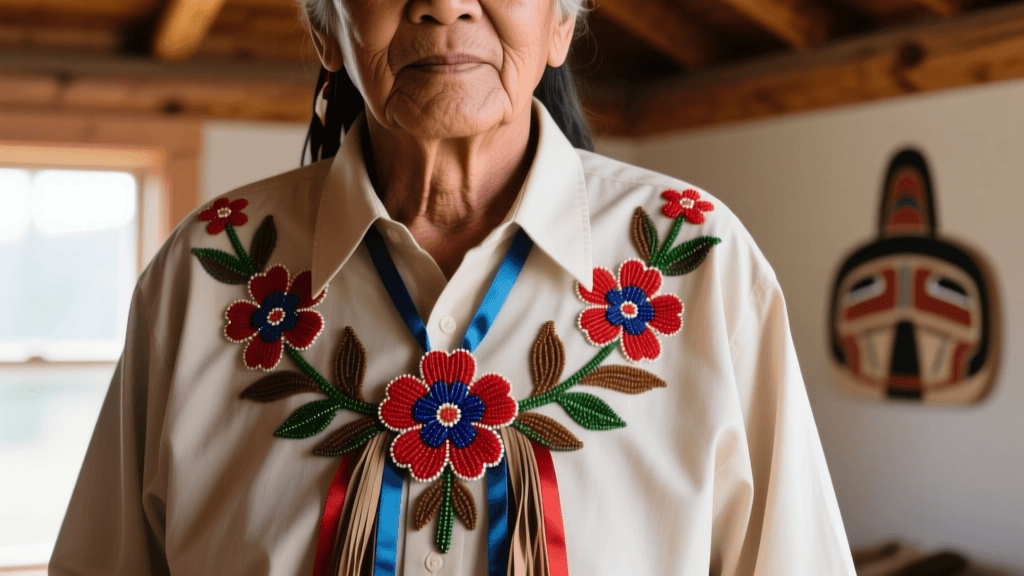
Unlike the geometric patterns favored by Plains tribes, Great Lakes beadwork is renowned for its asymmetrical, curvilinear floral designs. These motifs are directly inspired by the medicinal plants, berries, and flora of the northern woodlands. The strawberry, sweetgrass, wild rose, and fireweed are common subjects, each carrying specific cultural teachings and spiritual significance. The signature technique used to create these lush, raised designs is the two-needle spot stitch (often called appliqué beadwork), which allows for tight curves and dense color fields that mimic the natural world.
Anatomy of the Modern Ribbon Shirt (2026 Trends)
The ribbon shirt is a pan-Indigenous garment, but its construction and styling vary significantly by region and maker. Originating from the trade-silk shirts of the 18th century, the modern ribbon shirt is characterized by its appliqué ribbon work, usually featuring geometric or floral patterns down the front, across the yoke, and along the sleeves.
Fabric and Material Innovations
In 2026, we are witnessing a renaissance in material choices among top-tier Ojibwe and Great Lakes designers. While traditional broadcloth and cotton sateen remain popular bases, there is a strong movement toward sustainable, natural fibers. Organic linen, hemp blends, and upcycled vintage textiles are increasingly used as the canvas for ribbon appliqué. The ribbons themselves, historically made of silk or nylon, are now frequently sourced from specialized suppliers who offer colorfast, UV-resistant satin that prevents the fading historically associated with older powwow regalia.
Contemporary Silhouettes
While the classic pull-over and button-down styles remain staples for ceremonial use, contemporary 2026 collections feature tailored fits, asymmetrical hemlines, and cropped jackets that blend traditional ribbon work with modern streetwear aesthetics. Many artisans are also incorporating dentalium shells, brass sequins, and ethically sourced turquoise accents into the ribbon patterns, creating a hybrid style that bridges Great Lakes and Southwestern traditions.
Sourcing Authentic Ojibwe Garments in 2026
The most critical aspect of acquiring Indigenous regalia is ensuring that your purchase directly supports Native artisans and complies with federal authenticity laws. The Indian Arts and Crafts Board (IACB) enforces the Indian Arts and Crafts Act, which makes it illegal to offer or display for sale any art or craft product in a manner that falsely suggests it is Indian-produced. When shopping for Ojibwe beadwork or ribbon shirts, always verify the artisan's tribal enrollment or state-recognized tribal affiliation.
Where to Buy Directly
- Indigenous-Led E-Commerce Cooperatives: In 2026, several Native-owned digital marketplaces have emerged, vetting every seller to guarantee authenticity. These platforms often provide detailed biographies of the artists and the specific communities they represent.
- Social Media and Direct Commissions: Many master beadworkers and seamstresses operate exclusively through direct commissions via social media. When commissioning a custom ribbon shirt, expect a lead time of 3 to 6 months, as the hand-stitching process is incredibly labor-intensive.
- Museum Gift Shops and Cultural Centers: Institutions like the National Museum of the American Indian and the Minneapolis Institute of Art (Mia) curate their retail spaces with verified Native artists, offering a reliable, albeit premium-priced, avenue for purchasing authentic pieces.
Comparison Chart: Authentic Artisan vs. Mass-Market Imitations
Understanding the physical differences between handcrafted regalia and factory-made costumes is vital for informed purchasing. Use the table below to evaluate potential acquisitions.
| Feature | Authentic Ojibwe Artisan | Mass-Market Imitation |
|---|---|---|
| Bead Type | High-quality Czech or Japanese glass (10/0, 11/0) | Plastic or low-grade acrylic |
| Backing Material | Brain-tanned deer hide, heavy wool, or cotton sateen | Thin synthetic felt or polyester |
| Stitching Technique | Two-needle spot stitch, secure and flexible | Machine-embroidered or glued |
| Motif Accuracy | Regionally accurate Great Lakes flora (strawberry, sweetgrass) | Generic, Pan-Indian, or copied designs |
| Price Range (2026) | $350 - $1,200+ | $40 - $90 |
Care and Preservation of Beaded and Ribbon Garments
Authentic Ojibwe regalia is an investment in cultural art that requires meticulous care to ensure its longevity. The weight of glass beads can strain the backing fabric over time, and improper storage can lead to irreversible damage.
Storage Best Practices
Never hang heavily beaded garments on standard hangers, as the gravitational pull will distort the fabric and snap the nylon or sinew threads. Instead, store beaded collars, medallions, and shirts flat in archival-quality, acid-free boxes. Place acid-free tissue paper between the folds to prevent the beads from pressing into the fabric. For ribbon shirts with minimal beadwork, padded hangers are acceptable, but the garment should be kept in a breathable cotton garment bag to protect it from dust and light.
Cleaning and Maintenance
Avoid dry cleaning or machine washing any garment featuring traditional beadwork or appliqué. The harsh chemicals used in dry cleaning can strip the color from glass beads and degrade the backing material. For ribbon shirts, spot cleaning with a mild, pH-neutral detergent and a damp cloth is the safest method. If a bead thread breaks, do not attempt to repair it with standard sewing thread or superglue; consult a professional conservator or the original artisan to re-stitch the area using proper sinew or bonded nylon thread.
Supporting Indigenous Economies Through Ethical Fashion
The revitalization of Ojibwe floral beadwork and ribbon shirts in 2026 is a testament to the resilience and creativity of Anishinaabe artists. By prioritizing ethical sourcing, verifying artisan credentials, and investing in high-quality, authentic garments, buyers play a direct it. Always prioritize ethical sourcing, verify artisan credentials, and invest in high-quality, authentic garments, buyers play a crucial role in sustaining these vital cultural economies. Whether you are acquiring a piece for a private collection, attending a powwow, or simply expanding your understanding of Indigenous North American dress traditions, respecting the origins and artistry of these garments ensures they will continue to thrive for generations to come.