Oaxacan Zapotec Backstrap Weaving & Cochineal Dye Guide 2026
The Living Heritage of Zapotec Textiles in 2026
The textile traditions of Oaxaca, Mexico, represent one of the most complex and culturally significant garment histories in the Americas. As the global fashion industry pivots heavily toward regenerative and sustainable practices in 2026, the ancient techniques of the Zapotec people have moved from the periphery of indigenous craft to the center stage of ethical textile arts. At the heart of this tradition is the telar de cintura (backstrap loom) and the use of grana cochinilla (cochineal), a parasitic insect that produces a brilliant, colorfast carminic acid. For modern weavers, natural dyers, and textile historians, understanding the intersection of these two practices is essential for both preserving indigenous heritage and participating in the contemporary slow-fashion movement.
In 2026, the demand for naturally dyed, handwoven Latin American garments has surged, driven by a consumer base that values transparency, biodegradable fibers, and ancestral knowledge. However, this renewed interest brings challenges regarding cultural appropriation and resource scarcity. This comprehensive guide explores the technical anatomy of the Zapotec backstrap loom, the precise chemistry of cochineal dyeing, and the current 2026 market landscape for ethical sourcing.
Anatomy of the Telar de Cintura (Backstrap Loom)
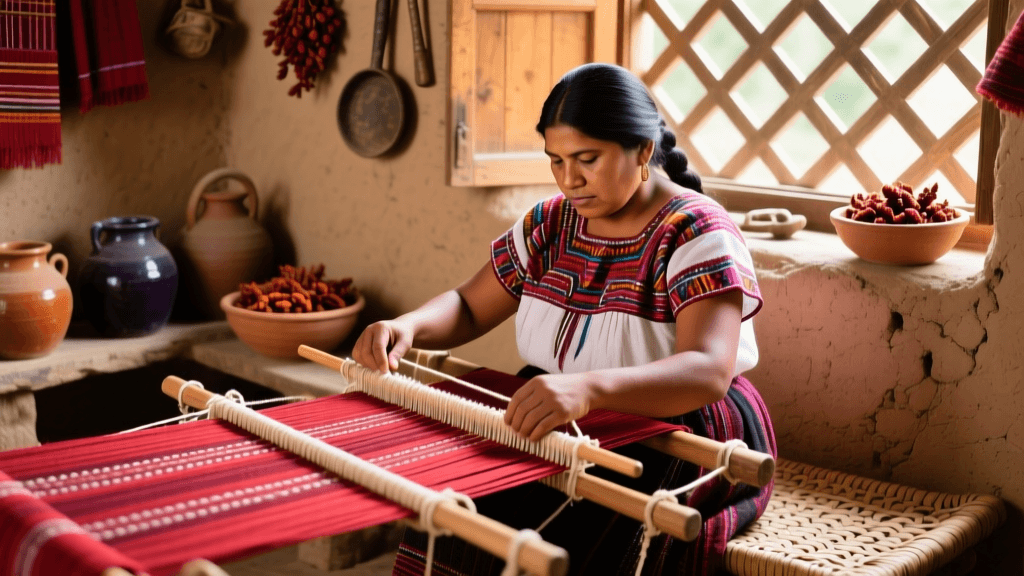
Unlike the rigid, floor-standing pedal looms introduced by the Spanish in the 16th century, the pre-Columbian backstrap loom is a portable, dynamic tool that relies entirely on the weaver's body for tension. The weaver sits on the ground, looping a strap around their lower back or hips, while the opposite end of the warp is tied to a fixed point, such as a tree or a wooden post. By leaning forward or backward, the weaver micro-adjusts the tension of the warp threads, a skill that takes years to master and allows for the creation of intricate, tightly woven textiles.
Key Components of the Loom
- Yugo (Backstrap): Traditionally made from woven cotton or leather, this strap distributes the tension across the weaver's lower back. In 2026, many artisans use ergonomically designed, padded yugos to prevent strain during long weaving sessions.
- Enjulio (Loom Bars): Two smooth wooden dowels. One secures the warp to the anchor point, and the other attaches to the yugo. The warp threads are wound continuously between these bars.
- Mallas (Heddles): A complex system of string loops that lift alternating warp threads to create the shed (the space through which the weft passes). Zapotec weavers often use a secondary heddle stick for complex brocade and supplementary weft patterns.
- Naveta (Shuttle): A small, boat-shaped piece of wood or bamboo that carries the weft yarn through the shed.
- Machete or Espada (Batten): A heavy, flat wooden sword used to beat the weft yarn tightly into place, determining the density and structural integrity of the final garment.
The backstrap loom is not merely a tool; it is an extension of the weaver's body and spirit. Every breath and shift in posture translates directly into the tension and soul of the textile.
Cochineal (Dactylopius coccus): Sourcing and Biology
Cochineal is a scale insect native to the Americas that feeds exclusively on the Opuntia (nopal) cactus. When crushed, the female insect yields carminic acid, a potent dye that has been used for over a millennium. According to the Metropolitan Museum of Art, cochineal was so highly valued by the Aztec Empire that it was demanded as tribute, and later became one of Spain's most lucrative colonial exports, second only to silver.
As of early 2026, the global market for natural cosmetics, food coloring, and luxury textiles has pushed the price of premium, dried Oaxacan cochineal to approximately $280 to $320 USD per kilogram. The Food and Agriculture Organization (FAO) notes that sustainable nopal farming provides a crucial, drought-resistant economic lifeline for rural communities in the face of changing climate patterns. When sourcing cochineal, buyers must look for whole, dried insects rather than pre-extracted powder, as whole insects retain their potency longer and allow the dyer to control the extraction process.
The Chemistry of Red: Mordanting and pH Shifts
Cochineal is a substantive dye, but to achieve true colorfastness on cellulose (cotton) or protein (wool, alpaca, silk) fibers, a mordant is required. The most common traditional mordant is alum (potassium aluminum sulfate), often combined with cream of tartar to brighten the red and prevent the alum from making the wool brittle.
One of the most magical aspects of cochineal is its extreme sensitivity to pH levels. By altering the acidity or alkalinity of the dye bath, a single pot of cochineal can yield a vast spectrum of colors:
- True Crimson / Ruby Red: Achieved in a neutral pH environment using standard alum mordanting.
- Bright Orange / Coral: Achieved by adding an acid to the dye bath, such as fresh lime juice, lemon juice, or a mild citric acid solution.
- Deep Purple / Plum: Achieved by adding an alkaline modifier, such as baking soda, wood ash water, or a few drops of household ammonia.
- Black / Deep Charcoal: Achieved by introducing an iron modifier (ferrous sulfate) or dyeing in a cast-iron pot, though iron must be used sparingly to avoid degrading the fiber.
Step-by-Step Cochineal Dyeing Recipe (For 100g of Fiber)
This recipe is optimized for 100 grams of scoured, mordanted wool or alpaca yarn, utilizing techniques practiced by master dyers in Teotitlán del Valle.
1. Extraction
Grind 8 to 10 grams of dried cochineal insects into a coarse powder using a traditional volcanic stone molcajete or a dedicated coffee grinder. Place the powder in a stainless steel pot with 3 liters of distilled or neutral spring water. Bring to a gentle simmer (do not boil vigorously, as high heat can dull the carminic acid) and hold for 45 minutes. Strain the liquid through a fine muslin cloth, reserving the liquid dye. You can re-simmer the insect remains once more to extract secondary, lighter pink baths.
2. The Dye Bath
Return the extracted liquid to the pot. Add your pre-mordanted, wetted-out fiber. Slowly raise the temperature to 80°C (176°F) and maintain this heat for 45 to 60 minutes, gently agitating the fiber every 10 minutes to ensure even penetration. Turn off the heat and allow the fiber to cool in the bath overnight. This slow cooling process is critical for maximizing dye absorption and achieving deep, rich saturation.
3. Color Shifting and Rinsing
Once cooled, remove the fiber. If you wish to shift the color, prepare a separate modification bath with warm water and your chosen pH modifier (e.g., a tablespoon of baking soda for purple), and steep the yarn for 15 minutes. Finally, rinse the yarn in cool water with a pH-neutral soap until the water runs clear. Hang to dry out of direct sunlight.
2026 Market Guide: Sourcing Ethical Cochineal and Yarn
Navigating the textile market in Oaxaca requires an understanding of the local cooperative structures. In 2026, buying direct from indigenous women's collectives ensures that the financial benefits remain within the community, bypassing predatory middlemen. The Mexican government agency, FONART (Fondo Nacional para el Fomento de las Artesanías), has recently updated its certification processes to help buyers identify authentic, fairly traded indigenous crafts and raw materials.
| Sourcing Channel | Avg. Price (per kg) | Minimum Order | Ethical & Traceability Rating |
|---|---|---|---|
| Direct from Women's Cooperatives (e.g., Teotitlán del Valle) | $280 - $300 USD | 100 grams | Excellent (100% traceable, direct community impact) |
| Oaxaca City Artisan Markets (Mercado de Artesanías) | $320 - $350 USD | 50 grams | Good (Supports local vendors, but origin may be blended) |
| International Natural Dye Exporters | $400 - $450 USD | 1 kilogram | Fair (High markup, lower direct impact on original farmers) |
Preserving Heritage: Ethics and Cultural Appreciation
As Latin American traditional garments and textile arts continue to influence global runways and boutique interiors in 2026, the line between cultural appreciation and appropriation remains a critical conversation. For non-indigenous artists, designers, and hobbyists, the ethical mandate is clear: study the history, respect the intellectual property of indigenous patterns, and compensate artisans fairly for their raw materials and time.
When purchasing finished Zapotec garments, such as the intricate huipiles or rebozos, buyers should seek out pieces accompanied by a certificate of origin or purchase directly from recognized artisan cooperatives. By understanding the immense physical labor required to operate the backstrap loom and the precise agricultural and chemical knowledge needed to cultivate and extract cochineal, we elevate these practices from mere 'crafts' to their rightful status as masterworks of indigenous science and art. The survival of these traditions in 2026 and beyond depends entirely on a global community that values the hands that make them as much as the beauty they produce.