Regional Indigenous Dress: Navajo & Osage Traditions 2026
Introduction to Regional Indigenous Dress
Indigenous North American dress traditions are as diverse as the landscapes from which they originate. Far from being a monolith, Native American and First Nations clothing, regalia, and textile arts are deeply tied to specific regional ecosystems, trade histories, and spiritual cosmologies. In 2026, there is a profound resurgence in traditional material arts, driven by a new generation of Indigenous makers who are reclaiming ancestral techniques while navigating modern supply chains. For collectors, cultural enthusiasts, and fashion historians, understanding the distinct regional differences in garment creation is essential. This guide focuses on two vastly different but equally magnificent traditions: the intricate upright-loom weaving of the Diné (Navajo) in the Southwest, and the vibrant silk ribbon work of the Osage and neighboring tribes in the Plains region.
The Southwest: Diné (Navajo) Weaving Traditions
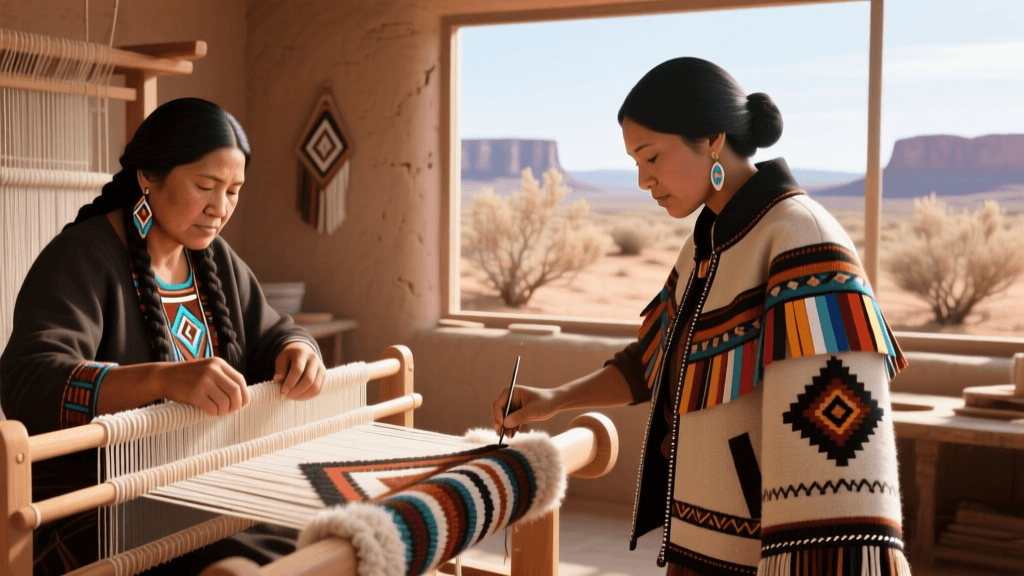
The Diné people of the American Southwest possess a weaving tradition that is globally renowned for its geometric complexity, durability, and spiritual significance. According to Diné cosmology, the art of weaving was taught to the people by Spider Woman, who instructed them on how to construct the loom using elements of the earth and sky. Today, Diné weaving remains a vital economic and cultural pillar for the Navajo Nation.
Heritage Fleece: The Navajo-Churro Sheep
The foundation of authentic Diné textiles is the Navajo-Churro sheep. Brought to the Americas by Spanish explorers in the 16th century, the Churro breed was perfectly adapted to the arid, high-desert environment. Churro fleece is characterized by its long, lustrous, and low-lanolin fibers, which require minimal washing and can be spun directly from the fleece. In 2026, the preservation of the Churro flock is heavily supported by Indigenous-led cooperatives like Diné be'iiná, which connect local shearers, spinners, and weavers. Sourcing authentic, hand-carded Churro wool directly from Navajo Nation chapters currently costs between $45 and $65 per pound, reflecting the intensive labor and ethical shearing practices required to maintain the breed's genetic integrity.
Natural Dyeing in the Modern Era
While early Diné weavers relied on the natural shades of the sheep (white, brown, black, and grey), the introduction of botanical dyes expanded the palette. In 2026, master weavers continue to harvest local flora sustainably. Rabbitbrush yields vibrant yellows and golds, while wild walnut hulls provide deep, rich browns. The highly prized cochineal insect, found on prickly pear cacti, is meticulously crushed to produce brilliant reds and purples. When purchasing contemporary Diné textiles, buyers should request a 'dye recipe' from the artisan, as the specific plant combinations and mordants (like juniper ash) used are often closely guarded family knowledge.
The Plains: Osage Ribbon Work and Regalia
Shifting from the arid Southwest to the sweeping grasslands of the Plains, we encounter the spectacular textile art of ribbon work. While several tribes, including the Miami, Potawatomi, and Shawnee, practice this art form, the Osage Nation has elevated ribbon work to a defining element of their cultural identity and ceremonial dress.
The Art of Reverse Appliqué
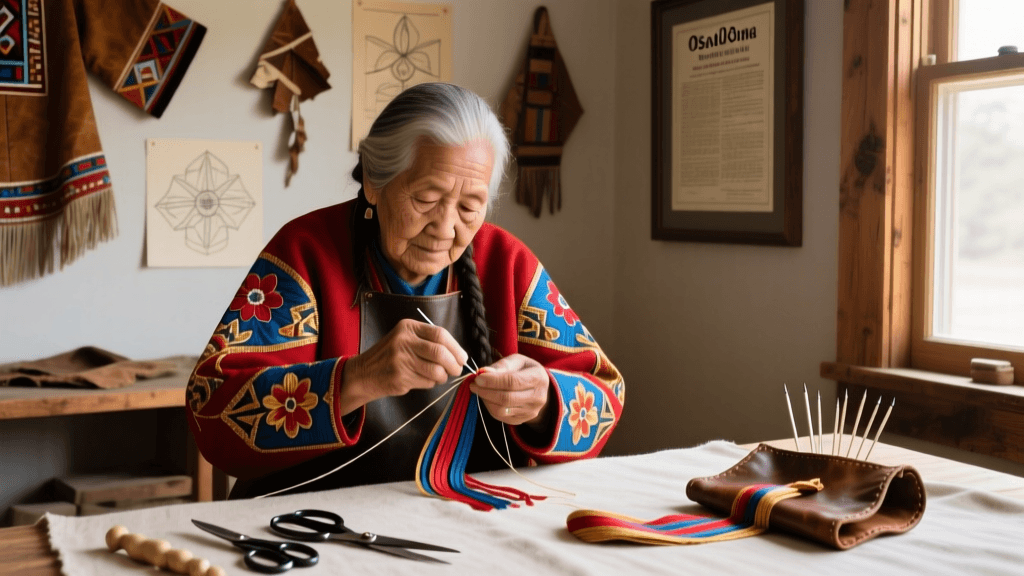
Ribbon work originated in the 18th century when French and British traders introduced silk ribbons to North America. Indigenous women innovatively adapted these materials, moving away from European embroidery techniques to create complex, layered reverse appliqué. By cutting intricate, geometric, and floral patterns into overlapping layers of brightly colored silk ribbons and folding the edges under, artisans create striking, high-contrast designs. In 2026, Osage ribbon work is prominently featured on wedding coats, dance shawls, cradleboard covers, and ceremonial skirts. The creation of a single, fully ribbon-worked Osage wedding coat can take a master artisan over 300 hours, making these garments highly valued family heirlooms.
Sourcing Silk in 2026
The shift toward synthetic fabrics in the mid-20th century threatened the longevity of ribbon work, as polyester ribbons do not fold, crease, or age like natural silk. Today, there is a strict return to 100% pure silk taffeta and satin ribbons among serious Osage regalia makers. Because domestic silk production in the United States is limited, artisans in 2026 often source imported pure silk ribbons from specialized textile importers in Europe and Asia, paying a premium of $12 to $20 per yard for the 1-inch to 2-inch widths required for detailed appliqué work.
Material Comparison and 2026 Sourcing Guide
For those looking to support Indigenous artisans or source materials for their own traditional crafts, understanding the regional material requirements is crucial. Below is a comparative breakdown of the primary materials used in these two distinct traditions.
| Material | Region / Tribe | Preparation Method | 2026 Avg. Cost | Best Sourcing Method |
|---|---|---|---|---|
| Navajo-Churro Wool | Southwest / Diné | Hand-carded, drop-spun, botanically dyed | $45 - $65 / lb | Direct from Diné cooperatives or fiber festivals |
| Pure Silk Ribbon | Plains / Osage | Cut, folded, and sewn in reverse appliqué | $12 - $20 / yard | Specialized international silk importers |
| Brain-Tanned Buckskin | Plains / Pan-Indian | Smoked, brain-tanned, hand-softened | $80 - $120 / sq ft | Verified Indigenous tanners and trappers |
Authentication: Spotting Genuine Indigenous Artistry
As the global appreciation for Indigenous fashion and textiles grows in 2026, so does the market for mass-produced, culturally appropriated knockoffs. Distinguishing between a genuine, handcrafted garment and a factory-made imitation requires a trained eye and an understanding of traditional techniques.
The Burn Test for Silk Ribbons
If you are purchasing vintage or contemporary Osage ribbon work, verifying the material is essential. Many mid-century garments were repaired with synthetic nylon or polyester ribbons, which degrade poorly. With the seller's permission, a microscopic snippet of the ribbon can be subjected to a burn test. Pure silk is a protein fiber; it will burn slowly, smell like burning hair, and leave behind a brittle, crushable ash. Conversely, polyester will melt rapidly, emit a sweet chemical odor, and form a hard, uncrushable plastic bead.
Examining the Weft and Warp
Authentic Diné textiles are woven on an upright loom, which leaves distinct structural clues. Unlike European horizontal looms that produce continuous, unbroken selvage edges, the upright loom requires the weaver to finish the top and bottom edges manually. Look for the 'spirit line' (ch'ihónít'i')—a deliberate, thin line woven from the center design to the edge of the textile. This spiritual pathway ensures the weaver's creative energy is not trapped within the rug's borders. Furthermore, hand-spun Churro yarn will exhibit slight variations in thickness, unlike the perfectly uniform, machine-spun yarns used in imported imitation rugs.
Ethical Purchasing and Legal Protections
When investing in Indigenous garments and textiles, ethical sourcing is paramount. In the United States, the Indian Arts and Crafts Board enforces the Indian Arts and Crafts Act, a truth-in-advertising law that prohibits misrepresentation in the marketing of Indian arts and crafts. Under this law, it is illegal to offer or sell any art or craft product in a manner that falsely suggests it is Indian-produced by an Indian tribe or Indian artisan. In 2026, enforcement has expanded to include digital marketplaces and social media vendors, making it easier for consumers to report fraudulent sellers.
Always purchase directly from the artist, from tribally-owned enterprises, or from verified galleries that provide a certificate of authenticity detailing the artist's tribal enrollment. Institutions like the National Museum of the American Indian offer extensive digital archives that can help buyers familiarize themselves with the hallmarks of authentic regional styles before making a purchase.
Preservation and Garment Care
Caring for these regional garments requires specialized knowledge. Diné wool textiles should never be dry-cleaned, as the harsh chemicals strip the natural lanolin and botanical dyes. Instead, they should be gently vacuumed through a fiberglass screen and stored flat in acid-free tissue paper to prevent the warp threads from stretching under their own weight. Osage silk ribbon garments are highly susceptible to light damage and moisture. They must be stored in dark, climate-controlled environments, ideally padded with unbleached muslin to prevent the silk from creasing along the intricate appliqué folds. By respecting the materials and the ancestral knowledge required to manipulate them, collectors and wearers alike help ensure these vibrant North American dress traditions continue to thrive for generations to come. For more information on tribal cultural preservation initiatives, visitors can explore resources provided directly by sovereign nations, such as the Osage Nation official cultural departments.