Navajo Biil Dresses & Plains Ribbon Shirts: 2026 Guide
The Living Tapestry of Indigenous North American Dress in 2026
Indigenous North American dress traditions are not relics of the past confined to museum archives; they are vibrant, living expressions of cultural continuity, spiritual belief, and artistic innovation. As we navigate the 2026 powwow season and contemporary fashion landscape, the regional distinctions of Native American and First Nations textiles remain a profound testament to the diversity of Indigenous cultures. From the high desert plateaus of the Southwest to the sweeping grasslands of the Great Plains and the forested shores of the Great Lakes, traditional garments are deeply tied to local ecologies, historical trade routes, and spiritual teachings.
For collectors, cultural enthusiasts, and those seeking to ethically support Native artisans, understanding these regional nuances is essential. In 2026, the market for authentic Indigenous garments has evolved, with a strong emphasis on sustainable material sourcing, digital authentication, and the protection of intellectual property. This guide explores the distinct dress traditions of the Diné (Navajo) of the Southwest and the Ojibwe and Lakota of the Plains and Great Lakes, providing actionable insights into their construction, cultural significance, and current market valuations.
The Southwest: Diné (Navajo) Biil Dresses and Woven Textiles
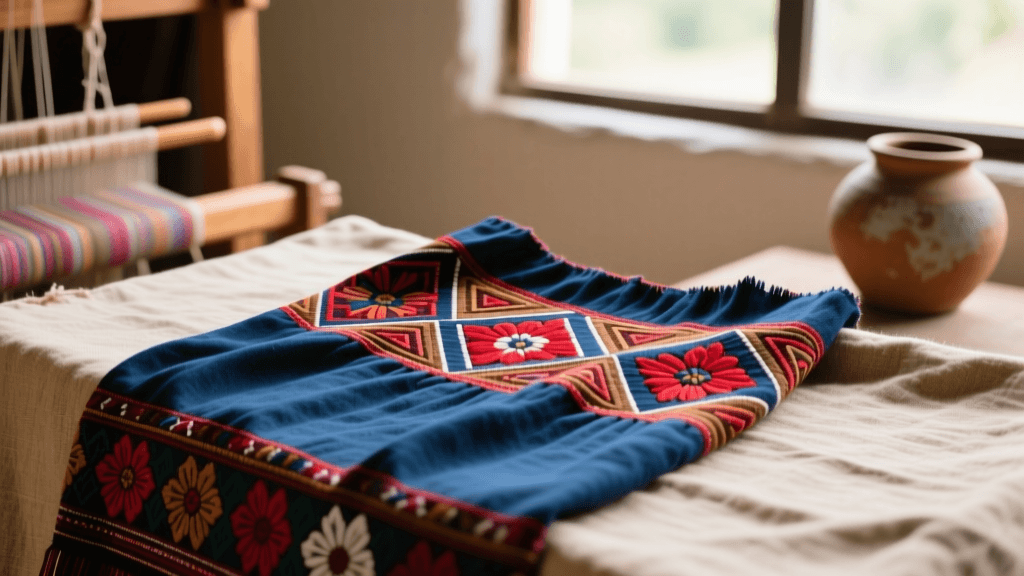
The traditional dress of the Diné (Navajo) people is inextricably linked to the art of weaving, a practice that is both an economic cornerstone and a sacred spiritual duty. The cornerstone of traditional Diné women's regalia is the biil, a woven dress that historically consisted of two rectangular panels of hand-woven wool tied together at the shoulders and belted at the waist.
Spiritual Foundations and Weaving Techniques
In Diné cosmology, the art of weaving was a gift from Spider Woman (Na'ashjé'íí Asdzáá), who taught the people how to weave using the tools provided by Spider Man. According to the Smithsonian National Museum of the American Indian, the loom itself is a microcosm of the universe, with the vertical warp representing the rain and the horizontal weft representing the earth. A traditional weaver incorporates a 'spirit line' (ch'ihónít'i) into the textile—a deliberate pathway that allows the weaver's spirit to escape the intricate patterns and prevents them from becoming trapped in their own creation.
Materials, Sourcing, and 2026 Market Prices
Authentic Diné weaving relies heavily on the Navajo-Churro sheep, a heritage breed known for its long-staple, low-lanolin wool that is ideal for hand-spinning. In 2026, the revitalization of natural dyeing techniques has reached new heights. Master weavers are utilizing wild walnut hulls for deep browns, cochineal insects for vibrant crimsons, and sage or rabbitbrush for soft yellows and greens.
- Hand-Spun, Hand-Dyed Biil Dress: Due to the scarcity of premium Churro wool and the hundreds of hours required for processing, spinning, dyeing, and weaving, a complete biil dress crafted by a recognized master weaver in 2026 commands between $6,500 and $14,000.
- Commercial-Yarn Woven Garments: Dresses woven using high-quality, commercially dyed wool yarns (such as Australian or processed domestic wools) are more accessible, typically ranging from $2,500 to $4,500.
- Men's Traditional Attire: Diné men's traditional wear often features velveteen shirts, turquoise and silver concho belts, and hand-woven sashes. A fully assembled, artisan-crafted men's traditional outfit in 2026 averages $3,000 to $8,000, heavily dependent on the silverwork and turquoise quality.
The Great Plains and Great Lakes: Ribbon Shirts and Jingle Dresses
Moving northeast to the Great Lakes and westward across the Great Plains, the textile traditions shift from woven wool to intricate cut-and-sew appliqué and beadwork. The introduction of European trade goods in the 18th and 19th centuries—specifically silk ribbons, broadcloth, and glass beads—was rapidly adapted by tribes such as the Ojibwe, Lakota, and Cree into distinctly Indigenous art forms.
Ojibwe and Lakota Ribbon Work Techniques
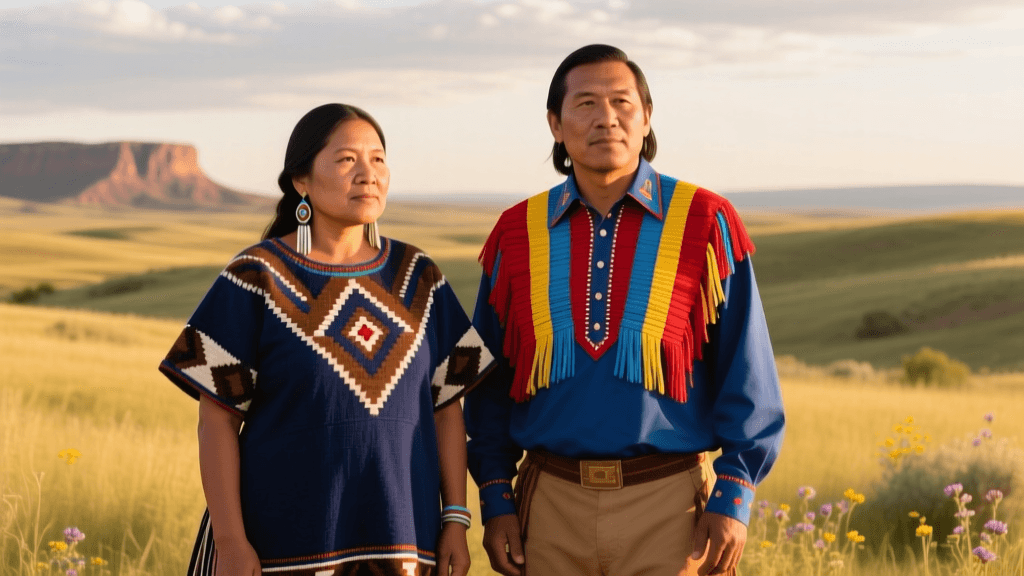
The ribbon shirt is a pan-Indigenous garment worn by men and women across the Plains and Great Lakes, though its origins are deeply rooted in the Great Lakes ribbon work tradition. Artisans create complex, symmetrical patterns by layering brightly colored silk or polyester ribbons, cutting away specific sections of the top layers, and folding the edges under to reveal the contrasting colors beneath. In 2026, contemporary ribbon workers are increasingly sourcing colorfast, sustainably produced silk-polyester blends to ensure the garments can withstand the rigors of the summer powwow circuit without fading or fraying.
The Healing Power of the Jingle Dress
The Jingle Dress, originating from the Ojibwe (Anishinaabe) people of the Great Lakes region in the early 20th century, is widely recognized as a healing dress. The garment is adorned with rows of metal cones, or 'jingles,' which create a rhythmic, rain-like sound during the dance. Historically crafted from rolled snuff can lids, the 2026 standard for high-end regalia involves custom-stamped, lightweight stainless steel or brass jingles that offer optimal acoustic resonance. A fully beaded and jingled dress, tailored to the dancer's exact measurements and featuring intricate floral beadwork motifs, requires over 300 hours of labor and is valued between $2,500 and $5,000 in the current market.
Comparison Chart: Regional Garment Traditions in 2026
| Region | Tribe/Nation | Signature Garment | Primary Materials | 2026 Artisan Cost Estimate |
|---|---|---|---|---|
| Southwest | Diné (Navajo) | Biil (Woven Dress) | Hand-spun Churro wool, natural dyes | $6,500 - $14,000 |
| Great Lakes | Ojibwe | Jingle Dress & Ribbon Shirt | Broadcloth, silk/poly ribbons, metal jingles | $2,500 - $5,000 |
| Great Plains | Lakota | Ribbon Shirt & Star Quilt | Cotton broadcloth, satin ribbons, glass beads | $800 - $2,200 |
| Pacific NW | Tlingit / Haida | Chilkat Robe | Mountain goat wool, yellow cedar bark | $20,000 - $40,000+ |
Ethical Sourcing and Supporting Indigenous Artisans
As the global interest in Indigenous aesthetics continues to grow in 2026, so does the proliferation of 'Native-inspired' fast fashion and AI-generated designs that appropriate sacred motifs without benefiting Native communities. For buyers, collectors, and institutions, ethical sourcing is not just a moral imperative; it is a legal one.
The Indian Arts and Crafts Board (IACB), an agency within the U.S. Department of the Interior, enforces the Indian Arts and Crafts Act. This federal truth-in-advertising law makes it illegal to falsely market goods as Native American if they are not made by a member of a federally or state-recognized tribe, or an artisan certified by such a tribe. When purchasing high-value items like a Diné biil dress or an Ojibwe jingle dress in 2026, buyers should adhere to the following actionable steps:
- Verify Tribal Enrollment or Certification: Always ask for the artist's tribal affiliation. Reputable artists and galleries will transparently provide this information.
- Purchase from Established Markets: Attend premier events like the Santa Fe Indian Market or the Heard Museum Guild Indian Fair, where vendor authenticity is strictly vetted by selection committees.
- Utilize Indigenous-Owned Platforms: Support digital cooperatives and verified Native artisan networks that ensure profits go directly to the creators and their communities.
- Request Documentation: For high-ticket woven textiles, request a certificate of authenticity that details the materials used, the dye sources, and the number of hours invested in the piece.
Conclusion
The traditional garments of Indigenous North America are profound narratives woven into cloth, bead, and ribbon. Whether it is the spiritual geometry of a Diné biil dress or the healing resonance of an Ojibwe jingle dress, these garments represent the resilience and ongoing evolution of Native cultures. By understanding the regional distinctions, respecting the sacred origins of these textiles, and committing to ethical purchasing practices, we can ensure that Indigenous artisans continue to thrive and pass their invaluable knowledge down to the next generation in 2026 and beyond.