Miao Silver and Embroidery: A Guide to Hmong Traditional Dress
The Cultural Significance of Miao Traditional Dress
The Miao people, widely known in the West as the Hmong, possess one of the most visually stunning and culturally rich sartorial traditions in Asia. Concentrated primarily in the mountainous provinces of Guizhou, Yunnan, Hunan, and Guangxi in southern China, the Miao ethnic group comprises numerous subgroups, each with distinct dialects and clothing styles. Because many Miao communities historically lacked a formal written language, their garments serve as 'wearable history books.' Every stitch, motif, and silver ornament encodes centuries of migration, mythology, and spiritual belief.
According to cultural heritage initiatives tracked by the UNESCO Intangible Cultural Heritage program, Miao embroidery and silversmithing are not merely decorative arts; they are vital mechanisms for transmitting oral history and community identity across generations. For the modern collector, traveler, or fashion historian, understanding the nuances of Miao traditional dress requires looking beyond the dazzling surface to appreciate the meticulous craftsmanship and profound symbolism embedded in every thread and ingot.
The Art of Miao Embroidery: Techniques and Motifs
Miao embroidery, or ci xiu, is renowned for its complexity, vibrant colors, and three-dimensional texture. The process begins long before the needle touches the cloth. Traditional Miao garments are woven from homegrown hemp or cotton and dyed using natural indigo. The batik process (la jian) involves drawing intricate patterns on white cloth using a copper pen filled with melted beeswax, which is then submerged in fermented indigo vats. Once boiled, the wax melts away, revealing striking white-on-blue geometric patterns.
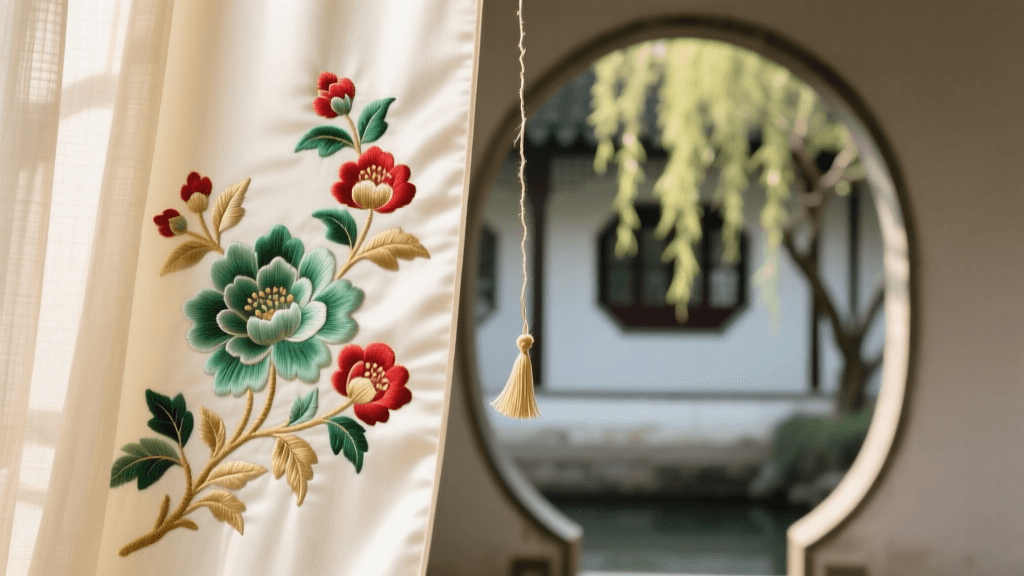
The embroidery itself features a rich lexicon of mythological motifs. The most sacred is the 'Butterfly Mother' (Mai Bang), the mythical ancestor of the Miao people, often depicted alongside the buffalo, dragons, and birds. Unlike Han Chinese embroidery, which often prioritizes smooth, flat surfaces, Miao embroidery employs highly textured techniques. The 'seed stitch' (da zi xiu) creates raised, granular patterns resembling tiny seeds or pearls, while 'braided stitch' (bian xiu) involves weaving silk threads into miniature ropes before couching them onto the fabric.
As reported in regional cultural features by China Daily, local cooperatives in Guizhou have recently empowered thousands of Miao women to commercialize their embroidery skills, lifting villages out of poverty while preserving ancient techniques. However, this commercialization has also flooded the market with machine-made imitations, making it crucial for buyers to know how to identify authentic handcrafted pieces.
Miao Silver Jewelry: Weight, Craftsmanship, and Cost
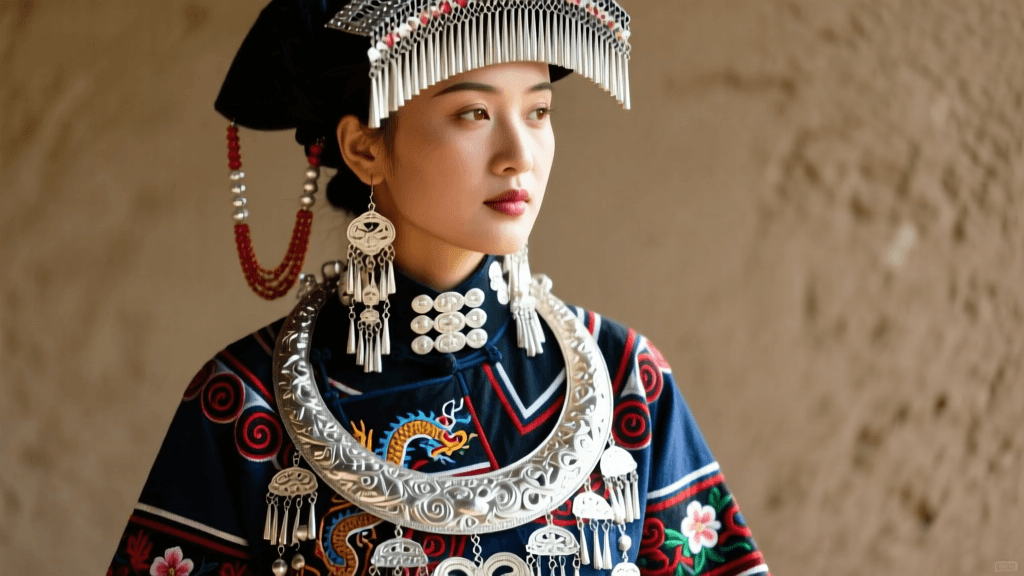
No Miao festival garment is complete without its accompanying silver jewelry. For the Miao, silver represents light, purity, and spiritual protection against evil spirits. A full festival ensemble for a Miao woman can include a towering silver horn headdress, multiple layered necklaces, chest plates, hairpins, and bracelets, often weighing between 5 to 10 kilograms (11 to 22 pounds) in total.
Miao silversmiths are highly respected artisans. They employ over thirty distinct techniques, including hammering, filigree, and repoussé, to transform solid silver ingots into delicate, bell-adorned masterpieces. The tinkling sound of the silver bells is believed to ward off malevolent spirits and announce the wearer's presence to the ancestors. When purchasing Miao silver, it is essential to understand that authentic pieces are crafted from pure silver or high-grade sterling, and their value is intrinsically tied to the daily market price of silver plus the artisan's labor.
Comparison: Authentic vs. Mass-Produced Miao Garments
When shopping in tourist hubs like Xijiang Miao Village, buyers must be vigilant. Below is a structured comparison to help you distinguish between authentic heritage pieces and mass-produced souvenirs.
| Feature | Authentic Handcrafted | Mass-Produced Tourist Market |
|---|---|---|
| Embroidery Backing | Irregular, visible hand-stitching; thick, textured threads. | Uniform, flat machine stitching; thin, shiny synthetic threads. |
| Indigo Dye | Earthy scent; slightly stiff fabric; fades naturally over time. | Chemical smell; soft fabric; colors bleed uniformly when wet. |
| Silver Material | Pure silver or 990 silver; heavy; hallmarked by local smiths. | White copper, brass, or silver-plated alloy; lightweight; no hallmark. |
| Motif Symmetry | Slight, charming asymmetries inherent to human handiwork. | Perfect, mirrored symmetry indicative of computerized looms. |
| Production Time | 6 months to 2 years for a full embroidered jacket. | Minutes to hours via factory assembly lines. |
Actionable Guide: Buying Authentic Miao Garments and Silver
If you are looking to acquire genuine Miao textiles or silver jewelry, whether for a personal collection, a museum archive, or high-end fashion sourcing, you must approach the market with specific metrics and expectations.
Price Guide and Measurements
- Authentic Embroidered Festival Jacket: Expect to pay between 3,000 and 15,000 RMB ($400 to $2,100 USD), depending on the density of the seed stitch and the age of the piece. Vintage jackets (pre-1980s) can exceed 30,000 RMB. Standard measurements for a traditional cropped Miao jacket are roughly 55 cm in length and 130 cm across the outstretched sleeves.
- Silver Horn Headdress: Priced by weight. With raw silver fluctuating around 6 to 8 RMB per gram, a crafted 500-gram horn will cost roughly 7,500 to 12,000 RMB ($1,000 to $1,650 USD) factoring in the silversmith's labor (usually calculated at 10-15 RMB per gram for intricate filigree).
- Indigo Batik Skirt: A genuine, hand-pleated hemp and indigo skirt, which requires hundreds of meticulous pleats set with egg white and bamboo, typically costs 1,500 to 4,000 RMB ($200 to $550 USD).
How to Spot Authentic vs. Mass-Produced Pieces
To verify silver authenticity, carry a small neodymium magnet. Silver is diamagnetic; a strong magnet should slide slowly down a pure silver ingot or thick bangle rather than snapping or sticking. For embroidery, turn the garment inside out. Authentic hand-embroidered Miao work will show a chaotic but secure network of knots and thread ends, whereas machine embroidery will feature a uniform grid of interlocking bobbin threads.
Timing and Locations for Sourcing
Travel and ethnographic publications like Smithsonian Magazine frequently highlight the architectural and sartorial brilliance of Guizhou's minority villages, but timing your visit is crucial for witnessing these garments in their proper context.
- When to Go: Plan your trip around the Sisters' Meal Festival (usually mid-April in Taijiang County) or the Miao New Year (November/December, varying by lunar calendar). During these times, villagers wear their authentic, heirloom silver and embroidery, allowing you to see the garments in motion and network directly with local artisans.
- Where to Go: Avoid the highly commercialized main streets of Xijiang Miao Village for serious sourcing. Instead, travel to Shidong Town in Taijiang County, known as the epicenter of Miao silver craftsmanship, or Huangping County for exquisite, fine-thread embroidery and intricate batik.
- Sourcing Etiquette: When buying directly from a village artisan, negotiate respectfully. Acknowledge that you are paying for months of labor, not just raw materials. Request a handwritten receipt detailing the silver weight and purity, which serves as both a certificate of authenticity and a respected record of the artisan's work.
Preserving the Heritage
The traditional clothing of the Miao people is a masterclass in sustainable fashion, utilizing natural indigo, homegrown hemp, and recyclable precious metals. As modernization encroaches on rural China, the younger generation of Miao women are increasingly leaving villages for urban centers, threatening the transmission of seed-stitch embroidery and complex silversmithing. By understanding the true value, measurements, and costs of these garments, collectors and cultural enthusiasts can provide the economic incentives necessary to keep these breathtaking Asian traditions alive for centuries to come.