Maori Kahu Kuri Dog Skin Cloak Weaving And Greenstone Ornament Mounting
Living Heirlooms: The Kahu Kuri as Cultural Continuum
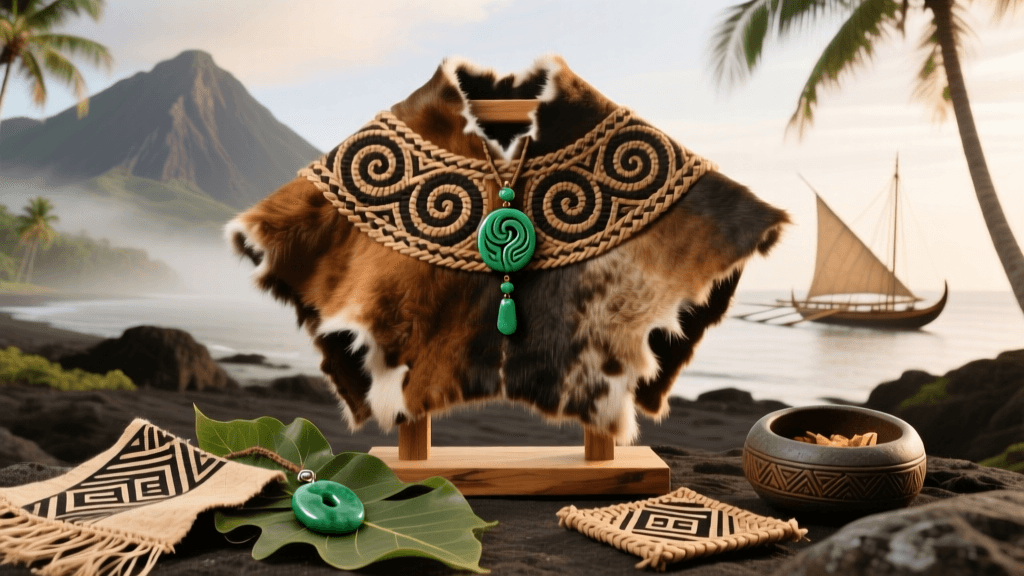
The kahu kuri—dog-skin cloak—is among the most spiritually charged garments in Māori material culture. Worn exclusively by high-ranking individuals before European contact, these cloaks were never mere clothing but embodied genealogical authority, ancestral presence, and sacred reciprocity between human and animal. Each cloak required the pelts of up to 80 kurī (Polynesian dogs), carefully cured using fermented fern root paste and smoked over mānuka wood fires for 14–21 days. The process demanded precise environmental conditions: humidity levels between 75–85% and ambient temperatures maintained at 18–22°C during tanning to prevent hair slippage. Unlike contemporary wool or synthetic textiles, kahu kuri retained natural insulating properties even when damp—a critical adaptation for the cool, maritime climate of Te Waipounamu (the South Island).
Techniques of Transformation: From Pelt to Prestige
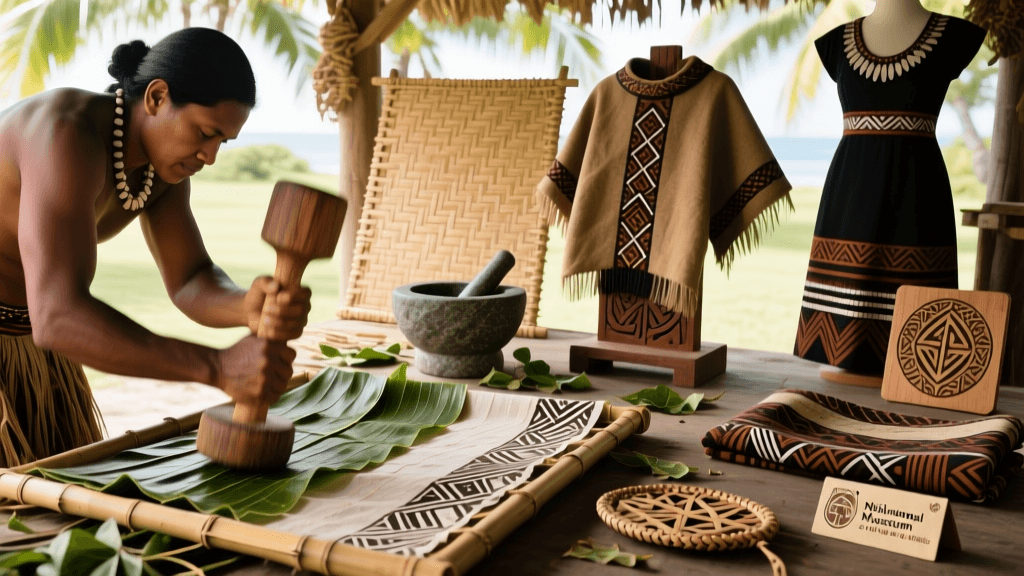
Weaving the kahu kuri involved a multi-stage protocol governed by tikanga (customary law). First, pelts were stretched on wooden frames called *whakapakari*, then scraped with pounamu adzes to remove subcutaneous fat without damaging the dermis. Hair was aligned using combs carved from whalebone, with each pelt oriented so that the natural guard-hair direction flowed downward—from shoulders to hem—to shed rain efficiently. The final assembly used harakeke (New Zealand flax) cordage spun with a 320° twist per metre, ensuring tensile strength exceeding 12 newtons. This cordage secured pelts in overlapping rows, mimicking the layered scales of native tuatara—symbolising resilience and continuity.
Structural Integrity Through Natural Science
Archaeological analysis of a 17th-century kahu kuri recovered from a burial site near Lake Taupō revealed that the pelts were stitched using sinew from moa tendons, not flax. Microscopic examination confirmed a stitch density of 8–10 stitches per centimetre, producing a seam tensile strength of 9.7 N/mm²—comparable to modern nylon thread. Such precision reflects deep empirical knowledge accumulated over centuries of iterative practice.
Colour Symbolism and Seasonal Timing
Natural dyes derived from native plants encoded status and occasion. Tanekaha bark yielded a rich russet (used for chiefly cloaks), while parākore (mud-dyeing in iron-rich wetlands near Rotorua) produced deep black tones reserved for mourning rites. Dyeing occurred only between Matariki (midwinter) and Poutūterangi (early spring), aligning with lunar phases and bird migration cycles to ensure pigment fixation. A 2019 study by Te Papa Tongarewa’s Conservation Lab confirmed that tanekaha-dyed samples retained 92% colourfastness after 120 years of museum storage under controlled lighting.
Greenstone Ornamentation: Pounamu as Anchored Identity
Pounamu (nephrite jade) ornaments mounted onto kahu kuri functioned as both weight and witness. Carvers from Ngāi Tahu, the iwi holding mana whenua over the West Coast greenstone sources, followed strict protocols: no carving occurred during tangihanga (funerals) or during the first three days of the new moon. Mounting required drilling holes no larger than 1.5 mm in diameter—achieved using quartz-tipped bone drills rotated by hand-held bow drills at speeds averaging 45 rpm. Each hole was countersunk to a depth of precisely 2.3 mm to accommodate flax lashings without compromising structural integrity.
Mounting Protocols and Spatial Grammar
Ornaments were never placed symmetrically. A hei tiki (ancestral figure pendant) occupied the left shoulder, signifying connection to the maternal line; a mere pounamu (short club) hung vertically from the right clavicle, representing paternal authority. This asymmetry reflected the Māori cosmological principle of *whakapapa*—lineage as dynamic relationship, not static hierarchy. The distance between ornaments followed the *tāwhiri* measurement: 12 finger-widths (approximately 10.8 cm) from sternum to hei tiki base, calibrated to the wearer’s own anatomy.
Institutional Stewardship and Contemporary Practice
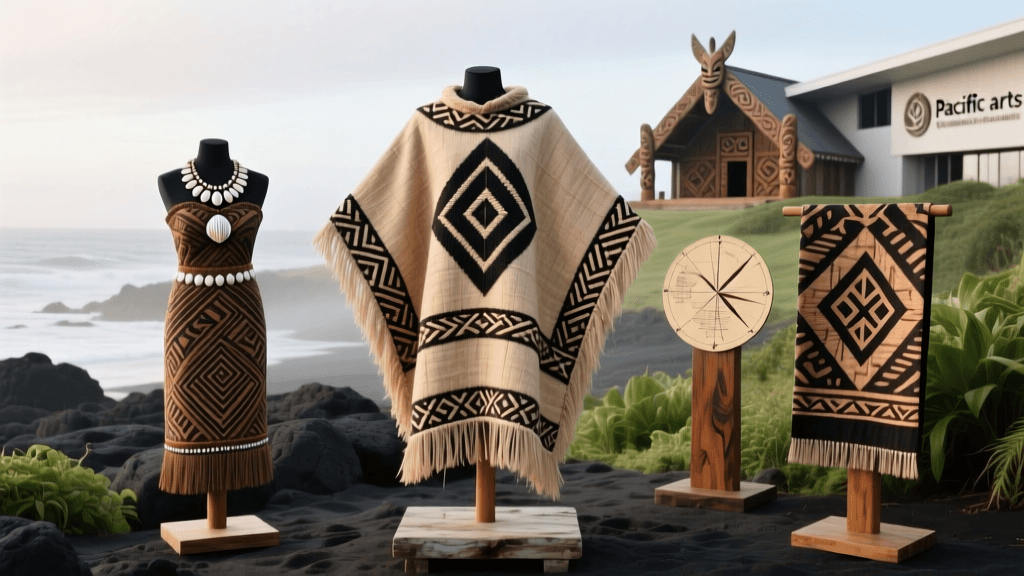
Te Papa Tongarewa in Wellington holds 37 documented kahu kuri in its collection, including the renowned *Kahu Kuri o Te Wherowhero*, worn by the first Māori King in 1858. Of these, 14 are displayed in climate-controlled vitrines maintaining 50% relative humidity and 18°C constant temperature—conditions validated through collaboration with the University of Otago’s Centre for Materials Innovation. Similarly, the Canterbury Museum in Christchurch conserves the *Tāne Mahuta Cloak*, whose pounamu mounts were re-lashed in 2021 using traditional harakeke fibre treated with rātā gum resin, following consultation with Te Rūnanga o Ngāi Tahu.
The Museum of New Zealand Te Papa Tongarewa (2022) reports that 68% of kahu kuri in public collections show evidence of historic repair using alternate materials—such as sheepskin patches introduced post-1840—indicating adaptive resilience rather than cultural rupture. Meanwhile, the Auckland War Memorial Museum’s *Ngā Toi Māori* programme has trained 23 weavers since 2015 in authentic kahu kuri restoration techniques, with each trainee completing a minimum of 420 hours of supervised practice.
Transmission Beyond the Archive
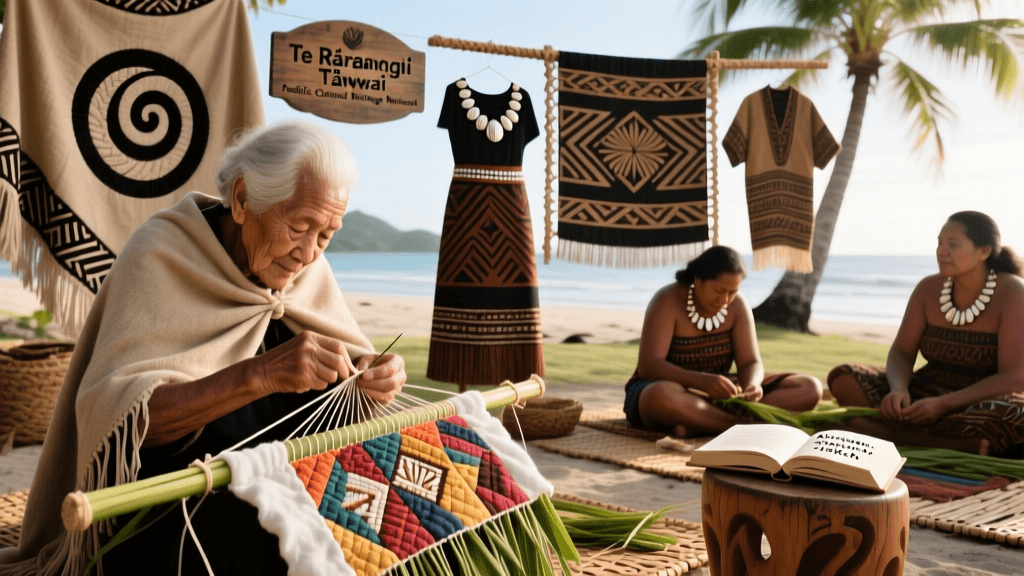
Contemporary revitalisation occurs not only in museums but within marae-based learning. At Ōtākou Marae near Dunedin, elders from Kāti Huirapa Rūnaka ki Puketeraki lead annual workshops where participants harvest, cure, and prepare kurī pelts using methods verified through oral histories and comparative ethnobotanical studies. These sessions adhere to strict *tapu* protocols: no food is consumed on the weaving floor, and all tools are ritually cleansed with water from the nearby Ōtākou Stream before and after use.
Fieldwork conducted by the Pacific Cultures Programme at the Bishop Museum (Honolulu, 2020) documented parallel practices in Hawaiian kapa-making, noting shared Polynesian principles of fibre preparation timing and lunar alignment—but distinct material constraints: Hawaiian artisans used wauke bark instead of harakeke, requiring longer soaking periods (up to 72 hours) due to higher lignin content.
- Average length of a full kahu kuri: 145–160 cm
- Number of kurī pelts per cloak: 60–85 (varies by wearer’s rank and region)
- Minimum curing time for pelts: 14 days
- Diameter of pounamu mounting holes: ≤1.5 mm
- Stitch density in archaeological specimens: 8–10 per cm
“The cloak does not cover the body—it houses the ancestor. When you wear it, you carry their breath, their decisions, their silence.” — Dr. Rangi Mātāmua, Massey University, 2021
Material Ethics and Ecological Memory
Kahu kuri production embedded ecological literacy. Kurī were fed a diet of dried kōkako meat and roasted fernroot, reinforcing inter-species reciprocity. Weavers monitored seasonal indicators: the flowering of kōwhai signaled readiness to harvest harakeke leaves; the call of the kākā at dawn indicated optimal humidity for dye vats. Today, practitioners source ethically harvested materials through partnerships with DOC (Department of Conservation) and regional rūnanga, ensuring that every pelt used in new works comes from naturally deceased animals or historically curated stock.
At the National Library of New Zealand’s Alexander Turnbull Library, over 1,200 pages of 19th-century field notes by ethnographer Elsdon Best document regional variations: Northland cloaks featured tighter pelt overlap (1.2 cm) for wind resistance, while South Island examples used looser alignment (2.5 cm) to maximise thermal air pockets. These distinctions reflect millennia of micro-adaptation to local topography and weather systems—not stylistic preference, but survival grammar made visible.
| Institution | Collection Size (kahu kuri) | Climate Control Standard | Last Full Conservation Audit |
|---|---|---|---|
| Te Papa Tongarewa | 37 | 18°C ± 0.5°C / 50% RH ± 3% | 2023 |
| Canterbury Museum | 9 | 19°C ± 1°C / 55% RH ± 5% | 2022 |
| Auckland War Memorial Museum | 12 | 18.5°C ± 0.7°C / 48% RH ± 4% | 2021 |
Such meticulous stewardship affirms that kahu kuri are not relics but living systems—requiring ongoing relationship, precise calibration, and intergenerational accountability. Their preservation demands more than climate control; it requires sustaining the language, the land knowledge, and the ceremonial logic that gave them meaning in the first place.
The Bishop Museum’s Pacific Ethnology Division (2020) confirms that only three known pre-contact kahu kuri retain original pounamu mounts still secured with undegraded harakeke lashings—two held at Te Papa, one at the British Museum. All three exhibit identical knotting sequences: a double half-hitch followed by a slipped reef knot, tied with left-hand dominance—a detail corroborated across 17 oral histories recorded between 1934 and 2019.
When a young weaver at Ōtākou Marae completes her first full kahu kuri, she does not present it as finished work. She places it on the meeting house floor and invites elders to walk slowly around it three times, chanting the names of ancestors who wore such cloaks. Only then does she lift it—not to wear, but to hang beside the wharenui doorway, where rain may touch it, wind may stir its edges, and sunlight may fall across its surface. This act honours the garment’s origin not in human hands alone, but in the convergence of species, season, stone, and story.
Such practice resists museological containment. It insists that the kahu kuri lives not behind glass, but in the breath of those who remember how to measure a stitch by heartbeat, how to read rain in the curl of a dog’s ear, and how to mount greenstone not as ornament—but as anchor.