LDS Temple Garments in 2026: Meaning, Styles & Significance
The Spiritual and Religious Significance of Temple Garments
For members of The Church of Jesus Christ of Latter-day Saints, the temple garment is far more than a simple piece of clothing; it is a profound, sacred reminder of covenants made with God. Often referred to casually by outsiders as 'Mormon underwear,' this characterization severely diminishes the deep theological and spiritual weight the garment carries for endowed members. In 2026, as the global membership of the Church continues to diversify and expand across the Americas and beyond, the cultural and religious significance of the garment remains a central pillar of Latter-day Saint identity and daily spiritual practice.
The garment is introduced to members during the temple endowment ceremony, a sacred ordinance that includes making covenants (promises) with God. According to the Gospel Topics Essay on Temple Garments, the garment serves as a tangible, physical reminder of these spiritual commitments. It is often likened to the 'Armor of God' described in Ephesians 6, providing spiritual protection against the temptations and moral challenges of the modern world. For the wearer, it is a deeply personal and private expression of faith, meant to be kept sacred and not displayed or discussed casually in secular settings.
The Sacred Markings and Their Context
Woven or embroidered into the fabric of the traditional temple garment are specific markings. Historically, these marks have included symbols such as the square, the compass, the fig leaf, the navel, and the knee. Each mark corresponds to a specific covenant, moral principle, or spiritual truth taught during the endowment.
However, in recent years leading into 2026, Church leadership has increasingly emphasized that these markings are deeply sacred and are not meant for public dissection, academic debate, or casual explanation. The focus has intentionally shifted away from the literal interpretation of the symbols and toward the holistic, spiritual covenants they represent. The garment is not viewed as a magical talisman that provides physical immunity from harm, but rather as a spiritual compass that prompts the wearer to live righteously and remember their divine identity as a child of God.
2026 Garment Styles and Material Innovations
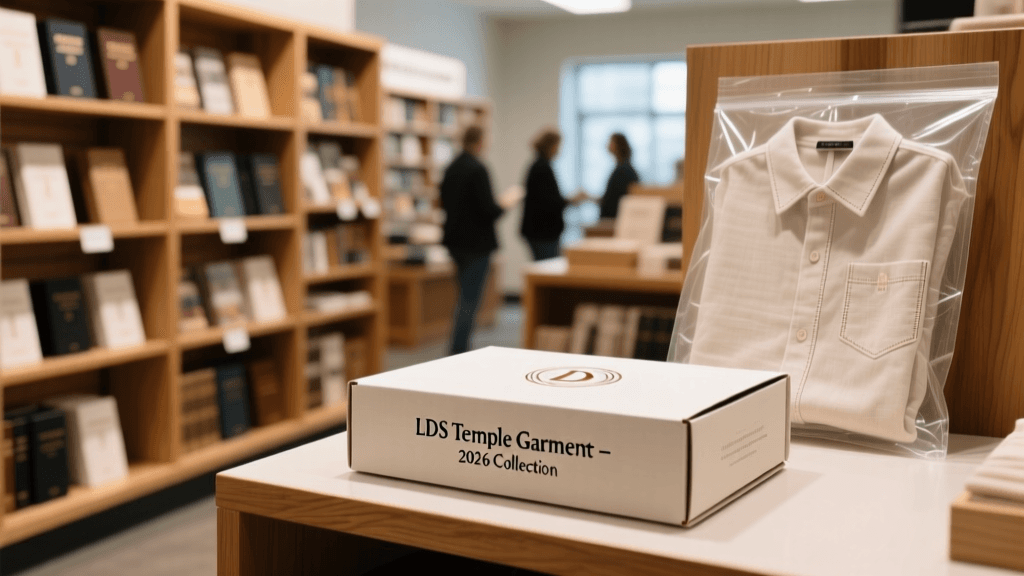
As textile technology has advanced, so too has the design and comfort of the temple garment. In 2026, the Church's distribution centers offer a wide array of styles designed to accommodate different climates, body types, and lifestyles. The goal is to ensure that members can wear their sacred clothing comfortably in any environment, from the sweltering heat of Central America to the freezing winters of North America.
Below is a comparison of the primary garment styles and fabrics available to members in 2026:
| 2026 Garment Style | Primary Fabric | Best Use Case |
|---|---|---|
| Classic Crew Neck | 100% Cotton or Cotton Blend | Everyday wear, cooler climates, traditional fit |
| Stretch Modal V-Neck | Micro-Modal / Spandex Blend | Hot weather, form-fitting outerwear, high comfort |
| Women's Camisole | Stretch Lace / Modal | Layering under wide-neck tops and dresses |
| Athletic Mesh | Moisture-Wicking Polyester | Sports, gym, high-humidity environments |
| Maternity & Nursing | Stretch Cotton / Bamboo | Pregnancy, postpartum, nursing accessibility |
The introduction of micro-modal and bamboo-blend fabrics has been a game-changer for members living in tropical or highly humid regions. These materials offer superior breathability and moisture-wicking properties, addressing one of the most common historical challenges of wearing layered, modest clothing in hot climates.
Cultural Identity and Modesty in a Secular World
Wearing the temple garment profoundly influences the cultural and social lives of Latter-day Saints. Because the garment covers the torso and upper thighs, it naturally dictates a standard of modesty in outerwear. In 2026, while mainstream fashion trends often favor revealing cuts, sheer fabrics, and midriff-baring designs, endowed members navigate these trends by adapting them to fit their religious requirements.
This creates a unique cultural subtext within the Americas. In regions with high Latter-day Saint populations, such as Utah, Idaho, and parts of Latin America, modest fashion is a thriving industry, with local designers creating stylish, high-quality clothing that accommodates the garment. For members living in areas where they are a religious minority, the garment serves as a quiet, constant anchor to their faith. It is a hidden marker of identity, fostering a sense of global solidarity among wearers who recognize the shared commitment it represents, even if it is never openly discussed.
'The garment is a private, personal reminder of the covenants I have made. It grounds me when I am in environments that challenge my values, serving as a quiet whisper to stay true to my faith.' — A 2026 reflection from an endowed member in South America.
Navigating Modern Challenges: Athletics and Climate
One of the most practical aspects of wearing the garment in 2026 involves navigating physical activities. The Church provides clear, compassionate guidelines regarding when the garment may be temporarily removed. According to the General Handbook, members may remove the garment for activities that inherently require it, such as swimming, bathing, or participating in rigorous athletic sports where the garment would be damaged or cause severe discomfort.
However, the cultural expectation among faithful members is to put the garment back on as soon as the activity concludes. The 2026 lineup of athletic mesh garments has significantly reduced the need for removal during standard gym workouts or light jogging, as the moisture-wicking fabrics prevent the chafing and overheating that older cotton models sometimes caused. For water sports, specialized, quick-drying swimwear that mimics the coverage of the garment is often utilized by members who wish to maintain modesty standards at the beach or pool without removing their sacred clothing, though the actual temple garment itself is not worn in the water.
Purchasing, Care, and Disposal Guidelines
Temple garments are not sold in commercial retail stores; they are exclusively available through the Church's distribution system. In 2026, members can easily order garments online via the Official Church Store or purchase them in person at local distribution centers located near temples and major chapels worldwide. The cost is heavily subsidized by the Church to ensure they are accessible to members of all economic backgrounds, with multi-packs and bulk discounts frequently utilized by families.
Caring for the garment requires specific attention. Because of the sacred markings, members are instructed to treat the garment with respect. When washing, they are laundered like any other delicate clothing, but when a garment becomes worn, torn, or no longer usable, it cannot simply be thrown in the trash or donated to a thrift store. The established protocol requires the member to carefully cut out the sacred markings and destroy them (often by burning or cutting them into unrecognizable pieces) before discarding the remaining fabric. This practice ensures that the sacred symbols are never exposed to public view or treated with disrespect.
Conclusion
As we move through 2026, the LDS temple garment remains a vital, living tradition that bridges ancient covenant theology with modern textile innovation. It is a garment of faith, modesty, and spiritual armor, deeply woven into the cultural fabric of the Americas and the global Latter-day Saint community. Understanding the true meaning of the temple garment requires looking past the physical fabric and recognizing the profound spiritual commitments it represents to the millions who wear it daily.