Mormon Temple Garments 2026: Religious Meaning and Modern Styles
The Sacred Origins and Theological Foundations
For members of The Church of Jesus Christ of Latter-day Saints (often referred to as Mormons), the temple garment is far more than a simple undergarment; it is a profound religious artifact and a daily, physical reminder of sacred covenants. Originating in the 1840s during the Nauvoo period, the practice of wearing sacred clothing was introduced by the Prophet Joseph Smith as part of the temple endowment ceremony. Today, in 2026, millions of faithful members across the Americas and the globe wear these garments as a symbol of their devotion to God and their commitment to live a moral, ethical, and spiritually focused life.
Unlike ordinary clothing, which is chosen primarily for fashion, comfort, or utility, temple garments are considered sacred vestments. They serve as an outward expression of an inward commitment, acting as a spiritual shield against the temptations of the modern world. The Church emphasizes that the garment is a private matter, not meant for public display or casual discussion, which has historically led to misunderstandings among those outside the faith. However, as of 2026, increased transparency through official Church media and academic research has helped demystify the garment, allowing for a broader cultural understanding of its deep religious significance.
Decoding the Symbolism: The Four Sacred Marks
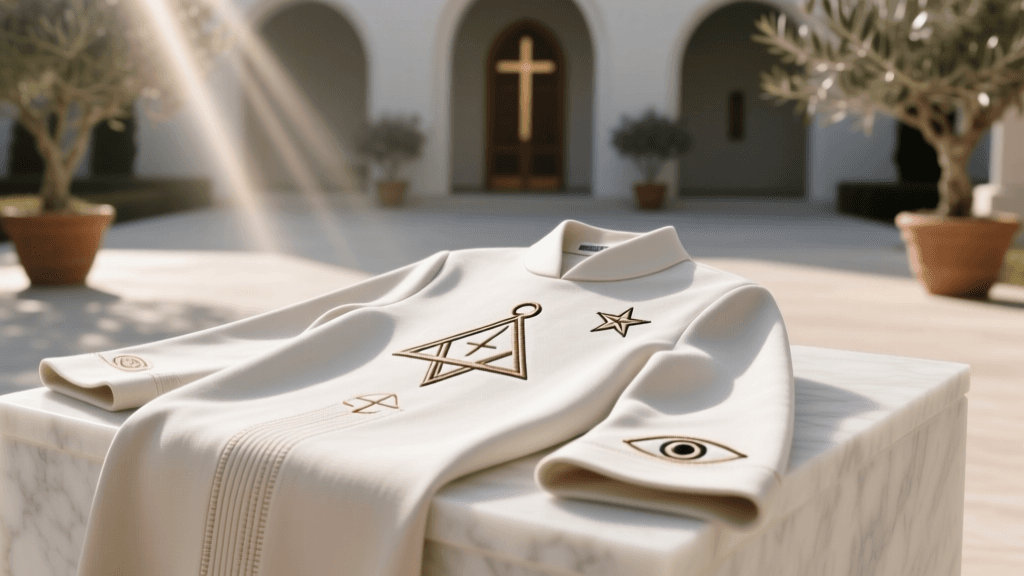
One of the most defining characteristics of the LDS temple garment is the presence of specific symbolic marks woven or embroidered into the fabric. These marks are deeply rooted in Masonic and ancient Abrahamic traditions, adapted by Joseph Smith to teach theological principles. While the exact nature of the temple ceremonies is kept sacred and private by members, the general symbolism of these marks has been discussed in official Church publications and historical archives.
- The Compass: Typically located on the left breast, the compass symbolizes the importance of keeping one's life within the bounds of truth and righteousness. It serves as a reminder to stay on the correct spiritual path and to avoid wandering into moral error.
- The Square: Usually placed on the right breast, the square represents honor, integrity, and the necessity of dealing fairly with all of God's creations. It reminds the wearer to act with uprightness in their personal and professional dealings.
- The Navel Mark: Located near the midsection, this mark symbolizes the need for continuous spiritual nourishment and the importance of prayer. It reminds the wearer that their spiritual center must be constantly fed by divine guidance.
- The Knee Mark: Placed near the lower hem, the knee mark represents the willingness to bow in humble submission to the will of God. It is a reminder of the physical act of kneeling in prayer and the spiritual posture of humility required for exaltation.
According to the official Gospel Topics Essay on Temples and Garments, these symbols are designed to help members 'remember the covenants they have made in the temple.' The physical sensation of the garment against the skin acts as a continuous, tactile prompt to choose the right throughout the daily challenges of life.
Cultural Significance Across the Americas in 2026
The cultural footprint of the temple garment is particularly prominent across the Americas, where the highest concentrations of Latter-day Saints reside. In the United States, particularly in the 'Mormon Corridor' spanning Utah, Idaho, Arizona, and parts of Nevada and California, the garment heavily influences local fashion, retail, and lifestyle industries. In 2026, modesty-focused fashion brands in these regions routinely design outerwear—such as higher-necked blouses, longer hemlines, and specialized swimwear—specifically tailored to accommodate the garment without compromising contemporary style.
Beyond the American West, the cultural significance of the garment is rapidly evolving in Latin America. With massive temple construction and membership growth in countries like Mexico, Brazil, Chile, and Peru, the garment has become a unifying cultural artifact among Indigenous and Mestizo Latter-day Saints. In these regions, wearing the garment in hot, humid climates has historically been a challenge. However, the introduction of advanced moisture-wicking fabrics by the Church's distribution network has allowed members in tropical areas of the Americas to maintain their religious commitments comfortably. The garment transcends national borders, creating a shared, unspoken bond of religious identity among wearers from the bustling streets of São Paulo to the rural highlands of Guatemala.
2026 Fabric Innovations and Style Guide
The practical design of the temple garment has evolved significantly since its inception. While early garments were one-piece, full-length union suits made of heavy cotton or wool, the modern 2026 iteration consists of a two-piece set (a t-shirt style top and boxer-brief or knee-length bottom). The Church's manufacturing partners have heavily invested in textile engineering to ensure that garments are breathable, durable, and suitable for diverse lifestyles and climates.
Below is a comparison of the primary fabric options available through the official Church Distribution system in 2026:
| Fabric Type | Best Use Case | Key Features (2026 Specs) | Climate Suitability |
|---|---|---|---|
| Classic Cotton | Everyday wear, sleep | 100% ring-spun cotton, soft finish, traditional feel | Temperate, Indoor |
| Modesty Mesh | Summer, high humidity | Micro-mesh knit, ultra-lightweight, maximum airflow | Tropical, Hot Summers |
| Stretch Cotton | Active lifestyles, office | Cotton-spandex blend, retains shape, flexible fit | All-season versatility |
| Performance Cool-Max | Athletics, manual labor | Moisture-wicking synthetic blend, anti-odor treatment | Extreme heat, High sweat |
For members living in the sweltering summers of the American South or the tropical environments of Central and South America, the Modesty Mesh and Performance Cool-Max options have been revolutionary. As noted by the Church Newsroom's FAQ on Temple Garments, the Church continuously updates its materials to ensure members can wear the garments 'comfortably in all climates and situations.'
Purchasing, Sizing, and Distribution in 2026
Acquiring temple garments is a restricted process; they are not sold in standard retail clothing stores or secular e-commerce platforms. Only members who have received their temple endowment and hold a current, valid temple recommend are authorized to purchase them. In 2026, the primary method of acquisition is through the Church's secure online portal or by visiting physical Church Distribution centers, which are often located adjacent to temples or large meetinghouses.
When ordering online via the official Church Distribution store, members must log in with their Church account, which verifies their eligibility. The 2026 sizing matrix has been refined to offer inclusive and precise fits. Tops are available in standard necklines (crew, V-neck, and scoop) and sleeve lengths (short, cap, and sleeveless for women). Bottoms come in various inseams, ranging from mid-thigh to below-the-knee, accommodating different outerwear styles, from professional suits to athletic shorts. For women, specialized maternity panels and nursing-access designs are also available, ensuring that the religious commitment can be maintained seamlessly through all stages of life.
Garment Care, Longevity, and Respectful Disposal
Because of their sacred nature, the care and eventual disposal of temple garments are governed by specific cultural and religious guidelines. In 2026, with the rise of eco-friendly laundry practices, members are encouraged to wash garments in cold water with mild, biodegradable detergents to preserve the elasticity of the modern spandex blends and prevent the shrinking of cotton fibers. Tumble drying on low heat or air-drying is recommended to extend the lifespan of the fabric.
When a garment becomes worn, torn, or unusable, it cannot simply be thrown into the regular trash or donated to a thrift store, as this would be considered deeply disrespectful to the sacred symbols it bears. The established protocol requires members to carefully cut out the sacred marks (the compass, square, navel, and knee) and destroy them. The remaining, unmarked fabric can then be disposed of in the regular trash, or if it is still in good condition but no longer usable as a garment, the fabric may be repurposed as cleaning rags. This meticulous process of disposal underscores the reverence with which the garment is treated from the moment it is first put on until the end of its physical utility.
Conclusion
The Mormon temple garment remains one of the most unique and deeply meaningful religious garments in the Americas. Far from being a mere relic of the 19th century, it has adapted to the modern era through advanced textile engineering and global distribution, while fiercely maintaining its original theological purpose. For the millions of Latter-day Saints who wear it daily in 2026, the garment is a quiet, constant companion—a wearable sanctuary that anchors their identity, guides their moral compass, and connects them to a heritage of faith that spans across the hemisphere.