2026 Guide to Lakota Beadwork & Diné Velvet Regalia
Introduction to Regional Indigenous Dress in 2026
Indigenous North American dress traditions are not static relics of the past; they are living, breathing expressions of cultural continuity, regional identity, and artistic innovation. As we navigate the 2026 powwow season, regional gatherings, and ceremonial events, the distinction between tribal regalia styles remains profoundly tied to geography, history, and the natural resources of specific homelands. For collectors, cultural practitioners, and textile enthusiasts, understanding the nuanced differences between the Northern Plains and the Southwest is essential. This comprehensive guide explores two of the most iconic and visually striking regional traditions: the intricate beadwork of the Lakota people and the elegant velvet and silverwork of the Diné (Navajo). By examining the historical context, contemporary techniques, and 2026 market sourcing realities, we can better appreciate and ethically support these magnificent textile arts.
The Northern Plains: Lakota Beadwork Traditions
Historical Context and the Lazy Stitch
Before the introduction of glass trade beads by European settlers, Plains tribes, including the Lakota, relied heavily on porcupine quillwork to decorate hide garments, moccasins, and parfleche containers. Quillwork was a sacred art form, governed by strict societal protocols and spiritual visions. By the mid-19th century, glass seed beads began to replace quills due to their vibrant color palette and ease of application. However, the Lakota adapted these new materials using traditional geometric motifs and distinct stitching techniques that mirrored the linear, banded patterns of earlier quillwork.
The most defining technique of Lakota beadwork is the 'lazy stitch' (often referred to by practitioners as the lane stitch). In this method, beads are strung on a single thread and then tacked down at the ends of the lane, creating a slightly raised, ribbed texture that is both durable and visually striking. This technique is particularly well-suited for covering large areas on brain-tanned buckskin, such as the yokes of women's dresses or the leggings and shirts of men's regalia. In 2026, master beadworkers continue to utilize the lane stitch to maintain structural integrity on garments that must withstand the rigorous movement of the powwow arena.
Sourcing Materials for Lakota Beadwork in 2026
Creating authentic Lakota regalia requires specific, high-quality materials. The foundation of any traditional Plains garment is the hide. While commercial garment-tanned leather is widely available, traditionalists and high-end regalia makers seek out brain-tanned or smoke-tanned buckskin and elk hide. In 2026, authentic, hand-brained deer hide sourced from Indigenous tanners typically ranges from $35 to $55 per square foot, reflecting the immense labor and specialized knowledge required for the tanning process.
For the beadwork itself, the gold standard remains the Czech glass seed bead, specifically Preciosa Ornela in size 11/0. These beads offer the uniformity and historical color accuracy required for traditional geometric patterns. In 2026, a standard hank (approximately 4,000 beads) of high-quality Czech seed beads costs between $4.50 and $7.00, depending on the finish (e.g., opaque, metallic, or lined). Beadworkers also rely on specialized threads; Nymo or Silamide nylon threads, heavily waxed with beeswax or synthetic micro-wax, are essential to prevent the thread from cutting through the beads or the hide over time.
Essential Tools for the Modern Beadworker
Whether you are a beginner learning the lane stitch or an experienced artist expanding your regalia portfolio, having the right tools is critical. Here are the essential supplies for 2026:
- Beading Needles: Size 10 or 12 English beading needles (brands like John James) are necessary to pass through 11/0 seed beads multiple times.
- Backing Material: For beadwork applied to cloth rather than hide, heavy-duty cotton canvas or wool broadcloth (preferably Melton wool) provides the necessary structural support to prevent sagging.
- Awl and Scratch Tool: A fine steel awl is used to pierce brain-tanned hide without tearing the fibers, a crucial step when working with expensive, traditionally tanned skins.
- Beeswax and Thread Conditioner: Essential for coating nylon threads, reducing friction, and preventing tangling during long stitching sessions.
The Southwest: Diné (Navajo) Velvet and Silver
The Origins and Evolution of the Diné Velvet Dress
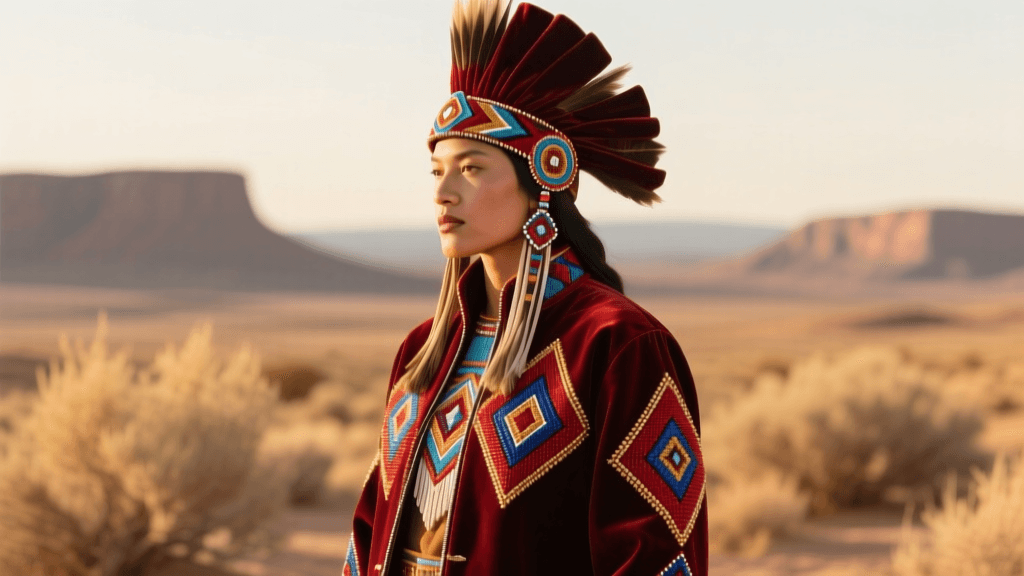
Transitioning from the Northern Plains to the arid landscapes of the Southwest, the traditional dress of the Diné (Navajo) presents a striking contrast in both material and silhouette. The iconic Diné velvet dress and blouse ensemble is a masterclass in cultural adaptation. In the mid-to-late 19th century, trading posts introduced Euro-American textiles, including velvet and calico, to the Navajo Nation. Rather than adopting Euro-American clothing styles wholesale, Diné women ingeniously adapted these fabrics into garments that reflected their own cultural aesthetics and practical needs.
The traditional women's ensemble consists of a high-necked, long-sleeved velvet blouse paired with a full, tiered skirt, often made of velvet or brightly patterned calico. The skirt is designed with generous yardage, allowing for ease of movement and providing warmth during the cold desert nights. According to the Heard Museum, the integration of velvet into Diné clothing became a marker of status and cultural pride, eventually evolving into the standard formal and ceremonial attire worn at gatherings, graduations, and political events today.
Concho Belts and Silverwork Market in 2026
No Diné velvet ensemble is complete without the accompanying silverwork, most notably the concho belt and the squash blossom necklace. Diné silversmithing originated in the mid-19th century, heavily influenced by Mexican plateros (silversmiths) and later refined into a distinct, world-renowned art form. The concho belt, featuring a series of oval or round silver plates (conchos) strung on a leather belt, is perhaps the most recognizable piece of Southwestern Indigenous jewelry.
The market for authentic, hand-stamped sterling silver concho belts has seen significant shifts in 2026. With the spot price of silver experiencing volatility and consistently hovering at premium levels, the raw material costs for silversmiths have risen. A traditional, hand-stamped sterling silver concho belt featuring 12 to 14 solid silver conchos, crafted by a recognized Diné or Zuni artisan, now commands a baseline price between $2,200 and $4,500. Belts featuring high-grade, natural turquoise settings—such as rare Number 8 or Lander Blue turquoise—can easily exceed $8,000. Buyers must be highly discerning, as the market is unfortunately saturated with mass-produced, imported imitations that mimic the Southwestern aesthetic but lack the cultural authenticity and metallurgical quality of genuine Indigenous craftsmanship.
2026 Material Sourcing and Pricing Comparison
To assist collectors, artisans, and regalia makers in navigating the current market, the following table outlines the estimated costs and sourcing considerations for key materials used in Lakota and Diné traditions in 2026.
| Material | Region / Tradition | Application | 2026 Estimated Cost | Ethical Sourcing Notes |
|---|---|---|---|---|
| Brain-Tanned Deer Hide | Northern Plains (Lakota) | Leggings, dresses, moccasins | $35 - $55 / sq ft | Purchase directly from Indigenous tanners or verified tribal cooperatives. |
| Czech Seed Beads (11/0) | Northern Plains (Lakota) | Lane stitch, spot stitch appliqué | $4.50 - $7.00 / hank | Ensure beads are genuine Preciosa Ornela to avoid color fading. |
| Heavy Velvet (Cotton/Silk) | Southwest (Diné) | Blouses, skirts, men's shirts | $25 - $45 / yard | Source from established Southwest trading posts or specialized textile vendors. |
| Sterling Silver Conchos | Southwest (Diné / Zuni) | Concho belts, hatbands | $2,200 - $4,500+ (full belt) | Verify the artist's tribal enrollment and hallmark stamp. |
| Natural Turquoise (Cabochon) | Southwest (Diné) | Squash blossoms, belt buckles | $15 - $150+ / carat | Demand documentation of the mine origin (e.g., Kingman, Sleeping Beauty). |
Ethical Purchasing and Cultural Preservation
As the global appreciation for Indigenous North American textiles and jewelry grows, so does the prevalence of counterfeit goods. In 2026, it is more critical than ever for buyers to adhere to the principles of ethical purchasing. The Indian Arts and Crafts Board, an agency within the U.S. Department of the Interior, enforces the Indian Arts and Crafts Act, a truth-in-advertising law that prohibits misrepresentation in the marketing of Indian arts and crafts products within the United States. Under this law, it is illegal to offer or sell any art or craft product in a manner that falsely suggests it is Indian-produced, an Indian product, or the product of a particular Indian or Indian Tribe.
When purchasing Lakota beadwork or Diné silverwork, always buy directly from the artist, from verified tribal enterprises, or from reputable galleries that provide written documentation of the artist's tribal enrollment. Institutions like the Smithsonian National Museum of the American Indian provide extensive educational resources on identifying authentic craftsmanship and understanding the cultural significance of these garments. Supporting authentic Indigenous artisans not only ensures you are acquiring a high-quality, culturally significant piece, but it also directly sustains the local economies and cultural preservation efforts of Native communities.
Conclusion
The dress traditions of the Lakota and the Diné represent two distinct but equally profound expressions of Indigenous identity in North America. From the rhythmic, geometric precision of the Lakota lazy stitch on smoke-tanned hide to the flowing elegance of the Diné velvet blouse accented by hand-stamped sterling silver, these garments are testaments to resilience and artistic mastery. As we move through 2026, the continued creation and wearing of these traditional garments ensure that the stories, skills, and spirits of the Plains and the Southwest remain vibrantly alive. Whether you are a maker sourcing the finest Czech beads and brain-tanned leather, or a collector seeking an authentic concho belt, approaching these traditions with respect, knowledge, and a commitment to ethical sourcing is the highest form of appreciation.