Kimono Fabric Sound and Texture: Sensory Guide 2026

The Multi-Sensory Renaissance of the Kimono in 2026
For decades, the global appreciation of the Japanese kimono was predominantly visual. We marveled at the vibrant yuzen dyeing, the intricate gold-leaf embroidery, and the striking silhouettes. However, as we navigate 2026, a profound shift has occurred within the realms of slow fashion and mindful dressing. The modern wearer and collector are no longer satisfied with merely looking at traditional garments; they want to feel and hear them. This year has ushered in a multi-sensory renaissance, where the acoustic and tactile properties of kimono fabrics are celebrated just as much as their visual aesthetics.
The sensory experience of wearing a kimono is a masterclass in textile engineering. From the crisp snap of summer gauze to the deep, earthy quietude of winter pongee, the fabric dictates not just how the garment drapes, but how it interacts with the human body and the surrounding environment. In 2026, sensory-focused styling workshops in Kyoto and Tokyo are teaching enthusiasts to close their eyes and listen to their garments, transforming the act of getting dressed into a meditative, full-body experience.
The Science and Soul of Kinu-Zure (The Rustle of Silk)
At the heart of the kimono’s acoustic profile is a phenomenon known in Japanese as kinu-zure (衣擦れ), which translates literally to "silk rubbing." This is the distinctive, soft rustling sound produced when layers of silk glide against one another. In traditional Japanese literature and poetry, kinu-zure is often used to evoke the elegant presence of a noblewoman or the intimate, quiet moments of a geisha’s movements.
But what creates this specific sound? The secret lies in the microscopic structure of the silk fiber and the presence of sericin, the natural gum that binds silk filaments. Unlike synthetic fibers which are perfectly smooth and uniform, raw and traditionally processed silk fibers possess a triangular prism-like structure. When these fibers rub together, they create a unique acoustic friction. Furthermore, the sericin coating adds a subtle stiffness that amplifies the sound. As noted in the extensive historical textile archives at the Victoria and Albert Museum's Asian Collections, the structural integrity and natural gum retention of historical silk garments play a massive role in their preservation and their distinct physical behavior.
In 2026, modern acoustic textile studies have begun mapping the exact decibel levels and frequencies of different traditional weaves. Researchers have found that the kinu-zure of a high-quality silk kimono operates at a frequency that the human brain associates with calmness and nature—similar to the sound of dry leaves rustling in a gentle breeze. This scientific validation has only fueled the 2026 trend of "acoustic dressing," where individuals select their daily kimono based on the auditory environment they wish to create around themselves.
Tactile Landscapes: A Breakdown of Traditional Weaves
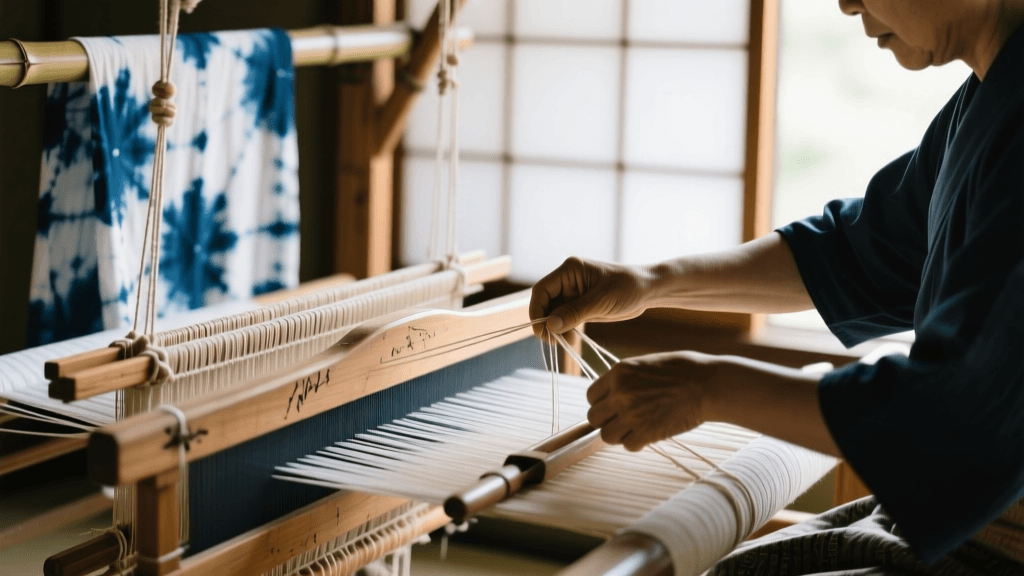
To truly understand the sensory experience of the kimono, one must explore the vast tactile landscapes created by traditional Japanese weaving techniques. The texture of a kimono is determined by the preparation of the yarn (whether it is tightly twisted, left raw, or dyed before weaving) and the loom setup. According to the comprehensive databases at Kogeijapan, the meticulous, region-specific twisting and weaving of threads are what give Japanese textiles their globally recognized, unmatched depth.
Below is a structured comparison of the most prominent kimono fabrics, detailing their unique sensory profiles for the modern wearer.
| Fabric Type | Weave / Technique | Acoustic Profile (Sound) | Tactile Feel (Texture) | Best Season & Use |
|---|---|---|---|---|
| Chirimen (Crepe) | Highly twisted weft yarns woven with a loose warp, creating a pebbled surface. | Loud, pronounced rustle. High friction creates a continuous, rich kinu-zure. | Bumpy, textured, slightly dry but deeply luxurious. Grips the skin gently. | Spring / Autumn. Ideal for formal and semi-formal occasions. |
| Oshima Tsumugi (Pongee) | Mud-dyed, hand-spun silk threads woven tightly in a plain weave. | Very quiet, muted. A soft, dull "shhh" sound rather than a crisp rustle. | Matte, nubby, earthy, and incredibly soft. Feels almost like fine cotton or wool. | Winter / Autumn. Perfect for casual, everyday wear and travel. |
| Ro (Summer Gauze) | Leno weave where warp threads are twisted around each other, creating sheer gaps. | Sharp, crisp, and airy. Produces a light "snapping" or "swishing" sound. | Cool, slightly stiff, breathable, and smooth. Slides effortlessly over the skin. | Mid-Summer (July/August). Essential for beating the humidity. |
| Sha (Thin Gauze) | Similar to Ro but with a more open, sheer structure and complex gap patterns. | Delicate and whispery. The lightest acoustic footprint of all silk weaves. | Ethereal, paper-thin, and crisp. Feels like wearing a cool breeze. | Peak Summer. Used for high-fashion and formal summer events. |
| Habutae (Plain Silk) | Tightly woven, un-twisted raw silk threads in a simple over-under pattern. | Smooth, fluid sliding sound. A quiet, continuous whisper. | Buttery soft, highly lustrous, and perfectly smooth. Zero friction. | Year-round (mostly as linings or undergarments). |
The Hidden Architecture: Nagajuban and Koshihimo
While the outer kimono (uwagi) receives all the visual glory, the true engine of the kimono’s sensory experience lies hidden beneath. The nagajuban (the under-kimono) and the koshihimo (the long, narrow ties used to secure the garment) are critical to both the tactile comfort and the acoustic output of the ensemble.
In 2026, there is a fierce debate among kimono purists and modern innovators regarding the material of the nagajuban. Traditionalists insist on a silk nagajuban because the friction between the silk undergarment and the silk outer kimono is what generates the most authentic, resonant kinu-zure. When you walk, the two layers of silk rub together, creating that iconic rustle. However, modern washable synthetics and advanced bamboo-blends have become incredibly popular for their ease of care and moisture-wicking properties. While these 2026 high-tech fabrics offer superior comfort in humid climates, they fundamentally alter the acoustic profile of the kimono, often dampening the sound and creating a softer, almost inaudible glide.
Similarly, the koshihimo ties, traditionally made of stiff, un-dyed silk or cotton, create localized pressure points that force the outer kimono to bunch and fold in specific ways. These intentional folds increase the surface area of fabric rubbing against itself, thereby amplifying the sound. A skilled kitsuke (kimono dresser) in 2026 knows exactly how to tie these sashes to optimize both the silhouette and the acoustic resonance of the wearer's movements.
Experiencing the Sensory Kimono in 2026
If you are looking to immerse yourself in the tactile and acoustic world of the kimono this year, the landscape of purchasing and renting has evolved to cater specifically to sensory seekers. Cultural preservation initiatives supported by organizations like the Japan Foundation have increasingly highlighted the intangible, experiential aspects of traditional crafts, leading to a boom in interactive, sensory-first retail environments.
When visiting a high-end kimono boutique in Kyoto's Nishijin district or Tokyo's Nihonbashi in 2026, do not just look at the bolts of fabric (tanmono). Engage with the material. Ask the shopkeeper if you can perform a "sound test." Gently rub a folded section of the Chirimen between your thumb and forefinger near your ear to hear the high-frequency rustle. Contrast this by running your hand over a bolt of Oshima Tsumugi to feel its matte, earthy warmth and notice the profound acoustic silence it offers.
For those renting, seek out "mindful kitsuke" studios. These emerging 2026 businesses focus on the meditative process of dressing. They utilize traditional silk nagajuban and take the time to explain the sensory shifts you will feel as each layer is added. They encourage clients to walk around the studio, listening to the hem of the kimono swish against the ankles, and feeling the deliberate, grounding weight of the obi (sash) securing the core.
Conclusion
The kimono is far more than a beautiful garment to be photographed; it is an acoustic instrument and a tactile landscape that responds to the human body. As we embrace the sensory-focused fashion movements of 2026, taking the time to understand the kinu-zure of silk, the pebbled grip of Chirimen, and the quiet warmth of Tsumugi allows us to connect with Japanese tradition on a profoundly intimate level. By engaging all our senses, we do not just wear the kimono—we experience it, honoring centuries of textile mastery with every step we take.