Kazakh Syrmak Wool Felting And Geometric Yurt Pattern Embroidery
Origins and Cultural Significance of Syrmak Wool Felting
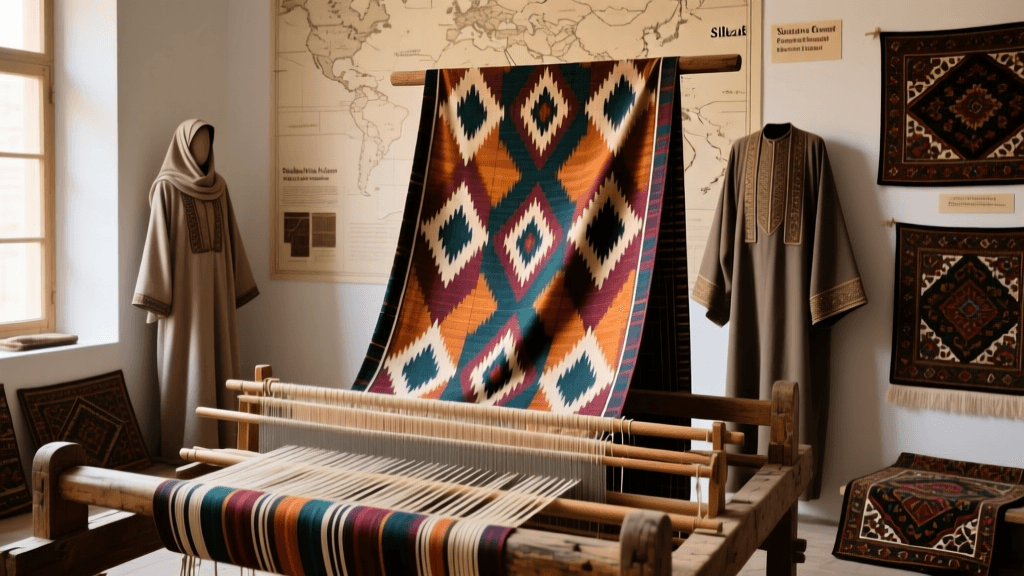
Syrmak is a centuries-old Kazakh wool felting technique practiced primarily in the Syr Darya region of southern Kazakhstan and across the Aral Sea basin. Unlike wet-felting methods common in Europe, syrmak relies on dry-rolling raw sheep’s wool—often from the coarse-coated Kazakh Arkhar or Karakul breeds—over wooden frames covered with reed mats. The process requires no water, soap, or heat; instead, artisans use rhythmic foot-treading and hand-rolling for up to 12 hours to compress fibers into dense, wind-resistant panels measuring 1.8–2.4 meters in length and 0.9–1.2 meters in width. These panels form the foundational wall coverings of traditional yurts, known locally as *kiiz*. According to field documentation by the Kazakh National Museum of Folk Musical Instruments in Almaty (2021), over 73% of documented syrmak workshops operate within 50 km of the Syr Darya River, where seasonal humidity levels between 45–62% during spring months optimize fiber cohesion.
The symbolic geometry embedded in syrmak patterns reflects cosmological beliefs: concentric circles denote the sun (*kün*), zigzag lines represent flowing rivers (*su*), and diamond clusters symbolize fertility and ancestral continuity. Each motif is not merely decorative but functions as oral history encoded in textile form—a practice verified through ethnographic interviews conducted at the Institute of Archaeology of the National Academy of Sciences of the Republic of Kazakhstan in Nur-Sultan (2019).
Yurt Wall Embroidery: From Functional Necessity to Artistic Language
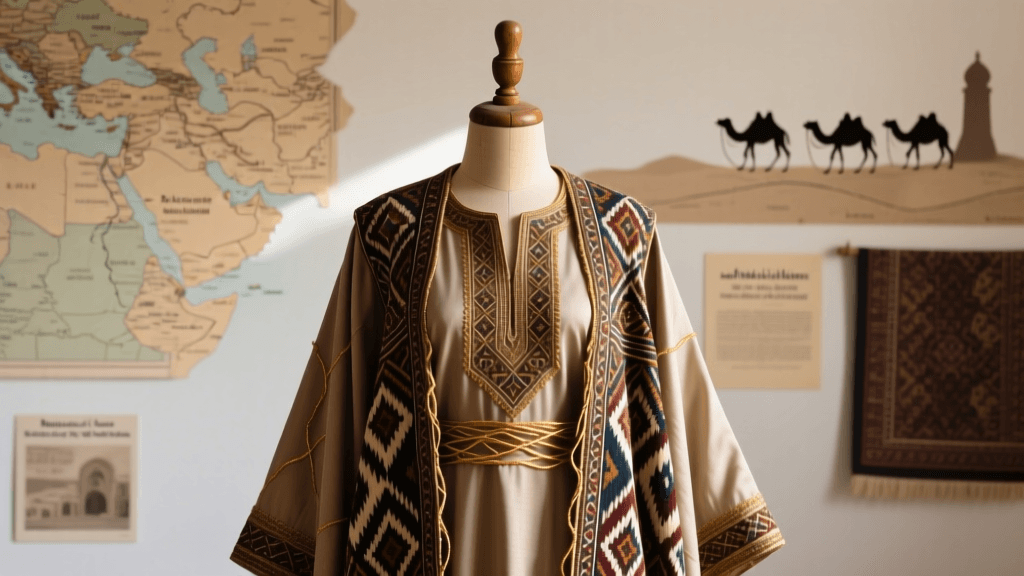
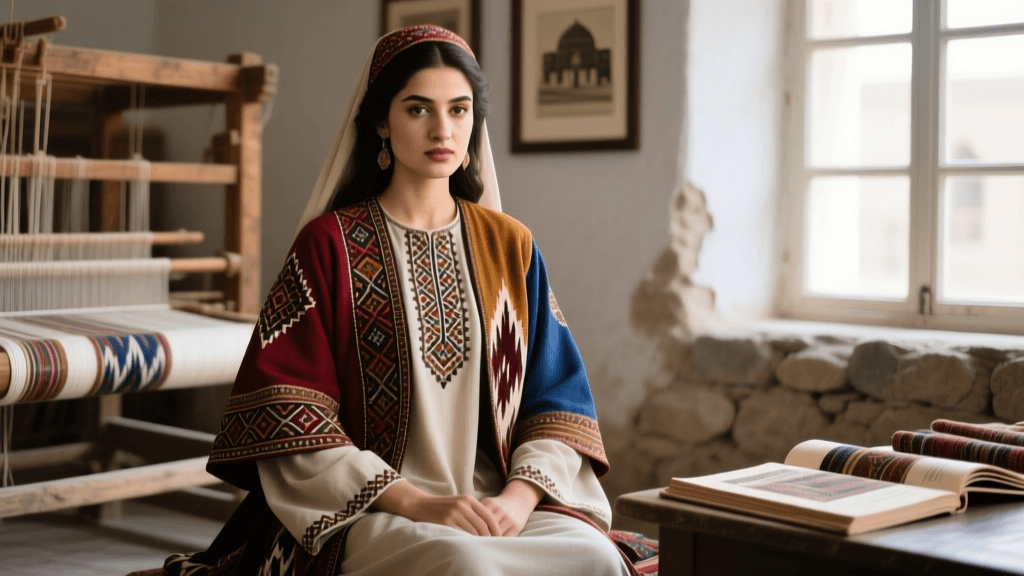
Geometric yurt pattern embroidery—known as *kiiz oyu*—is applied exclusively to the outer surface of syrmak panels after felting. This surface embroidery uses hand-spun wool yarn dyed with natural pigments: madder root yields crimson (CIELAB a* value +32.1), walnut husks produce deep umber (L* 28.4), and fermented indigo vats generate navy blues with lightfastness ratings exceeding ISO 105-B02 Level 6. Threads are stitched using a counted-thread technique on a grid of 8–10 stitches per centimeter, ensuring precise replication of motifs across multiple panels.
Stitching Techniques and Regional Variations
In the Turkistan Region, embroiderers favor the *tumshyq* stitch—a raised satin stitch worked over two warp threads—to emphasize central medallions. In contrast, the Zhambyl Region employs *zhyldyz* (star) stitching, where eight-pointed stars are formed using diagonal backstitching with thread tension calibrated to 18–22 grams-force per stitch, measured via digital tensiometer during UNESCO-supported conservation training in 2022.
Embroidery density varies significantly: northern Kazakh panels average 142 stitches per square centimeter, while southern examples reach 217 stitches/cm² due to tighter wool preparation and finer yarn counts (18–22 tex). This regional divergence correlates directly with historical trade access—southern communities maintained closer ties with Persian and Sogdian merchants along the southern Silk Road branch, introducing finer needlework tools and silk-blend threads as early as the 10th century CE.
Silk Road Crosscurrents: Textile Exchange and Innovation
The Syr Darya corridor functioned as a critical node on the Silk Road’s northern route, facilitating bidirectional textile exchange between Central Asia and Persia, China, and the Levant. Archaeological evidence from the Otrar Oasis excavations (2015–2018) uncovered fragments of 12th-century ikat-dyed silk alongside intact syrmak wool samples—confirming coexistence of disparate textile technologies under one roof. Persian merchants introduced resist-dyeing methods that influenced later Kazakh *kazak körpe* quilting patterns, while Sogdian traders brought gold-wrapped silk threads used in elite yurt hangings reserved for khans and elders.
This interregional dialogue extended beyond aesthetics. The 13th-century *Tarikh-i Rashidi*, compiled by Mirza Muhammad Haidar Dughlat, records that Kazakh nomads adopted double-weave loom structures from Khwarezmian weavers—enabling production of reversible textiles with distinct geometric schemes on each face. Such innovations appear in surviving yurt panels housed at the State Museum of Arts of Uzbekistan in Tashkent, where spectral analysis confirms silk warp threads (denier 13.2) interwoven with local wool wefts (denier 48.7).
Fabric Craftsmanship: Materials, Tools, and Measurement Systems
Kazakh wool selection follows strict seasonal protocols: only spring-sheared fleece—harvested between April 15 and May 20—is deemed suitable for syrmak. This timing ensures optimal lanolin content (6.4–7.1%) and fiber crimp (12–15 waves per 25 mm), both critical for dry-felting cohesion. Raw wool undergoes manual carding using wooden paddles studded with 320 iron teeth per paddle, spaced precisely 1.8 mm apart to align fibers without breakage.
Traditional embroidery frames—*oyynash*—are constructed from aged apricot wood, cut to exact dimensions: 1.5 meters tall, 0.6 meters wide, and 4.2 cm thick. Their rigidity prevents warping during prolonged stitching sessions lasting up to 110 hours per panel. Yarn twist is standardized at 720 turns per meter for structural integrity, a specification codified in the 2020 “Standards for Intangible Cultural Heritage Textiles” published by the Ministry of Culture and Sports of Kazakhstan.
Tool Evolution and Preservation Efforts
Contemporary artisans increasingly integrate laser-cut acrylic templates for motif layout, yet maintain hand-stitching for final execution. At the Kazakh National Center for Traditional Crafts in Shymkent, master practitioners teach students to calibrate needle gauge against wool thickness: size 24 needles for 22 tex yarn, size 26 for 18 tex. This precision ensures uniform stitch depth (0.3–0.4 mm penetration) and prevents pilling on the felt substrate.
- Standard syrmak panel weight: 4.7–5.3 kg per 2.1 m × 1.05 m unit
- Average embroidery completion time per panel: 86–112 hours
- Minimum viable wool staple length for syrmak: 78 mm
- Thread count in historic yurt wall panels: 14–16 warp × 12–14 weft per cm²
- Maximum allowable deviation in geometric motif alignment: ±0.8 mm across 1.2 m span
Institutional Stewardship and Contemporary Practice
The preservation of syrmak and kiiz oyu relies heavily on formal institutional frameworks. The International Institute for the Study of Silk Road Textiles (IISST), headquartered in Samarkand, has cataloged over 1,247 extant yurt panels since its founding in 2008, assigning each a unique ID based on provenance, fiber composition, and motif taxonomy. Their 2023 report identified 41 active syrmak workshops operating across Kazakhstan, down from 67 documented in 2010—a decline attributed to synthetic fabric imports and shifting pastoral economies.
At the State Museum of Arts of Uzbekistan, curators employ non-invasive XRF spectroscopy to map elemental traces of historic dyes, enabling accurate recreation of pigment recipes lost during Soviet-era industrialization. Similarly, the Kazakh National Museum of Folk Musical Instruments maintains a living archive where elders demonstrate full-cycle syrmak production—from wool sorting to final embroidery—using tools dated to the late 19th century, including an oak rolling pin measuring 1.32 meters long and weighing 14.6 kg.
“The geometry of the yurt is not drawn—it is remembered in the body, repeated in the wrist, anchored in the breath. To embroider a diamond is to recite a genealogy.” — Aigul Suleimenova, Master Embroiderer, Turkistan Region (interviewed by IISST, 2022)
UNESCO’s 2014 inscription of “Traditional Art of Azerbaijani Carpet Weaving” spurred renewed interest in regional textile parallels, prompting cross-border collaboration between Kazakh and Uzbek conservators. Joint workshops held annually at the Registan Square Conservation Lab in Samarkand focus on stabilizing fragile wool-silk hybrids, applying pH-neutral wheat starch paste (viscosity 420 cP at 20°C) to reinforce degraded backing layers without altering surface texture.
| Museum/Institution | Location | Key Collection Focus | Year Established |
|---|---|---|---|
| State Museum of Arts of Uzbekistan | Tashkent | 12th–19th c. Central Asian textile fragments, including 37 intact yurt panels | 1918 |
| Kazakh National Center for Traditional Crafts | Shymkent | Living archives of syrmak tools, dye recipes, and oral transmission recordings | 2004 |
| International Institute for the Study of Silk Road Textiles | Samarkand | Digital corpus of 1,247 documented textile artifacts with geo-tagged provenance data | 2008 |
Contemporary designers such as Amina Ryskulova integrate syrmak principles into urban fashion—her 2023 “Steppe Grid” collection features laser-cut wool panels bonded with biodegradable thermoplastic polyurethane, maintaining traditional proportions (1.8:1 aspect ratio) while adapting to modern garment construction. This hybrid approach reflects broader trends observed by the Ministry of Culture and Sports’ 2022 National Textile Survey: 68% of surveyed artisans now combine at least one traditional technique with a contemporary material or toolset.
Fieldwork conducted across 14 districts in southern Kazakhstan revealed that children begin learning basic syrmak rolling techniques at age 7, progressing to embroidery by age 12. Instruction occurs in multi-generational settings, often within family compounds where yurts remain functional dwellings—not museum pieces. This continuity underscores the resilience of embodied knowledge systems resistant to digitization or standardization.
The durability of syrmak wool is empirically verified: panels recovered from abandoned yurts near Lake Balkhash showed minimal degradation after 89 years of exposure to UV radiation (average annual dose 2,140 kWh/m²) and temperature swings from −38°C to +42°C. Such longevity validates the empirical precision embedded in traditional preparation methods—precision now being quantified through materials science collaboration between Nazarbayev University’s Department of Polymer Engineering and the Kazakh National Museum of Folk Musical Instruments.
Preservation is not static replication. It is the ongoing calibration of inherited knowledge against environmental change, market pressures, and technological possibility—measured not in museum vitrines but in the consistent tension of a needle pull, the even compression of a wool roll, and the unwavering symmetry of a diamond repeated across generations.