Kabuki, Noh & Bunraku Theater Kimono Costumes 2026
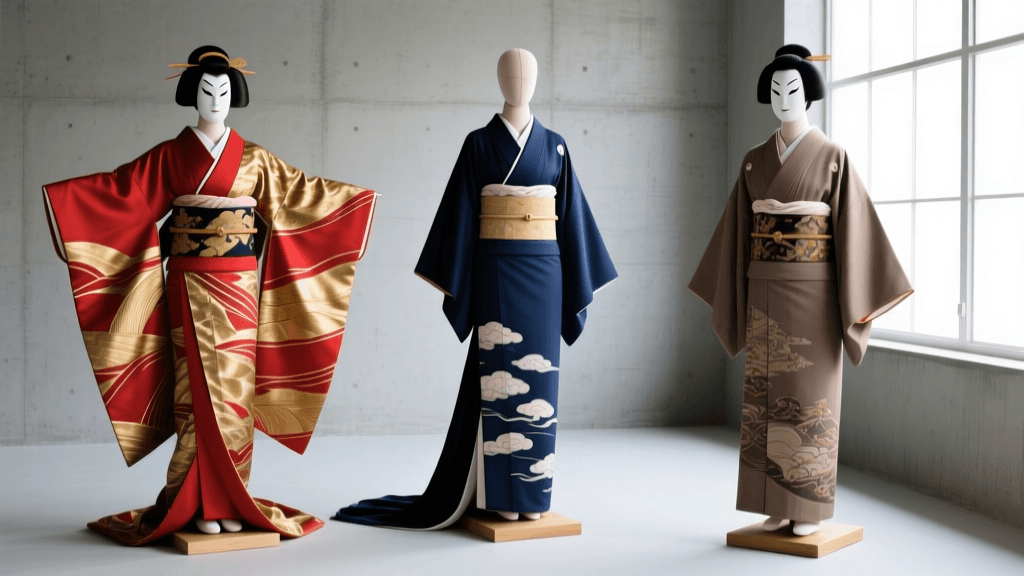
The Living Textiles of Japanese Classical Theater
When we discuss traditional Japanese garments, the conversation often centers on everyday historical wear, formal occasions, or seasonal festivals. However, some of the most breathtaking, technically complex, and culturally significant kimonos ever created were designed not for the streets of Kyoto or Tokyo, but for the stage. As we navigate the cultural landscape of 2026, the intersection of ancient textile arts and modern preservation has brought renewed global attention to the theatrical costumes of Japan. The garments used in classical Japanese theater are not merely clothing; they are vital storytelling devices, structural engineering marvels, and canvases of profound symbolism.
Understanding the distinctions between the costumes of Noh, Kabuki, and Bunraku requires a deep dive into the specific performance mechanics, philosophical underpinnings, and visual requirements of each art form. In 2026, with advanced digital archiving and AI-assisted textile restoration becoming standard in Japanese museums, collectors and enthusiasts have unprecedented access to the intricate details of these stage garments. This guide explores the unique kimono traditions of Japan's three major classical theaters, offering actionable insights for collectors, theatergoers, and textile historians.
Noh Theater: The Weight of Spirits and Karaori Brocades
Noh theater, dating back to the 14th century, is defined by its minimalist stage, slow, deliberate movements, and the profound concept of yugen (mysterious, subtle beauty). The costumes in Noh, known collectively as shozoku, are designed to obscure the actor's physical form, transforming them into deities, spirits, or demons. According to the National Theatre of Japan's Noh Archives, the garments are intentionally constructed to be heavy and voluminous, forcing the actor to move with a grounded, gliding grace that is essential to the Noh aesthetic.
The most iconic of these garments is the karaori, a stiff, heavily brocaded outer robe woven with gold and silver threads, often featuring motifs of pine, bamboo, plum blossoms, or mythical creatures. Unlike the soft, draping silks of everyday kimono, a high-quality Noh karaori is woven in the Nishijin district of Kyoto using techniques that make the fabric almost rigid. The weight of a full Noh costume, including the inner layers (kitsuke), the wide divided skirt (hakama), and the karaori, can exceed 15 kilograms (33 pounds).
Another critical Noh textile is the surihaku, a garment where gold or silver leaf is pressed directly into the fabric using a specialized paste, creating a brilliant, reflective surface that catches the dim, natural light of the traditional Noh stage. In 2026, the preservation of surihaku is a major focus for textile conservators, as the metallic leaf is highly susceptible to flaking. Collectors looking at antique Noh garments must be acutely aware of the structural integrity of these metallic applications, as restoration costs for authentic Edo-period surihaku have surged past $12,000 USD in recent auction cycles.
Kabuki: Extravagance, Hikinuki, and Visual Spectacle
If Noh is the theater of subtle shadows, Kabuki is the theater of blinding light and explosive drama. Emerging in the early Edo period as a popular, avant-garde entertainment form, Kabuki demands costumes that project to the back of massive, multi-tiered theaters. The National Theatre of Japan highlights that Kabuki costumes (isho) are characterized by their bold color palettes, exaggerated silhouettes, and ingenious mechanical constructions designed to facilitate rapid on-stage transformations.
The most famous of these mechanical costume techniques is hikinuki. During a dramatic climax, an actor will strike a powerful pose (mie), and stagehands dressed in black (kuroko) will simultaneously pull specific basting threads. In a fraction of a second, the outer kimono falls away or flips inside out to reveal a completely different color and pattern underneath, symbolizing a sudden change in the character's emotion, allegiance, or supernatural nature. To achieve this, Kabuki kimonos are constructed with specialized hidden ties and looser basting stitches in strategic areas, unlike the permanent, tight stitching of formal wear.
Textile-wise, Kabuki relies heavily on elaborate yuzen dyeing, heavy metallic embroidery, and shibori (tie-dyeing) to create massive, sweeping patterns that can be read from a distance. The kosode (the precursor to the modern kimono) worn by Kabuki actors often features incredibly long, trailing sleeves and exaggerated collars. In 2026, contemporary Kabuki productions at Tokyo's Kabukiza Theatre continue to commission new, custom-woven textiles for premier performances, with a single lead actor's wardrobe for a new play often costing upwards of $40,000 USD to produce, utilizing master weavers and dyers from across Japan.
Bunraku: Engineering the Illusion of Scale
Bunraku, Japan's traditional puppet theater, presents a unique set of challenges for kimono construction. The puppets, which are roughly two-thirds to three-quarters the size of a human, are operated by three visible puppeteers who manipulate the head, left arm, and right arm/legs. The Bunraku Association notes that the costumes must not only fit the wooden armature of the puppet but also accommodate the hands and arms of the puppeteers hidden within the fabric.
To achieve this, Bunraku kimonos are structurally split and modified. The garments are designed with hidden openings, extended armholes, and specialized internal rigging that allows the main puppeteer (the omozukai) to manipulate the head and right arm without the fabric bunching or tearing. The scale of the patterns on Bunraku textiles is also carefully considered; because the puppet is smaller than a human, the motifs on the kimono are slightly reduced in scale to maintain the illusion that the audience is watching a full-sized human actor.
Despite their smaller size, Bunraku costumes are made from the same luxurious, heavy silks as Kabuki garments, featuring rich brocades and vibrant dyes. The weight and stiffness of the fabric are actually utilized by the puppeteers to create the illusion of the puppet's body mass and the natural drape of clothing in motion. When a Bunraku puppet weeps, the puppeteer manipulates the heavy silk sleeves to mimic the trembling of human shoulders, a feat that requires the textile to have the exact right balance of stiffness and fluidity.
2026 Comparative Analysis: Stage Garments at a Glance
For collectors, curators, and theater enthusiasts, understanding the functional and material differences between these three theatrical forms is essential. The following table outlines the primary characteristics of Noh, Kabuki, and Bunraku costumes as of the 2026 market and performance standards.
| Theater Form | Primary Outer Garment | Average Weight | Key Textile Technique | 2026 Antique Market Price (USD) |
|---|---|---|---|---|
| Noh | Karaori (Brocaded Robe) | 10 - 15 kg | Nishijin-ori (Tight Brocade), Surihaku (Metal Leaf) | $8,000 - $25,000+ |
| Kabuki | Kosode / Uchikake | 4 - 8 kg | Yuzen Dyeing, Heavy Embroidery, Hikinuki Rigging | $3,500 - $15,000 |
| Bunraku | Modified Kosode / Hakama | 2 - 4 kg (Scale adjusted) | Internal Rigging, Scaled Yuzen, Split Seams | $2,000 - $7,000 |
Textile Conservation and the 2026 Antique Market
The acquisition and preservation of theatrical kimonos have evolved significantly by 2026. Unlike standard vintage kimonos, which are often evaluated purely on the condition of the silk and the complexity of the dye, stage garments are evaluated on their historical provenance, their association with specific legendary actors or puppeteers, and the integrity of their mechanical modifications. A Kabuki kimono featuring intact, original hikinuki basting threads and stage-wear patina is often valued higher than a pristine, unworn garment of the same era, as the wear tells the story of its performative life.
Conservationists in 2026 are utilizing non-invasive spectral imaging to analyze the degradation of metallic threads in Noh karaori and the chemical breakdown of Edo-period indigo and safflower dyes in Kabuki costumes. For private collectors, it is highly recommended to store these heavy garments flat in acid-free, climate-controlled environments. Hanging a 15-kilogram Noh karaori on a standard kimono hanger will inevitably result in the tearing of the ancient silk shoulders due to the immense gravitational stress.
Where to Experience Theatrical Kimonos in 2026
For those looking to study these garments in person, 2026 offers several unparalleled opportunities. The Kabukiza Theatre in Tokyo's Ginza district remains the premier destination for live Kabuki, where the single-act hitomaku-mi tickets allow visitors to drop in and witness the spectacular costume changes. The theater's basement gallery frequently rotates exhibitions of the actual garments worn in current productions, allowing for close-up inspection of the embroidery and dye work.
For Noh, the National Noh Theatre in Sendagaya, Tokyo, features a dedicated exhibition space that explains the layering and symbolism of the shozoku. Meanwhile, in Osaka, the National Bunraku Theatre offers backstage tours and lobby exhibitions where the intricate internal rigging and scaled textiles of the Bunraku puppets are laid bare. Whether you are a textile artist seeking inspiration, a historian tracing Edo-period aesthetics, or a collector hunting for a masterpiece of Japanese weaving, the theatrical kimonos of Japan offer a profound, dynamic window into the soul of traditional Asian garment culture.