Jingle Dress Regalia 2026: Crafting & Ethical Sourcing
The Sacred Origins of the Jingle Dress
The Jingle Dress dance is one of the most visually and sonically striking traditions at modern powwows across North America. As we navigate the 2026 powwow circuit, the Jingle Dress remains a profound symbol of healing, resilience, and cultural pride. Originating from the Ojibwe (Anishinaabe) people in the early 20th century, the dress was born from a vision. According to oral history, a medicine man was given a vision of a dress that could heal his ailing granddaughter. When the dress was crafted and the girl danced in it, she was restored to health. The distinctive sound of the metal cones striking one another is said to mimic the sound of rain on a tin roof, a sacred element that calls upon the spirits for healing and purification.
Today, the Jingle Dress has transcended its Ojibwe roots and is danced by Indigenous women and Two-Spirit individuals from various tribes across the Americas. However, the core spiritual significance remains intact. In 2026, as the revitalization of Indigenous languages and traditional ecological knowledge continues to flourish, the creation of Jingle Dress regalia is deeply intertwined with movements toward sustainability, ethical sourcing, and the support of Native-owned enterprises.
The Anatomy of a Jingle Dress Regalia
To the untrained eye, the Jingle Dress might appear to be a single garment, but it is, in fact, a complex and comprehensive regalia set. A complete ensemble includes the dress itself, matching leggings, fully beaded moccasins, a shawl or cape, and often a feather fan. The base of the dress is typically constructed from high-quality broadcloth, satin, or taffeta, chosen for its durability and ability to hold the significant weight of the metal cones.
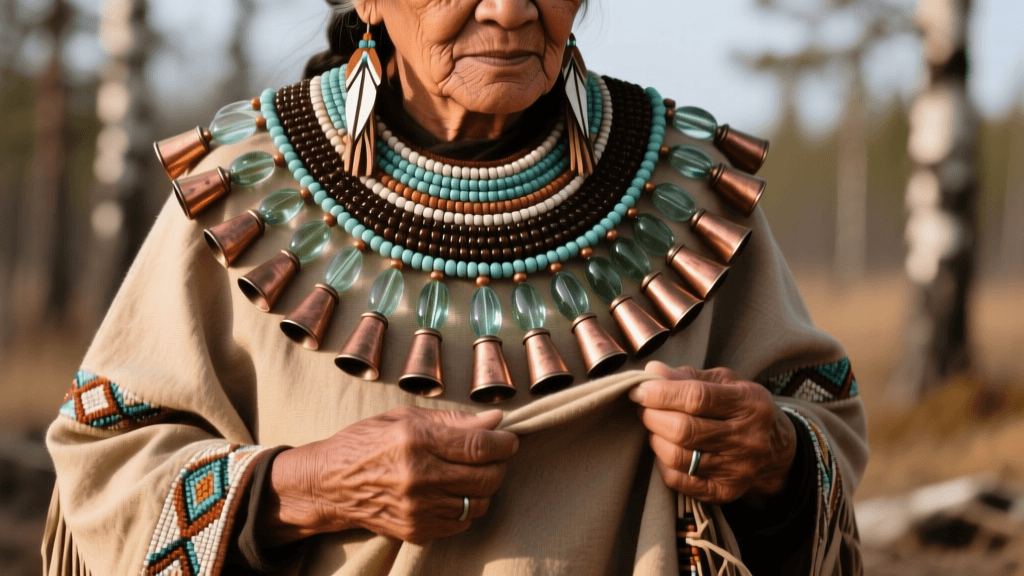
The defining feature, of course, is the 'jingles' or metal cones. Traditionally, these were hand-rolled from the lids of snuff cans. In 2026, while some traditionalists still hand-roll their own cones from raw sheet metal or recycled aluminum, many dancers purchase pre-stamped cones from Native metalworkers. A standard adult dress can feature anywhere from 300 to 700 cones, adding between 10 to 15 pounds of weight to the garment. The physics of the dress require the dancer to move with a specific, grounded footwork that keeps the dress swaying and the cones striking each other to produce the signature 'shhh-shhh' sound.
2026 Material Sourcing: Ethical and Sustainable Choices
One of the most significant shifts in the Indigenous textile arts community in 2026 is the move away from mass-produced, overseas import kits and toward ethical, Native-sourced materials. The National Endowment for the Arts Heritage Fellowships has consistently highlighted the importance of passing down traditional crafts, and modern artisans are taking this to heart by building localized, sustainable supply chains.
When sourcing materials, it is vital to be aware of the Indian Arts and Crafts Act, which makes it illegal to misrepresent goods as being Native American-produced. In 2026, ethical powwow dancers prioritize purchasing cones, beads, and ribbons directly from Indigenous cooperatives, verified Native artisans on platforms like Eighth Generation, or local tribal trade posts. This ensures that the economic benefits of the thriving powwow industry remain within Native communities.
2026 Regalia Material Sourcing Guide
| Component | Traditional Material | 2026 Ethical / Sustainable Alternative | Estimated Cost (USD) | Sourcing Tip |
|---|---|---|---|---|
| Metal Cones (Jingles) | Rolled snuff can lids | Hand-stamped recycled aluminum from Native metalworkers | $0.40 - $0.80 per cone | Order in bulk from tribal cooperatives in the Great Lakes region. |
| Base Fabric | Wool broadcloth | Heavyweight sustainable cotton-canvas or deadstock taffeta | $25 - $45 per yard | Seek out Native-owned textile mills or eco-conscious fabric districts. |
| Ribbonwork Appliqué | Satin ribbons | Recycled polyester satin or naturally dyed silk ribbons | $8 - $15 per spool | Support Indigenous dyers using traditional plant-based colorants. |
| Beads (Yoke & Moccasins) | Czech glass size 11/0 | Matte-finish Czech glass or eco-resin alternatives | $4 - $7 per hank | Purchase from verified Native bead suppliers to ensure quality and authenticity. |
| Thread & Sinew | Animal sinew | Waxed synthetic sinew or heavy-duty recycled nylon | $10 - $20 per spool | Must be UV and friction-resistant to handle the weight of the cones. |
The Art of Ribbonwork and Appliqué
Ribbonwork is a hallmark of Woodlands and Plains Indigenous textile arts, and it plays a crucial role in the visual impact of the Jingle Dress. The appliqué involves layering contrasting ribbons to create intricate, geometric patterns that border the hem, sleeves, and yoke of the dress. In 2026, there is a renaissance in the use of traditional color theory. While neon and hyper-bright colors dominated the late 2010s, contemporary dancers are returning to the earthy, complex palettes of the early 20th century—deep ochres, forest greens, navy blues, and rich burgundies—often accented with metallic-lined beads that catch the arena lights.
The mathematical precision required for ribbonwork cannot be overstated. Artisans must calculate the exact yardage needed to ensure that the geometric steps and curves align perfectly at the seams. According to exhibitions documented by the Heard Museum, the evolution of ribbonwork reflects a dynamic blend of historical adaptation and modern artistic expression, transforming European trade goods into distinctly Indigenous visual languages.
Beadwork Integration: Yokes and Moccasins
No Jingle Dress regalia is complete without its accompanying beadwork. The yoke of the dress and the matching moccasins are typically adorned with intricate, symmetrical floral or geometric designs. The 'lazy stitch' (or lane stitch) and the 'appliqué stitch' (or spot stitch) are the two primary techniques utilized. In 2026, beadworkers are increasingly experimenting with 3D beadwork techniques, raising certain elements of the floral patterns to give the yoke a sculptural, textured appearance.
Sizing 11/0 and 13/0 Czech glass beads remain the gold standard due to their uniformity and vibrant color palette. However, artisans are now incorporating metallic and dichroic beads to add a modern luminescence to traditional Ojibwe floral motifs. The beading process is immensely time-consuming; a fully beaded yoke and matching moccasin set can take upwards of 300 to 500 hours of meticulous hand-stitching.
Step-by-Step: Attaching the Cones
The process of attaching the jingles is a test of patience and physical endurance. The cones are not sewn directly to the fabric; rather, they are attached via small loops of ribbon, leather, or heavy thread. This flexibility is what allows them to swing and strike one another.
- Step 1: Pattern Mapping. The artisan marks the dress with chalk or a water-soluble pen, creating a grid or chevron pattern. Cones are typically spaced about one inch apart, both horizontally and vertically.
- Step 2: Threading the Cones. Using a heavy-duty upholstery needle and waxed nylon thread, the crafter passes the needle through the top loop of the metal cone, then through the fabric, and back down through a small ribbon tie.
- Step 3: Securing the Knot. Each cone is individually knotted on the inside of the dress to ensure that if one thread snaps during a vigorous dance routine, the dancer does not lose multiple cones.
- Step 4: Weight Distribution. Because the hem of the dress bears the brunt of the weight, the bottom rows are often reinforced with an inner lining of heavy canvas to prevent the delicate outer fabric from tearing.
Powwow Etiquette and Cultural Protocol in 2026
As the popularity of powwows continues to grow, drawing diverse crowds of spectators globally, understanding cultural protocol is more important than ever. The most critical rule to remember is that Native American traditional clothing is referred to as 'regalia,' never a 'costume.' A costume implies a disguise or a performance for Halloween; regalia is a sacred, deeply personal expression of identity, lineage, and spiritual belief.
When attending a powwow in 2026, spectators must never touch a dancer's regalia. The oils from human hands can tarnish delicate beadwork and soil vintage fabrics. Furthermore, always ask for explicit permission before taking photographs of a dancer, especially outside of the Grand Entry or designated dance competitions. Some items of regalia may have specific ceremonial restrictions regarding when and where they can be photographed. The Smithsonian National Museum of the American Indian provides excellent educational resources for the public on how to respectfully engage with Indigenous cultures and traditions at public events.
Conclusion
The Jingle Dress is far more than a beautiful garment; it is a living, breathing entity that carries the prayers, healing intentions, and artistic brilliance of Indigenous peoples. As we move through 2026, the dedication of Native artisans to ethical sourcing, sustainable textiles, and the preservation of ancestral techniques ensures that the Jingle Dress will continue to heal and inspire for generations to come. Whether you are a seasoned dancer, an emerging beadworker, or a respectful observer, honoring the profound history and meticulous craftsmanship of the Jingle Dress regalia is essential to celebrating the vibrant tapestry of Indigenous cultures in the Americas.