Exploring Traditional Japanese Geta And Zori Craft 2026
The Resurgence of Japanese Footwear Craft in 2026
In the vibrant global fashion landscape of 2026, the rhythmic karakoro sound of wooden Geta and the subtle elegance of woven Zori have experienced an unprecedented renaissance. No longer confined to summer festivals or strict ceremonial dress, traditional Japanese footwear has crossed over into everyday streetwear, high fashion, and sustainable lifestyle circles. As consumers increasingly seek out artisanal, handcrafted goods with deep cultural roots, the meticulous craft of Geta and Zori making has captured the attention of designers and heritage enthusiasts worldwide.
At the heart of this revival is a profound respect for the artisans who carve the wooden bases and weave the intricate straps. In 2026, the fusion of ancestral techniques with modern sustainable practices has redefined what it means to wear traditional Japanese footwear. This comprehensive guide explores the anatomy, craftsmanship, and modern styling of Geta and Zori, offering a deep dive into the heritage that continues to walk confidently into the future.
The Anatomy of Traditional Japanese Footwear
To truly appreciate the craftsmanship, one must first understand the structural components that differentiate these iconic styles. While often grouped together by the untrained eye, Geta and Zori serve distinct purposes and are constructed using entirely different methodologies.
Geta: The Elevated Wooden Clog
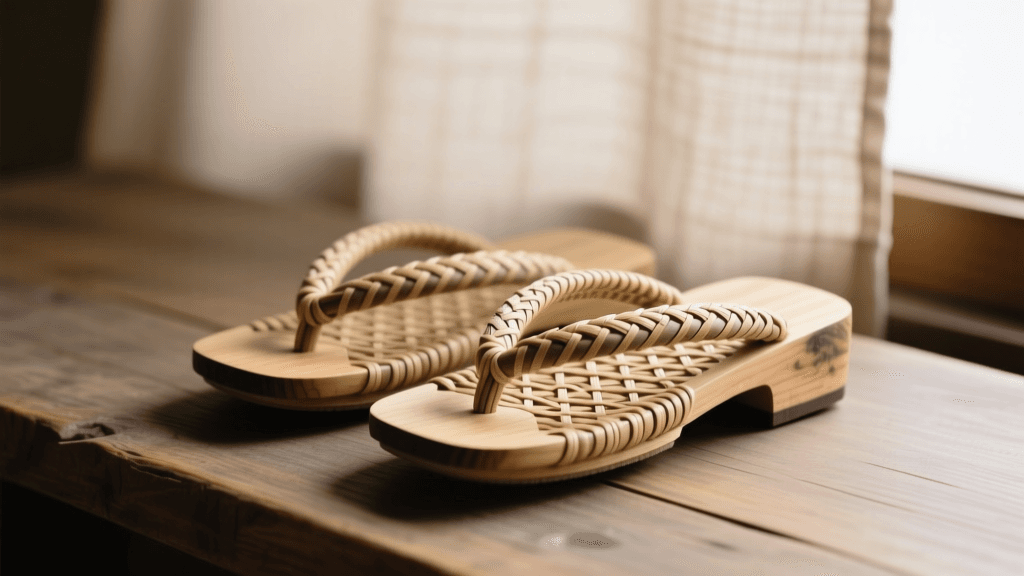
Geta are characterized by their elevated wooden base, known as the dai. The underside of the dai features one or two wooden supports called ha (teeth), which elevate the wearer above the ground. Historically, this elevation kept expensive silk kimonos clean from mud and rain. The feet are secured by the hanao, the cloth straps that pass between the toes.
Zori: The Flat, Versatile Sandal
Zori share the same hanao strap system as Geta but feature a completely flat base. Traditional Zori bases were woven from rice straw, but modern 2026 iterations utilize a variety of materials including lacquered wood, vinyl, leather, and compressed sustainable hemp. Zori are generally considered more formal than Geta and are the standard footwear worn with formal kimono ensembles.
The Art of the Dai: Sustainable Wood Carving
The foundation of any Geta is the dai. For centuries, the preferred material has been Paulownia wood, known in Japan as Kiri. Kiri is prized for its lightweight properties, natural resistance to moisture, and beautiful, pale grain. However, as environmental consciousness has peaked in 2026, the sourcing of Kiri wood has undergone a significant transformation.
According to the Japanese Ministry of Economy, Trade and Industry (METI), the preservation of traditional crafts now heavily emphasizes ecological sustainability. Artisans in regions like Oita and Shizuoka are increasingly utilizing reclaimed architectural Kiri and sustainably managed, fast-growing Paulownia plantations. This ensures that the harvesting of wood for Geta bases does not contribute to deforestation.
The carving process remains fiercely traditional. Master woodworkers use specialized hand planes (kanna) to shape the dai, ensuring the angle of the heel and the placement of the ha (teeth) perfectly distribute the wearer's weight. A poorly carved dai can cause severe foot fatigue, making the artisan's understanding of human ergonomics just as crucial as their woodworking skills. In 2026, some progressive workshops have begun applying bio-based, non-toxic lacquers to the wood, enhancing water resistance without relying on harmful synthetic chemicals.
Hanao Weaving: The Soul of the Footwear
If the wooden base is the body of the Geta, the hanao is undoubtedly its soul. The hanao consists of the main strap that passes between the big and second toe, and the side straps that connect to the base. Crafting and attaching the hanao is a highly specialized skill that requires immense finger strength and precision.
The process begins with selecting the fabric. While traditional cotton and velvet remain popular, 2026 has seen a surge in demand for upcycled textiles, vintage kimono silks, and durable hemp blends. The fabric is cut on the bias to allow for a slight stretch, then tightly rolled and stitched around a thick, resilient inner cord.
The Tying Technique
Attaching the hanao to the dai is a masterclass in tension management. The artisan pulls the straps through the three pre-drilled holes in the wooden base. The knot tied on the underside of the Geta must be incredibly tight to prevent slipping, yet positioned perfectly so it does not rub against the sole of the foot. A specialized tool called a hanao-kake is used to pull the straps with maximum force. When you purchase a custom pair from a renowned maker like Tsujiya Honten in Asakusa, Tokyo, the artisan will often adjust the tension and strap length to the exact millimeter based on the customer's foot shape and walking gait.
Comparing Traditional Footwear: Geta, Zori, and Setta
For those looking to invest in authentic Japanese footwear in 2026, it is essential to choose the right style for your intended use. Below is a structured comparison of the three primary types of traditional footwear.
| Feature | Geta | Zori | Setta |
|---|---|---|---|
| Base Material | Solid Wood (Kiri/Paulownia) | Straw, Leather, Vinyl, Wood | Woven Rush / Leather / Bamboo |
| Elevation | High (1 or 2 wooden teeth) | Flat | Flat (slight heel elevation) |
| Formality | Casual to Semi-Formal | Semi-Formal to Highly Formal | Smart Casual / Masculine Formal |
| Best Season | Summer / Rainy Season | Year-Round | Year-Round |
| 2026 Avg. Price | ¥12,000 - ¥35,000 | ¥8,000 - ¥50,000+ | ¥15,000 - ¥40,000 |
2026 Styling: Integrating Heritage into Modern Wardrobes
The most exciting development in 2026 is how traditional Japanese footwear has transcended the boundaries of the kimono. Global streetwear brands and independent Japanese designers are actively collaborating with Geta artisans to create hybrid styles. It is now common to see hand-carved Kiri Geta paired with wide-leg denim, oversized linen trousers, and avant-garde tech-wear.
For women, the trend of pairing brightly colored, patterned hanao Zori with minimalist, monochromatic maxi dresses has become a staple in Tokyo's Harajuku and Daikanyama districts. The contrast between the hyper-modern silhouette and the deeply traditional footwear creates a striking visual narrative. Furthermore, the rise of 'slow fashion' has made consumers more willing to invest in a ¥25,000 pair of handcrafted Geta, viewing it as a lifelong, repairable garment rather than a disposable seasonal trend.
Care and Maintenance for Longevity
Authentic Geta and Zori are investments that, with proper care, can last for decades. The natural materials used in their construction require specific maintenance routines, especially given the increasingly humid summers experienced in many parts of the world.
- Moisture Control: Never store Kiri wood Geta in damp, enclosed spaces. After wearing them in the rain, wipe the wood with a dry cloth and let them air dry in a well-ventilated area away from direct sunlight, which can cause the wood to crack.
- Hanao Cleaning: Cotton and silk hanao can accumulate dirt and oils from the skin. Use a soft-bristled brush and a mild, pH-neutral textile cleaner to gently spot-clean the straps. Avoid soaking the straps, as this can weaken the inner cord.
- Strap Replacement: One of the greatest advantages of traditional footwear is its modularity. When the hanao inevitably wears out or frays after years of use, you do not throw the footwear away. You simply take the wooden dai to a cobbler or a specialty shop to have a new hanao tied. This circular approach to footwear perfectly aligns with 2026's zero-waste fashion initiatives.
- Wood Nourishment: Once a year, apply a light coat of natural tung oil or specialized wood wax to the dai to replenish its natural oils and maintain its lustrous grain.
Experiencing the Craft Firsthand
For cultural travelers and fashion historians, witnessing the creation of these masterpieces is a profound experience. Institutions highlighted by the Japan National Tourism Organization (JNTO) frequently promote craft tourism, allowing visitors to step into the workshops of master artisans. In Kyoto and Tokyo, several heritage shops now offer 'Hanao Tying' workshops, where visitors can select their own fabrics and learn the foundational knots required to attach the straps to a pre-carved wooden base.
These immersive experiences not only provide a unique souvenir but also directly fund the transmission of these endangered skills to the next generation. As the older generation of master carvers retires, the financial support from global enthusiasts and craft tourists is vital to ensuring that the art of Japanese footwear craft survives and thrives.
Conclusion
The story of Geta and Zori in 2026 is one of remarkable resilience and adaptation. By honoring the meticulous craftsmanship of the past while embracing sustainable materials and modern styling, traditional Japanese footwear has secured its place in the contemporary wardrobe. Whether you are walking the ancient stone paths of Kyoto or navigating the concrete avenues of a modern metropolis, the clack of wooden Geta and the soft step of woven Zori serve as a beautiful, grounding reminder of the artistry that supports our every step.