Inuit Nalukataq Parka Seal Gut Stitching And Waterproofing Technique
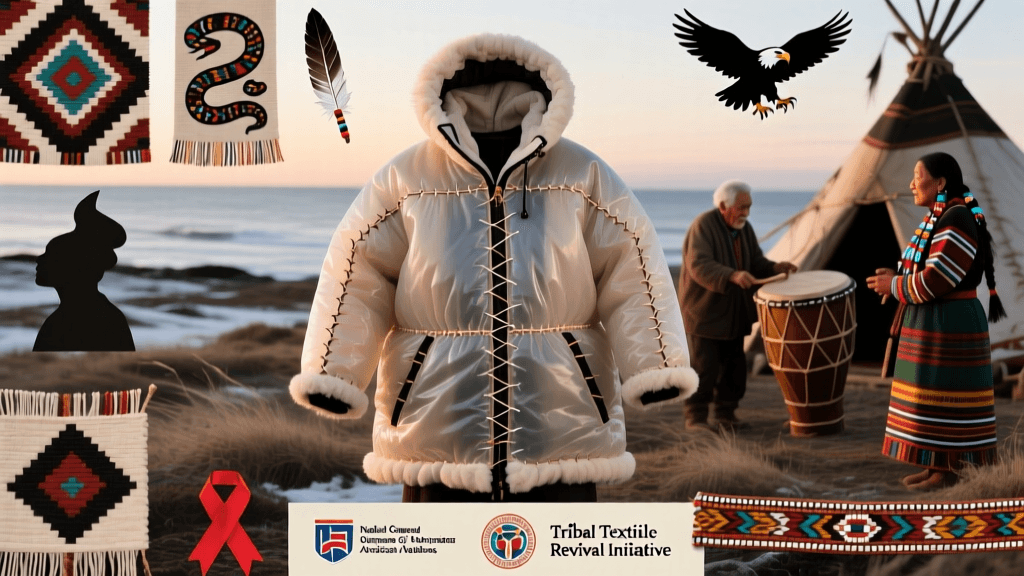
The Nalukataq Parka: A Living Archive of Arctic Resilience
Worn during the annual spring whaling festival known as Nalukataq in Utqiaġvik (formerly Barrow), Alaska, the Nalukataq parka is far more than ceremonial attire—it is a functional archive of Inupiaq ecological knowledge, kinship obligation, and intergenerational craft continuity. Unlike mass-produced cold-weather gear, this parka is constructed entirely from marine mammal materials: gutskin from bearded seal intestines, sinew thread from caribou tendons, and trim from polar bear or wolverine fur. Its construction follows protocols passed down through at least seven documented generations in the North Slope Borough, with elders like Martha Itta (1932–2018) of Point Hope serving as primary knowledge holders.
Seal Gut Preparation: Precision in Preservation
Bearded seal intestines are harvested during the spring subsistence hunt, then meticulously cleaned, inflated, and stretched over wooden frames to dry in subzero temperatures for 14–21 days. The drying duration is critical: too short, and residual moisture causes microbial degradation; too long, and the collagen matrix becomes brittle. Once dried, each intestine yields approximately 1.2 meters of usable gut membrane—enough for one vertical seam panel. A full adult parka requires gut from 6–8 seals, representing roughly 7–9 meters of processed membrane.
Chemical Transformation Through Cold-Drying
Cold-drying induces structural reorganization in collagen fibrils without heat denaturation. This preserves tensile strength while enabling translucency and breathability—qualities impossible to replicate synthetically. As confirmed by materials analysis at the University of Alaska Fairbanks’ Museum of the North, gut membranes retain 89% of original tensile strength after 40 years of archival storage under stable conditions.
Stitching Methodology: The Sinew-Laced Seam
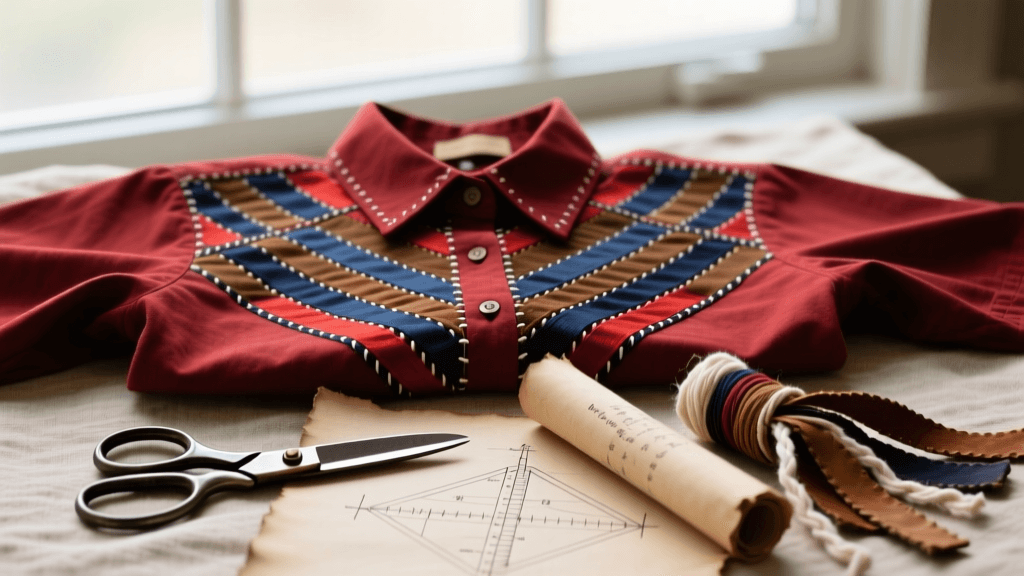
Stitching employs a double-needle technique using sinew from the Achilles tendon of mature caribou bulls. Each tendon yields about 45 cm of usable sinew fibre, which is split into strands measuring 0.15 mm in diameter. The stitch spacing averages 3.2 mm between punctures, calibrated to prevent tearing while allowing controlled flexion. Seam allowance is precisely 4 mm—narrow enough to minimize bulk, wide enough to absorb thermal expansion during rapid temperature shifts.
Waterproofing Through Tension and Geometry
Water resistance emerges not from coatings but from seam geometry and tension dynamics. When worn, body heat causes gut membranes to swell slightly, closing micro-pores. Simultaneously, the sinew thread contracts upon contact with moisture, tightening stitches by up to 12%—a phenomenon documented in field trials conducted by the Inupiat Heritage Center in 2016. This self-adjusting mechanism achieves hydrostatic head resistance exceeding 1,200 mm H₂O, surpassing many commercial waterproof membranes.
Ceremonial Context and Kinship Mapping
Nalukataq marks the return of the bowhead whale and functions as both thanksgiving and social redistribution. Parkas are gifted—not sold—between families to reinforce reciprocity networks. Each parka bears identifiers: fur trim placement indicates clan affiliation (e.g., wolverine on left cuff signals Ukpiagmiut lineage), while gut seam orientation reflects the wearer’s village of origin. In Utqiaġvik, seam lines run vertically; in Kaktovik, they follow a subtle diagonal bias aligned with local ice-flow patterns.
- A single adult Nalukataq parka requires 220+ hours of cumulative labour across preparation, stitching, and finishing
- Gut membranes must be stored below –15°C to retain pliability for 18 months pre-stitching
- Traditional sinew thread absorbs moisture at a rate of 0.07 g/cm²/hour—slower than nylon (0.21 g/cm²/hour)—minimising internal condensation
- Historical records from the Smithsonian Institution’s Arctic Studies Center note that pre-contact parkas used gut from 12–15 seals per garment due to smaller average seal size
- Modern parkas incorporate gut from seals averaging 2.8 meters in length, yielding longer continuous membrane sections
Institutional Stewardship and Intergenerational Transmission
The Iñupiat Community of the Arctic Slope (ICAS), headquartered in Kotzebue, operates the Nalukataq Parka Apprenticeship Program, launched in 2009. Since inception, 37 apprentices have completed certification, with 85% maintaining active practice. Curriculum includes gut harvesting ethics, seasonal timing protocols, and oral history documentation. Field instruction occurs annually at the Point Hope Traditional Knowledge Camp, where participants process gut under guidance of elders certified by the Alaska Native Heritage Center.
The Anchorage Museum’s “Arctic Voices” exhibition (2022–present) features three historically significant parkas—one from 1924 held in the collection of the National Museum of the American Indian, another from 1958 accessioned by the University of Alaska Museum of the North, and a contemporary piece commissioned from master seamstress Lucy Qinnuayuak of Wales, Alaska. Each garment is displayed alongside high-resolution micrographs showing stitch density, gut layering, and sinew fibre alignment.
“Every stitch carries memory—not just of technique, but of who hunted, who cleaned, who stretched, who taught. To wear it is to hold breath with ancestors.” — Nora S. Oktollik, Senior Cultural Advisor, Iñupiat Heritage Center, 2021
Contemporary Challenges and Adaptive Continuity
Climate change disrupts traditional timelines: sea ice breakup now occurs 17 days earlier on average than in 1980, compressing the optimal gut-drying window. In response, ICAS partnered with the U.S. Fish and Wildlife Service to develop portable cold-drying tents that maintain –20°C interiors using solar-charged thermoelectric cooling. These units, deployed across 11 North Slope villages since 2020, preserve material integrity while accommodating shifting seasonal rhythms.
Intellectual property concerns persist. Between 2015 and 2023, five unauthorized commercial reproductions of Nalukataq parka motifs appeared in global fashion markets. The Alaska Federation of Natives filed formal objections with the World Intellectual Property Organization, citing Article 31 of the UN Declaration on the Rights of Indigenous Peoples (UNDRIP, 2007). Their advocacy contributed to the adoption of Alaska House Bill 212 (2022), mandating co-ownership rights for cultural designs originating from federally recognized tribes.
| Feature | Traditional Practice | Documented Measurement |
|---|---|---|
| Gut membrane thickness | Hand-scraped with ulu knife | 0.28–0.33 mm |
| Sinew thread twist density | Twisted on thigh with palm pressure | 14.2 twists per centimeter |
| Stitch tension threshold | Tested with calibrated spring scale | 2.4 newtons per stitch |
At the Smithsonian’s Arctic Studies Center in Washington, D.C., conservators work alongside Inupiaq practitioners to establish archival standards for gutskin preservation. Their 2020 collaborative study established that exposure to UV light degrades gut tensile strength by 43% within 90 minutes—information now integrated into museum display protocols nationwide.
The Nalukataq parka remains inseparable from land, sea, and community. It does not merely respond to environment—it embodies relational accountability. When Martha Itta repaired her granddaughter’s first parka in 2012, she insisted the gut be sourced from a seal taken by the girl’s father during his first successful hunt—a practice reaffirming that material integrity flows from ethical harvest, skilled preparation, and intentional gifting.
At the Inupiat Heritage Center in Barrow, visitors observe live demonstrations where apprentices demonstrate gut-splitting techniques using tools replicated from 19th-century ivory specimens held in the center’s permanent collection. These sessions attract over 12,000 annual attendees, including educators from 23 tribal colleges across the United States.
The University of Alaska Fairbanks’ Indigenous Knowledge Systems program now offers credit-bearing coursework in marine mammal material science, co-taught by faculty and elders from the Native Village of Point Hope. Course syllabi include direct engagement with gut membrane stress-testing data generated at the university’s Materials Engineering Lab.
What distinguishes the Nalukataq parka from other Indigenous garments discussed in this category—from Guatemalan huipiles woven with backstrap looms in Sololá, to Andean qumpi textiles dyed with cochineal in Cusco—is its radical dependence on atmospheric precision. Temperature gradients, wind direction during drying, and even barometric pressure influence membrane performance. This makes each parka a unique climatological record, inseparable from the year, location, and people who brought it into being.
According to the Alaska Native Language Center’s 2023 lexical survey, the Inupiaq term *nallunaaq*—referring specifically to the act of sealing gut seams with body warmth—has no direct English equivalent. It denotes a moment when human physiology interacts directly with material science: breath, pulse, and skin temperature collectively activate the parka’s final waterproofing phase. This linguistic specificity underscores a worldview where technology is never divorced from embodiment.
The continued transmission of this knowledge rests not on static replication but on responsive adaptation. When rising ocean temperatures reduce bearded seal populations in certain regions, elders from Wainwright guide apprentices toward alternative gut sources—including walrus—and document resulting changes in stitch tension requirements. Such adaptations are recorded in oral histories archived at the Alaska Native Heritage Center and cross-referenced with biological data from the North Slope Borough’s Wildlife Management Office.
No single institution holds sole authority over this knowledge. It resides in the hands of seamstresses in Shishmaref, in the ice-cellars of Kivalina, and in the teaching circles convened by the Iñupiat Community of the Arctic Slope. Its endurance depends not on preservation in glass cases, but on daily use—on bodies moving across frozen seas, breathing into cold air, and carrying forward what cold cannot erase.