Hanfu on Global Runways 2026: Paris & Milan Trends
The 2026 Haute Couture Shift: Hanfu as Global Luxury
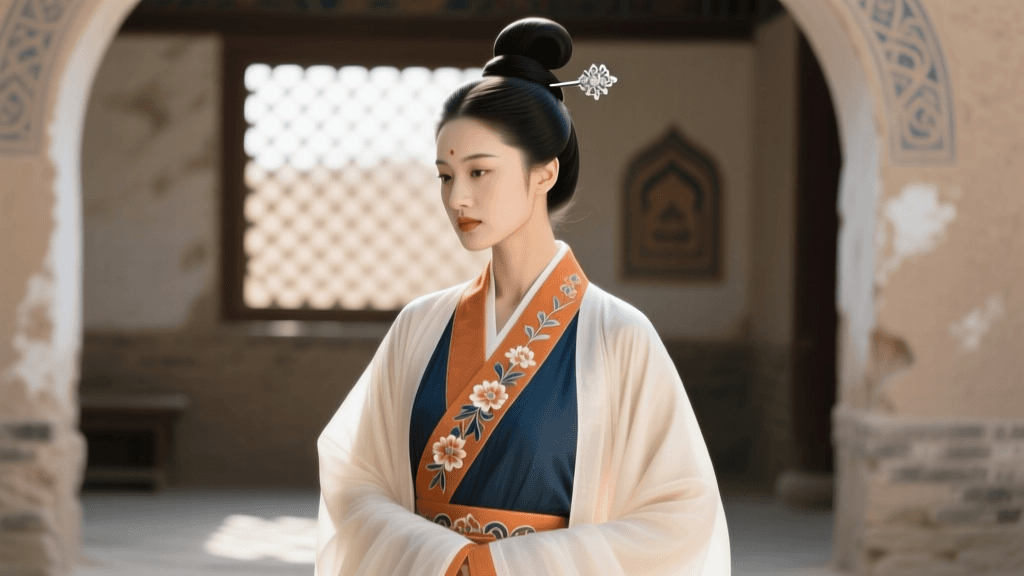
As the Spring/Summer and Fall/Winter 2026 fashion weeks conclude in Paris and Milan, a definitive shift has occurred in the global luxury landscape. Traditional Chinese garments, collectively known as Hanfu, have transcended niche streetwear and historical reenactment to become a dominant force on the world's most prestigious runways. No longer confined to regional showcases, Hanfu silhouettes, intricate weaving techniques, and philosophical approaches to draping are now being embraced by both heritage Chinese fashion houses and legacy European brands. In 2026, the integration of Hanfu into high fashion is characterized by a deep respect for historical accuracy combined with avant-garde tailoring, signaling a new era of cross-cultural sartorial excellence.
This year's international fashion weeks have highlighted a move away from superficial 'orientalist' motifs and toward a profound appreciation for structural authenticity. Designers are studying traditional flat-pattern cutting, the physics of silk pleating, and the historical significance of layering. According to recent industry analyses covered by Vogue Runway, the 2026 collections are heavily focused on the intersection of sustainability and heritage craftsmanship, making traditional Hanfu techniques more relevant than ever to the modern luxury consumer.
The Mamianqun: From Imperial Courts to Parisian Catwalks
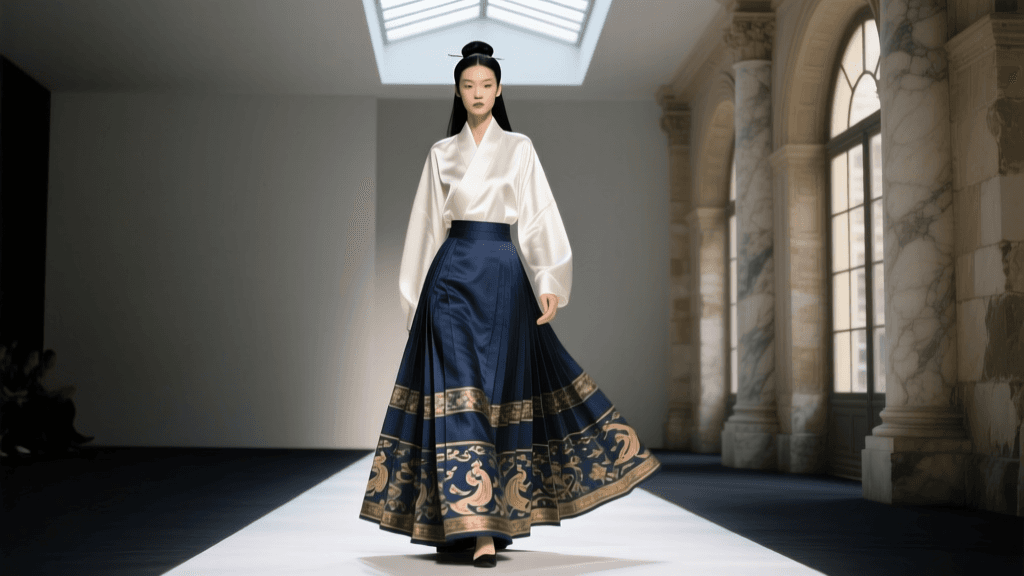
If there is one garment that has unequivocally conquered the 2026 runways, it is the Mamianqun, or 'horse-face' skirt. Originating in the Song Dynasty and reaching its zenith in the Ming Dynasty, this wrap-around skirt features flat front and back panels with intricately knife-pleated sides. In Paris this season, designers have reimagined the Mamianqun using modern jacquard looms and sustainable metallic yarns, creating skirts that catch the light with every step down the catwalk.
The structural brilliance of the Mamianqun lies in its dual-panel overlap, which allows for ease of movement while maintaining a modest, structured silhouette. In 2026, luxury houses are producing Mamianqun skirts with 24 to 32 micro-pleats per side, utilizing specialized memory-silk blends that hold their shape without the need for heavy chemical treatments. Paired with tailored Western blazers or traditional cross-collar blouses, the Mamianqun has become the ultimate statement piece for the global fashion elite, representing a perfect marriage of architectural tailoring and fluid elegance.
Key Hanfu Silhouettes Dominating 2026 Runways
1. The Cross-Collar (Jiaoling Youren) Revival
The Jiaoling Youren, characterized by a collar that crosses over the chest with the left side overlapping the right, is a foundational element of Hanfu. In Milan's Fall/Winter 2026 shows, this silhouette was adapted into heavy wool and cashmere outerwear. Designers have widened the collar bands, using contrasting silk brocades to frame the face, transforming the traditional inner garment into a commanding, structured overcoat that challenges Western lapel conventions.
2. Song Dynasty Minimalism and the Beizi Jacket
While Ming Dynasty opulence remains popular, 2026 has seen a massive surge in Song Dynasty minimalism. The Beizi, a long, open-front jacket with side slits and straight sleeves, has been adopted by avant-garde designers for its clean, vertical lines. Often layered over sheer silk organza and wide-leg trousers, the Beizi offers an ethereal, gender-fluid silhouette that aligns perfectly with the 2026 trend of relaxed, unrestrictive luxury.
3. Pibo Shawls and Ethereal Draping
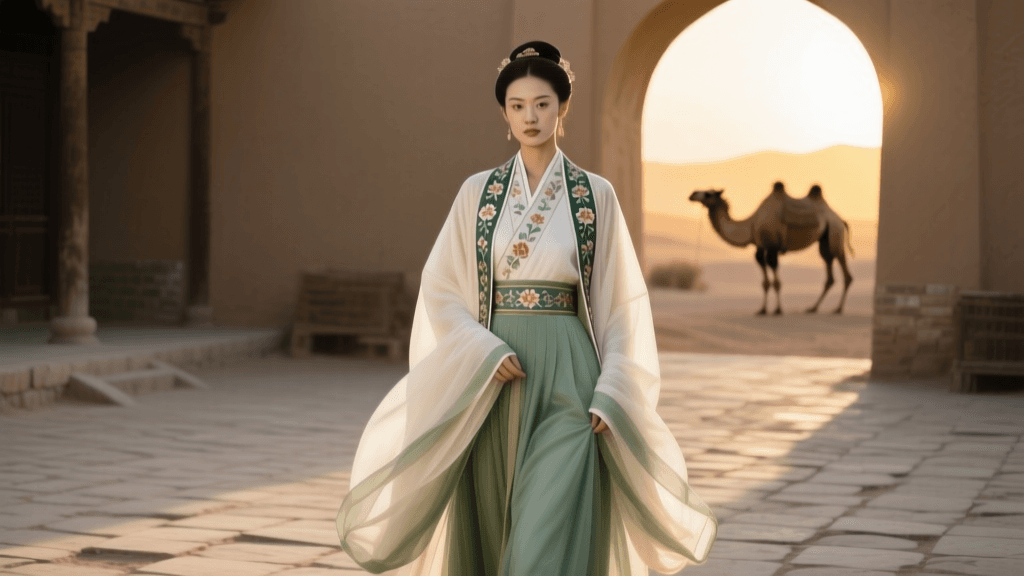
The Pibo, a long, flowing silk scarf draped over the arms and shoulders, has been elevated from a mere accessory to a central component of evening wear. Runway stylists in 2026 are using weighted Xiangyunsha (mud silk) Pibo to create dramatic, sculptural trains that trail behind models, mimicking the celestial aesthetics seen in ancient Dunhuang murals.
2026 Runway Trend Comparison: Ming vs. Song Influences
To understand the diverse applications of Hanfu on the 2026 runways, it is essential to compare the two primary historical dynasties inspiring modern designers. The following table breaks down how these distinct eras are being interpreted in contemporary high fashion.
| Feature | Ming Dynasty Inspiration (Opulence) | Song Dynasty Inspiration (Minimalism) |
|---|---|---|
| Key Garment | Mamianqun (Pleated Skirt), Aoqun (Jacket & Skirt) | Beizi (Open Jacket), Moxiong (Tube Top) |
| Silhouette | Structured, voluminous, A-line, heavily layered | Straight, columnar, fluid, elongated vertical lines |
| Runway Fabrics | Heavy Song brocade, gold-leaf jacquard, velvet | Sheer organza, lightweight crepe, raw linen-silk blends |
| Color Palettes | Jewel tones: ruby red, sapphire, emerald, gold | Muted earth tones: celadon, ivory, mist gray, bamboo |
| 2026 Styling | Paired with structured corsetry or sharp blazers | Layered over turtlenecks or worn as sheer dusters |
How to Adapt Runway Hanfu for Your 2026 Wardrobe
Translating the high-concept Hanfu seen in Paris and Milan into an everyday 2026 wardrobe requires a strategic approach to styling, proportion, and sourcing. Here is an actionable guide to incorporating these runway trends into your personal rotation.
- Invest in a Modern Mamianqun: For everyday wear, opt for a midi-length Mamianqun (approx. 75cm to 85cm) made from a polyester-silk blend or treated cotton. These are machine washable and hold their pleats during commutes. Expect to pay between $120 and $250 for high-quality, authentic construction from established heritage brands.
- Mix Eras and Cultures: The 2026 runway rule is 'contrast.' Pair a traditional, heavily embroidered Ming-style jacket with modern, wide-leg denim or tailored wool trousers. This grounds the historical piece and makes it appropriate for contemporary urban environments.
- Embrace the Cross-Collar Knit: Many contemporary knitwear designers are now producing Jiaoling Youren-style wrap sweaters in cashmere and merino wool. These provide the elegant, asymmetrical neckline of traditional Hanfu while offering the comfort and warmth required for modern climates.
- Accessorize with Subtlety: Instead of full historical hairpieces, opt for modernized buyao (step-shake) hairpins crafted from matte metals or carved jade. A single, well-crafted hairpin elevates a simple chignon, echoing the refined aesthetics seen on the Milan runways.
Sourcing Ethically: Supporting Heritage Artisans
As the global demand for Hanfu surges in 2026, the market has unfortunately seen an influx of mass-produced, culturally inaccurate garments. True luxury lies in authenticity and ethical sourcing. The preservation of traditional textile techniques, such as the intricate weaving of Song brocade and the labor-intensive dyeing of Xiangyunsha silk, relies heavily on consumer support. Institutions like the Metropolitan Museum of Art's Asian Art Department continuously highlight the historical significance and immense technical skill required to produce these textiles, underscoring their value as wearable art.
When purchasing Hanfu or Hanfu-inspired pieces this year, prioritize brands that transparently source their fabrics from heritage hubs like Suzhou and Hangzhou. Look for certifications of authentic intangible cultural heritage techniques. While a runway-accurate, hand-loomed Song brocade jacket may cost upwards of $2,500, the investment directly supports the artisans keeping these centuries-old traditions alive. By choosing quality over fast-fashion imitations, you participate in a global movement that respects, preserves, and celebrates the profound legacy of Asian traditional garments on the world stage.
Conclusion: A Lasting Sartorial Legacy
The presence of Hanfu on the global runways in 2026 is not a fleeting trend; it is a permanent recalibration of the fashion hierarchy. By honoring the structural genius of the Mamianqun, the philosophical elegance of the cross-collar, and the unparalleled artistry of Chinese silk weaving, the global fashion industry has finally recognized Hanfu not merely as historical costume, but as a living, breathing pillar of haute couture. As we move through 2026, the fusion of ancient Asian traditions with modern global aesthetics promises to deliver some of the most innovative and culturally rich fashion of the decade.