Modern Hanbok Red Carpet Trends: 2026 Fashion Media
The 2026 Red Carpet Shift: From Costume to Couture
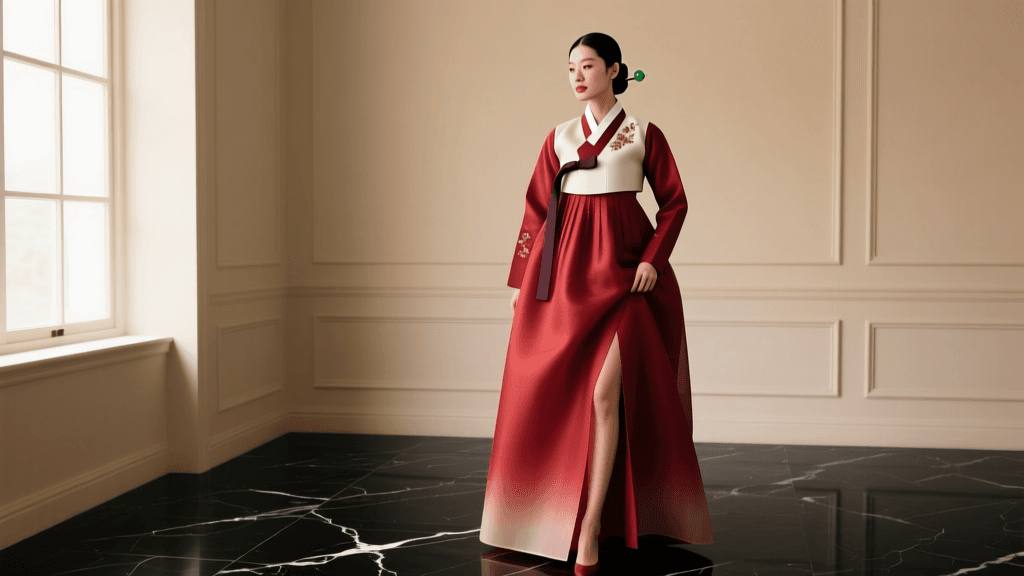
As we navigate the Spring/Summer 2026 global fashion weeks and the subsequent awards season, one distinct silhouette has moved from the periphery of cultural appreciation to the absolute center of high-fashion editorial styling: the modern Hanbok. No longer confined to historical dramas or traditional Korean holidays, the hanbok has been radically reimagined by top-tier global stylists for red carpets, Met Gala after-parties, and the pages of international fashion magazines. In 2026, the global fashion media consensus is clear—Asian traditional garments are not merely thematic costumes; they are foundational elements of modern luxury couture.
The integration of the hanbok into Western high-fashion spaces has been heavily documented by major publications, yet understanding how to actually wear, source, and tailor these pieces requires a deep dive into the garment's evolving architecture. According to the Victoria and Albert Museum's comprehensive guide to the Hanbok, the traditional garment is defined by its vibrant colors, simple lines, and lack of pockets, historically reflecting the social status and marital status of the wearer. Today, however, global fashion media has stripped away the rigid historical signifiers, focusing instead on the dramatic volumetric contrasts between the fitted upper body and the expansive lower half.
Deconstructing the 2026 Editorial Hanbok Silhouette
To replicate the looks seen on 2026 red carpets, one must understand the two primary components being manipulated by contemporary designers: the jeogori (upper jacket) and the chima (wrap skirt).
The Micro-Cropped Jeogori
Historically, the jeogori sat at the natural waist or slightly above. In 2026 editorial styling, the jeogori has been radically cropped, often ending 15 to 20 centimeters above the navel. This extreme cropping highlights the collarbone and creates a stark visual break before the high waistband of the skirt begins. Global stylists are currently favoring jeogori crafted from structured, heavy silk mikado or bio-fabricated peace silk, which holds the garment's architectural goreum (ribbon tie) in a rigid, sculptural bow rather than letting it drape softly.
The Architectural Chima
The chima in 2026 global media is all about volume and structural integrity. While traditional chimas rely on layers of petticoats to achieve their bell shape, modern red carpet iterations utilize built-in crinoline cages and stiffened organza hemlines. This allows the skirt to maintain a dramatic, gravity-defying silhouette even in windy outdoor paparazzi zones. The waistband, traditionally a simple flat band, has been widened to 7-10 centimeters and often features corsetry-inspired boning to provide structural support for the heavy skirt without the need for tight, uncomfortable lacing.
Traditional vs. 2026 Global Media Hanbok Elements
Understanding the differences between historical accuracy and modern editorial styling is crucial for anyone looking to purchase or commission a piece for a contemporary formal event.
| Garment Element | Traditional Historical Hanbok | 2026 Global Media Editorial Hanbok |
|---|---|---|
| Jeogori Length | Waist-length or slightly cropped | Extreme micro-crop (15-20cm above navel) |
| Chima Volume | Achieved via multiple layered petticoats | Built-in crinoline cages and stiffened organza |
| Fastenings | Single long Goreum (ribbon tie) | Hidden hooks, corsetry lacing, sculptural Goreum |
| Textiles | Ramie, hemp, traditional silk (Gapsa) | Silk mikado, bio-fabricated peace silk, neoprene |
| Color Palette | Obangsaek (five traditional colors) | Monochromatic, jewel tones, metallic foils |
Tailoring and Measurements: Getting the 2026 Fit
When commissioning a modern hanbok for a red carpet or gala event, off-the-rack sizing rarely suffices due to the precise placement required for the cropped jeogori. When communicating with a tailor or a fusion hanbok atelier in 2026, you must provide specific editorial measurements:
- Jeogori Drop: Measure from the base of the neck down to exactly where you want the hem to fall. For the 2026 editorial look, this is typically 12-15 cm below the collarbone.
- Sleeve Arc (Bae-rae): The traditional curved underarm seam is a hallmark of the hanbok. Request a 'moderate arc' for red carpet wear; an overly dramatic traditional arc can look bulky when photographed from the side or when holding a clutch.
- Chima Waist Placement: The skirt must sit exactly at the narrowest part of the ribcage, not the natural waist. Provide your under-bust and high-waist measurements to ensure the boned waistband grips securely without digging in.
Styling the Hanbok for Western Climates and Events
One of the most common challenges addressed in 2026 fashion media is adapting the hanbok for Western formal events, which often involve drafty venues, air conditioning, or winter red carpets. The traditional hanbok is highly modular, making it surprisingly adaptable to layering.
For cooler climates, global stylists are pairing the cropped silk jeogori with sheer, high-necked mesh under-layers or tailored, wide-leg silk trousers worn beneath the chima. The trousers provide warmth and modesty when sitting or navigating stairs, while remaining entirely hidden beneath the voluminous skirt. Furthermore, the durumagi (traditional overcoat) has been reimagined in 2026 as a floor-length, collarless silk duster coat, worn draped over the shoulders like a cape to provide warmth without crushing the structural integrity of the jeogori underneath.
Sourcing Authentic and Fusion Pieces in 2026
The global demand for high-quality, editorial-grade hanbok has led to a bifurcated market in 2026. Buyers can choose between authentic traditional ateliers and modern fusion houses.
- Luxury Fusion Houses (e.g., Danha, Tchai Kim): These designers are the darlings of 2026 global fashion media. They specialize in the architectural, red-carpet-ready silhouettes described above. Expect to pay between $1,200 and $4,500 for a custom-fitted jeogori and chima set. Lead times are typically 8 to 12 weeks.
- Contemporary Ready-to-Wear (e.g., Leesle, Haenim): For those looking to incorporate hanbok elements into a more accessible wardrobe, these brands offer modernized, machine-washable separates. A cropped daily-wear jeogori and a simplified wrap skirt will cost between $150 and $400.
- Traditional Ateliers (e.g., Park Seon-ok): For purists seeking historically accurate garments made with intangible cultural heritage techniques, traditional masters offer unparalleled craftsmanship. However, these pieces require specialized care and are less suited for the rigors of a modern red carpet. Pricing starts at $800 and can exceed $5,000 for hand-woven textiles.
Garment Care for High-Fashion Hanbok
The textiles used in 2026 editorial hanbok require meticulous care to maintain their structural volume and vibrant dyes. Silk mikado and bio-silks should never be steam-ironed directly, as this can flatten the crisp edges of the collar (git) and the white facing (dongjeong). Instead, use a handheld steamer at a distance of 15 centimeters to gently release wrinkles. The stiffened organza hemlines of the modern chima must be stored hanging in a breathable cotton garment bag; folding the skirt will permanently crease the crinoline cage and ruin the bell silhouette. For the sculptural goreum ties, lightly misting with a fabric stiffener before tying ensures the bow maintains its dramatic, gravity-defying shape throughout a multi-hour event.
Conclusion
The 2026 global fashion media landscape has unequivocally cemented the hanbok as a masterpiece of structural design and volumetric contrast. By understanding the precise tailoring requirements, sourcing from the right contemporary ateliers, and employing modern styling techniques, anyone can master the editorial hanbok silhouette. For further historical context on the evolution of these garments, the Metropolitan Museum of Art's Korean Textile Archive remains an invaluable resource for understanding the foundation upon which today's global fashion trends are built.