2026 NYC & LA Garment District Guide: Sourcing Indigenous Textiles
The 2026 Landscape of American Fashion Hubs
Welcome to the 2026 landscape of American fashion sourcing, where the intersection of urban manufacturing districts and traditional Indigenous and Latin American textiles has never been more vital. As the global fashion industry pivots toward radical transparency, traceability, and cultural respect, designers and brands are looking closer to home. The historic garment districts of New York City and Los Angeles have evolved. They are no longer just centers for fast-fashion cut-and-sew operations; they have transformed into specialized hubs for heritage textiles, sustainable fibers, and ethically sourced Indigenous materials.
For designers focusing on the Americas and Indigenous categories, navigating these urban hubs requires a nuanced understanding of both modern supply chain logistics and traditional textile arts. Whether you are searching for authentic Navajo Churro wool, hand-loomed Oaxacan cotton, or sustainable Andean alpaca blends, the NYC and LA garment districts offer specialized vendors, deadstock archives, and import networks that cater to the culturally conscious creator. This comprehensive 2026 guide will walk you through the streets, vendors, and ethical sourcing practices required to build a truly authentic and sustainable collection.
The New York Garment District: Heritage Wools and Archival Trims
Located between 34th and 42nd Streets in Manhattan, the NYC Garment District remains the historical beating heart of American fashion. In 2026, the district has seen a massive revitalization driven by the city's new sustainable manufacturing grants. According to the NYC Garment District BID, over 40% of the district's remaining textile showrooms now specialize in heritage, deadstock, and traceable natural fibers, moving away from synthetic virgin materials.
Sourcing Traditional and Indigenous Materials in NYC
While NYC is not a primary production hub for Native American regalia, it is a premier destination for sourcing the raw materials required to create them. Showrooms like Mood Fabrics and specialized trim shops on 38th Street have expanded their 'Heritage and Natural' sections. Here, designers can source heavy-weight melton wools, untreated cotton canvas, and traditional glass beads that are essential for Indigenous and traditional garment construction.
- Wool and Heavy Weights: Look for vendors specializing in traceable North American wools. In 2026, many NYC suppliers utilize Digital Product Passports (DPPs) via QR codes on their bolts, allowing you to trace the wool back to specific ranches in the American West, including those managed by Indigenous cooperatives.
- Traditional Trims and Notions: The trim shops along 37th and 38th Streets are invaluable for sourcing authentic ribbons, metallic threads, and natural shell buttons used in both Native American and Latin American traditional dress.
- Deadstock Archives: For designers looking to upcycle, the district's deadstock vendors offer vintage Pendleton-style trade blankets and selvedge denim that can be repurposed into modern Indigenous-inspired streetwear without contributing to new textile waste.
Los Angeles Fashion District: Latin American Textiles and Sustainable Scale
The Los Angeles Fashion District, centered around Maple Avenue and 9th Street, operates on a completely different frequency than New York. LA is the undisputed gateway for Latin American textiles in the United States. In 2026, California's strict zero-waste and ethical labor mandates have forced the district to clean up its supply chain, resulting in a highly regulated, transparent environment for importing traditional fabrics from Mexico, Peru, Bolivia, and Guatemala.
Navigating the Maple Avenue Corridor
The California Fashion Association notes that LA's import sector has heavily invested in direct-trade relationships with Indigenous weaving cooperatives in the Americas. According to the California Fashion Association, brands sourcing through LA's certified importers can now guarantee fair-wage compensation for Indigenous artisans in Oaxaca and the Andes, bypassing the exploitative middlemen that plagued the industry in the early 2020s.
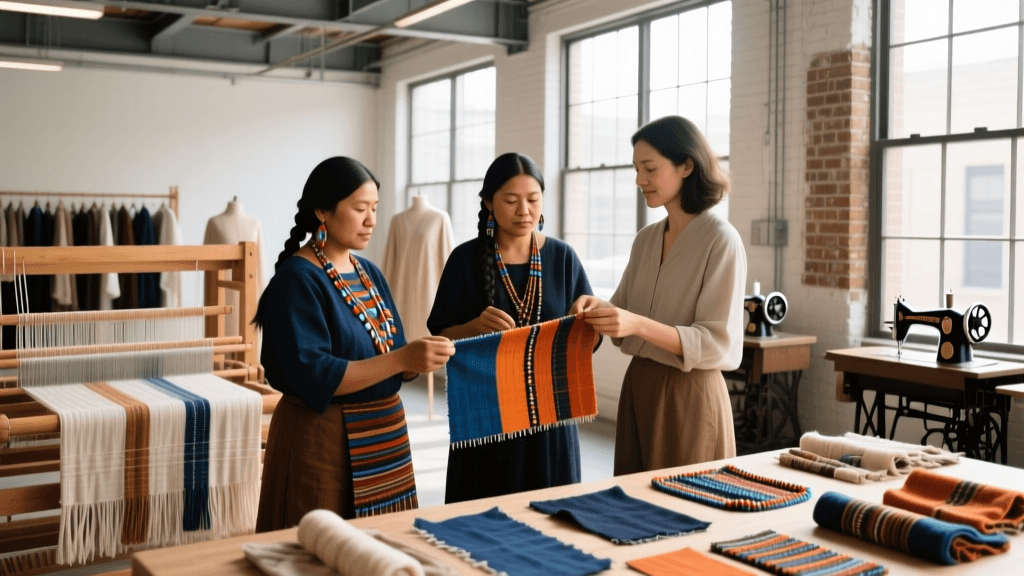
- Oaxacan Cotton and Backstrap Loom Fabrics: Several specialized importers on 9th Street now carry authentic, hand-dyed cottons sourced directly from Zapotec and Mixtec cooperatives. These fabrics are sold by the yard but come with certificates of authenticity and artisan compensation reports.
- Andean Alpaca and Llama Wool: For winter collections, LA's wholesale houses offer baby alpaca and llama wool blends. In 2026, the best vendors provide blockchain-verified sourcing data proving the fibers were sheared using traditional, humane methods by Quechua and Aymara herders.
- Embroidery and Appliqué: LA's jobbers are famous for their intricate embroidery services. Many shops now employ artisans trained in traditional Latin American floral and geometric motifs, allowing for culturally accurate embellishments on modern silhouettes.
The Ethics of Authenticity: Avoiding Counterfeits
One of the most critical challenges when sourcing Indigenous-inspired materials in urban fashion hubs is avoiding cultural appropriation and counterfeit goods. The market is flooded with mass-produced, machine-made imitations of sacred Indigenous patterns and traditional Latin American textiles. As a designer in 2026, it is your legal and ethical responsibility to verify the origins of your materials.
The Indian Arts and Crafts Board, a division of the U.S. Department of the Interior, strictly enforces the Indian Arts and Crafts Act. This truth-in-advertising law prohibits misrepresentation in marketing of Indian arts and crafts products within the United States. If you are purchasing textiles in NYC or LA that claim to be 'Native American made' or 'Indian crafted,' the vendor must be able to prove that the product was made by a member of a State or federally recognized Tribe or an artisan certified by such a Tribe.
2026 Sourcing Rule of Thumb: Never purchase 'tribal print' fabrics from standard wholesale jobbers if you intend to market them as authentic Indigenous textiles. True Indigenous textiles are hand-crafted, rare, and sourced directly from artisans or certified cooperatives, not printed on polyester in a massive overseas factory.
2026 Sourcing Comparison: NYC vs. LA vs. Santa Fe
While NYC and LA are the primary urban manufacturing hubs, designers focusing heavily on authentic Native American textiles must also consider Santa Fe, New Mexico. Below is a comparison of these three vital American fashion hubs for the 2026 sourcing season.
| Hub | Best For | Minimum Order Quantities (MOQ) | Price Point & Accessibility |
|---|---|---|---|
| New York City | Heritage wools, archival trims, heavy canvas, deadstock trade cloth. | Low to Medium (15-50 yards) | Premium pricing; excellent for high-end, low-volume luxury designers. |
| Los Angeles | Latin American imports, Oaxacan cotton, alpaca blends, large-scale ethical cut-and-sew. | Medium to High (100+ yards) | Wholesale pricing; ideal for contemporary brands scaling sustainable collections. |
| Santa Fe | Authentic Native American wools, turquoise and silver notions, hand-woven regalia materials. | Artisan-based (Per-piece or small batch) | Direct-to-artisan pricing; requires relationship building and on-site trading. |
Emerging Hubs: Portland and the Pacific Northwest
Beyond the traditional coasts, Portland, Oregon, has emerged in 2026 as a critical hub for sustainable, outdoor-inspired tech-wear that frequently collaborates with Indigenous designers from the Pacific Northwest. The city's garment district, though smaller, is heavily focused on waterproof, sustainable natural fibers and collaborations with local Salish and Chinook artisans. Designers looking to merge traditional Indigenous motifs with modern, climate-resilient outerwear will find Portland's network of eco-textile labs and Indigenous design incubators to be an invaluable resource.
Actionable Advice for 2026 Sourcing Trips
To maximize your time and budget when visiting the NYC or LA garment districts this year, follow these industry-tested strategies:
- Pre-Register for Showrooms: In 2026, many of the premium heritage textile showrooms in NYC operate on an appointment-only basis to manage foot traffic and ensure dedicated consultation time. Use the district's digital portals to book swatching sessions two weeks in advance.
- Request Digital Product Passports (DPPs): When sourcing Latin American imports in LA, always ask the vendor for the fabric's DPP. This digital record will provide you with the exact cooperative origin, water usage metrics, and artisan compensation data required for your brand's 2026 sustainability reporting.
- Carry Both Digital and Physical Currency: While 95% of the garment districts have transitioned to digital B2B payment platforms, many of the oldest, most specialized trim shops and deadstock vendors still offer significant discounts (up to 15%) for immediate physical cash or direct wire transfers on the spot.
- Hire a Local Sourcing Agent: If you are unfamiliar with the labyrinthine layouts of LA's Maple Avenue or NYC's 38th Street, hiring a local sourcing agent who specializes in ethical and Indigenous supply chains can save you days of wandering and protect you from accidentally purchasing counterfeit cultural goods.
Conclusion
The American garment districts of 2026 are more than just places to buy fabric; they are complex ecosystems where global trade, local manufacturing, and ancient textile traditions intersect. By approaching the NYC and LA hubs with a deep respect for cultural authenticity, a demand for supply chain transparency, and a commitment to ethical sourcing, designers can create garments that honor the rich Indigenous and Latin American heritage of the Americas. Whether you are pulling heavy wool from a Manhattan showroom or sourcing hand-loomed cotton from an LA importer, the materials you choose tell a story—make sure it is one of respect, traceability, and enduring craftsmanship.