Traditional Diné Velvet Shirts & Concho Belts 2026
The Evolution of Diné Velvet and Silver
When envisioning the traditional dress of the American Southwest, few images are as striking and instantly recognizable as a Diné (Navajo) individual adorned in a rich velvet shirt, layered turquoise, and a heavy silver concho belt. While the Diné people have a rich pre-contact history of weaving and hide-tanning, the iconic velvet and silver regalia seen at powwows, chapter house meetings, and ceremonial gatherings today is the result of centuries of adaptation, trade, and artistic innovation. As we navigate the cultural landscape of 2026, traditional Diné clothing is experiencing a profound renaissance. Younger generations of Diné designers, silversmiths, and seamstresses are not only preserving ancestral techniques but are also innovating with sustainable materials and modern tailoring, ensuring these garments remain a vibrant, living expression of Indigenous identity.
The integration of velvet into Diné wardrobes began in the late 19th century. Following the tragic era of the Long Walk and the subsequent establishment of trading posts on the Navajo Nation, European-American textiles became widely available. Diné women, already master weavers of churro sheep wool, recognized the luxurious drape and deep color retention of velvet. They quickly adopted it, transforming a foreign trade good into a foundational element of Indigenous North American dress traditions. Today, in 2026, the velvet shirt and the concho belt stand as testaments to Diné resilience and aesthetic sovereignty.
The Men's Velvet Shirt: Tailoring and Tradition
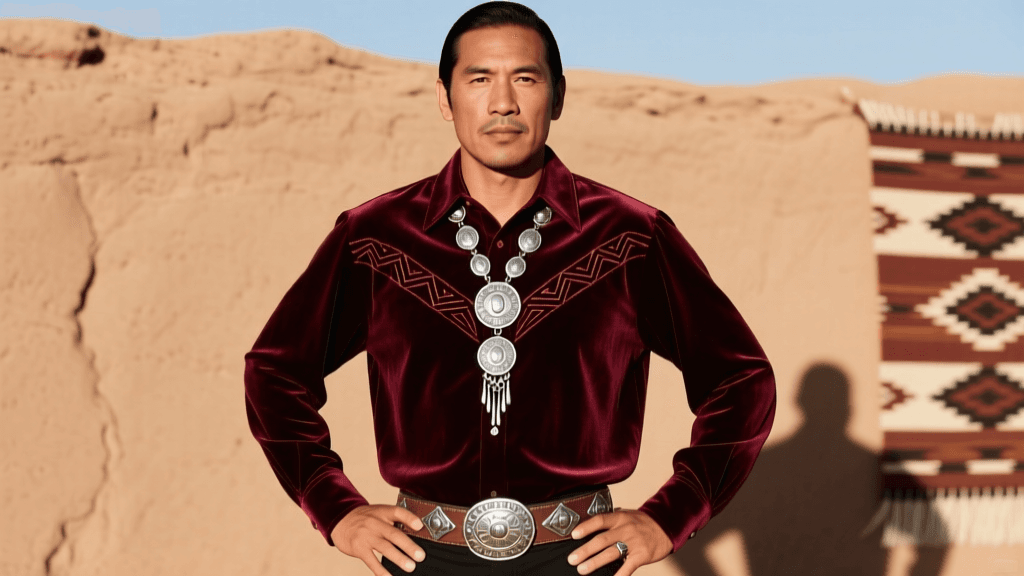
The traditional Diné men's velvet shirt, often referred to in the context of the broader bił náádidlá (velvet garments), is a masterclass in bespoke tailoring. Unlike the mass-produced western wear found in mainstream retail, an authentic Diné velvet shirt is typically custom-fitted, featuring distinctive elements that separate it from standard cowboy attire.
Key Elements of the Diné Velvet Shirt
- The Yoke and Piping: The most defining feature is the intricate contrasting piping that traces the yoke, cuffs, and button placket. In 2026, artisans are utilizing high-grade, colorfast silk-blend ribbons that resist fraying and fading far better than the synthetic alternatives of the late 20th century.
- The Collar: A high, banded collar is standard, often fastened with a single silver button or a traditional turquoise cabochon setting.
- Button Selection: While early shirts utilized glass or shell buttons traded from coastal tribes, modern traditional shirts heavily feature hand-stamped silver buttons, coin buttons (such as vintage Morgan or Peace dollars), or turquoise-set silver domes.
- Fabric Sourcing: The deep, rich blacks, navy blues, and burgundies of Diné velvet are highly prized. In 2026, elite seamstresses are sourcing sustainable, crush-resistant cotton velvets from specialized textile mills, ensuring the garment maintains its regal silhouette even after hours of wear at a social dance.
The process of creating these shirts is largely passed down through matrilineal lines. A well-made velvet shirt requires precise measurements, particularly around the shoulders and chest, to allow for the fluid movement required during traditional dances and daily ranching work on the reservation.
The Art of the Concho Belt in 2026
No discussion of Diné traditional dress is complete without the silver concho belt. The history of Diné silversmithing traces back to Atsidi Sani (Old Smith), who learned the craft from a Mexican silversmith in the mid-19th century. From those early days of melting down foreign coins to forge bridles and jewelry, the Diné have elevated silversmithing to a globally recognized fine art.
The concho belt is more than an accessory; it is a historical ledger, a display of family wealth, and a spiritual protector. The word "concho" derives from the Spanish word for shell, reflecting the oval or round, scalloped silver plates that adorn the leather belt. In the 2026 precious metals market, with silver spot prices maintaining a strong upward trajectory, the raw material cost for a heavy, authentic, hand-stamped concho belt is a significant investment. This economic reality has further elevated authentic Diné jewelry, separating true artisan masterworks from imported, mass-produced imitations.
2026 Concho Belt Market Comparison
For collectors, tribal members investing in their regalia, and museum curators, understanding the distinct silversmithing techniques is vital for authenticating and valuing these pieces in the current market.
| Concho Belt Technique | Description & Characteristics | 2026 Average Market Price | Creation Time |
|---|---|---|---|
| Hand-Stamped | Individual steel stamps struck with a hammer; features deep, crisp shadows and unique, slight asymmetries that prove human craftsmanship. | $4,500 - $12,000+ | 40 - 80 hours |
| Sandcast (Tufa) | Molten silver poured into carved tufa stone molds; results in a heavy, rustic, and highly textured surface unique to Southwest Indigenous smithing. | $6,000 - $15,000+ | 30 - 60 hours |
| Cast (Rubber Mold) | Reproduced from a master model using modern centrifugal casting; smoother finish, less distinct stamping, often used for more accessible retail lines. | $1,200 - $3,500 | 10 - 20 hours |
When purchasing a concho belt in 2026, buyers should closely inspect the stamp work. True hand-stamping will show microscopic variations in depth and alignment, whereas cast reproductions will appear unnaturally uniform. Furthermore, the leather backing should be thick, high-quality saddle leather, often hand-cut and dyed by the silversmith or a dedicated leatherworker within the same community.
Women's Regalia: Skirts, Squash Blossoms, and Moccasins
While the men's velvet shirt is iconic, Diné women's traditional regalia is equally breathtaking and complex. The traditional outfit consists of a velvet blouse, a sweeping, multi-tiered velvet skirt, a squash blossom necklace, and intricate turquoise and silver moccasins.
The tiered velvet skirt is a marvel of fabric manipulation. Often featuring three to five ruffled tiers, the skirt requires yards of premium velvet and meticulous hemming. In 2026, contemporary Diné seamstresses are experimenting with gradient dyeing techniques and incorporating subtle, tonal embroidery into the lower tiers, blending historical silhouettes with modern artistic expression. The skirt is frequently adorned with silver pins, brooches, or coin pendants along the seams, adding a melodic, chiming sound as the wearer moves.
The squash blossom necklace is the crowning jewel of the ensemble. Despite its English name, the "blossom" beads are actually representations of the pomegranate flower, a motif introduced by Spanish colonizers that the Diné masterfully adapted. The centerpiece of the necklace is the naja, a crescent-shaped pendant. Originally derived from Moorish symbols used on Spanish horse bridles to ward off the evil eye, the Diné repurposed the naja as a symbol of protection, fertility, and the cyclical nature of life. Today's master jewelers are increasingly prioritizing ethically mined, natural turquoise from historic Nevada and Arizona mines, setting them in heavy, hand-twisted silver wire bezels.
Completing the outfit are the moccasins (kélésh). Traditional Diné moccasins are crafted from brain-tanned deer hide, featuring a distinctive pleated toe and a thick, durable sole. While modern rubber soles are sometimes used for everyday practicality, ceremonial and dance moccasins in 2026 still heavily favor traditional hide or thick leather soles, often adorned with silver conchos on the vamp and turquoise inlays along the side seams. The revival of traditional brain-tanning and smoke-tanning techniques among young Diné artisans has ensured that the distinct, rich scent and supple texture of authentic hide moccasins remain a staple of high regalia.
Ethical Sourcing and the Indian Arts and Crafts Act
As the global appreciation for Indigenous North American dress traditions grows, so does the proliferation of counterfeit goods. Mass-produced "Native-inspired" velvet shirts and cast-metal belts manufactured overseas frequently flood the market, undermining the economic sovereignty of tribal artisans. When investing in traditional Diné garments, it is imperative to ensure you are purchasing authentic, Indigenous-made products.
The Indian Arts and Crafts Board, an agency within the U.S. Department of the Interior, strictly enforces the Indian Arts and Crafts Act. This federal truth-in-advertising law prohibits misrepresentation in the marketing of Indian arts and crafts. According to their guidelines, any product marketed as "Native American," "Navajo," or "Diné" must be made by a member of a federally or State-recognized tribe, or by a certified Indian artisan. Buyers in 2026 should always request a certificate of authenticity or a detailed receipt that includes the artist's name and tribal affiliation.
For those looking to directly support the Navajo Nation's economy and acquire guaranteed authentic regalia, the Navajo Arts and Crafts Enterprise (NACE) remains the premier, officially sanctioned destination. Established by the Navajo Nation Council, NACE works directly with hundreds of independent Diné silversmiths, weavers, and seamstresses across the reservation. Purchasing through official tribal enterprises or directly from artists at reputable markets, such as the annual Navajo Nation Fair or the Santa Fe Indian Market, ensures that your investment directly sustains Indigenous families and cultural preservation efforts.
Conclusion: Wearing Identity Forward
The traditional Diné velvet shirt and silver concho belt are far more than historical artifacts relegated to museum archives, such as the extensive textile collections preserved by the Smithsonian National Museum of the American Indian. In 2026, they are dynamic, evolving garments that bridge the gap between the ancestral past and the Indigenous future. Every stitch of contrasting piping, every hammer strike on a silver concho, and every carefully set turquoise cabochon represents a conscious act of cultural survival.
Whether worn by a Diné elder attending a chapter house meeting, a young professional blending a velvet vest with modern streetwear in Albuquerque, or a dancer moving to the rhythm of the drum at a regional powwow, these garments speak a visual language of pride, resilience, and unparalleled artistry. By understanding the history, recognizing the hallmarks of authentic craftsmanship, and committing to ethical sourcing, we can all play a role in honoring and sustaining the magnificent dress traditions of the Diné people for generations to come.