Diné Velvet Ribbon Shirts and Tiered Skirts: 2026 Guide
The Origins of Diné Velvet and Tiered Skirts
When discussing Indigenous North American dress traditions by tribe and region, the Southwest stands out for its vibrant, deeply symbolic, and historically rich textile arts. Among the most iconic garments to emerge from this region are the Diné (Navajo) velvet ribbon shirts and tiered skirts. While contemporary observers might assume these garments are ancient, their origins are a fascinating testament to Indigenous adaptation, resilience, and the transformation of colonial trade goods into powerful cultural markers. As of 2026, these garments remain a staple of Diné formal wear, powwow regalia, and everyday cultural pride, seamlessly bridging the gap between historical memory and modern Indigenous fashion.
The transition to velvet and calico began in the late 19th century. Prior to this, Diné women primarily wore the biil, a traditional two-piece woven dress made from Churro sheep wool on upright looms. However, the traumatic period of the Long Walk (1864) and the subsequent internment at Bosque Redondo severely disrupted traditional weaving practices. Upon their return to a newly established reservation in 1868, Diné people were introduced to government annuity goods and trading post merchandise. According to historical archives maintained by the Smithsonian National Museum of the American Indian, European and Victorian-style fabrics, including cotton velvet, calico, and metallic trims, quickly became highly sought-after trade items.
Rather than simply adopting Euro-American clothing styles, Diné women deconstructed and reimagined these materials. They took the high-collared, long-sleeved Victorian blouses and adapted them into the velvet shirts worn today, while the voluminous tiered skirts were born from the need to modestly cover the legs while allowing for ease of movement during daily tasks and ceremonies. This act of sartorial reclamation is a cornerstone of Southwest Indigenous dress traditions.
Anatomy of the Traditional Diné Velvet Shirt
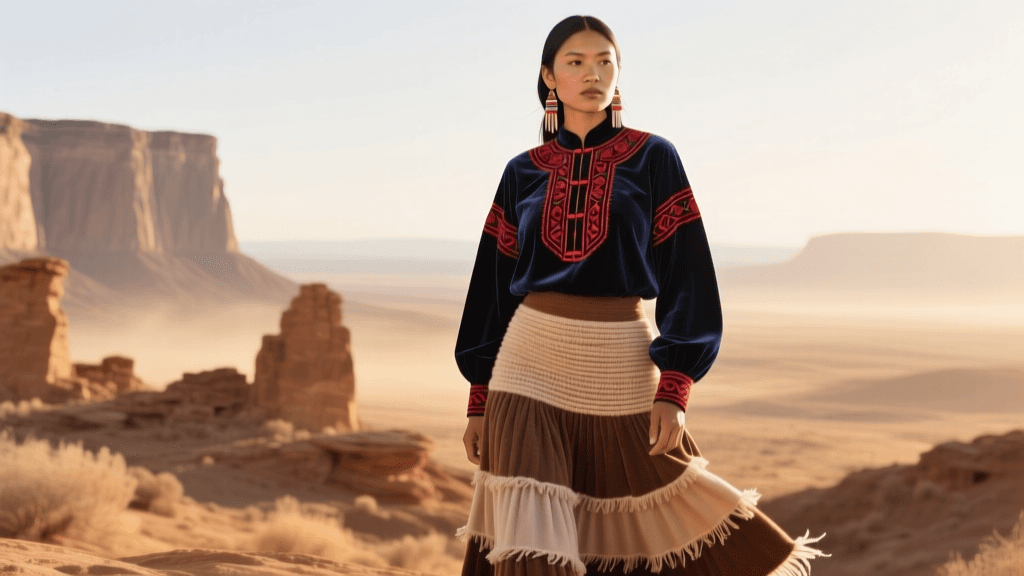
The traditional Diné velvet shirt is a masterclass in tailored elegance and regional specificity. Unlike the beadwork-heavy regalia of the Plains tribes, the Southwest velvet shirt relies on the rich texture of the fabric, the precision of the ribbon appliqué, and the striking contrast of silver accents.
Men's and Women's Variations
While both men and women wear velvet shirts, there are distinct variations in cut and styling. The men's shirt typically features a straight hem that falls to the hips, a high mandarin-style collar, and a front placket adorned with silver or metallic buttons. The sleeves are long and often cuffed. Women's velvet shirts, or velvet blouses, are similarly tailored with high necklines and long sleeves but are usually tucked into the waistband of the tiered skirt. In 2026, it is common to see subtle variations in the collar height and the width of the ribbon trim, allowing for personal and familial expression within the traditional framework.
The defining feature of the shirt is the ribbon work. Unlike the complex, cut-and-fold ribbon appliqué of the Great Lakes tribes, Diné ribbon work typically involves laying flat ribbons or rickrack along the seams, cuffs, collar, and placket. This not only reinforces the structural integrity of the garment but also creates striking geometric lines that contrast beautifully against the deep jewel tones of the velvet—most commonly navy blue, black, deep purple, or burgundy.
The Tiered Skirt and Calico Traditions
The Diné tiered skirt is an engineering marvel of fabric and motion. Traditionally made from calico or velvet, the skirt consists of three or four distinct horizontal tiers. The bottom tier is the widest and longest, often grazing the ankles, while each subsequent tier is gathered and attached to the one below it. This gathering technique creates a beautiful, swaying silhouette that commands presence during social dances and formal gatherings.
The seams between the tiers are meticulously covered with rickrack or bias tape. In the 2026 market, artisans are increasingly sourcing high-quality, colorfast cotton rickrack to ensure the skirts can withstand frequent wear and cleaning. While velvet skirts are reserved for the most formal occasions, such as graduations, political inaugurations, and major powwows, calico tiered skirts are a beloved staple of everyday wear for many Diné matriarchs. The patterns of the calico—often featuring small, intricate floral or geometric prints—are carefully selected to ensure the patterns align harmoniously across the gathered tiers.
2026 Material Sourcing and Cost Breakdown
For those looking to commission or sew authentic Diné garments in 2026, understanding the current textile market is crucial. The cost of raw materials has fluctuated, and discerning artisans prioritize natural fibers over synthetic blends to maintain the garment's historical integrity and breathability in the harsh Southwest climate.
| Material | Specification | 2026 Est. Cost | Sourcing Notes |
|---|---|---|---|
| Cotton Velvet | 100% cotton, 45' width, medium pile | $28 - $38 / yard | Avoid poly-blends which trap heat. Source from specialized online textile retailers or Southwest trading posts. |
| Rickrack Trim | Cotton/poly blend, 1/2' to 1' width | $4 - $8 / yard | Essential for tiered skirts and shirt plackets. Buy in bulk rolls to ensure dye-lot consistency. |
| Silver Buttons | Sandcast or stamped sterling silver | $15 - $45 / each | Commission directly from verified Diné silversmiths to ensure authenticity and support local economies. |
| Calico Print | 100% cotton quilting weight, 44' width | $12 - $18 / yard | Requires 6 to 10 yards depending on the desired fullness of the gathers and the wearer's height. |
| Concho Belt | Sterling silver, leather backing | $1,500 - $5,000+ | Investment pieces that serve as both adornment and stored wealth. Verify artist hallmark. |
When sourcing materials, it is imperative to be aware of the Indian Arts and Crafts Act. The Indian Arts and Crafts Board, a branch of the U.S. Department of the Interior, provides vital resources and directories for consumers seeking authentic Native American-made goods, ensuring that the economic benefits of these traditions remain within Indigenous communities.
Integrating Navajo Silversmithing
No discussion of Diné velvet and tiered skirts is complete without addressing the integral role of Navajo silversmithing. The velvet shirt serves as a dark, luxurious canvas that makes sterling silver pop. Men and women alike adorn their shirts with heavy silver squash blossom necklaces, naja pendants, and elaborate concho belts that cinch the waist of the tiered skirt.
The silver buttons on a velvet shirt are often custom-made by a family silversmith. These buttons may feature stamped turquoise inlays, sandcast starburst patterns, or intricate repoussé work. In 2026, with the rising cost of precious metals, many families are melting down older, damaged silver pieces to recast new buttons and conchos, a practice that imbues the new garments with the spiritual weight and history of their ancestors. The integration of silver is not merely decorative; historically, it served as a portable form of wealth and a display of familial status and artistic lineage.
Contemporary Adaptations in 2026
While the traditional cuts remain highly revered, the 2026 Indigenous fashion landscape has seen a surge in contemporary adaptations of the velvet shirt and tiered skirt. Younger Diné designers are reimagining these garments for modern streetwear and high-fashion contexts. Exhibitions at institutions like the Heard Museum frequently highlight how Native designers are pushing the boundaries of traditional wear.
Modern iterations might feature the classic high collar and silver buttons but are tailored into cropped bomber jackets, tailored blazers, or even incorporated into denim jackets. Similarly, the tiered skirt silhouette is being adapted into asymmetrical hemlines or constructed from unconventional materials like upcycled denim or sustainable hemp blends. These innovations do not dilute the tradition; rather, they ensure its survival and relevance, proving that Indigenous fashion is a living, breathing art form that evolves with each generation.
Garment Care and Archival Preservation
Because authentic velvet and sterling silver are significant financial and cultural investments, proper care is essential to ensure these garments last for generations. Velvet is notoriously delicate and prone to crushing. In 2026, conservationists recommend storing velvet shirts and skirts on padded, wide-shoulder hangers rather than wire hangers, which can distort the fabric and leave permanent indentations. Garments should be kept in breathable cotton garment bags in a climate-controlled environment, away from direct sunlight which can fade the deep dyes.
Cleaning requires special attention. Dry cleaning is generally recommended for velvet, but it is crucial to remove all silver buttons and conchos before the garment is treated with chemical solvents, as these can tarnish or strip the patina from the silver. For minor stains, spot cleaning with a specialized velvet brush and a mild, pH-neutral textile cleaner is preferred. Silver accents should be polished separately using a non-abrasive microfiber cloth and stored in anti-tarnish flannel pouches when not attached to the garment.
Conclusion
The Diné velvet ribbon shirt and tiered skirt are far more than mere clothing; they are wearable archives of survival, adaptation, and artistic brilliance. From the trading posts of the late 19th century to the contemporary fashion runways of 2026, these garments continue to define the visual landscape of the Southwest. By understanding their history, respecting the intricate construction techniques, and supporting authentic Indigenous artisans and silversmiths, we help preserve a vital thread in the rich tapestry of Indigenous North American dress traditions.