Japanese Fashion Schools & Kimono Apprenticeships in 2026
The Intersection of Heritage and Haute Couture in 2026
The pursuit of mastering Japanese traditional garments has never been more dynamic than it is in 2026. As global interest in sustainable, artisan-crafted fashion surges, Japan stands at the forefront of a unique educational renaissance. Prospective designers and textile enthusiasts are now faced with a fascinating dichotomy: the structured, avant-garde environment of modern Japanese fashion schools versus the deeply immersive, time-honored path of the traditional shokunin (artisan) apprenticeship. Whether your goal is to deconstruct the kimono silhouette for international runways or to spend a decade mastering the meticulous art of Kyo-Yuzen resist dyeing, understanding the educational landscape of 2026 is critical for your success.
In this comprehensive guide, we explore the premier institutions, the realities of traditional apprenticeships, and the actionable steps required to secure your place in Japan’s prestigious garment industry this year.
The Landscape of Japanese Fashion Education in 2026
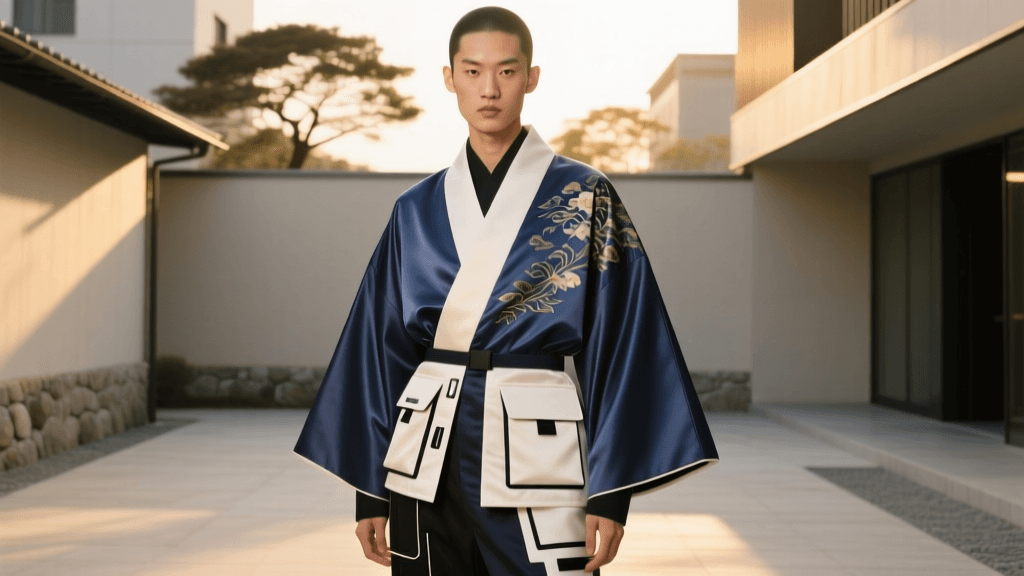
Japan’s formal fashion education sector is globally renowned for producing some of the most influential avant-garde and technical designers of the last half-century. In 2026, institutions like Bunka Fashion College and Tokyo Mode Gakuen continue to dominate the international stage. These schools have recently updated their curricula to integrate 3D digital garment simulation alongside traditional flat-pattern drafting, ensuring graduates are fluent in both physical tailoring and digital fashion ecosystems.
For the 2026 academic year, tuition at top-tier Tokyo institutions averages between ¥1,400,000 and ¥1,650,000 per year (approximately $9,500 to $11,200 USD, depending on current exchange rates). According to the Bunka Fashion College official admissions portal, international applicants must now demonstrate a minimum JLPT N2 (Japanese-Language Proficiency Test) certification, alongside a comprehensive portfolio of 15 to 20 original sketches and constructed garments. The emphasis in 2026 is heavily placed on sustainable material sourcing and the structural engineering of traditional Japanese silhouettes, such as the straight-line cutting method (chokusen-dachi) inherent to kimono construction.
Traditional Kimono Apprenticeships: The Shokunin Path
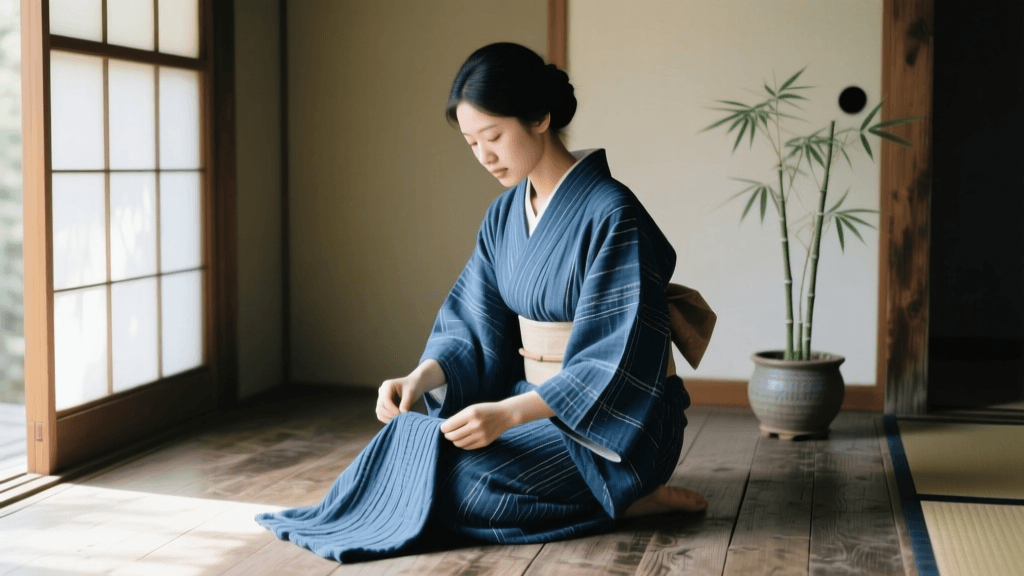
While modern fashion schools focus on global trends and rapid production cycles, the traditional apprenticeship system remains the sole gateway to mastering Japan’s designated heritage crafts. The shokunin path is not merely an educational choice; it is a lifelong commitment to spiritual and technical discipline. In 2026, the Japanese government, recognizing the severe shortage of aging artisans, has heavily subsidized new apprenticeship programs through regional cooperatives in Kyoto, Kanazawa, and Niigata.
Unlike the tuition-based model of Tokyo fashion academies, a traditional apprenticeship (deshi) operates on a master-disciple hierarchy. Apprentices do not pay tuition; instead, they receive a modest living stipend (averaging ¥160,000 per month in 2026) while dedicating 10 to 12 hours a day, six days a week, to their master’s workshop. The first two years of a Yuzen dyeing apprenticeship may involve nothing more than washing brushes, mixing natural dyes, and sweeping the studio floor—a practice designed to build humility, observation skills, and an intimate understanding of the studio’s rhythm.
Comparing Educational Pathways: Modern School vs. Traditional Apprenticeship
| Feature | Modern Fashion School (e.g., Bunka) | Traditional Artisan Apprenticeship (Shokunin) |
|---|---|---|
| Duration | 2 to 4 Years | 5 to 15 Years (Mastery Level) |
| 2026 Financial Cost | ¥1,450,000+ / year (Tuition) | Stipend-based (¥160k/month avg.) |
| Primary Focus | Global trends, pattern making, business, 3D design | Yuzen dyeing, Nishijin weaving, tea ceremony attire |
| Language Requirement | JLPT N2 or EJU (Examination for Japanese University) | JLPT N1 + deep cultural/dialect fluency |
| Output | Degree, Diploma, Industry Networking | Master Certification, Independent Workshop |
Deep Dive: Nishijin-ori and Kyo-Yuzen Mastery
For those drawn specifically to the kimono, Kyoto remains the undisputed epicenter of textile education. Two techniques dominate the aspirations of international and domestic apprentices alike: Nishijin-ori (brocade weaving) and Kyo-Yuzen (resist dyeing).
Nishijin-ori Weaving
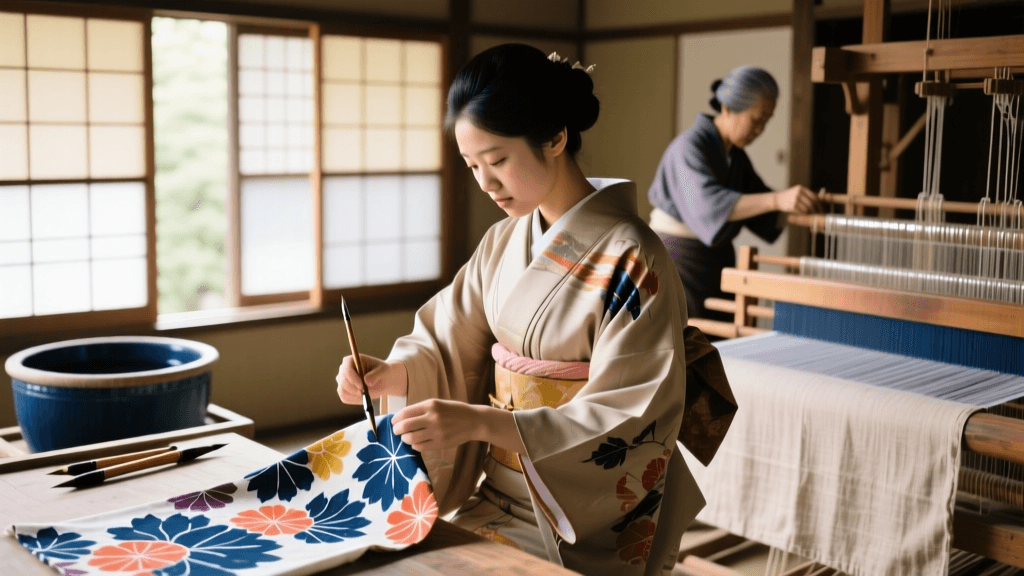
The Nishijin district in Kyoto is synonymous with opulent, intricately patterned silk weaving. As documented by the Nishijin Textile Center, the creation of a single Nishijin obi sash can involve over twenty distinct specialized roles, from the zuanshi (pattern designer) to the hataori (weaver). In 2026, apprenticeships in Nishijin have begun to incorporate AI-assisted jacquard loom programming, allowing young artisans to translate hand-painted motifs into digital punch cards without losing the tactile tension control required for silk threads. Securing a placement here requires an introduction from a recognized guild member or graduation from a specialized vocational track at the Kyoto Seika University Faculty of Art.
Kyo-Yuzen Resist Dyeing
Kyo-Yuzen is the breathtaking art of applying vibrant, pictorial designs directly onto silk using a rice-paste resist. The 2026 intake for Yuzen workshops in Kyoto is highly competitive. The Ministry of Economy, Trade and Industry (METI) strictly oversees the certification of Traditional Craft Products, ensuring that only those who complete the grueling multi-year apprenticeship can legally stamp their work with the official traditional seal. Apprentices must master the precise viscosity of the itome-nori (rice paste outline) and the delicate brushwork of iro-sashi (color application), skills that take a minimum of seven years to refine.
How to Apply and Prepare for 2026 Intakes
Navigating the Japanese educational and immigration systems requires meticulous preparation. If you are an international applicant aiming to study or apprentice in Japan in 2026, follow these actionable steps:
- Language Acquisition: Begin your Japanese studies immediately. While modern schools accept JLPT N2, traditional masters will expect N1-level fluency, including an understanding of keigo (honorific speech) essential for studio etiquette.
- Portfolio Development: For fashion schools, curate a digital and physical portfolio highlighting your understanding of drape, textile manipulation, and structural seams. Include at least one project inspired by traditional Asian garment architecture.
- Visa Procurement: Students enrolling in accredited colleges will apply for a Student Visa (Ryugaku). However, those entering a traditional, unaccredited artisan workshop must often secure a Designated Activities Visa or an Instructor Visa, which requires the master’s workshop to prove financial stability and a formalized training curriculum to Japanese Immigration.
- Networking and Guilds: Attend the annual Tokyo Kimono Show or the Kyoto Gozan Okuribi festivals to network with cooperative leaders. Many 2026 apprenticeships are still arranged through tsukugi (personal introductions) rather than online applications.
The Future: Merging Tech with Tradition
A common misconception is that traditional Japanese fashion education is resistant to change. In 2026, the opposite is true. The most successful young shokunin are those who leverage modern technology to preserve ancient techniques. For example, apprentices are now using spectrophotometers to perfectly archive the exact chemical breakdown of rare botanical dyes like ai (indigo) and benibana (safflower) before they fade. Furthermore, 3D printing is being utilized to create custom kanzashi (hair ornaments) molds, reducing the woodworking time required for apprentices and allowing them to focus on the intricate lacquerware finishing.
"The true essence of the shokunin in 2026 is not just repeating the past, but acting as a bridge. We use digital archiving to ensure that if a master passes away, their exact hand tension and dye ratios are not lost to history." — Master Artisan, Kyoto Yuzen Cooperative, 2026.
Conclusion: Choosing Your Path
Whether you choose the bustling, neon-lit studios of Bunka Fashion College in Tokyo or the quiet, indigo-scented workshops of Kyoto, Japanese fashion education in 2026 offers unparalleled depth. The modern school route will equip you with the business acumen and technical versatility to launch a global brand rooted in Japanese aesthetics. Conversely, the traditional apprenticeship demands immense personal sacrifice but rewards you with the profound spiritual satisfaction of becoming a living guardian of Asian textile heritage. Assess your goals, prepare your language skills, and step into a world where every stitch carries centuries of meaning.