Banarasi vs Kanchipuram Silk Saris: 2026 Fabric Guide
The Enduring Legacy of Indian Silk Saris
When it comes to South Asian traditional garments, few textiles command the reverence, artistry, and cultural weight of the Indian silk sari. As we navigate the fashion landscape in 2026, heritage weaves are experiencing a massive renaissance, driven by a global demand for sustainable luxury, artisanal craftsmanship, and slow fashion. For brides, festival-goers, and collectors, choosing the right silk is not merely about color or pattern; it is about understanding the structural integrity, historical context, and textile engineering of the fabric. According to the Victoria and Albert Museum, the sari represents an unbroken continuum of textile mastery that adapts to contemporary tastes while preserving ancient techniques.
Among the myriad of regional weaves, Banarasi and Kanchipuram silks stand as the two undisputed titans of Indian bridal and ceremonial wear. Yet, their fabric compositions, weaving techniques, and draping qualities are vastly different. This comprehensive 2026 guide breaks down the textile choices between Banarasi and Kanchipuram silk saris, helping you make an informed investment for your traditional wardrobe.
Banarasi Silk: The Brocade Masterpiece of Varanasi
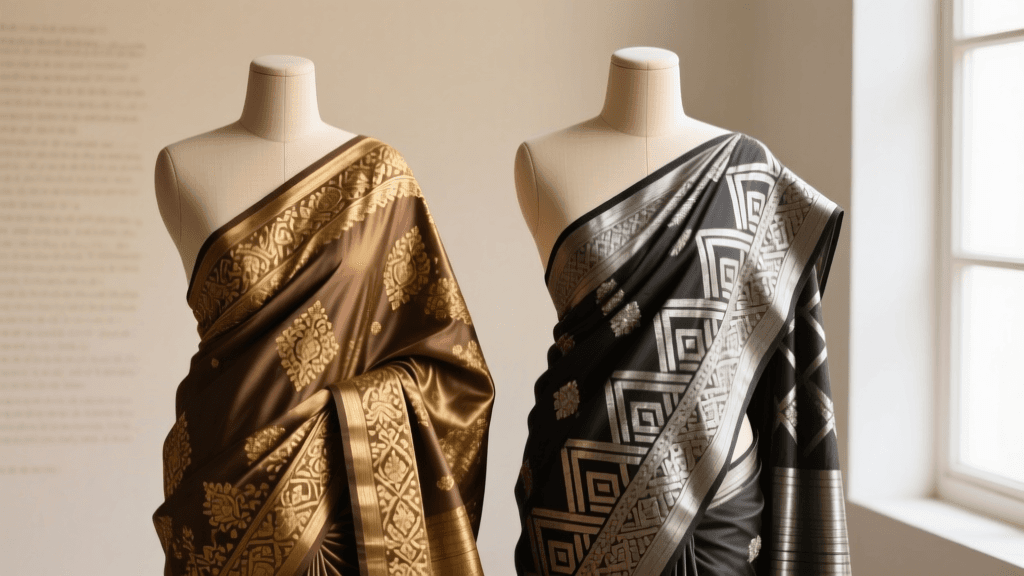
Originating from the sacred city of Varanasi (Banaras) in Uttar Pradesh, Banarasi silk is globally celebrated for its intricate brocade work, Mughal-inspired motifs, and opulent sheen. The textile is traditionally woven on jacquard looms, utilizing a twill weave that allows for the creation of complex, raised patterns using metallic threads.
Textile Composition and Weave
Authentic Banarasi silk relies on finely twisted mulberry silk yarns. The hallmark of this fabric is its 'kalga' (mango motif), 'bel' (creeping vine), and 'jhallar' (fringe-like patterns) woven directly into the cloth. Unlike printed textiles, the motifs in a true Banarasi sari are created by the extra weft threads that interlock with the warp, giving the fabric a distinct, embossed texture. The reverse side of a genuine Banarasi sari will show the floating threads of the motif, a key indicator of handloom authenticity.
2026 Market Trends for Banarasi Textiles
In 2026, the Banarasi market has seen a significant shift toward lightweight, breathable variations to suit destination weddings and warmer climates. Weavers are increasingly blending traditional silk with organza (kora) and georgette, creating 'tissue' Banarasis that offer the signature gold-and-silver brocade brilliance but with a fraction of the weight. Furthermore, the push for eco-conscious fashion has led to a surge in GI-certified (Geographical Indication) Banarasis dyed with organic, azo-free botanical colors, appealing to the modern, environmentally aware consumer.
Kanchipuram Silk: The Temple Weaver's Pride
Hailing from the temple town of Kanchipuram in Tamil Nadu, Kanchipuram silk (often called Kanjeevaram) is the quintessential South Indian bridal textile. Known for its vivid color contrasts, heavy weight, and unparalleled durability, a Kanchipuram sari is often treated as a generational heirloom, passed down from mother to daughter.
The Korvai Technique and Mulberry Excellence
The structural genius of Kanchipuram silk lies in its use of high-grade, three-ply mulberry silk. The fabric is renowned for the 'Korvai' technique, an intricate interlocking method where the border and the body of the sari are woven separately and then seamlessly joined together. This creates a stark, vibrant contrast between the border and the main drape. The pallu (the decorative end piece) is also woven separately and interlocked using the 'Petni' method. If the sari tears, the border will not detach from the body—a testament to its legendary structural integrity.
2026 Innovations in Kanchipuram Weaves
While the classic heavy drape remains a staple for traditional temple weddings, 2026 has introduced the 'half-and-half' or 'color-block' Kanchipuram, featuring striking geometric contrasts that appeal to contemporary aesthetics. Additionally, master weavers are experimenting with two-ply silk and 'soft silk' variants that maintain the rich luster of Kanjeevaram but offer a more fluid, manageable drape for prolonged wear during multi-day wedding festivities.
The Zari Factor: Navigading Gold Prices in 2026
No discussion of these textiles is complete without addressing 'Zari'—the metallic thread that gives both Banarasi and Kanchipuram saris their royal sparkle. Historically, pure zari consisted of a silk core wrapped in flattened silver wire, which was then electroplated with pure gold. However, the global gold market has seen unprecedented fluctuations leading into 2026, making pure zari exponentially more expensive.
Today, buyers must navigate three main tiers of zari:
- Pure Zari: The highest grade, containing genuine gold and silver. In 2026, a Kanchipuram sari with 100% pure zari is a luxury investment, often starting well above $800 USD.
- Tested Zari (Half-Fine): A silver core electroplated with gold, but with a lower gold concentration than pure zari. It offers excellent durability and a rich glow at a more accessible price point.
- Plastic/Imitation Zari: A synthetic core coated with metallic paint. While affordable and lightweight, it tarnishes quickly and is generally avoided for heirloom bridal wear.
Head-to-Head Textile Comparison
To help you visualize the distinct characteristics of these two legendary fabrics, refer to the comparison chart below:
| Feature | Banarasi Silk | Kanchipuram Silk |
|---|---|---|
| Origin | Varanasi, Uttar Pradesh (North India) | Kanchipuram, Tamil Nadu (South India) |
| Silk Type | Finely twisted mulberry silk, often single or double ply | Heavy, three-ply mulberry silk (traditionally) |
| Weave Technique | Jacquard loom, twill weave, extra weft brocade | Pit loom, Korvai (interlocking border) and Petni techniques |
| Motifs & Patterns | Mughal motifs, kalga, bel, intricate jaal (lattice), floral vines | Temple borders, peacocks, checks, stripes, mythological figures |
| Drape & Weight | Fluid, relatively lightweight, clings to the body elegantly | Stiff, heavy, holds pleats rigidly, structured drape |
| 2026 Price Range (USD) | $250 to $1,200+ (depending on zari and silk purity) | $400 to $2,500+ (pure zari pieces command premium prices) |
| Best Suited For | Receptions, evening events, North Indian bridal ceremonies | Temple weddings, morning ceremonies, heirloom investments |
Verifying Authenticity: Silk Mark and GI Tags
With the rise of power-loom replicas and synthetic blends flooding the e-commerce space, verifying the authenticity of your silk is more critical than ever in 2026. The Silk Mark Organization of India, a government-backed initiative, provides a standardized 'Silk Mark' label that guarantees the textile is made of 100% pure natural silk. When purchasing either a Banarasi or Kanchipuram sari, always look for this holographic tag and scan its QR code to verify the weaver's details.
Additionally, both weaves hold Geographical Indication (GI) status. This legal designation ensures that only saris woven in the specific geographic regions of Varanasi and Kanchipuram, using traditional methods, can be legally sold under these names. Reputable boutiques and the National Handloom Development Corporation portals provide certified GI-tagged garments, ensuring your money supports authentic artisan communities rather than mass-production factories.
Care and Maintenance for Heritage Textiles
Investing in pure silk requires meticulous care to preserve the fabric's structural integrity and the zari's luster for decades.
- Cleaning: Never machine wash or hand wash pure Banarasi or Kanchipuram silk. Always opt for professional dry cleaning, specifically requesting a gentle, silk-friendly solvent. For minor fresh stains, a localized spot treatment by a textile specialist is recommended.
- Storage: Store your saris in breathable, unbleached cotton muslin bags. Avoid plastic covers, which trap moisture and cause the silk fibers to degrade and the zari to oxidize and turn black.
- Pest Control: Use natural deterrents like dried neem leaves or cedar blocks in your wardrobe. Never place mothballs directly on or near the silk, as the harsh chemicals can permanently discolor the fabric and tarnish the metallic threads.
- Rotation: Refold your heirloom saris every three to four months along different lines to prevent permanent creasing and fiber breakage along the fold lines.
Final Thoughts on Choosing Your Silk
The choice between Banarasi and Kanchipuram silk ultimately comes down to your personal aesthetic, the nature of the event, and your draping preferences. If you desire a lightweight, intricately patterned fabric with a fluid drape and Mughal elegance, the Banarasi brocade is your ideal textile. If you seek a structured, heavy, and vibrantly contrasted garment that serves as a bold statement of South Indian heritage and a lifelong heirloom, Kanchipuram silk remains unmatched. By understanding the distinct textile engineering, zari compositions, and 2026 market dynamics of these magnificent weaves, you can confidently select a garment that honors tradition while perfectly suiting your contemporary style.