Plains Tribe Ribbon Shirts & Beadwork: 2026 Ethical Sourcing Guide
The Resurgence of Plains Regalia in 2026
The vibrant landscapes of North America have long been home to diverse Indigenous cultures, each with distinct sartorial traditions that communicate identity, spirituality, and community status. Among the most visually striking and culturally significant of these are the regalia, ribbon shirts, and beadwork of the Plains Tribes. In 2026, the intersection of traditional Indigenous knowledge and contemporary fashion has sparked a massive resurgence in the creation and wearing of authentic Native regalia. However, this popularity brings challenges, particularly regarding ethical sourcing, cultural appropriation, and the preservation of sacred techniques. For collectors, powwow dancers, and allies looking to support Native artisans, understanding the regional distinctions and material requirements of Plains dress traditions is essential. This comprehensive 2026 guide explores the nuances of Northern and Southern Plains beadwork and ribbon work, providing actionable advice on sourcing authentic materials, commissioning custom pieces, and navigating the legal frameworks that protect Indigenous intellectual property.
Regional Distinctions: Northern vs. Southern Plains
The Great Plains region spans a massive geographic area, and the dress traditions of the tribes within it are far from monolithic. While outsiders may group all Plains beadwork together, Indigenous artisans recognize profound regional differences in stitch techniques, color palettes, and motif structures.
Northern Plains (Lakota, Dakota, Nakota, Crow, Cheyenne)
Northern Plains beadwork is historically characterized by the 'lazy stitch' (also known as the lane stitch), where beads are strung on sinew or thread and tacked down at intervals to create parallel, ribbed lines. This technique is ideal for covering large surface areas like leggings, moccasin vamps, and cradleboards. In 2026, Northern Plains artisans continue to favor high-contrast geometric patterns, utilizing a classic color palette of white backgrounds with bold triangles and squares in greasy yellow, powder blue, and translucent red. The Crow tribe, while geographically Northern, developed a distinct appliqué stitch and a vibrant, highly stylized floral and geometric aesthetic that remains highly sought after in contemporary powwow circuits.
Southern Plains (Comanche, Kiowa, Osage, Southern Cheyenne)
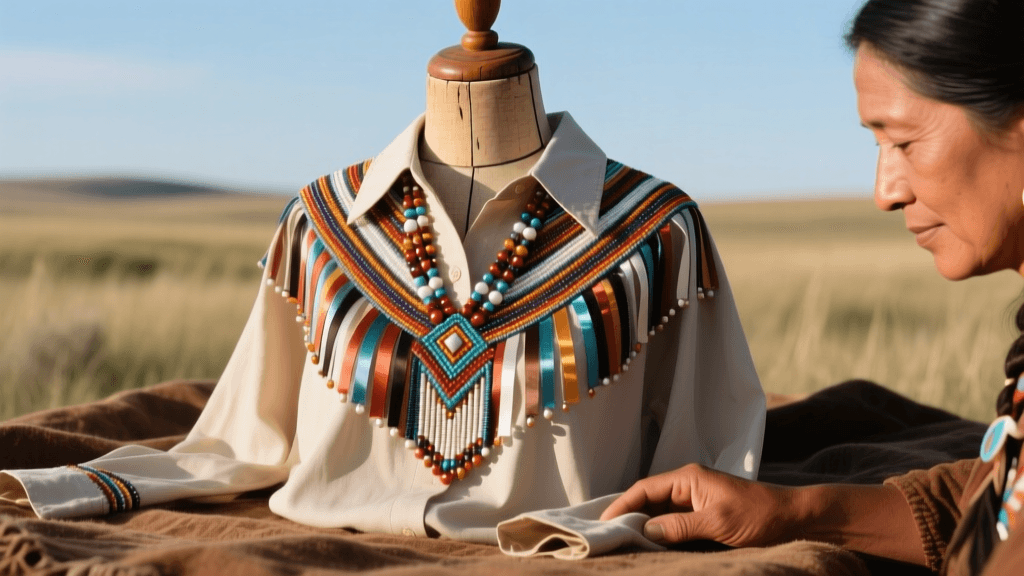
Southern Plains traditions often incorporate more complex curvilinear designs, peyote stitch (common in gourd society regalia and fan handles), and intricate ribbon work. The Osage and Kiowa are renowned for their elaborate ribbon shirts and finger-woven sashes. Unlike the Northern preference for stark geometric contrast, Southern Plains beadwork and textile arts frequently blend floral motifs with geometric borders, reflecting historical trade routes and interactions with Eastern Woodlands tribes. In 2026, Southern Plains ribbon shirts feature highly structured appliqué, utilizing silk and high-grade polyester ribbons to create dynamic, moving patterns that catch the light during dance competitions.
2026 Material Sourcing Guide for Artisans and Makers
Creating authentic regalia requires specific, high-quality materials that honor the durability and aesthetic of historical garments. The modern market offers a plethora of options, but discerning artisans know that cheap imitations compromise the integrity of the work. When sourcing materials in 2026, prioritize Native-owned cooperatives and established, reputable trading posts like Crazy Crow Trading Post, which has supplied Indigenous crafters for decades.
Beads: Czech Charlotte vs. Japanese Miyuki
For traditional Plains beadwork, the choice of seed bead is paramount. Czech Charlotte cut beads (size 13/0) remain the gold standard for fine detail work, medallions, and moccasin edging. The single cut facet on the Charlotte bead catches the light, giving the finished piece a subtle, organic sparkle that mimics historical glass beads. In 2026, a standard hank of authentic Czech 13/0 Charlottes costs between $4.50 and $6.50, depending on the rarity of the color. Conversely, Japanese Miyuki Delicas (size 11/0) are perfectly uniform cylinders. While they are excellent for loom weaving and highly structured geometric patterns, many traditionalists avoid them for freehand lazy stitch because their uniformity lacks the organic, handmade soul of traditional Czech glass.
Broadcloth and Ribbons
The foundation of a high-quality ribbon shirt or beaded cape is the broadcloth. Strathmore wool-blend Melton broadcloth is the premier choice for 2026 regalia makers. It is dense, resists fraying when cut for appliqué, and drapes beautifully. Expect to pay $28 to $38 per yard for authentic Melton wool. For ribbon work, pure silk dupioni or high-grade rayon ribbons are preferred over cheap polyester, which melts easily when heat-sealed and degrades under the intense sun of outdoor summer powwows.
Commissioning Custom Regalia: Costs and Timelines
If you are not a maker but wish to acquire an authentic, custom-commissioned piece for powwow dancing or ceremonial use, you must understand the economics of Indigenous artistry. Beadwork and ribbon work are incredibly time-intensive. A fully beaded vest or a complex, multi-ribbon dance shirt can take anywhere from 80 to 200 hours to complete. In 2026, master artisans charge commensurate with their skill level and the sacred nature of the work.
| Item Type | Estimated 2026 Cost | Artisan Timeline | Primary Materials |
|---|---|---|---|
| Fully Beaded Moccasins (Hard Sole) | $600 - $900 | 3 - 5 Months | Brain-tanned deer hide, Czech 13/0 beads, sinew |
| Custom Ribbon Shirt (Standard) | $350 - $550 | 2 - 4 Months | Melton broadcloth, silk ribbons, cotton lining |
| Elaborate Dance Regalia Shirt | $800 - $1,500+ | 6 - 12 Months | Wool, extensive ribbon appliqué, beadwork medallions |
| Beaded Medallion / Lanyard | $80 - $150 | 2 - 4 Weeks | Vintage trade beads, leather backing, edging |
When commissioning, always provide a clear deposit (typically 50%) and respect the artisan's timeline. Many Native makers balance their art with full-time jobs, family obligations, and community ceremonial duties. Rushing an artisan is considered deeply disrespectful in Indigenous crafting circles.
Navigating Ethics and the Indian Arts and Crafts Act
The commercialization of Indigenous aesthetics has led to a flood of mass-produced, culturally appropriated 'Native-style' clothing. As a buyer in 2026, it is your responsibility to verify the authenticity of the pieces you purchase. The Indian Arts and Crafts Board (IACB), a division of the U.S. Department of the Interior, enforces the Indian Arts and Crafts Act. This truth-in-advertising law makes it illegal to offer or display for sale any art or craft product in a manner that falsely suggests it is Indian-produced, an Indian product, or the product of a particular Indian tribe. When shopping at galleries, online marketplaces, or powwow vendor rows, always ask for the artist's tribal enrollment or state certification. Supporting verified Native artisans ensures that the economic benefits of this cultural renaissance flow directly back into Indigenous communities, funding the next generation of knowledge keepers.
Preserving and Caring for Heirloom Regalia
Authentic Plains regalia is often passed down through generations, carrying the spiritual energy and history of the family. Proper storage in 2026 requires moving away from plastic bins, which trap moisture and encourage mold growth on natural fibers and hides. Instead, store wool broadcloth and beaded items in acid-free archival textile boxes or wrap them in unbleached, washed cotton muslin. For items featuring brain-tanned leather or eagle feathers, climate control is vital; maintain a relative humidity of 45-55% to prevent the hide from drying out and cracking. Cedar chests are excellent for deterring moths, but ensure the garments do not touch the raw wood directly, as cedar oils can stain delicate silk ribbons and porous beads. The Smithsonian National Museum of the American Indian offers extensive public resources on the conservation of Native textiles and organic materials, providing museum-grade care techniques adapted for home use.
Conclusion
The dress traditions of the Plains Tribes are not relics of the past; they are living, breathing expressions of Indigenous resilience, artistry, and identity. Whether you are an artisan sourcing the finest Czech Charlottes for a new pair of moccasins, or a collector seeking an ethically made ribbon shirt, understanding the regional nuances and material standards of 2026 is crucial. By prioritizing authentic sourcing, respecting artisan timelines, and adhering to ethical purchasing practices, we can all play a part in honoring and sustaining these magnificent North American textile traditions for generations to come.