Authentic Oaxacan Zapotec Woven Textiles: 2026 Guide
The Resurgence of Oaxacan Textiles in 2026
The rich tapestry of Latin American traditional garments finds one of its most vibrant expressions in the state of Oaxaca, Mexico. As we navigate the fashion and textile landscape of 2026, the global appreciation for slow fashion, indigenous sovereignty, and regenerative agriculture has propelled Oaxacan Zapotec and Mixtec textiles into the international spotlight. However, this surge in demand has also flooded the market with mass-produced imitations. For collectors, designers, and cultural enthusiasts, understanding the nuances of authentic backstrap loom weaving, natural dyeing processes, and direct-trade cooperatives is more critical than ever. This comprehensive guide will equip you with the knowledge to identify, price, and ethically source authentic Oaxacan textiles in 2026.
The Magic of Natural Dyes: Cochineal, Indigo, and Beyond
In 2026, the most prized Oaxacan textiles are those dyed using pre-Columbian botanical and insect-based methods. The shift away from synthetic aniline dyes is not just an aesthetic choice; it is a movement toward environmental sustainability and cultural preservation. The Museo Textil de Oaxaca has been instrumental in documenting and reviving these ancient recipes, ensuring that the next generation of dyers maintains the ecological balance of the Valles Centrales.
- Cochineal (Grana Cochinilla): Derived from the Dactylopius coccus insect that lives on nopal cacti, cochineal produces a stunning spectrum of reds, pinks, and purples. By altering the pH with lime juice or baking soda, master dyers in 2026 are achieving deeper, more colorfast burgundies than ever before.
- Indigo (Añil): The fermentation process of the Indigofera suffruticosa plant yields rich, deep blues. Authentic indigo-dyed cotton will often have a slightly uneven, organic depth that synthetic navy dyes cannot replicate.
- Marigold (Cempasúchil) and Pecan Shells: Used for vibrant yellows, golds, and deep earthy browns, these plant-based dyes connect the garments directly to the Oaxacan soil and agricultural cycles.
When purchasing a piece in 2026, ask the artisan for the 'receta' (recipe) of the dye bath. Genuine cooperatives are proud to share their mordanting processes, which often use alum or banana bark to fix the colors permanently into the cotton fibers.
Backstrap Loom vs. Pedal Loom: Understanding the Weave
To evaluate a textile, you must understand the technology that created it. Oaxacan weavers primarily utilize two distinct loom types, each serving a different cultural and functional purpose.
The Backstrap Loom (Telar de Cintura)
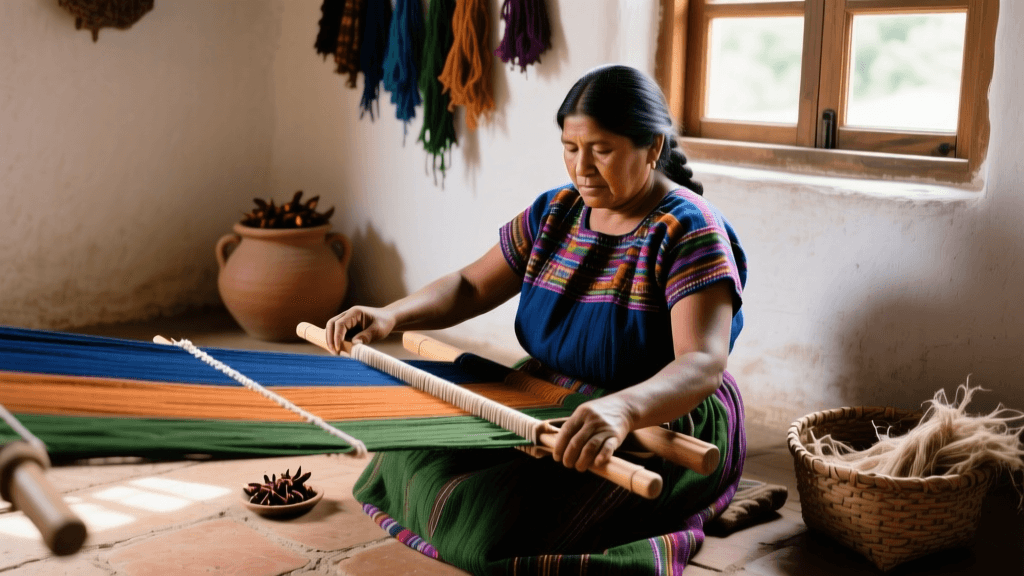
The backstrap loom is an indigenous technology dating back thousands of years. One end of the loom is tied to a tree or post, while the other is secured around the weaver's lower back. The weaver's body provides the tension, making every piece deeply personal and physically connected to its creator. Because the width is limited by the weaver's arm span (typically 18 to 24 inches), garments like the traditional huipil (tunic) are woven in two or three separate panels and then sewn together using intricate, decorative randa (seaming) stitches. In 2026, backstrap-woven cotton from the coastal regions, such as San Juan Colorado, commands a premium due to the intense labor and ergonomic toll it takes on the artisan.
The Pedal Loom (Telar de Pedal)
Introduced by the Spanish in the 16th century, the pedal loom is a larger, wooden frame operated by foot pedals. This technology allows for wider, continuous pieces of fabric and is predominantly used in the Valles Centrales, particularly in Teotitlán del Valle, to weave heavy wool tapetes (rugs) and wide rebozos (shawls). While not pre-Columbian, the pedal loom has been fully indigenized over five centuries, with Zapotec weavers developing complex tapestry techniques that are globally recognized today.
Decoding Zapotec and Mixtec Motifs
Authentic Oaxacan garments are not merely decorative; they are codified texts that communicate the wearer's village, marital status, and cosmological beliefs. According to research archived by the National Museum of the American Indian, these motifs serve as a visual language that preserves indigenous epistemology.
- The Rombo (Diamond): Often found on huipiles from the Isthmus of Tehuantepec and the Mixteca, the diamond represents the universe, the four cardinal directions, and the cycle of the sun.
- The Greca (Step-Fret): Inspired by the ancient stone mosaics of the Mitla archaeological site, the greca symbolizes the journey of life, the winding paths of rivers, and the transition between the physical and spiritual realms.
- El Sapo (The Frog) and El Ciempiés (The Centipede): Common in the humid, mountainous regions, these creatures represent rain, agricultural fertility, and a deep respect for the earth's biodiversity.
2026 Pricing Guide for Authentic Zapotec Garments
The economics of indigenous textiles have shifted dramatically. In 2026, artisan advocacy groups have successfully campaigned for living wages, and the cost of organic, hand-spun cotton has risen due to global supply chain shifts and climate impacts on regional agriculture. Below is a realistic pricing guide for authentic, direct-trade Oaxacan textiles in 2026. Prices are estimates based on purchasing directly from cooperatives or verified ethical galleries.
| Garment Type | Technique | Dye Type | 2026 Avg Price (USD) | 2026 Avg Price (MXN) |
|---|---|---|---|---|
| Daily Huipil | Backstrap Loom | Synthetic/Local Mix | $150 - $250 | $2,500 - $4,200 |
| Ceremonial Huipil | Backstrap Loom | Cochineal/Indigo | $500 - $1,200 | $8,400 - $20,000 |
| Rebozo (Hand-Knotted Fringe) | Backstrap/Pedal | Natural Botanical | $300 - $600 | $5,000 - $10,000 |
| Tapete (Wool Rug, 3x5 ft) | Pedal Loom | Cochineal/Indigo | $450 - $900 | $7,500 - $15,000 |
If you encounter a 'hand-woven' huipil selling for $40 in a tourist market in 2026, you are almost certainly looking at a machine-embroidered, synthetic-blend import. True hand-woven cotton takes a minimum of three to six weeks of daily labor to complete.
How to Spot Mass-Produced Imitations
As the aesthetic of Oaxacan textiles has been co-opted by fast-fashion brands, the market is saturated with machine-made replicas. Here is how to authenticate a piece in 2026:
- The Selvage Test: Examine the edges of the fabric. A true backstrap loom piece will have clean, tightly woven selvages on the sides because the weft thread turns back on itself. Machine-woven fabrics will have serged or overlocked edges to prevent fraying.
- The Tension Check: Hold the fabric up to the light. Hand-woven textiles will have microscopic variations in tension and thread thickness. Machine-woven fabrics are mathematically perfect and uniform.
- The Smell Test: Authentic natural dyes smell earthy, slightly woody, or like dried herbs. Synthetic dyes often carry a faint, acrid chemical odor, especially when warmed by the sun or body heat.
- The Burn Test (with caution): If you are allowed to burn a single stray thread, natural cotton or wool will turn to fine ash and smell like burning paper or hair. Synthetic polyester will melt into a hard, plastic bead.
Sourcing Directly from Artisan Cooperatives
The most ethical way to acquire Oaxacan textiles in 2026 is to bypass the middlemen and buy directly from women-led cooperatives. Organizations recognized by UNESCO's Intangible Cultural Heritage frameworks emphasize the importance of community-led economic models. Villages such as Santa María Alotepec, San Antonino Castillo Velasco, and Teotitlán del Valle have established community showrooms where 100% of the profits return to the weavers. When buying online, look for galleries that provide the name, photograph, and biography of the specific artisan who wove your garment, ensuring transparency and fair compensation.
Caring for Your Natural-Dye Textiles
To preserve the integrity of your 2026 acquisitions, proper care is essential. Never machine-wash a hand-woven, natural-dyed garment. Instead, hand-wash in cool water using a pH-neutral, biodegradable soap. Avoid wringing the fabric; gently press out the water and lay it flat to dry in the shade. Direct sunlight will rapidly fade cochineal and indigo over time. Store your huipiles and rebozos flat or rolled in acid-free tissue paper alongside cedar blocks to deter moths, ensuring these masterpieces of Latin American textile art endure for generations.