Ethical Guatemalan Huipil Sourcing and Weaving Guide for 2026
The Enduring Legacy of the Mayan Huipil
The huipil (pronounced wee-peel) is far more than a traditional garment; it is a wearable manuscript of Mayan cosmology, history, and identity. Worn by Indigenous women across Guatemala and parts of Mexico, this tunic-like blouse is an essential component of the traje (traditional dress). As we navigate the global textile market in 2026, the demand for authentic, handwoven Latin American garments has surged, driven by a growing appreciation for sustainable fashion and slow-craft methodologies. However, this increased visibility has also led to a proliferation of mass-produced, machine-embroidered knockoffs that appropriate sacred motifs without compensating the originating communities.
For collectors, cultural enthusiasts, and ethical fashion advocates, understanding the nuances of Mayan textile arts is paramount. The year 2026 marks a critical turning point in the fight for Indigenous intellectual property rights. Organizations and artisan coalitions are actively lobbying for legal frameworks to protect their ancestral designs from corporate plagiarism. When you purchase an authentic huipil today, you are not merely acquiring a piece of clothing; you are participating in a vital economic ecosystem that supports Indigenous sovereignty and preserves centuries-old backstrap weaving techniques.
Identifying Authentic Backstrap Loom Weaving
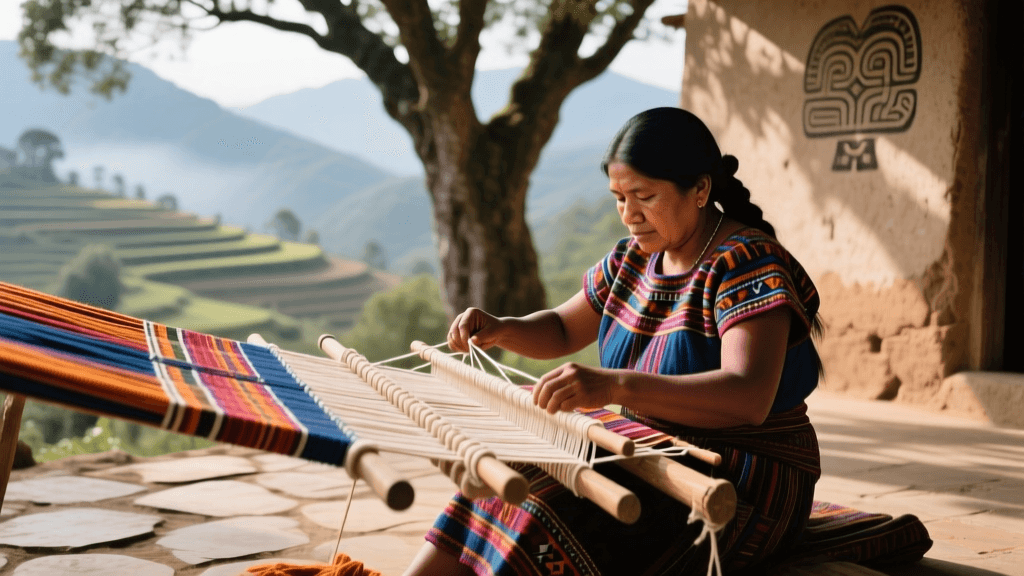
The hallmark of an authentic Guatemalan huipil is its creation on a backstrap loom (telar de cintura). This pre-Columbian technology relies on the weaver’s own body weight to create tension on the warp threads. One end of the loom is tied to a sturdy post or tree, while the other is secured around the weaver’s lower back via a leather or wooden strap. This intimate connection between the artisan and the textile results in a fabric with a distinct, dense, and slightly irregular texture that power looms simply cannot replicate.
The Selvedge and Brocade Tell
To verify authenticity in 2026, examine the garment’s selvedges (the finished edges of the fabric). On a backstrap loom, the weft thread is passed back and forth using a wooden shuttle, and the edges are naturally finished without cutting or hemming. If you see serged, machine-stitched, or cut side seams, the piece is likely a commercial hybrid or entirely factory-made.
Furthermore, authentic huipils feature brocade (supplementary weft) rather than embroidery. In brocading, the artisan introduces colored threads during the weaving process itself, creating patterns that are integrated into the structural matrix of the cloth. Run your fingers over the motif: if the design is stitched onto a pre-existing piece of flat fabric, it is embroidery. If the pattern is woven directly into the cloth, creating a raised, reversible, or integrated texture, you are looking at true backstrap brocade.
Natural Dyes: Cochineal and Indigo Mastery
While synthetic aniline dyes are common in everyday market pieces, the highest tier of contemporary and ceremonial huipils utilizes natural, botanically and entomologically derived dyes. Master dyers in regions like Totonicapán and Quetzaltenango continue to cultivate these ancient color sources.
- Cochineal (Dactylopius coccus): This parasitic insect, native to the Americas and found on Opuntia cacti, yields a spectacular range of reds, purples, and oranges. By altering the pH of the dye bath using acidic modifiers like lemon juice or alkaline modifiers like wood ash, artisans can extract vastly different hues from the same dried insects.
- Indigo (Indigofera suffruticosa): Native Mesoamerican indigo requires a complex fermentation and oxidation process. The leaves are soaked, fermented, and then vigorously aerated to precipitate the blue pigment. True natural indigo will have a slightly uneven, organic depth of color and may rub off faintly on the skin initially—a prized characteristic known as 'crocking' that proves its natural origin.
- Sacatinta and Marigold: For deep blacks and vibrant yellows, weavers utilize the sacatinta plant and wild marigolds (cempasúchil), often mordanted with alum or local banana sap to ensure colorfastness against the intense highland sun.
Ethical Sourcing: Where to Buy Authentic Huipils
Sourcing ethically in 2026 requires bypassing middlemen and tourist traps, opting instead for cooperatives that guarantee fair wages and community reinvestment. According to advocacy groups like Cultural Survival, supporting women-led cooperatives is one of the most effective ways to combat the systemic economic marginalization of Indigenous artisans. These organizations ensure that the weavers are paid a living wage that reflects the hundreds of hours required to spin, dye, and weave a single garment.
Top Fair-Trade Cooperatives in Guatemala
When planning a sourcing trip or ordering online, prioritize organizations with transparent supply chains. Trama Textiles is a premier example, operating as a fair-trade weaving cooperative that supports over 400 weavers across the Guatemalan highlands. They provide direct market access, business training, and healthcare initiatives for their members. Another vital institution is the Museo Ixchel del Traje Indígena in Guatemala City, which not only preserves historical textiles but also hosts vetted artisan pop-up sales and provides educational resources on regional weaving variations.
Comparison Chart: Mass-Produced vs. Authentic Handwoven
Understanding the market differences is crucial for making informed purchasing decisions in 2026. Below is a structured comparison to help you identify true artisanal work.
| Feature | Authentic Handwoven Huipil | Mass-Produced / Commercial Imitation |
|---|---|---|
| Creation Method | Backstrap loom; supplementary weft brocade | Power loom fabric with machine embroidery |
| Production Time | 2 to 6 months of daily weaving | Minutes per unit in a factory setting |
| Selvedge Edges | Naturally finished, continuous weft thread | Cut, serged, or machine-hemmed side seams |
| Design Integration | Woven into the structural matrix of the cloth | Stitched on top of pre-woven flat fabric |
| 2026 Price Range | $150 - $800+ USD (depending on complexity) | $20 - $60 USD |
| Cultural Motifs | Specific to the weaver's village and lineage | Generic, mixed, or appropriated pan-Mayan symbols |
Caring for Your Vintage and Contemporary Huipils
A handwoven huipil is an investment in wearable art. Proper care ensures that the cotton fibers remain strong and the natural dyes retain their vibrancy for generations. Never machine wash or dry clean an authentic backstrap-woven textile. The harsh agitation and chemical solvents will distort the tension of the warp threads and strip natural mordants from the fibers.
Instead, hand wash the garment in cool water using a pH-neutral, biodegradable soap. Avoid wringing or twisting the fabric; gently press the water out by rolling the huipil in a clean, dry cotton towel. Lay the garment flat to dry in a shaded, well-ventilated area. Direct sunlight will rapidly degrade both cotton fibers and natural dyes, particularly cochineal and indigo. If ironing is necessary, use a low heat setting and always place a cotton pressing cloth between the iron and the brocaded surface to prevent crushing the raised supplementary weft threads.
Conclusion
The landscape of Latin American traditional garments is evolving, but the soul of the Mayan huipil remains anchored in the rhythmic clack of the wooden batten and the vibrant stains of natural dyes. As consumers and collectors in 2026, our choices directly impact the survival of these ancestral practices. By learning to identify true backstrap weaving, understanding the chemistry of natural dyes, and committing to ethical sourcing through verified cooperatives, we help ensure that the women who weave the cosmos into cloth are respected, protected, and fairly compensated for their unparalleled artistry.