Preserving Silk Kimonos and Hanboks: 2026 Storage Guide
The Unique Vulnerability of Asian Silk Garments
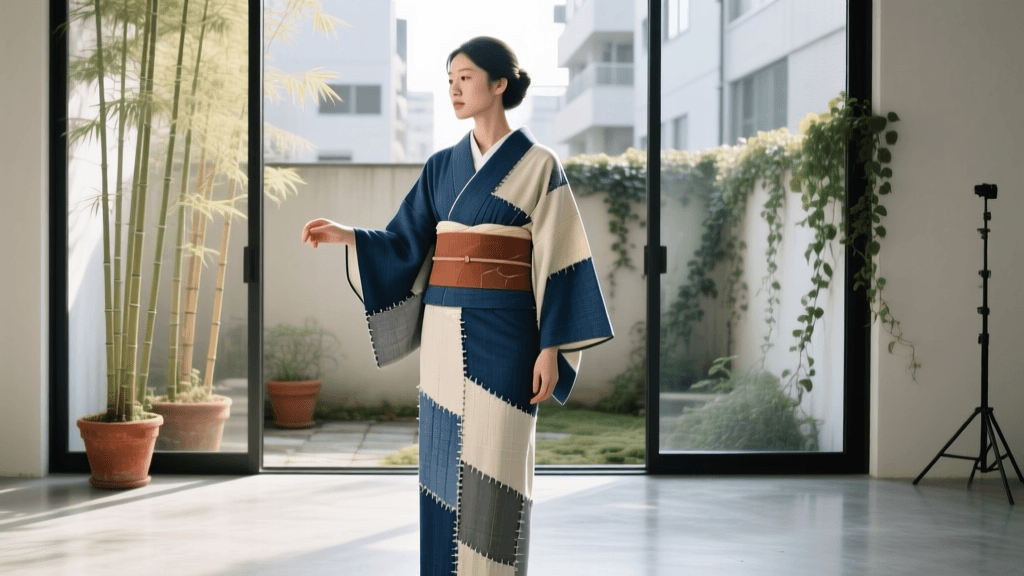
Asian traditional garments, particularly the Japanese kimono and the Korean hanbok, represent centuries of meticulous craftsmanship, cultural heritage, and textile artistry. However, preserving these masterpieces in a modern environment presents unique challenges. The primary material used in high-end kimonos and hanboks is silk, a natural protein fiber composed of fibroin. Unlike plant-based cellulose fibers such as cotton or linen, protein fibers are highly susceptible to environmental fluctuations, acidic degradation, and biological pests. Furthermore, these garments often feature intricate metallic threads (such as kinran in Japan or gils in Korea), delicate embroidery, and natural dyes that can easily tarnish, bleed, or shatter if improperly stored.
As we navigate the preservation landscape in 2026, advancements in smart home climate monitoring and archival material sciences have made it easier than ever for private collectors and families to protect their heirlooms. According to the Victoria and Albert Museum's textile conservation guide, preventive conservation—focusing on environment, handling, and storage—is the most effective way to extend the lifespan of historic garments without resorting to invasive treatments. This comprehensive guide outlines the exact protocols, materials, and techniques required to archive silk kimonos and hanboks safely in 2026.
Establishing the Ideal Microclimate in 2026
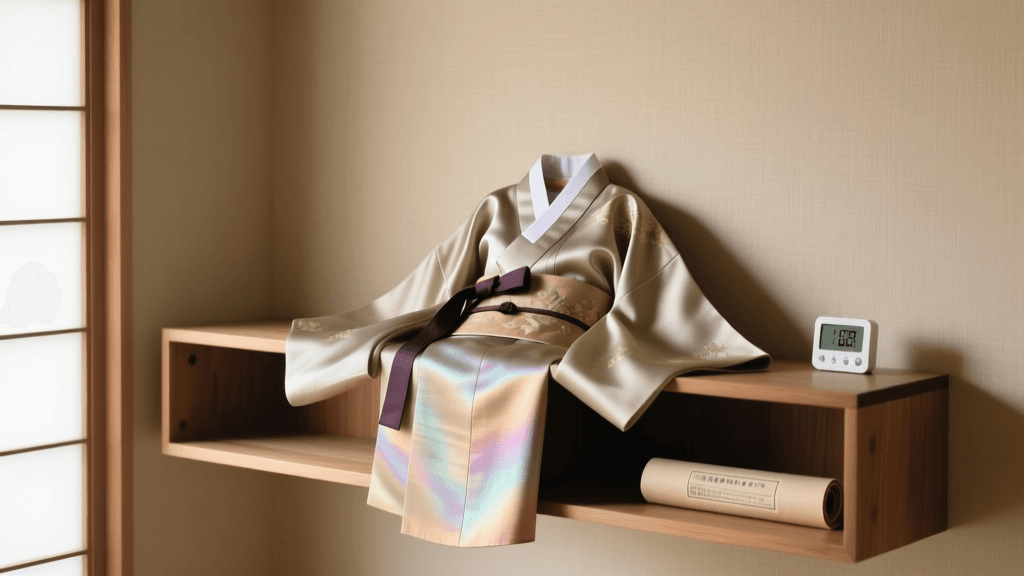
The foundation of textile preservation is strict climate control. Silk fibers become brittle in overly dry conditions and are prone to mold growth and dye migration in humid environments. The universally accepted standard for storing protein-based textiles is a temperature of 65°F to 70°F (18°C to 21°C) and a Relative Humidity (RH) of 45% to 55%. In 2026, maintaining this microclimate is highly accessible through smart environmental sensors.
For localized storage areas like closets or display cabinets, the Govee Wi-Fi Thermometer Hygrometer H5179 remains a top recommendation. Priced around $18 in 2026, this device offers real-time alerts to your smartphone if the RH drops below 40% or spikes above 60%, allowing you to intervene before moisture damage or desiccation occurs. If your storage area is prone to high humidity, integrating a desiccant system like silica gel cassettes (specifically the two-way conditioning Prosorb brand) inside your archival boxes will buffer the microclimate. Conversely, if you live in an arid climate, placing a small, localized humidifier in the room—never directly inside the garment box—will prevent the silk from shattering along fold lines.
Archival Storage Materials: What to Buy and Avoid
The physical materials that come into direct contact with your kimonos and hanboks must be chemically inert. Standard cardboard boxes, wooden cedar chests, and plastic dry-cleaning bags are highly detrimental to silk. Cardboard and raw wood off-gas acidic compounds and lignins that cause yellowing and structural weakening of the silk over time. Plastic dry-cleaning bags trap moisture and emit volatile organic compounds (VOCs) that degrade natural dyes.
Instead, collectors in 2026 should invest in buffered or unbuffered archival tissue paper and custom-sized barrier board boxes. For protein fibers like silk, unbuffered acid-free tissue paper is mandatory. Buffered tissue contains calcium carbonate, which is beneficial for plant-based fibers but can cause chemical reactions that damage protein structures over decades. The Gaylord Archival Blue/Grey Barrier Board Boxes are an industry standard, featuring a metal-edge construction that prevents the box from collapsing under its own weight. In 2026, a standard 40-inch long kimono storage box costs approximately $65 to $85, a necessary investment for heirloom protection.
Storage Material Comparison Chart
| Material | Safety for Silk | Pros | Cons | 2026 Estimated Cost |
|---|---|---|---|---|
| Unbuffered Acid-Free Tissue | Excellent | Prevents creasing, chemically inert, breathable | Requires replacement every 3-5 years | $15 per pack (25 sheets) |
| Unbleached Cotton Muslin | Very Good | Washable, breathable, protects from dust/light | Must be washed before first use to remove sizing | $20 - $35 per bag |
| Metal-Edge Archival Board Box | Excellent | Structural support, blocks light, acid-free | Bulky, higher initial cost | $65 - $85 per box |
| Polyethylene (PE) Plastic Bin | Good (with lining) | Water-resistant, pest-proof, durable | Traps moisture if not ventilated, requires interior lining | $25 - $40 per bin |
| Traditional Cedar Chest | Poor | Aesthetic appeal, historical use | Off-gasses acidic oils, stains silk, traps moisture | N/A (Avoid) |
Mastering the Tatoushi: Kimono Folding Techniques
Unlike Western garments that are often stored on padded hangers, traditional kimonos are specifically designed to be folded flat. Hanging a heavy silk kimono for long periods places immense stress on the shoulder seams, leading to permanent distortion and tearing. The traditional Japanese method of wrapping a kimono is called tatoushi. While historically made from thick washi paper, modern preservationists use unbuffered acid-free tissue paper to mimic this protective layer.
To fold a kimono for archival storage, lay it face down on a clean, large surface. Fold the sleeves back, aligning the edges precisely. Fold the right side of the body toward the center back seam, followed by the left side, creating a long, narrow rectangle. The critical step in preservation is padding the folds. Every time the silk bends, a stress point is created. By rolling small 'sausages' of acid-free tissue paper and placing them inside every fold line, you prevent hard creases from forming. This prevents the silk fibers from breaking along the fold, a common issue seen in antique kimonos. Once folded and padded, wrap the entire garment in a large sheet of unbleached cotton muslin before placing it in the archival box.
Preserving the Hanbok: Chima and Jeogori Storage
The Korean hanbok requires a slightly different approach due to its distinct structural components: the jeogorichima
For the chima, do not attempt to flatten the pleats entirely. Instead, lay the skirt flat and pad the deep folds of the pleats with crumpled acid-free tissue paper to support their three-dimensional structure. Fold the skirt in half or thirds depending on the width of your archival box, ensuring tissue separates every layer of silk. The jeogori should be treated similarly to the kimono body: folded with the sleeves tucked inward and the front panels crossed, with tissue padding placed at the armpits and shoulder folds. Store the jeogori on top of the chima within the same archival box to keep the set together and prevent heavier items from crushing the delicate jacket embroidery.
Pest Management Without Toxic Chemicals
Silverfish, carpet beetles, and clothes moths are the natural enemies of protein fibers. Historically, collectors relied on naphthalene or paradichlorobenzene (PDB) mothballs. In 2026, these chemicals are widely recognized as highly toxic to humans and devastating to textiles; they emit gases that can melt metallic threads and permanently stain silk. The Canadian Conservation Institute guidelines on textile preservation strongly advise against the use of chemical pesticides in enclosed storage spaces.
Modern pest management relies on exclusion and natural deterrents. Ensure your archival boxes are tightly sealed. Place pheromone traps for clothes moths and silverfish in the corners of your storage room to monitor pest activity early. If you wish to use a scent deterrent, dried lavender sachets or cedar blocks can be placed outside the muslin wrap and outside the archival box. Never allow cedar or botanical oils to come into direct contact with the silk, as the oils will transfer and cause irreversible lipid stains. Additionally, lightly dusting the perimeter of your storage room with food-grade diatomaceous earth provides a safe, non-toxic physical barrier against crawling insects.
Sourcing Professional Restoration Services
Despite meticulous care, antique garments may suffer from historical damage, such as shattered silk, dye bleed, or tarnished metallic threads. Attempting to wash, iron, or stitch these garments at home will almost certainly cause further harm. Silk requires specialized wet-cleaning techniques and conservation-grade stitching that only trained professionals possess.
If your kimono or hanbok requires stabilization, you must seek a certified textile conservator. The American Institute for Conservation (AIC) maintains a directory of vetted professionals who adhere to strict ethical guidelines, ensuring that any restoration work is reversible and historically accurate. In 2026, professional stabilization of a standard kimono ranges from $400 to $1,200, depending on the extent of the shattering and the complexity of the embroidery. By combining modern smart-climate monitoring, chemically inert archival materials, and traditional folding techniques, you can ensure that these magnificent pieces of Asian cultural heritage survive intact for generations to come.