Traditional Chinese Dresses: Hanfu, Qipao & Varieties
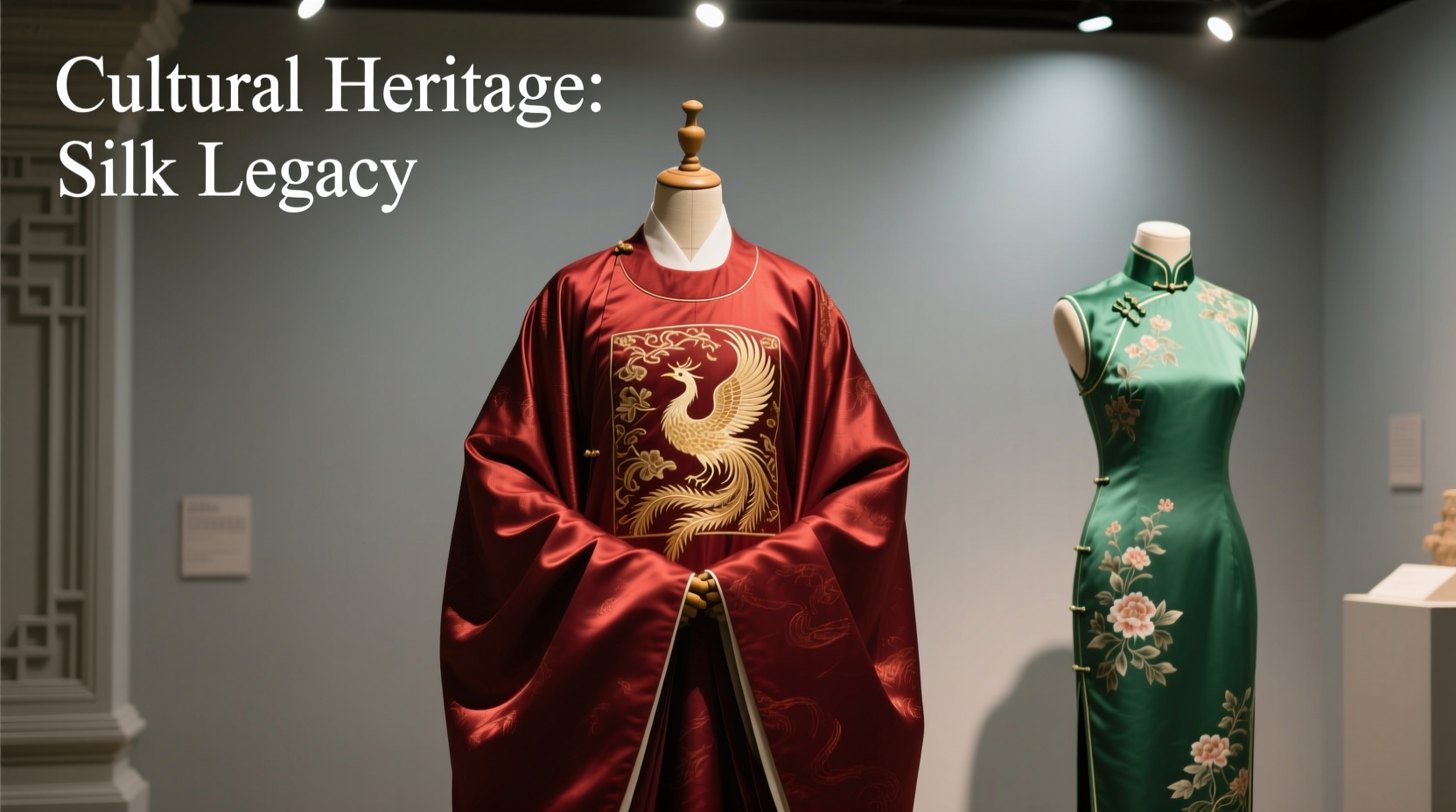
When international audiences search for traditional Chinese dresses, they are often met with a monolithic visual of the form-fitting qipao. However, this Western catch-all term obscures a vast, highly structured sartorial history spanning over three millennia. To truly understand Chinese sartorial heritage, one must deconstruct the terminology and appreciate the distinct engineering, regional variations, and cultural protocols that define garments like the Hanfu, the Qipao, and the Tangzhuang.
The Taxonomy of Traditional Chinese Dresses
Before exploring construction and sourcing, it is vital to distinguish between the three primary garments that dominate the modern market and historical record.
| Garment | Historical Origin | Collar & Closure | Silhouette & Tailoring | Modern Price Range (USD) |
|---|---|---|---|---|
| Hanfu | Han to Ming Dynasties (c. 206 BCE – 1644 CE) | Cross-collar (jiaoling), sash ties | Flat-cut, voluminous, no darts | $60 – $400+ (Artisan) |
| Qipao / Cheongsam | Republic Era (1920s – 1940s) | Mandarin collar, pankou frogs | 3D tailored, form-fitting, darts | $80 – $2,500+ (Bespoke) |
| Tangzhuang | Modern synthesis of Qing dynasty magua | Mandarin collar, pankou frogs | Boxy, relaxed, cropped jacket | $40 – $150 |
Hanfu: The Ancient Cross-Collar Silhouette
The Hanfu represents the historical dress of the Han ethnic majority. Unlike Western tailoring, which cuts fabric to conform to the body’s three-dimensional curves, traditional Hanfu relies on flat-cutting. Fabric is woven to specific widths and folded, draped, and tied, honoring the integrity of the textile without the use of darts or shoulder seams.
The Rule of Jiaoling Youren
The most critical cultural protocol in wearing a Hanfu is the jiaoling youren (intersecting collar, right lapel). The left side of the collar must always cross over the right. According to the Smithsonian National Museum of Asian Art, this right-over-left orientation was deeply tied to ancient cosmological beliefs regarding life and yang energy. Conversely, crossing the right over the left (zuoren) was strictly reserved for dressing the deceased or depicting foreign “barbarian” tribes in ancient art. Wearing it incorrectly today is considered a severe cultural faux pas.
Mamianqun and the Ming Dynasty Aesthetic
Currently experiencing a massive revival in modern streetwear, the Ming Dynasty mamianqun (horse-face skirt) is a marvel of structural design. It features flat, unpleated front and back panels (the “horse faces”) flanked by deeply pleated side panels. This construction allows for modesty while walking or riding, while the heavy silk jacquard weaves provide a striking, architectural drape. Paired with an ao (a lined jacket featuring a stand-up collar and metal zikou snap buttons), this silhouette remains the gold standard for formal Hanfu attire.
Qipao and Cheongsam: The Tailored Republic Era
While Hanfu relies on draping, the Qipao (known as Cheongsam in Cantonese) is a masterclass in structural tailoring. Evolving from the loose, A-line changpao worn by Manchu women during the Qing Dynasty, the modern Qipao was born in 1920s Shanghai. It represents a fascinating synthesis of Chinese aesthetics and Western sartorial engineering.
Jingpai vs. Haipai: A Tale of Two Cities
When sourcing a Qipao, buyers must understand the two dominant regional styles:
- Jingpai (Beijing Style): Rooted in northern traditions, the Jingpai Qipao is generally looser, more conservative, and features an A-line silhouette with lower slits. It heavily utilizes traditional pankou (knotted frog buttons) and heavy brocades, prioritizing modesty and regal elegance.
- Haipai (Shanghai Style): The cosmopolitan Haipai style introduced Western darts, set-in sleeves, and high kaicha (slits) to accentuate the figure. As documented by the Metropolitan Museum of Art’s Heilbrunn Timeline, the Shanghai Qipao became the definitive garment of the modern, liberated Chinese woman in the 1930s, often sewn from lightweight crepes and vibrant silks.
The Art of the Hand-Rolled Hem
A true hallmark of a high-end, bespoke Qipao is the gunbian (hand-rolled hem). Unlike machine-stitched hems, the artisan uses a single thread to roll the silk edge inward, creating a virtually invisible, incredibly durable finish that allows the bias-cut silk to stretch and move with the wearer. This technique alone can take dozens of hours to complete on a single dress.
Artisan Textiles: Beyond Standard Silk
To truly appreciate traditional Chinese dresses, one must examine the textiles. Mass-market garments often rely on synthetic polyesters, but authentic cultural pieces utilize heritage weaves and dyeing techniques.
- Xiangyunsha (Gambiered Canton Gauze): Originating from Guangdong, this UNESCO-recognized fabric is dyed using the juice of the Dioscorea cirrhosa tuber and coated with iron-rich river mud. The result is a rustling, water-resistant, and naturally cooling fabric with a distinct dark brown and black dual-tone. Authentic Xiangyunsha garments command premium prices, often starting at $300.
- Song Brocade (Songjin): Characterized by its soft, supple texture and intricate geometric patterns, Song brocade is highly prized for Hanfu outerwear and Mamianqun skirts. Unlike the stiff Shu brocade, Songjin drapes beautifully, making it ideal for garments requiring fluid movement.
- Xiang Embroidery (Xiangxiu): Hailing from Hunan province, this technique is famous for its double-sided embroidery, where the pattern is identical and flawless on both sides of the silk. It is frequently used on the lapels and cuffs of high-end bespoke Qipaos.
Buyer’s Framework: Sourcing Authentic Garments
Whether you are purchasing a Hanfu for a cultural festival or commissioning a bespoke Qipao for a wedding, understanding the market landscape is crucial.
Sizing and Measurement Protocols
Hanfu sizing is generally forgiving due to its tie-closure and flat-cut nature; buyers typically only need to provide height, weight, and waist measurements to select a standard size. The Qipao, however, requires rigorous bespoke measurements. A master tailor will take up to 36 individual measurements, including the precise circumference of the neck, the slope of the shoulders, and the exact distance between the bust apex points, to ensure the pankou closures lay flat without gaping.
Where to Source
For Hanfu, specialized digital storefronts and independent “Hanfu studios” (such as Minghuatang or Shisan Yu) collaborate with historians to recreate Ming and Song dynasty patterns with museum-level accuracy. Expect to pay between $80 and $250 for high-quality, historically accurate off-the-rack sets.
For a Qipao, avoid tourist-trap boutiques that sell mass-produced, poorly fitted polyester blends. Instead, seek out established tailors in Shanghai’s French Concession or specialized diaspora boutiques in cities like New York, London, or Vancouver. A genuine, hand-finished silk Qipao with hand-rolled hems and custom-knotted pankou will typically range from $600 to $2,500, reflecting the meticulous hand-stitching required.
“The beauty of Chinese sartorial history lies in its diversity. From the philosophical drape of the Hanfu to the architectural precision of the Qipao, these garments are not mere costumes; they are living, evolving expressions of cultural identity.” — Curatorial notes from the Victoria and Albert Museum’s Asian Collections.
By understanding the distinct histories, construction methods, and regional variations of traditional Chinese dresses, buyers and enthusiasts can engage with these garments respectfully, ensuring these magnificent textile traditions continue to thrive in the modern era.