Beyond Qipao: Chinese Dress Regions
The Myth of a Monolithic Silhouette
When researching the traditional Chinese dress ladies wear for formal occasions, cultural festivals, or weddings, the global imagination often defaults to a single, ubiquitous silhouette: the form-fitting, high-collared Shanghai qipao. However, treating Chinese sartorial history as a monolith erases centuries of profound regional diversity. The reality is that the Chinese dress ladies favor is deeply dictated by geography, climate, local artisanal traditions, and historical trade routes.
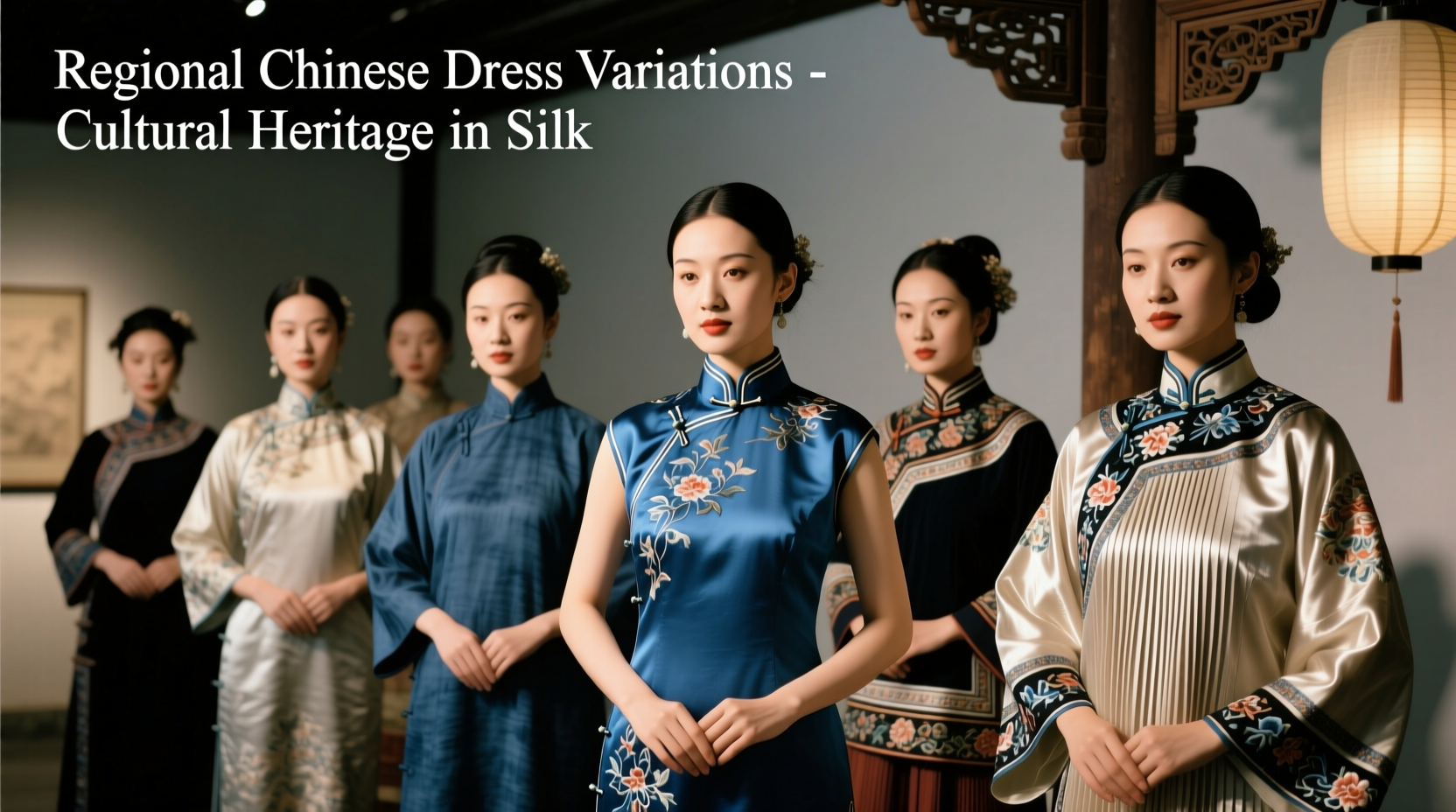
To truly appreciate Chinese garment culture, one must look beyond the standardized mass-produced cheongsam and explore the distinct regional substyles that define the nation's textile heritage. From the imperial conservatism of Beijing to the humid, pragmatic adaptations of the Lingnan region, the variations in cut, fabric, and embellishment reveal a rich tapestry of living history.
Haipai (Shanghai School): The Birth of the Modern Silhouette
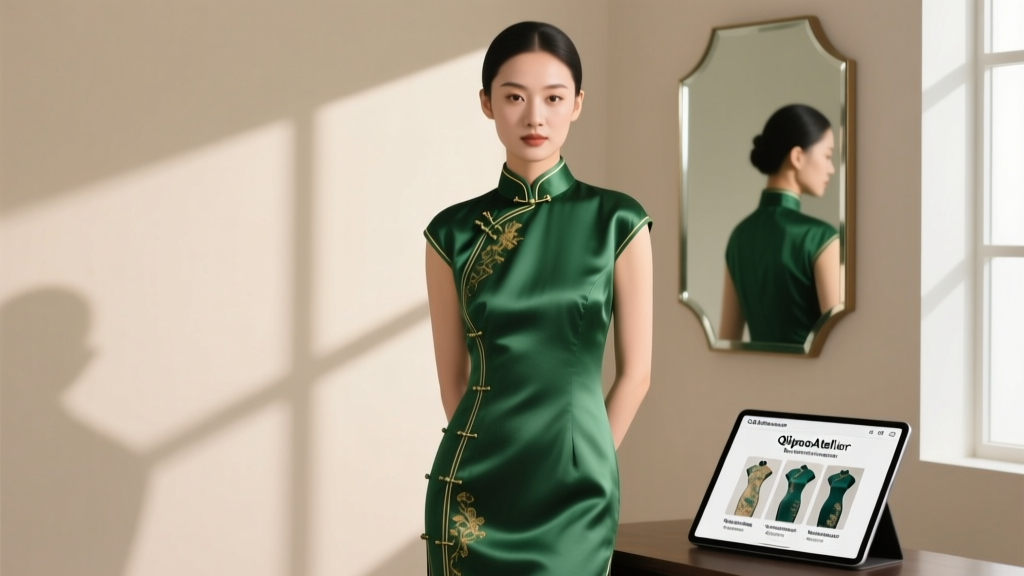
The Haipai (Shanghai School) qipao is what most Westerners recognize as the quintessential Chinese dress. Emerging in the cosmopolitan hub of 1920s and 1930s Shanghai, this style represented a radical departure from traditional Qing Dynasty robes. According to the archives at the Hong Kong Heritage Museum, Shanghai tailors began integrating Western sartorial techniques to cater to a modernizing, urban female populace.
Construction and Tailoring
Unlike traditional Chinese garments that relied on flat, straight-grain cutting, the Haipai qipao introduced bust and waist darts (shengdao), set-in sleeves, and shoulder padding. This three-dimensional tailoring allowed the garment to contour closely to the body. The iconic high, stiff collar (yingling) and thigh-high side slits were popularized during this era, balancing modesty with an unprecedented freedom of movement for women entering the workforce and university life.
- Primary Fabrics: Lightweight silks, crepe de chine, and imported lace.
- Embellishment: Restrained, often relying on the geometric patterns of the woven textile rather than heavy surface embroidery.
- Modern Price Range: A bespoke, hand-tailored Haipai qipao from a master tailor in Shanghai's长乐路 (Changle Road) district typically ranges from $800 to $3,500 USD, depending on the silk grade and hand-rolled hem detailing.
Jingpai (Beijing School): Imperial Heritage and Conservative Elegance
While Shanghai embraced Western modernity, the Jingpai (Beijing School) remained steadfastly rooted in imperial traditions. The Beijing-style qipao is characterized by a more relaxed, conservative fit, prioritizing the dignity of the wearer and the showcase of exquisite, time-honored craftsmanship over the display of the female form.
The Art of Flat Cutting and Jingxiu
The Beijing style relies on traditional flat-pattern cutting, where the front and back panels are often cut from a single piece of fabric without shoulder seams. This creates a distinctive, structured drape that does not cling to the body. The true hallmark of the Jingpai garment is Jingxiu (Beijing embroidery), an imperial technique that utilizes metallic threads, peacock feathers, and intricate padding to create raised, three-dimensional motifs of dragons, phoenixes, and peonies.
"The Beijing qipao is less about the silhouette of the body and more about the canvas it provides for the artisan's needle. It is an architectural garment." — Textile Conservator, Victoria and Albert Museum
Because of the heavy brocades and dense metallic embroidery, Jingpai garments are substantial in weight and are predominantly worn for high-formal winter events, traditional tea ceremonies, and state-level cultural banquets.
Lingnan (Cantonese) Adaptations: Climate, Commerce, and Xiangyunsha
In the deep south, the subtropical climate of the Lingnan region (Guangdong and Guangxi) necessitated a completely different approach to the Chinese dress ladies wear during the sweltering summer months. Cantonese tailors adapted the qipao to be shorter, with lower collars and wider, more breathable armholes.
The Mastery of Xiangyunsha (Gambiered Canton Gauze)
The crowning achievement of Lingnan textile culture is Xiangyunsha (香云纱), a UNESCO-recognized intangible cultural heritage fabric. As documented by the China National Silk Museum, this unique silk is dyed using the tannin-rich juice of the Dioscorea cirrhosa yam and subsequently coated with iron-rich river mud. The chemical reaction between the tannins and the mud creates a dark, lustrous, and slightly crisp fabric that is naturally water-resistant, antibacterial, and exceptionally cooling against the skin.
A Cantonese qipao crafted from authentic Xiangyunsha is a highly prized investment piece. The fabric itself costs between $150 and $400 USD per meter, and a finished, tailored garment easily commands prices upward of $1,200 USD. The subtle, earthy sheen and the faint, natural scent of the yam dye make it instantly recognizable to connoisseurs of Chinese sartorial arts.
Comparative Guide: Regional Qipao Substyles
To assist collectors, brides, and cultural enthusiasts in identifying and selecting the appropriate garment, the following table outlines the core structural and aesthetic differences between China's primary qipao schools.
| Regional School | Tailoring Method | Primary Fabric & Drape | Collar & Slit Profile | Ideal Occasion |
|---|---|---|---|---|
| Haipai (Shanghai) | 3D Western darts, set-in sleeves | Crepe, lightweight silk; body-hugging | High stiff collar, high thigh slits | Cocktails, modern weddings, galas |
| Jingpai (Beijing) | Flat cross-cutting, no darts | Heavy brocade, velvet; structured drape | Moderate collar, lower calf slits | Winter banquets, formal cultural events |
| Lingnan (Canton) | Relaxed fit, raglan or short sleeves | Xiangyunsha, linen; breathable, crisp | Low/soft collar, moderate slits | Summer events, outdoor tea gatherings |
| Jiangnan (Suzhou) | Soft tailoring, fluid draping | Organza, soft satin; ethereal flow | Delicate scalloped edges, subtle slits | Spring festivals, artistic performances |
Hanfu Regionalism: Northern Severity vs. Southern Fluidity
While the qipao dominates the 20th-century narrative, the broader category of Hanfu (traditional Han Chinese clothing) is experiencing a massive revival among younger generations. When examining the Chinese dress ladies wear within the Hanfu movement, regional historical variations are strictly observed by purists and modern designers alike.
During the Ming Dynasty (1368–1644), the heavy, structured Mamianqun (horse-face skirt) constructed from thick, pleated brocades was essential for the harsh winters of the Northern capital. Conversely, in the water towns of Jiangnan (South of the Yangtze River), ladies favored lighter, flowing garments made of translucent gauze and soft silks, heavily adorned with Su Xiu (Suzhou embroidery), which is renowned for its impossibly fine, double-sided stitching that captures the delicate aesthetics of southern gardens and koi ponds.
Sourcing Authentic Regional Garments: A Buyer’s Framework
Acquiring an authentic regional Chinese dress requires navigating a market flooded with fast-fashion, polyester imitations. To ensure cultural respect and garment longevity, adhere to the following sourcing principles:
- Verify the Fiber Content: Authentic regional garments utilize 100% mulberry silk, Xiangyunsha, or high-grade natural linens. Avoid "satin" blends that are primarily polyester, as they lack the breathability and historical accuracy required for traditional dress.
- Examine the Pankou (Frog Closures): In high-end Haipai and Jingpai garments, the pankou (knotted buttons) are hand-rolled and stitched using the same silk as the dress. Machine-made, stiff cotton knots are a hallmark of mass-produced tourist garments.
- Seek Out Intangible Heritage Artisans: For Beijing embroidery or Cantonese Xiangyunsha, look for ateliers certified by provincial Intangible Cultural Heritage bureaus. These cooperatives ensure that the dyeing and weaving processes adhere to historical methodologies.
- Budget for Bespoke: True regional variations are rarely available in standardized off-the-rack sizing. Budget between $600 and $2,500 USD for a commissioned piece that honors the specific tailoring rules of the chosen region.
Conclusion
The Chinese dress ladies wear today is not a relic of a singular past, but a vibrant, regionally diverse spectrum of sartorial engineering. Whether it is the architectural grace of a Beijing brocade, the cosmopolitan allure of a Shanghai silk, or the earthy, climate-responsive brilliance of Cantonese Xiangyunsha, each substyle offers a unique lens into China's vast cultural geography. By understanding and respecting these regional variations, wearers and collectors do more than don a beautiful garment; they participate in the preservation of a complex, living heritage.