Red Traditional Chinese Dress: Wedding & Event Guide
The Cultural Weight of Red in Chinese Sartorial Tradition
In Chinese culture, red (hong) is far more than an aesthetic choice; it is an acoustic and visual shield against malevolent forces and a powerful magnet for prosperity, joy, and vitality. When selecting a red traditional Chinese dress for significant life events, one is participating in a sartorial lineage that stretches back millennia. From the cinnabar-dyed silks of the Han Dynasty to the vermilion brocades of contemporary bridal wear, red remains the undisputed sovereign of celebratory attire.
However, navigating the modern landscape of Chinese formalwear requires a nuanced understanding of garment typology. A 'red dress' is not a monolith. Depending on the occasion—be it a traditional tea ceremony, a modern banquet, or a Lunar New Year celebration—the appropriate silhouette, fabric, and embroidery motifs shift dramatically. This guide decodes the essential red garments, offering actionable advice on procurement, styling, and cultural etiquette.
Decoding the Garments: Qipao, Qungua, and Xiuhefu
To wear a red traditional Chinese dress correctly, you must first identify which historical and regional silhouette aligns with your event. The contemporary market is dominated by three distinct categories.
The Qipao (Cheongsam): Elegance for Banquets and Receptions
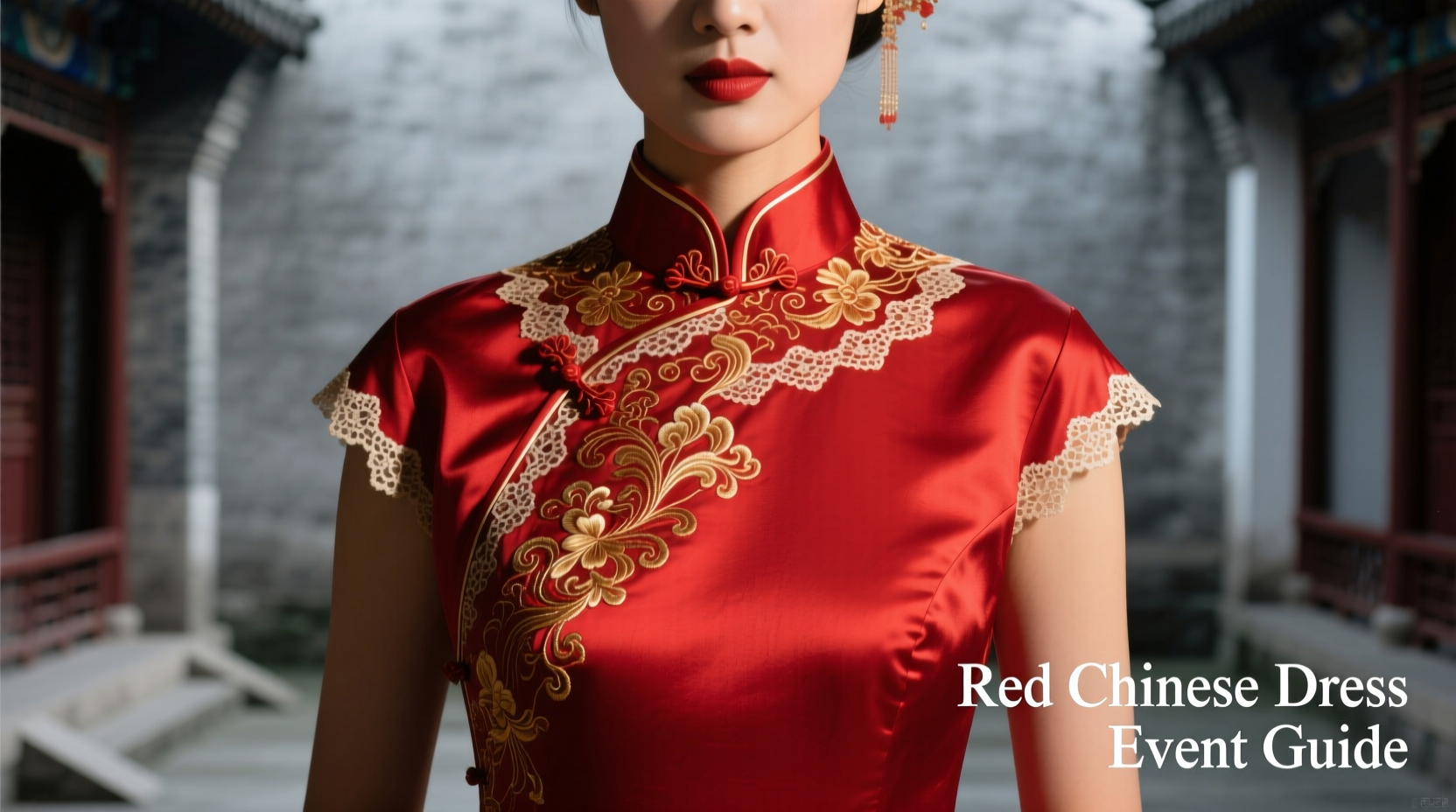
Originating in the cosmopolitan crucible of 1920s Shanghai, the qipao (or cheongsam in Cantonese) is a figure-hugging, one-piece dress characterized by its mandarin collar (yuanling), asymmetrical side closures, and dramatic side slits (kaiqi). While historically worn as daily attire by urban intellectuals, the modern red qipao is a staple for wedding banquets, formal galas, and high-stakes business dinners.
- Construction Detail: Authentic qipao rely on pankou (hand-knotted frog fasteners) rather than zippers. A master tailor will carve the fastener knots from the same silk bias as the dress itself.
- Best For: Evening wedding receptions, formal dinner parties, and cultural performances.
The Qungua and Longfenggua: The Tea Ceremony Standard
The qungua is a traditional two-piece ensemble consisting of a structured jacket (gua) and a pleated skirt (qun). When heavily embroidered with gold and silver couching thread depicting dragons and phoenixes, it is elevated to a longfenggua. This garment is the undisputed uniform for the traditional Chinese wedding tea ceremony, honoring the bride's transition into her new family.
- Embroidery Density: The formality of a qungua is measured by its embroidery coverage. A Xiuhegua features roughly 50% coverage, while the pinnacle of bridal luxury, the Gua Huang (Emperor Jacket), boasts 100% coverage, completely obscuring the red silk base beneath dense goldwork.
- Best For: Wedding tea ceremonies, ancestral worship rituals, and highly formal family introductions.
Xiuhefu: The Ming-Inspired Bridal Showstopper
Despite its historical appearance, the Xiuhefu is a relatively modern invention, popularized in the early 2000s by the television drama 'Xiuhe'. It draws heavy aesthetic inspiration from the Ming Dynasty's aoqun (jacket and skirt) system. It features a wide-sleeved, A-line tunic worn over a mamianqun (horse-face skirt), which is characterized by its flat front and back panels with deeply pleated sides.
- Construction Detail: The Xiuhefu is inherently more forgiving and modest than the qipao, utilizing flat-cutting techniques that prioritize comfort and ceremonial gravitas over the body's natural contours.
- Best For: The primary wedding ceremony, outdoor photoshoots, and grand entrance processions.
Occasion Matrix: Which Red Dress to Wear When
Selecting the incorrect garment for a specific cultural event can lead to sartorial dissonance. Use this matrix to align your attire with the occasion's formality and historical expectations.
| Occasion / Event | Recommended Garment | Ideal Fabric Composition | Appropriate Motifs | Formality Level |
|---|---|---|---|---|
| Wedding Tea Ceremony | Longfenggua (Two-piece) | Heavy Silk Satin, Gold Couching | Dragon, Phoenix, Peony | Ultra-Formal |
| Wedding Banquet / Reception | Qipao / Cheongsam | Silk Brocade, Velvet, Xiangyunsha | Double Happiness, Plum Blossom | Formal |
| Primary Wedding Procession | Xiuhefu (Aoqun style) | Woven Jacquard, Heavy Organza | Crane, Cloud, Lotus | Ceremonial |
| Lunar New Year Gathering | Modern改良 Qipao (Modified) | Cotton-blend, Light Brocade | Coin, Koi Fish, Bamboo | Semi-Formal |
| Cultural Gala / Banquet | Floor-length Qipao | Mulberry Silk, Crepe de Chine | Landscape, Orchid, Abstract | Black-Tie Equivalent |
Textile Integrity: Beyond Standard Silk
When investing in a high-end red traditional Chinese dress, the fabric dictates the garment's drape, longevity, and cultural resonance. According to the China National Silk Museum, the preservation and innovation of heritage textiles are vital to the authenticity of these garments.
Xiangyunsha (Gambiered Canton Gauze): Often referred to as 'soft gold,' this intangible cultural heritage fabric from Guangdong province is dyed using the juice of the shouliang (薯莨) yam and sealed with iron-rich river mud. The result is a rust-red or deep crimson fabric that is naturally water-resistant, anti-bacterial, and develops a beautiful, crackled patina over time. A genuine Xiangyunsha qipao is a masterclass in understated luxury.
Zhijin (Gold-Woven Brocade): For qungua and formal winter qipao, Zhijin brocade integrates actual gold or silver foil threads directly into the weave of the silk, rather than merely embroidering the surface. This technique, championed by the artisans of Nanjing, creates a structural luminosity that catches the light dynamically as the wearer moves.
Procurement and Pricing: Navigating the Market
The market for red Chinese formalwear is highly stratified. Understanding these tiers prevents overpaying for mass-produced synthetics and helps you allocate your budget toward genuine artisanship.
- Mass-Market / Off-the-Rack ($80 - $250 USD): Typically made from polyester blends or low-grade rayon. Embroidery is machine-done with synthetic threads that lack luster. Acceptable for single-use Lunar New Year parties or casual banquets, but lacks the structural integrity for heirloom preservation.
- Mid-Tier Boutique ($500 - $1,800 USD): Features genuine mulberry silk, real silk brocade, and a mix of machine and hand-embroidery. The pankou fasteners are usually hand-knotted. This is the sweet spot for modern brides and frequent gala attendees.
- Bespoke / Master Artisan ($3,000 - $20,000+ USD): Commissioned directly from heritage tailors in Shanghai, Hong Kong, or Suzhou. Includes custom pattern drafting, heritage fabrics like Xiangyunsha, and hundreds of hours of hand-embroidery (Su embroidery or gold couching). A bespoke Gua Huang can easily exceed $15,000 due to the sheer density of metallic threadwork.
Styling Protocols and Cultural Etiquette
Wearing a red traditional Chinese dress requires adherence to specific styling protocols to maintain cultural respect and visual harmony. The Victoria and Albert Museum's archive on Chinese dress highlights how historical garments were always part of a highly codified head-to-toe ensemble.
The Rule of the Collar (Youren)
For all traditional Chinese garments, the left side of the collar must always cross over the right side (youren 右衽). Crossing right over left is historically reserved for the deceased and is considered a severe cultural taboo. Always verify this alignment when wearing a qipao or Xiuhefu.
Footwear and Accessories
Avoid pairing red ceremonial wear with black or white shoes, as these colors are inextricably linked to mourning in traditional Chinese culture. Opt for red silk slippers, gold leather pumps, or embroidered heels. Jewelry should lean heavily toward gold, jade, or pearls. Jade, in particular, is believed to harmonize with the fiery energy of red, providing a grounding, protective influence for the wearer.
Hair and Headpieces
For brides wearing a qungua or Xiuhefu, the hair is traditionally swept up into an elaborate chignon adorned with gold filigree hairpins (buyao) and fresh or silk flowers. Loose, unstyled hair is considered inappropriate for highly formal ceremonial wear. As noted in The Metropolitan Museum of Art's explorations of Chinese sartorial influence, the integration of intricate headpieces completes the architectural silhouette of traditional Chinese formalwear.
Final Thoughts on Sartorial Heritage
A red traditional Chinese dress is a wearable archive of philosophy, artistry, and familial hope. Whether you are slipping into a sleek, 1930s-inspired qipao for a modern banquet or donning a heavy, gold-embroidered qungua to serve tea to your elders, you are engaging with a living tradition. By prioritizing authentic textiles, respecting construction protocols, and understanding the specific demands of your occasion, you ensure that your attire honors the profound legacy of Chinese garment-making.