Qipao Buttons Guide: The History and Art of Pankou Knots

Beyond the Fastener: What Are Pankou Knots?
When discussing the iconic silhouette of the Chinese cheongsam, the conversation often gravitates toward the mandarin collar, the side slits, and the form-fitting tailoring. Yet, the true soul of the garment lies in its fasteners. Commonly searched as qipao buttons, these intricate closures are known in Chinese as pankou (盘扣). Far from mere utilitarian notions, pankou are masterpieces of textile sculpture, representing a convergence of structural engineering, cultural symbolism, and sartorial elegance.
To refer to them simply as 'buttons' is to underestimate their complexity. Unlike Western shank or flat buttons that require a buttonhole cut into the fabric, pankou are entirely self-contained knot-and-loop systems. They are crafted from the very same silk as the garment or from contrasting soutache braids, serving as both a functional anchor and a profound decorative motif. According to the textile archives at the China National Silk Museum, the evolution of these knotted fasteners mirrors the broader socio-economic shifts in Chinese history, transitioning from humble cord ties to elaborate symbols of status and regional identity.
The Anatomy of a Traditional Qipao Button
Understanding the craftsmanship of qipao buttons requires a breakdown of their physical anatomy. A complete pankou set consists of two primary components that interlock seamlessly:
- Huatou (花头 - The Knot Head): This is the decorative, often asymmetrical or floral 'button' side. It is meticulously coiled and stitched into a rigid shape that acts as the anchor.
- Huan (环 - The Loop): The counterpart to the huatou, this is a carefully sized loop that stretches just enough to accommodate the knot head while remaining tight enough to hold the garment securely closed under the tension of the bodice.
- Pan (盘 - The Coiled Body): The trailing tails of the silk cord that are stitched flat against the garment's lapel and neckline, often forming sweeping geometric or botanical patterns.
Tracing the Thread: Historical Evolution from Ming to Shanghai
The lineage of knotted fasteners in East Asian dress predates the modern qipao by centuries. During the Ming Dynasty (1368–1644), clothing was predominantly secured with simple fabric ties or jade and metal toggles. However, it was the subsequent Qing Dynasty (1644–1912) that catalyzed the development of complex knotted closures. The Manchu rulers introduced the changpao (long robe) and magua (riding jacket), which utilized rudimentary pankou to secure heavy, layered collars against the harsh northern winters.
Early Qing fasteners were relatively simple, often featuring the 'straight knot' (一字扣) or basic geometric loops. As the dynasty progressed and the empire's wealth grew, the Victoria and Albert Museum's Asian Collections notes that Qing court artisans began experimenting with complex floral and auspicious knotting, elevating the fastener from a necessity to a canvas for micro-embroidery and silk manipulation.
Qing Dynasty Utility to 1930s Shanghai Glamour
The true renaissance of qipao buttons occurred in the cosmopolitan hub of 1920s and 1930s Shanghai. As the traditional, loose-fitting Manchu robes were tailored into the modern, body-conscious qipao (cheongsam), the role of the pankou shifted dramatically. Because the modern qipao incorporated Western-style darts and hidden metal snap fasteners along the side seams for a smoother silhouette, the pankou along the neckline and lapel were freed from heavy structural duties.
Liberated from the need to bear the garment's tension, Shanghai's master tailors transformed qipao buttons into purely ornamental flourishes. This era birthed the 'floral knot' (花扣), where the silk cords were manipulated into intricate shapes resembling plum blossoms, swallows, and butterflies, turning the upper bodice of the qipao into a wearable botanical garden.
Symbolism in Silk: Decoding Pankou Motifs
In traditional Chinese material culture, no motif is arbitrary. The shapes chosen for qipao buttons are deeply embedded in the language of homophonic puns, mythology, and natural philosophy. When commissioning a bespoke qipao, the selection of the pankou motif is a deliberate communication of the wearer's intentions, age, and the occasion for the garment.
| Motif Name | Chinese Term | Cultural Symbolism | Traditional Occasion |
|---|---|---|---|
| Plum Blossom | Meihua (梅花) | Resilience, endurance, and purity amidst adversity (blooming in winter). | Winter festivals, mature elegance, academic milestones. |
| Butterfly | Hudie (蝴蝶) | Joy, romance, and the pursuit of freedom; homophone for 'longevity' (耋). | Engagement banquets, spring weddings, romantic events. |
| Ruyi Scepter | Ruyi (如意) | 'As you wish'; ultimate good fortune, power, and heavenly blessing. | High-formal state dinners, matriarchal birthday celebrations. |
| Swallow | Yanzi (燕子) | The return of spring, marital fidelity, and domestic harmony. | Wedding trousseaus, anniversary gifts. |
| Straight Line | Yizi (一字) | Simplicity, unity, and the foundational balance of Yin and Yang. | Everyday wear, academic uniforms, understated daily qipao. |
The Master Artisan’s Process: Crafting Authentic Qipao Buttons
The creation of authentic, hand-rolled qipao buttons is an exercise in extreme patience and tactile precision. The process begins with the preparation of the silk. Artisans cut strips of silk charmeuse or crepe de chine on the true bias (a 45-degree angle to the selvage). This bias cut is non-negotiable; it grants the woven silk the necessary elasticity to be folded, stretched, and coiled without fraying or buckling.
The bias strips, typically measuring between 1 to 1.5 centimeters in width, are folded and stitched into narrow tubes. Historically, these tubes were stuffed with cotton thread or hemp yarn to give them a rounded, three-dimensional profile. Today, the hallmark of a mid-century or contemporary master-crafted floral pankou is the use of a fine copper wire core. The artisan inserts the copper wire into the silk tube, allowing the knot to be bent, shaped, and locked into elaborate, gravity-defying petals and leaves.
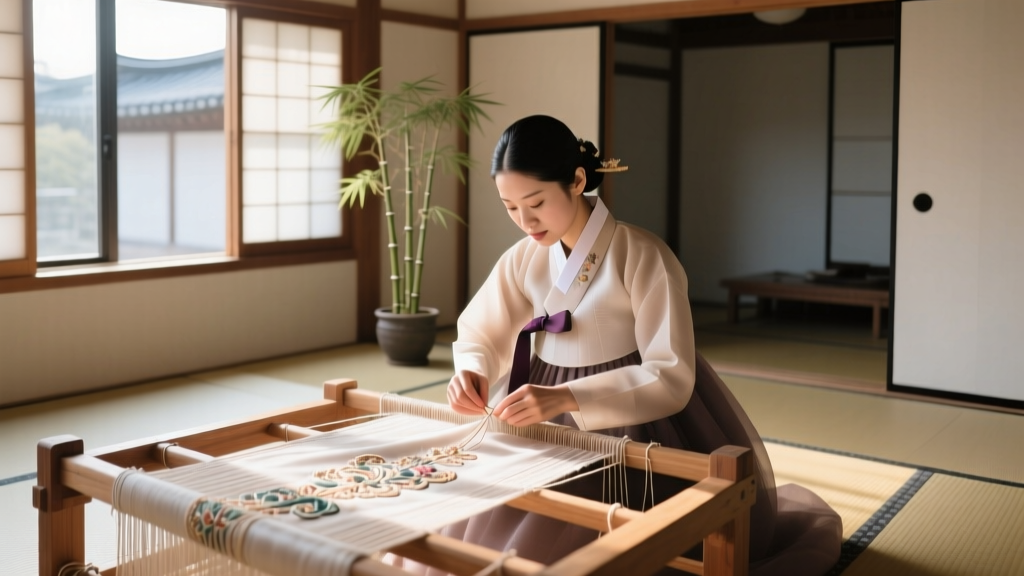
Using specialized tweezers, a needle, and a thimble, the artisan coils the huatou into shape, securing the microscopic intersections with nearly invisible slip stitches. A single, complex floral pankou set can require up to four hours of continuous handwork to complete, demanding an intimate understanding of silk's grain and tension.
Materials, Tools, and Pricing in the Modern Market
As the global appreciation for the qipao has grown, the market for qipao buttons has bifurcated into mass-produced synthetics and heritage craftsmanship. Understanding this divide is critical for collectors, tailors, and cultural enthusiasts.
- Machine-Made / Synthetic Pankou ($2 – $8 per set): Constructed from polyester soutache braid and often glued rather than stitched. The shapes are uniform, the loops lack tension, and the material possesses a plastic sheen that clashes with natural silk garments.
- Hand-Rolled Silk Pankou ($25 – $60 per set): Crafted by skilled tailors using genuine silk bias strips and cotton stuffing. These are the standard for high-end ready-to-wear qipao, offering beautiful, soft geometric and simple floral shapes.
- Bespoke Master Artisan Copper-Core Pankou ($100 – $250+ per set): Commissioned directly from heritage knotting masters (often based in Shanghai, Hangzhou, or Suzhou). These feature copper-wire armatures, gradient-dyed silks, and complex multi-layered floral architectures that qualify as wearable art.
Sourcing and Caring for Heritage Pankou Fasteners
When sourcing authentic qipao buttons, buyers should look for the subtle imperfections of handwork. A genuine hand-rolled silk tube will have a microscopic seam line and a soft, organic yield when pressed, whereas glued synthetic cords will feel rigid and uniformly cylindrical. The Metropolitan Museum of Art's Department of Asian Art frequently highlights how the tactile quality of textile fasteners serves as a primary indicator of a garment's provenance and the socioeconomic status of its original wearer.
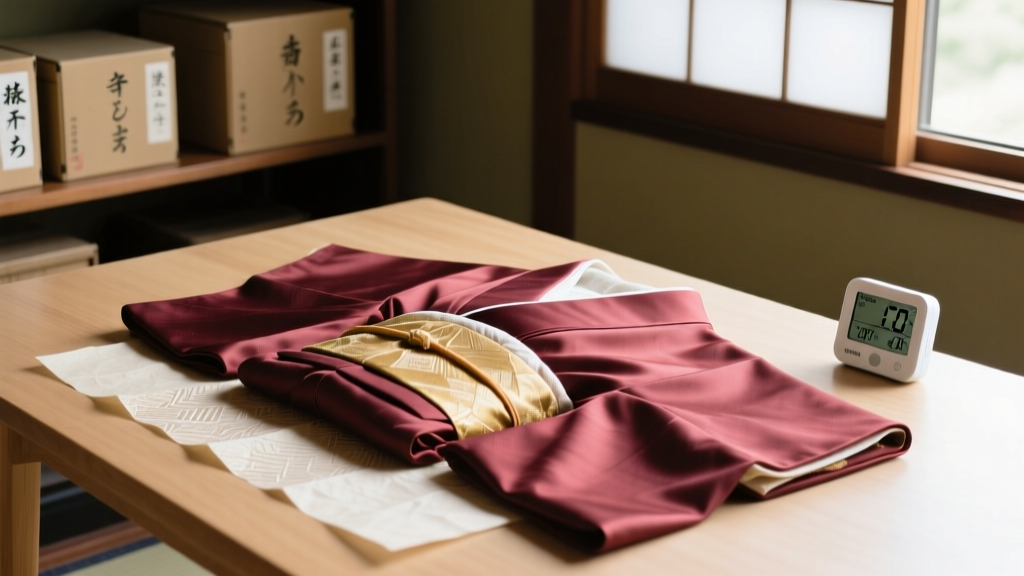
Caring for these fasteners requires specific protocols, particularly for vintage or copper-core pieces. Because the internal copper wire can oxidize and stain the surrounding silk if exposed to prolonged moisture, garments with elaborate floral pankou should never be submerged in water or aggressively steamed. Instead, professional dry cleaning with a specialist familiar with heritage Asian garments is recommended. When storing the qipao, the neckline should be padded with acid-free tissue paper to prevent the huatou from being crushed or permanently deformed under the weight of the fabric. By preserving these intricate knots, we preserve a vital, tactile language of Asian cultural history that continues to fasten the past to the present.