Modern Chinese Clothing Male Guide: Symbolism & Style 2026
The Renaissance of Xin Zhongshi (New Chinese Style)
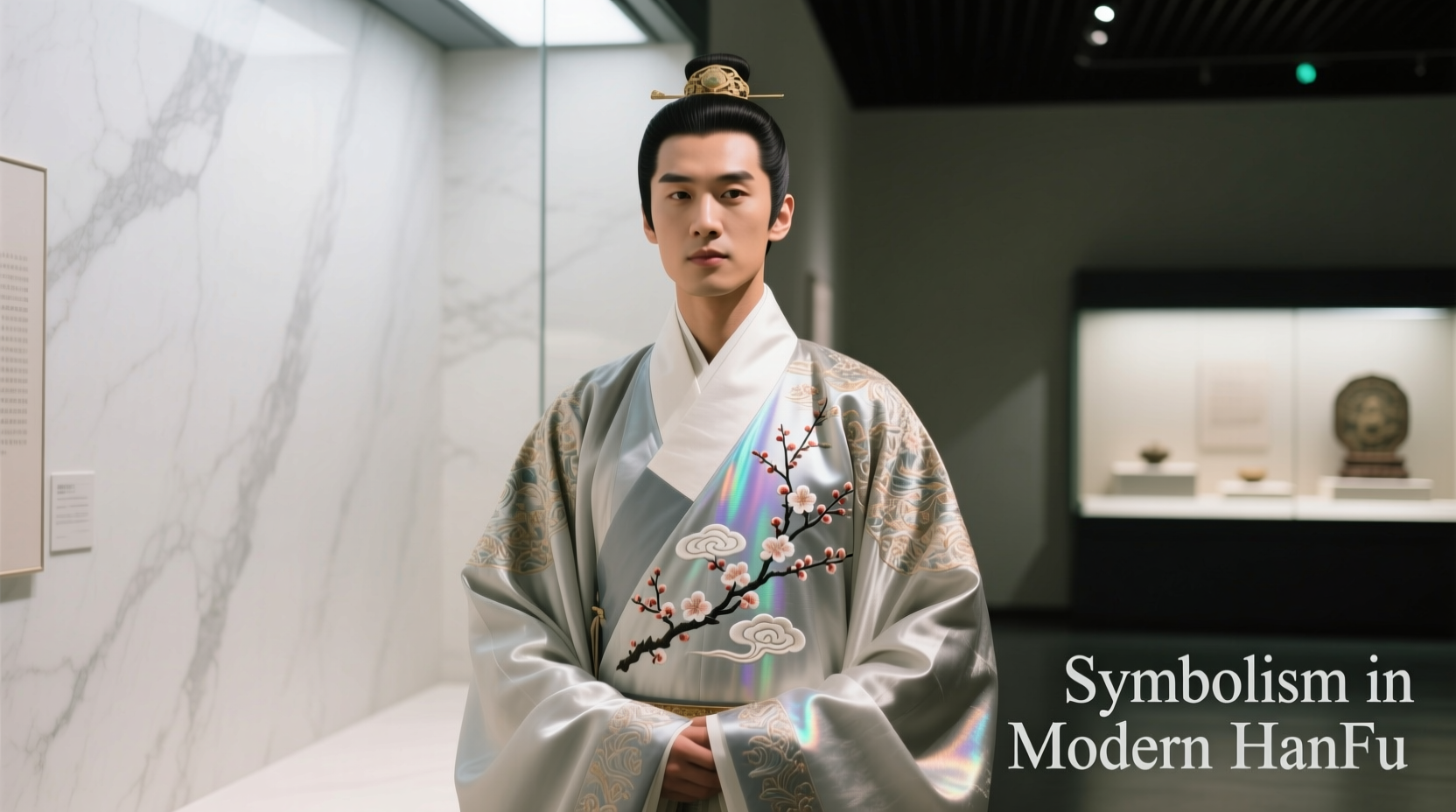
When exploring the landscape of modern chinese clothing male aesthetics, one quickly discovers that contemporary fashion in China is not merely about rejecting Western tailoring. It is about a profound cultural reclamation known as Xin Zhongshi (新中式), or 'New Chinese Style.' This movement merges traditional Han and Qing dynasty sartorial codes with modern minimalist silhouettes. For the contemporary man, wearing these garments is an exercise in semiotics—every collar, button, and woven motif communicates lineage, philosophy, and social intent.
Unlike the rigid uniforms of the mid-20th century, today's traditional menswear offers a fluid vocabulary. Whether you are attending a tea ceremony in Hangzhou, a creative business meeting in Shanghai, or a cultural gala abroad, understanding the hidden language of these garments is essential for wearing them with authenticity and respect.
Decoding Silhouettes: From Hanfu to the Tangzhuang
The foundation of male Chinese dress relies on specific structural rules that date back millennia. The most critical of these is the concept of Jiaoling Youren (交领右衽), or the cross-collar with the right lapel.
The Cross-Collar Protocol (Jiaoling Youren)
In traditional Hanfu (汉服), the left side of the robe must always cross over the right side, hiding the right lapel underneath. This is rooted in ancient Yin-Yang cosmology, where the left represents Yang (life, vitality, and the living) and the right represents Yin. Reversing this to Zuoren (left lapel over right) is strictly reserved for dressing the deceased for burial. When purchasing modern Hanfu-inspired jackets or wrap shirts, verifying the lapel direction is a crucial marker of cultural literacy.
The Tangzhuang and the Pankou Knot
Often misidentified by Westerners as a 'Tang Dynasty' garment, the Tangzhuang (唐装) actually evolved from the Qing dynasty Magua (horse jacket) and the Republic-era mandarin jacket. Its defining feature is the Pankou (盘扣), or frog button. In modern menswear, the number and placement of Pankou carry weight. Five buttons down the center front represent the Five Elements (Wu Xing), while asymmetric side-fastening jackets evoke the scholarly robes of the Song Dynasty, projecting an aura of intellectual refinement rather than martial authority.
The Zhongshan Zhuang (Mao Suit) Re-evaluated
Though heavily politicized in the 20th century, the Zhongshan Zhuang (中山装), introduced by Sun Yat-sen in the 1920s, is experiencing a bespoke revival among modern Chinese politicians and business leaders. Its symbolism is deeply republican: the four pockets represent the Four Virtues (propriety, justice, honesty, and shame), and the five center buttons symbolize the five branches of government. Today, high-end tailors in Beijing craft these from lightweight worsted wool or silk-blends, stripping away the baggy cuts of the past for a sharp, architectural shoulder.
Motif Matrix: What Your Garment Says About You
In Xin Zhongshi menswear, ostentatious dragon motifs are largely reserved for stage performers or grooms. The modern gentleman relies on subtle, tonal embroidery or woven brocades featuring the 'Four Gentlemen' (Si Junzi) or auspicious botanicals. Below is a guide to selecting the appropriate motif for your social context.
| Motif | Pinyin | Symbolic Meaning | Best Modern Application |
|---|---|---|---|
| Bamboo | Zhú (竹) | Resilience, integrity, hollow heart (modesty) | Everyday business casual, linen shirts, summer jackets |
| Pine Tree | Sōng (松) | Longevity, steadfastness in adversity | Winter outerwear, formal overcoats, elder respect |
| Plum Blossom | Méi (梅) | Endurance, blooming through hardship (winter) | Subtle tonal embroidery on cuffs or collars |
| Crane | Hè (鹤) | Immortality, high official rank, wisdom | Formal banquet wear, silk brocade jackets |
| Mountain & Water | Shānshuǐ (山水) | Daoist harmony, scholarly detachment | Resort wear, tea-ceremony robes, artistic circles |
Color Theory and the Five Elements
Historically, color in Chinese menswear was regulated by sumptuary laws. While those laws are gone, the cultural resonance of the Five Elements (Wu Xing) color theory remains potent in modern styling.
- Xuan (Black/Mysterious): Associated with water and the north. In modern tailoring, deep charcoal and obsidian black are the ultimate expressions of authority and grounding, preferred for high-stakes negotiations.
- Zhu (Vermilion): Associated with fire and the south. Once reserved for imperial edicts and temple pillars, deep oxblood or muted cinnabar is now used in Xin Zhongshi knitwear and scarves to project vitality and joy without crossing into theatricality.
- Qing (Cyan/Indigo): Associated with wood and the east. Indigo-dyed linens and raw silk in Qing tones are the staple of the modern creative class, signaling growth, spring, and artistic vision.
Fabric Weight, Drape, and Intangible Heritage
The true luxury of modern Chinese menswear lies not in logos, but in the mastery of heritage textiles. According to the Victoria and Albert Museum's Asian textile archives, the manipulation of silk and plant fibers has been a cornerstone of Chinese material culture for millennia. Today, two fabrics dominate the high-end male wardrobe:
Xiangyunsha (Gambiered Canton Gauze)
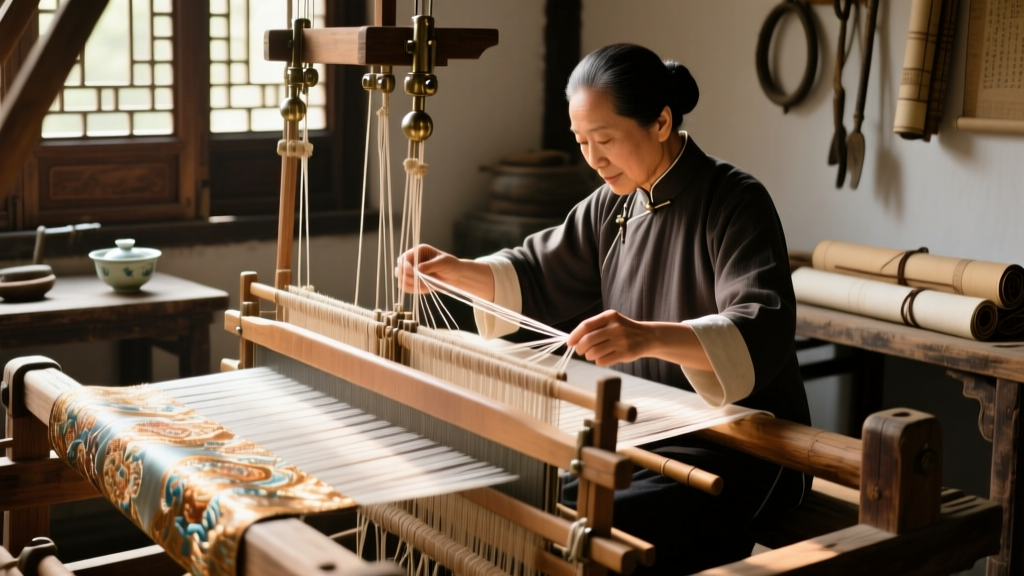
Originating from the Guangdong province, Xiangyunsha (香云纱) is a silk fabric dyed with the juice of the Dioscorea cirrhosa plant and coated in iron-rich river mud, then baked in the sun. The result is a dark, rustling, water-resistant fabric that feels like liquid leather but breathes like linen. It is an Intangible Cultural Heritage craft. A genuine Xiangyunsha jacket will cost between $400 and $1,200 USD, characterized by a subtle, crackled glaze on the surface that softens beautifully with the wearer's body heat over time.
Song Brocade (Song Jin)
For formal evening wear or winter banquets, Song Jin provides a structured, matte-finish brocade that avoids the garish shine of cheaper synthetic alternatives. As documented by the Metropolitan Museum of Art's Asian Art collection, Song dynasty weaves favored geometric lattices and subdued floral rounds. Modern menswear designers utilize these historical patterns in monochromatic weaves, allowing the texture to catch the light subtly.
'The contemporary revival of Chinese menswear is not a costume party; it is a reclamation of a sophisticated sartorial language that prioritizes harmony, drape, and moral symbolism over the rigid, body-constricting cuts of Western tailoring.'
— Curatorial Notes on Asian Textile Evolution, The Met
Sourcing and Price Guide for the Modern Wardrobe
Building a wardrobe of authentic Xin Zhongshi and traditional garments requires knowing where to look and what to pay. The market is saturated with cheap, mass-produced 'ancient-style' cosplay wear. To acquire garments with proper construction, natural fibers, and cultural accuracy, refer to this pricing and sourcing framework:
Entry-Level: The Tangzhuang & Linen Shirts
- Price Range: $40 – $120 USD (¥300 – ¥800 CNY)
- What to expect: Cotton-linen blends, machine-embroidered bamboo motifs, standard frog buttons.
- Best for: Casual weekend wear, informal cultural festivals, travel.
Mid-Tier: Xin Zhongshi Tailoring & Hanfu Outerwear
- Price Range: $150 – $450 USD (¥1,000 – ¥3,000 CNY)
- What to expect: 100% mulberry silk linings, hand-stitched Pankou, proper Jiaoling Youren geometry, structured shoulders on Zhongshan suits.
- Best for: Creative business environments, gallery openings, formal dinners.
Bespoke & Heritage: Xiangyunsha & Song Brocade
- Price Range: $600 – $2,500+ USD (¥4,000 – ¥15,000+ CNY)
- What to expect: Certified Intangible Heritage fabrics, custom measurements, horn or jade button accents, fully hand-finished interiors.
- Best for: Heirloom pieces, high-level diplomatic or cultural events, weddings.
Final Protocols for the Global Wearer
When integrating these garments into a global wardrobe, context is paramount. Pairing a structured Tangzhuang with tailored Western trousers and leather loafers is a widely accepted Xin Zhongshi styling technique that bridges East and West seamlessly. However, avoid mixing garments from conflicting historical eras or pairing mourning colors (like unadorned stark white hemp) with celebratory accessories. By respecting the profound symbolism woven into every thread, the modern man can wear Chinese traditional clothing not as a novelty, but as a living, breathing extension of a 5,000-year-old philosophical tradition.