Chinese Dress for Men: Fabric & Craft
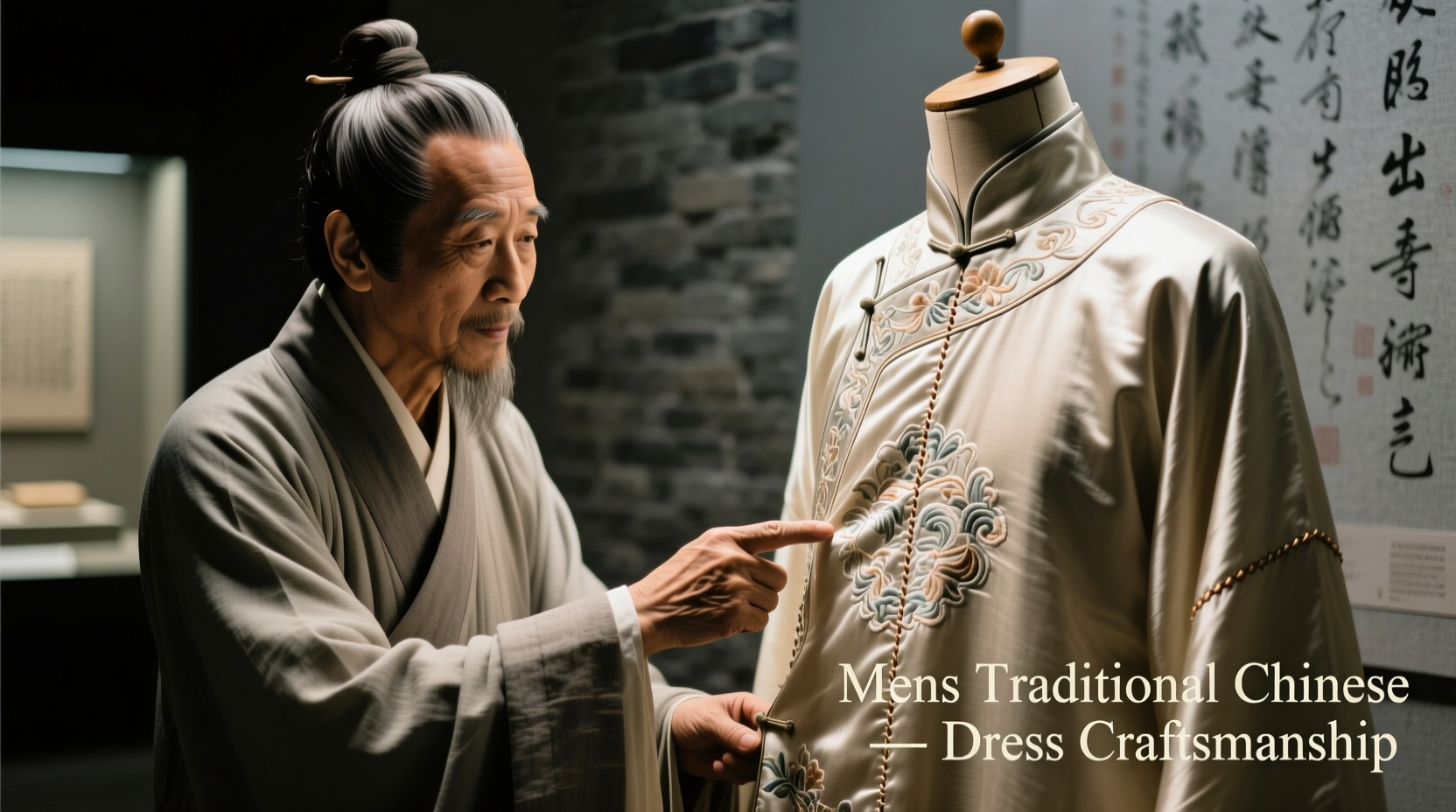
Beyond the Costume: The Renaissance of Menswear Craftsmanship
When discussing the traditional Chinese dress for man, mainstream fashion often defaults to the mass-produced, synthetic 'Tang suit' seen during Lunar New Year. However, for the sartorially educated, the authentic menswear of the Ming, Qing, and Republic eras represents a masterclass in textile engineering, philosophical tailoring, and artisanal dyeing. From the flowing Daopao (scholar’s robe) to the structured Changshan (long shirt) and Magua (riding jacket), authentic Chinese menswear is defined not by how it clings to the body, but by how it interacts with the air, the light, and the wearer's movement.
This deep dive explores the hidden architecture, heritage textiles, and meticulous hand-finishing techniques that define genuine Chinese menswear, offering a comprehensive framework for collectors, historians, and modern gentlemen seeking investment-grade garments.
The Philosophy of Pingmian Caizhi (2D Flat Cutting)
Western bespoke tailoring, pioneered on Savile Row, relies on 3D cutting—using darts, complex armholes, and curved seams to mold flat fabric to the human form. Traditional Chinese tailoring operates on an entirely different paradigm: Pingmian Caizhi (flat-plane cutting). According to archives at the Victoria and Albert Museum's Chinese Collections, this method treats the fabric as a continuous, unbroken canvas, minimizing waste and preserving the integrity of woven motifs.
The Zhongfeng (Center Seam) and Moral Architecture
In a traditional Changshan, the garment is constructed from two main panels joined at the shoulder, falling down the front and back. A defining feature is the Zhongfeng, or center back seam. While Western shirts often feature a center back pleat or yoke, the Zhongfeng is a rigid, unyielding seam that runs from the nape of the neck to the hem. Culturally, this seam represents the Confucian ideal of Zhongzheng (uprightness, centrality, and moral impartiality). The garment physically reminds the wearer to stand straight and act with integrity.
'The fabric is not forced to submit to the body's curves; rather, the body moves within the dignified architecture of the silk. The drape creates a kinetic silhouette that breathes with the wearer.' — Curatorial notes on Qing Dynasty robes, Metropolitan Museum of Art Asian Art Department.
Hidden Side Panels (Bai)
To allow for walking and riding without exposing the undergarments, Ming dynasty robes like the Daopao utilized Bai—hidden inner side panels. These overlapping gussets are stitched internally, creating a voluminous skirt that maintains modesty and structural weight while allowing complete freedom of movement for the legs.
Heritage Textiles: Weaving the Scholar's Wardrobe
The value of a traditional Chinese dress for man is inextricably linked to its textile. The China National Silk Museum highlights several regional weaves and dyeing processes that remain the gold standard for luxury menswear.
Xiangyunsha (Gambiered Canton Gauze)
Originating from the Shunde district of Guangdong, Xiangyunsha is arguably the most complex and expensive summer silk in the world. The production involves dipping raw silk gauze into the tannin-rich juice of the Shulang (gambier) yam, followed by a chemical reaction with iron-rich river mud from the Pearl River Delta. This labor-intensive process, repeated up to 30 times over several weeks, yields a fabric that is dark, subtly crackled, water-resistant, and naturally cooling. A genuine Xiangyunsha Changshan is highly prized by southern Chinese elites and typically costs between $800 and $2,500 USD.
Song and Yun Brocades
For winter garments and formal Magua (riding jackets), heavyweight brocades are essential. Song brocade (from Suzhou) features a softer, more supple hand, making it ideal for draped robes. Yun brocade (from Nanjing) is stiffer, heavily interwoven with gold and silver threads, and traditionally reserved for imperial rank badges (Buzi) and highly formal outerwear.
Garment Typology & Construction Specifications
Understanding the nuances between different historical garments is critical for collectors and those commissioning bespoke pieces. The table below outlines the primary archetypes of traditional Chinese menswear.
| Garment Name | Era of Prominence | Signature Fabric | Construction Hallmark | Bespoke Price Range (USD) |
|---|---|---|---|---|
| Changshan (Long Shirt) | Republic Era (1912+) | Hangzhou Crepe / Raw Silk | Flat-cut body, side slits (Kaicha), mandarin collar | $400 - $1,200 |
| Magua (Riding Jacket) | Qing Dynasty (1644-1911) | Xiangyunsha / Brocade | Center-front closure, short/wide sleeves, hem at waist | $600 - $1,800 |
| Daopao (Scholar's Robe) | Ming Dynasty (1368-1644) | Heavy Ramie / Slub Silk | Cross-collar (Jiaoling Youren), hidden side panels (Bai) | $700 - $2,200 |
| Tangzhuang (Modern Tang Suit) | Modern (2001+) | Synthetic Blends / Rayon | Western 3D darts, set-in sleeves, decorative frog buttons | $150 - $400 |
The Art of the Pankou (Frog Fastener)
In the absence of zippers and plastic buttons, the Pankou serves as both a functional closure and a canvas for micro-craftsmanship. A master artisan can spend up to four hours crafting a single, complex Pankou knot.
Yingpan vs. Ruanpan
- Yingpan (Hard Knots): These are constructed by wrapping silk thread tightly around a copper or brass wire core. They are rigid, hold precise geometric or floral shapes (like the plum blossom or butterfly), and are typically used on the stiff collars and cuffs of winter Magua.
- Ruanpan (Soft Knots): Made by stuffing silk strips with cotton or silk floss, then braiding and stitching them. They are flexible, comfortable against the skin, and predominantly used on lightweight summer Changshan.
The placement of these fasteners also follows strict historical protocols. A traditional Changshan features an asymmetrical closure that travels from the center of the collar, down to the right armpit, and continues down the side seam, often requiring five to seven individual Pankou to secure the garment properly against the wind.
Sourcing, Investing, and Care Protocols
Acquiring a genuine traditional Chinese dress for man requires navigating a market saturated with fast-fashion imitations. For investment-grade pieces, buyers should look to heritage hubs.
Where to Source Authentic Pieces
For bespoke Changshan and Magua, the tailors of Hangzhou and Suzhou remain the epicenter of quality. Workshops near the Suzhou Silk Museum still practice traditional hand-loom weaving and natural dyeing. When commissioning a piece, insist on viewing the 'wrong side' of the fabric; genuine heritage tailoring utilizes hidden seams (Lai Feng) where no raw edges are visible, even on the interior of the garment.
Care and Preservation
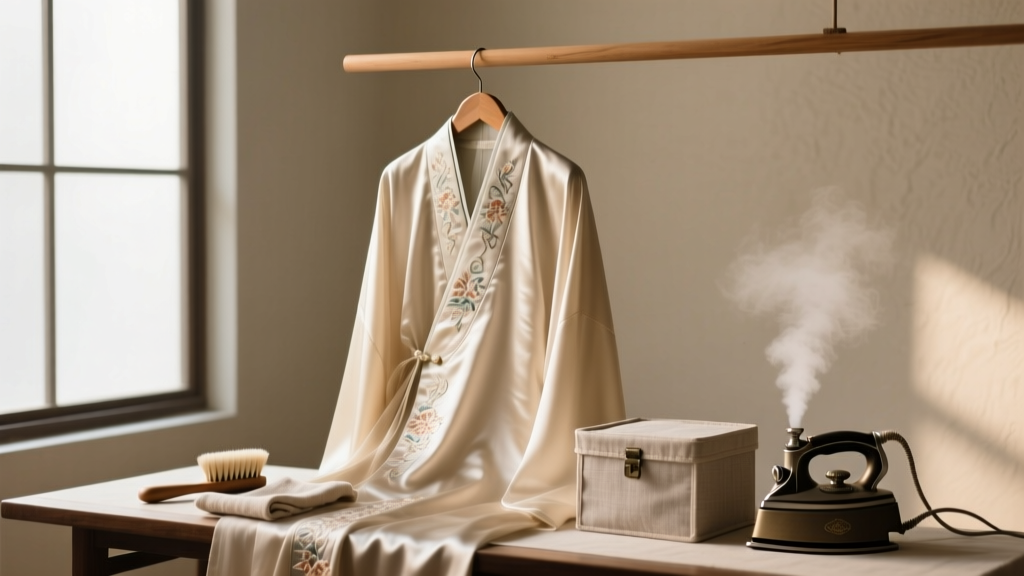
Heritage silks like Xiangyunsha require specific care. They must never be dry-cleaned with harsh chemicals, as this strips the natural gambier tannins. Instead, they should be gently hand-washed in cool water with a pH-neutral silk detergent and dried in the shade. Brocades, conversely, should only be spot-cleaned or professionally conserved, as water can cause the metallic threads to tarnish and the silk foundation to warp.
Conclusion
The traditional Chinese dress for man is far more than a historical artifact; it is a wearable manifestation of philosophy, regional terroir, and supreme artisanal skill. Whether it is the moral uprightness symbolized by the Zhongfeng seam, the alchemical magic of mud-dyed Xiangyunsha, or the mathematical precision of a wire-core Pankou, these garments offer a profound alternative to Western tailoring. For the modern wardrobe, investing in authentic, flat-cut Chinese menswear is an embrace of sartorial heritage that prioritizes dignity, comfort, and timeless craftsmanship.