Chinese Hanfu Men: Guide to Traditional Wear
The Anatomy of Traditional Chinese Menswear
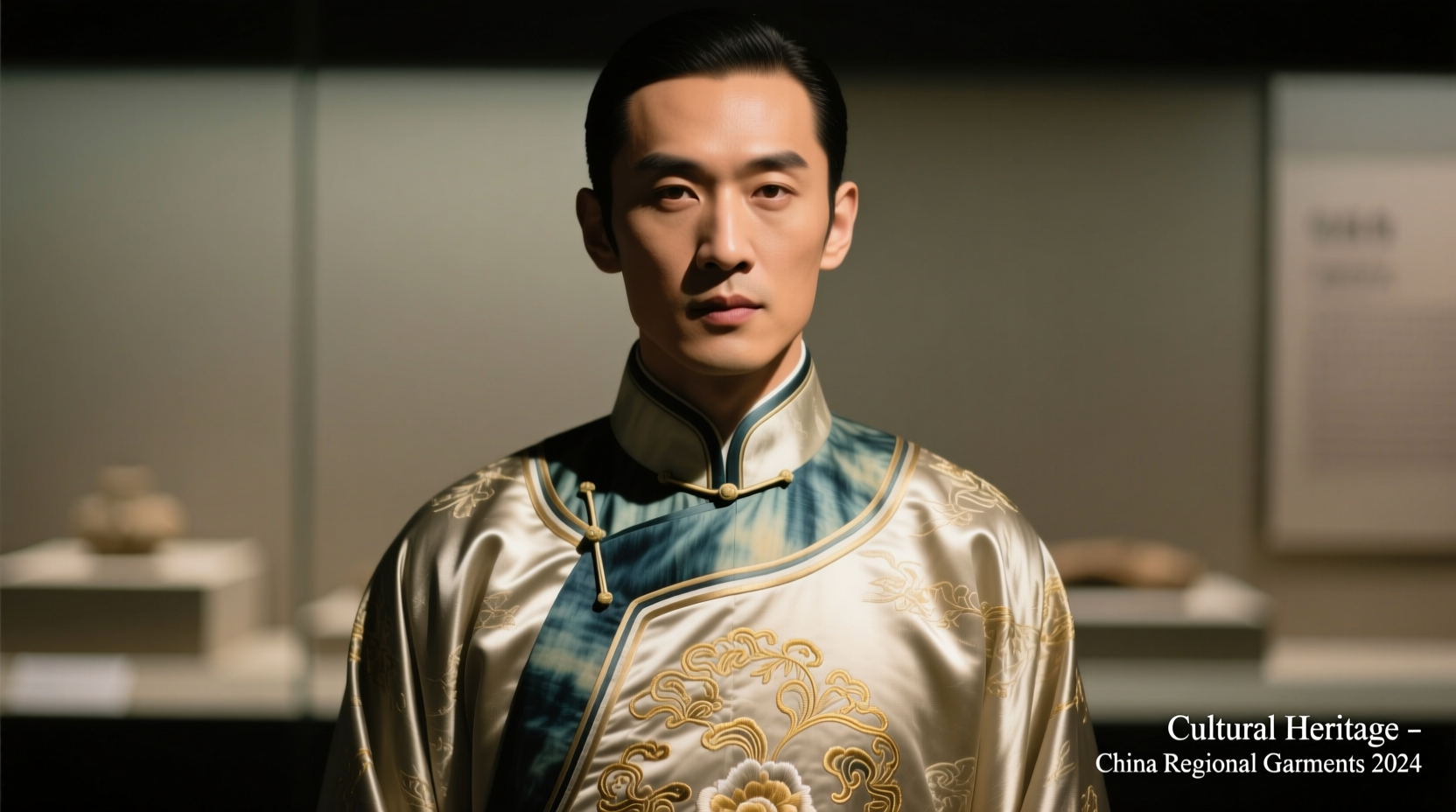
When discussing chinese hanfu men's fashion, we are exploring a sartorial lineage that spans over three millennia. Hanfu (汉服), literally translating to "Han clothing," represents the traditional dress of the Han Chinese people. Unlike the Qing Dynasty's Manchu-influenced Tangzhuang or the modern Qipao, Hanfu is defined by its distinct structural philosophy. The modern Hanfu Yundong (Hanfu revival movement) has meticulously reconstructed these garments using historical texts, tomb murals, and surviving artifacts.
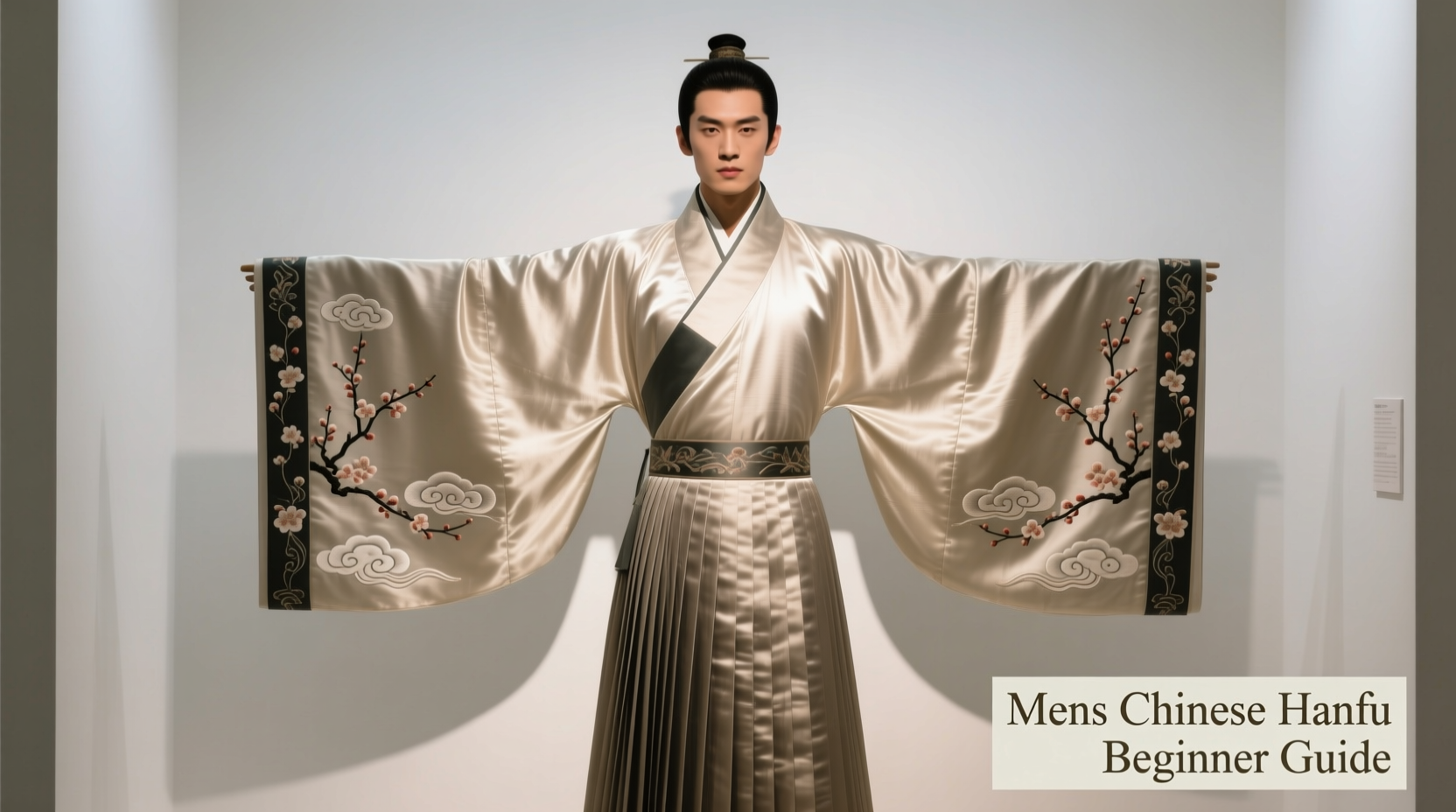
At the core of Hanfu construction is pingmian caizhi (平面裁剪), or flat-pattern cutting. Unlike Western tailoring, which uses darts and curved armholes to contour to the body's three-dimensional shape, traditional Chinese tailoring treats fabric as a two-dimensional canvas. Garments are cut from straight widths of fabric, meaning there are no shoulder seams; the fabric simply drapes over the shoulder. This creates the signature flowing, unstructured silhouette that prioritizes elegance and movement over physical restriction.
The Golden Rule: Jiaoling Youren
For any beginner stepping into the world of men's Hanfu, the most critical cultural protocol to memorize is Jiaoling Youren (交领右衽). This translates to "cross collar, right lapel." When wearing a cross-collared garment, the left side of the collar must cross over the right side, and the right lapel is tied on the wearer's right side.
"In traditional Chinese cosmology, the left represents Yang (life, the living, the sun) and the right represents Yin (death, the underworld, the moon). Therefore, crossing the left over the right honors the living. Reversing this (left lapel) is strictly reserved for dressing the deceased for burial." — China National Silk Museum Textile Archives.
Four Essential Hanfu Silhouettes for Men
Men's Hanfu is generally categorized by its historical dynasty and structural cut. While women's Hanfu often features the high-waisted Ruqun, men's wardrobes historically centered around robes and tunic-skirt combinations. Below is a comparative framework of the four most prominent silhouettes for men today.
| Silhouette Name | Historical Era | Key Characteristics | Best Suited For |
|---|---|---|---|
| Daopao (道袍) | Ming Dynasty (1368–1644) | Cross-collar, wide sleeves, features hidden side slits with internal swinging flaps (bai) that provide volume and modesty. | Daily wear, scholarly events, casual outings. |
| Yuanlingpao (圆领袍) | Tang to Ming (618–1644) | Round collar fastened with a button/tie on the right shoulder. Often worn with a leather belt and official hat. | Formal occasions, weddings, official ceremonies. |
| Feiyufu (飞鱼服) | Ming Dynasty (1368–1644) | Round or cross-collar robe adorned with the "flying fish" (dragon-like) motif. Historically worn by the Jinyiwei (Embroidered Uniform Guard). | Cosplay, martial arts demonstrations, dramatic formalwear. |
| Shenyi (深衣) | Pre-Qin / Han (c. 1046 BCE–220 CE) | A one-piece robe where the upper garment (yi) and lower skirt (chang) are sewn together. Features 12 fabric panels symbolizing the months. | Ancestral worship, academic rituals, deep traditionalists. |
Fabric, Color, and the Semiotics of Rank
Historically, the materials and colors of men's Hanfu were strictly regulated by sumptuary laws. Understanding these nuances adds profound depth to your wardrobe choices.
Material Composition
Before the widespread adoption of cotton in the late Ming and Qing dynasties, the Han Chinese relied on three primary fibers:
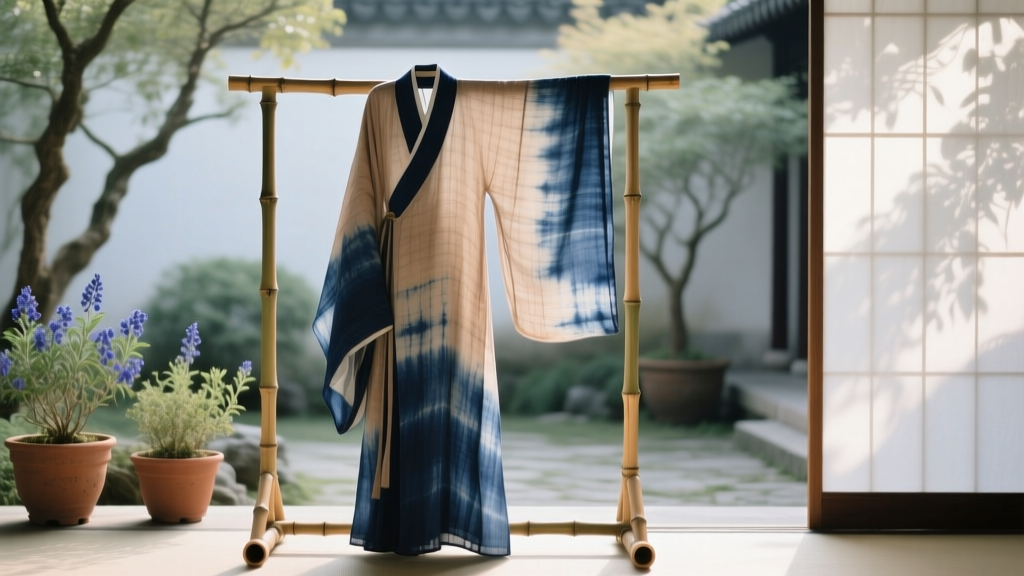
- Ge (Ramie/Hemp): The standard for commoners and summer wear. High-quality ramie, known as xia bu (summer cloth), is highly breathable and has a crisp, linen-like drape.
- Sik (Silk): Reserved for the elite, scholars, and formal court wear. Variations include chou (plain weave silk), duan (satin for winter/formal), and sha (gauze for extreme heat).
- Mian (Cotton): Introduced later but quickly adopted for winter padding and everyday commoner wear due to its warmth and durability.
Color Theory: Zhengse vs. Jianse
Traditional Chinese color theory divides hues into Zhengse (pure/primary colors: black, white, red, blue, and yellow) and Jianse (secondary/mixed colors). During the Tang and Song dynasties, officials were ranked by their robe colors. For example, a third-rank official might wear purple, while lower-ranking scholars wore cyan or blue. Today, modern men often gravitate toward deep, muted tones like indigo, bamboo green, charcoal, and burgundy, which convey a sense of scholarly refinement (Wenren aesthetic) rather than ostentatious wealth.
The Modern Buyer’s Framework: Sourcing and Sizing
Navigating the market for authentic chinese hanfu men's clothing can be daunting for international buyers. The industry is largely centered on specialized Taobao brands that employ historical researchers to draft their patterns. According to cultural analyses by institutions like the Metropolitan Museum of Art's Asian Textile Department, the modern revival relies heavily on digital communities and specialized e-commerce to sustain artisan weaving techniques.
Trusted Artisan Brands and Price Tiers
When purchasing, avoid generic "costume" shops on Amazon or AliExpress, which often mix Qing, Han, and fantasy elements. Instead, look for established Hanfu brands:
- Entry-Level ($35 - $70 USD): Hanshang Hualian and Yuhetao. Excellent for beginners. They offer durable polyester-cotton blends and accurate basic silhouettes like the Ming Daopao.
- Mid-Tier ($80 - $180 USD): Zhongzheng Hanfu. Highly respected in the men's community for historically accurate Ming dynasty cuts, excellent ramie fabrics, and robust tailoring.
- High-End / Artisan ($250 - $600+ USD): Minghuatang. The gold standard for Ming dynasty recreation. They use genuine silk brocades, real gold-leaf weaving (Zhi Jin), and museum-grade patterns.
Sizing and Measurements
Hanfu sizing does not use Western S/M/L conventions. Because garments are tied rather than buttoned, the chest and waist are highly forgiving. The critical measurements are:
- Tongxiu (Sleeve Span): Measured from wrist to wrist with arms outstretched. Traditional Ming sleeves should extend past the fingertips by at least 10-20cm to allow for the elegant "hand clasping" posture.
- Yichang (Garment Length): Measured from the base of the back neck to the floor. A proper Daopao should graze the ankle bone, ensuring it doesn't drag in the dirt while maintaining a dignified drape.
Cultural Protocols and Modern Etiquette
Wearing Hanfu is not merely about putting on clothes; it is an embodiment of Li (ritual propriety). When wearing formal robes like the Yuanlingpao, men traditionally wear a Putou (a structured official hat) or a Wangjin (a woven hairnet used to secure topknots under caps). Footwear should consist of traditional cloud-head shoes (Yunxie) for scholars, or black leather boots (Xue) for martial or official styles.
Furthermore, the posture changes when wearing Hanfu. The wide sleeves and flowing hems require a measured, deliberate way of walking. When greeting others, the traditional Gongshou (hand-cupping) salute is used: the left hand wraps around the right fist (for men, honoring the Yang-over-Yin principle), held at chest level. As the global interest in Asian traditional garments continues to grow, approaching Hanfu with historical accuracy and cultural reverence ensures this living tradition is preserved with the dignity it deserves. For deeper historical context on the sociological impact of the Hanfu revival, readers can refer to extensive cultural essays featured on BBC Culture's Asian Identity archives.