The Beginner's Guide to Mandarin Collars in Asian Dress
What Exactly Is a Mandarin Collar?
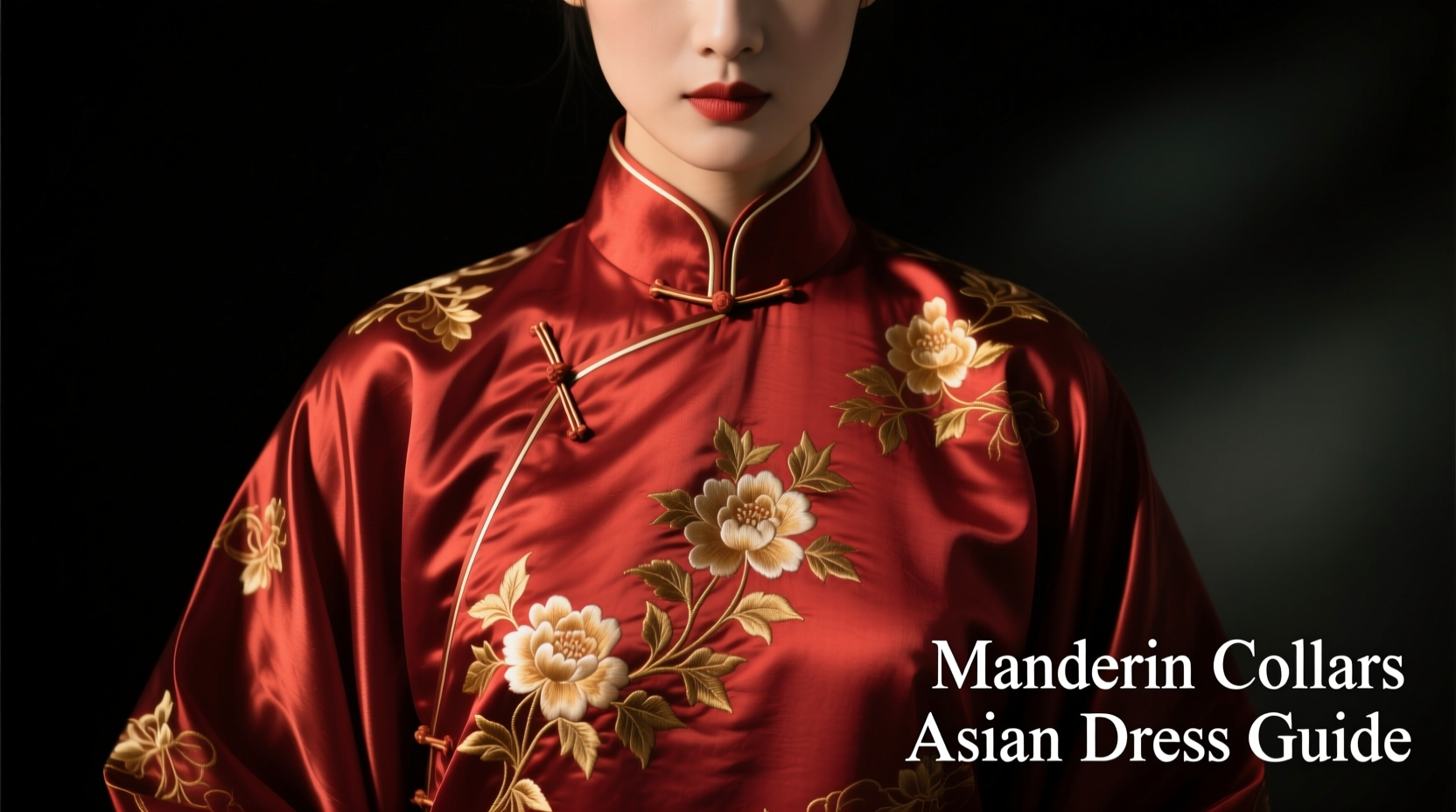
For many Westerners, the term "mandarin collar" evokes a specific, minimalist aesthetic: a short, unfolded stand-up collar that fastens at the center front. However, in the context of Asian traditional garments, this Western moniker barely scratches the surface of a rich, complex sartorial history. Known natively in Chinese as the liling (standing collar) or yuanling (round collar), this design element is foundational to dozens of cultural garments across Asia, from the Chinese changshan and qipao to the Indian bandhgala and Vietnamese áo dài.
This beginner’s guide will deconstruct the anatomy, history, and cultural significance of the standing collar, providing you with the knowledge to appreciate, purchase, and style these garments with cultural respect and sartorial precision.
The Anatomy of the Standing Collar
Unlike the Western shirt collar, which consists of a collar band and a folded leaf (lapel), the traditional Asian standing collar is constructed from a single band of fabric.
- Height: Traditional historical collars often ranged from 4 cm to 7 cm in height, designed to frame the jawline and restrict slouching, promoting an upright, dignified posture. Modern adaptations usually sit lower, between 2.5 cm and 4 cm.
- Edge Finishing: The edges are typically bound in silk bias tape or feature intricate embroidery. The front edges may meet perfectly flush or overlap slightly by 1 to 2 centimeters.
- Interfacing: To maintain the rigid, cylindrical shape, traditional tailors use multiple layers of starched cotton or rice paste as interfacing, though modern garments often use fusible synthetic interlinings.
Etymology and Cultural Nuance: Beyond the Western Moniker
The term "mandarin collar" is a Western exonym. It originated during the Qing Dynasty (1644–1912) when European traders and diplomats interacted with Chinese imperial bureaucrats, whom the Portuguese called mandarins (from the Sanskrit mantri, meaning counselor). The stiff, high-collared winter and summer uniforms worn by these officials caught the Western eye, leading to the permanent, albeit reductive, labeling of the style.
Cultural Sensitivity Note: While "mandarin collar" is the accepted search term in global fashion retail, cultural garment enthusiasts and historians prefer using native terminology. Referring to a changshan collar or a qipao collar acknowledges the garment's specific cultural lineage rather than reducing it to a colonial-era caricature. When shopping or discussing these garments, using terms like "standing band collar" or the specific garment name demonstrates cultural respect and a deeper understanding of Asian textile traditions.
Historical Evolution: From Ming to Qing
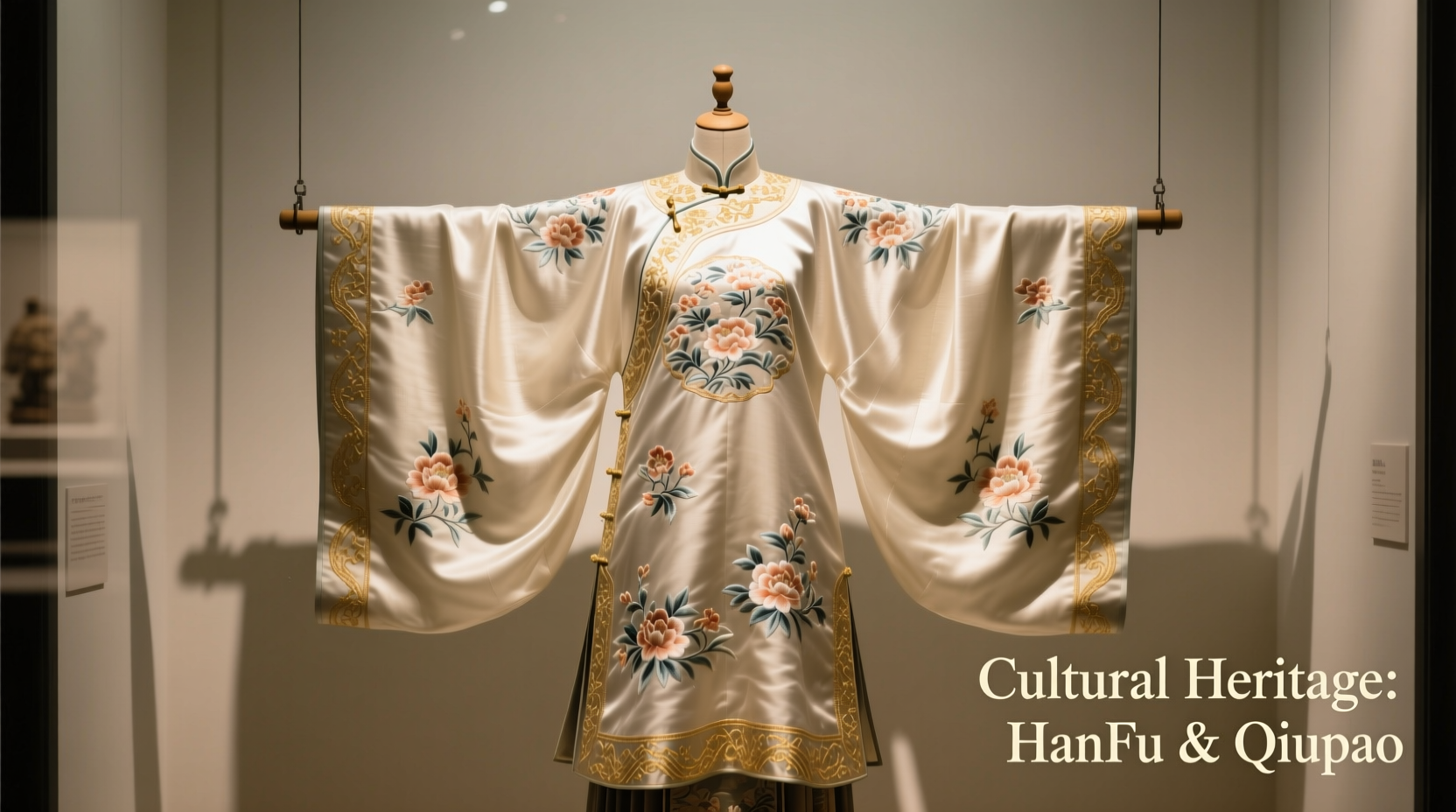
Contrary to popular belief, the standing collar is not exclusively a Manchu (Qing Dynasty) invention. Historical textiles housed in institutions like the Victoria and Albert Museum reveal that the liling actually gained prominence during the Han Chinese Ming Dynasty (1368–1644), particularly on women's jackets and official robes, as a response to colder climates and a shift toward more structured silhouettes.
When the Manchu-led Qing Dynasty took power, they mandated the tifa yifu edict, forcing Han Chinese men to adopt Manchu dress, which included the changshan (long shirt) and magua (riding jacket). These garments featured the standing collar, often adorned with rank badges (buzi) and intricate fastenings. The silhouette was further refined in the 1920s and 1930s in Shanghai, where the changshan and the women's qipao (cheongsam) were tailored closer to the body, cementing the standing collar as an icon of modern East Asian elegance. For a deeper dive into Qing dynasty court dress and its structural elements, the Metropolitan Museum of Art's Heilbrunn Timeline offers exceptional visual archives.
Cross-Cultural Variations Across Asia
The standing collar transcends Chinese borders, adapting to the climates, fabrics, and social norms of neighboring civilizations. Below is a comparative overview of how this collar style manifests across different Asian cultures.
| Garment Name | Origin | Collar Height & Fit | Traditional Fastening | Primary Occasion |
|---|---|---|---|---|
| Changshan | China | 4-6 cm, snug fit | Pankou (frog knots) | Weddings, martial arts, formal wear |
| Qipao / Cheongsam | China | 3-5 cm, structured | Hidden hooks, single knot | Formal events, professional wear |
| Bandhgala | India | 3-5 cm, often open | Buttons, sometimes brooch | Weddings, state dinners |
| Áo Dài | Vietnam | 2-4 cm, slightly looser | Hidden hooks, snap buttons | Daily wear, school uniforms, Tet |
| Nehru Jacket | India / Global | 2-4 cm, Western cut | Standard buttons | Political, semi-formal Western wear |
The Indian Bandhgala and Nehru Jacket
In South Asia, the standing collar is a hallmark of regal menswear. The bandhgala (literally "closed neck") originated in Jodhpur during the British Raj, blending the Indian angarkha with Western tailoring. It features a stiff standing collar that is often left unbuttoned at the very top to accommodate a brooch or pocket square. The "Nehru jacket," popularized globally by India's first Prime Minister Jawaharlal Nehru, is a sleeveless or long-sleeved vest/jacket featuring a lower, less restrictive standing collar, heavily adopted into 1960s Western mod fashion.
The Vietnamese Áo Dài
The Vietnamese áo dài features a standing collar that is generally lower and softer than its Chinese counterpart. Because the áo dài is worn over wide-legged silk trousers and is designed for movement in a tropical climate, the collar is engineered to prevent chafing. Modern iterations often use hidden snap fasteners rather than traditional knots to maintain a seamless, unbroken line of silk down the bodice.
The Art of Pankou: Fastenings and Construction
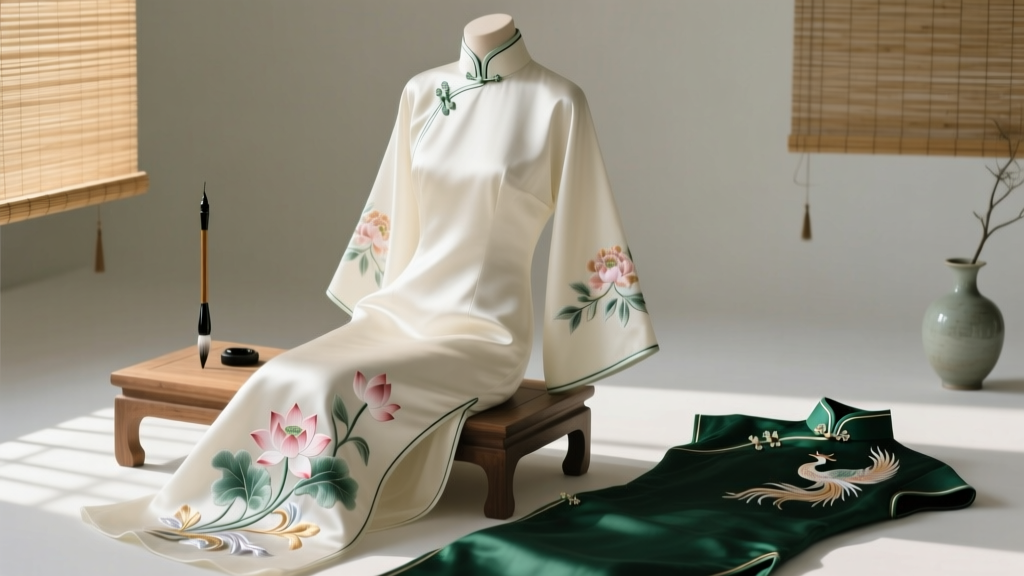
You cannot discuss the traditional Chinese standing collar without discussing pankou (frog buttons). These are not merely functional fasteners; they are intricate, hand-woven silk knots that serve as the primary decorative element on a changshan or qipao.
Construction Details: Authentic pankou are made from strips of silk that are folded, stuffed with cotton yarn or copper wire for rigidity, and then braided.
- The Pipa Knot: Shaped like the traditional Chinese lute, this is the most common knot used on the collar and side seams.
- The Meihua (Plum Blossom) Knot: A highly complex, symmetrical knot reserved for bridal wear and high-end bespoke garments.
- Placement: A traditional qipao will feature one knot at the base of the collar, one at the collarbone, and a series of them trailing down the side seam.
Beginner’s Guide to Buying: Fabrics and Price Tiers
When purchasing your first garment with a standing collar, fabric choice dictates both the drape and the cultural appropriateness of the piece. Avoid cheap, shiny synthetic satins, which are often associated with low-quality costume wear. Instead, look for the following:
- Xiangyunsha (Cantoned Silk): A rare, mud-dyed silk from Guangdong province. It is matte, slightly crisp, and makes a distinct rustling sound. Ideal for summer changshan.
- Song Brocade: A heavy, intricately patterned silk woven with gold or silver threads. Reserved for winter wear and wedding attire.
- Raw Silk and Linen Blends: Excellent for daily wear, offering breathability and a matte texture that looks incredibly elegant in a standing collar shirt.
Price Brackets (USD)
- Mass-Market / Fast Fashion ($30 - $70): Usually cotton-polyester blends with glued-on faux frog buttons. The collar will likely lack proper interfacing and collapse after washing.
- Mid-Tier Artisan ($150 - $350): Genuine silk or high-quality linen, hand-tied pankou knots, and proper internal collar banding. Brands in this tier often source from specialized ateliers in Shanghai or Hangzhou.
- Bespoke / Master Tailored ($600 - $2,000+): Custom-measured qipao or changshan featuring heritage fabrics like Xiangyunsha, hand-embroidered motifs, and structural perfection.
Styling and Fit Rules for the Modern Wearer
The standing collar is unforgiving of poor tailoring. Because it frames the face and sits directly against the carotid arteries, the fit must be exact.
The One-Finger Rule: When buttoned, you should be able to slide exactly one index finger comfortably between the collar and your neck. If you can fit two fingers, the collar is too loose and will gap unflatteringly. If you cannot fit one finger, the collar will restrict your breathing and cause the fabric to bunch at the shoulders.
Shoulder Drape: Unlike Western shirts where the collar sits on the shirt yoke, traditional Asian garments often feature a dropped shoulder or a continuous sleeve cut (no shoulder seam). Ensure the garment's shoulder line aligns with your natural posture; if it pulls forward, it will drag the collar away from the back of your neck.
Modern Styling: For a contemporary, respectful look, pair a linen standing-collar shirt with tailored trousers and leather loafers. Avoid pairing traditional garments with overly casual streetwear unless you are engaging in specific, high-fashion avant-garde styling. Never wear a changshan or qipao as a "costume" for themed parties; these are living garments with deep cultural resonance, deserving of the same respect as a Western tuxedo or a Scottish kilt.
Further Reading and Authoritative Sources
To deepen your understanding of Asian textile history and the evolution of the standing collar, we recommend exploring the digital archives of the V&A South Asian Collections for insights into the Bandhgala, as well as visiting the China National Silk Museum in Hangzhou (or their digital portals) to study the evolution of Ming and Qing dynasty weaving techniques that made these structured collars possible.