Chinese Traditional Wear: A 2026 Buyer's Guide & Shop List
The Global Resurgence of Chinese Sartorial Heritage
The landscape of Chinese traditional wear has undergone a magnificent renaissance. Driven by the grassroots Hanfu Movement (Hanfu Yundong) and a renewed global interest in intangible cultural heritage, buyers in 2026 are no longer limited to theatrical costume shops. Today, acquiring authentic Chinese garments involves navigating a rich ecosystem of bespoke tailors, heritage silk weavers, and specialized online boutiques. Whether you are seeking a meticulously pleated Ming Dynasty skirt or a form-fitting Shanghai-style cheongsam, understanding the construction, fabric grades, and cultural protocols is essential for building a respectful and high-quality wardrobe.
Decoding the Silhouettes: Hanfu, Qipao, and Tangzhuang
Before making a purchase, it is crucial to distinguish between the three primary categories of Chinese traditional wear, as their historical roots, construction methods, and fitting requirements vary drastically.
Hanfu (汉服): The Historical Revival
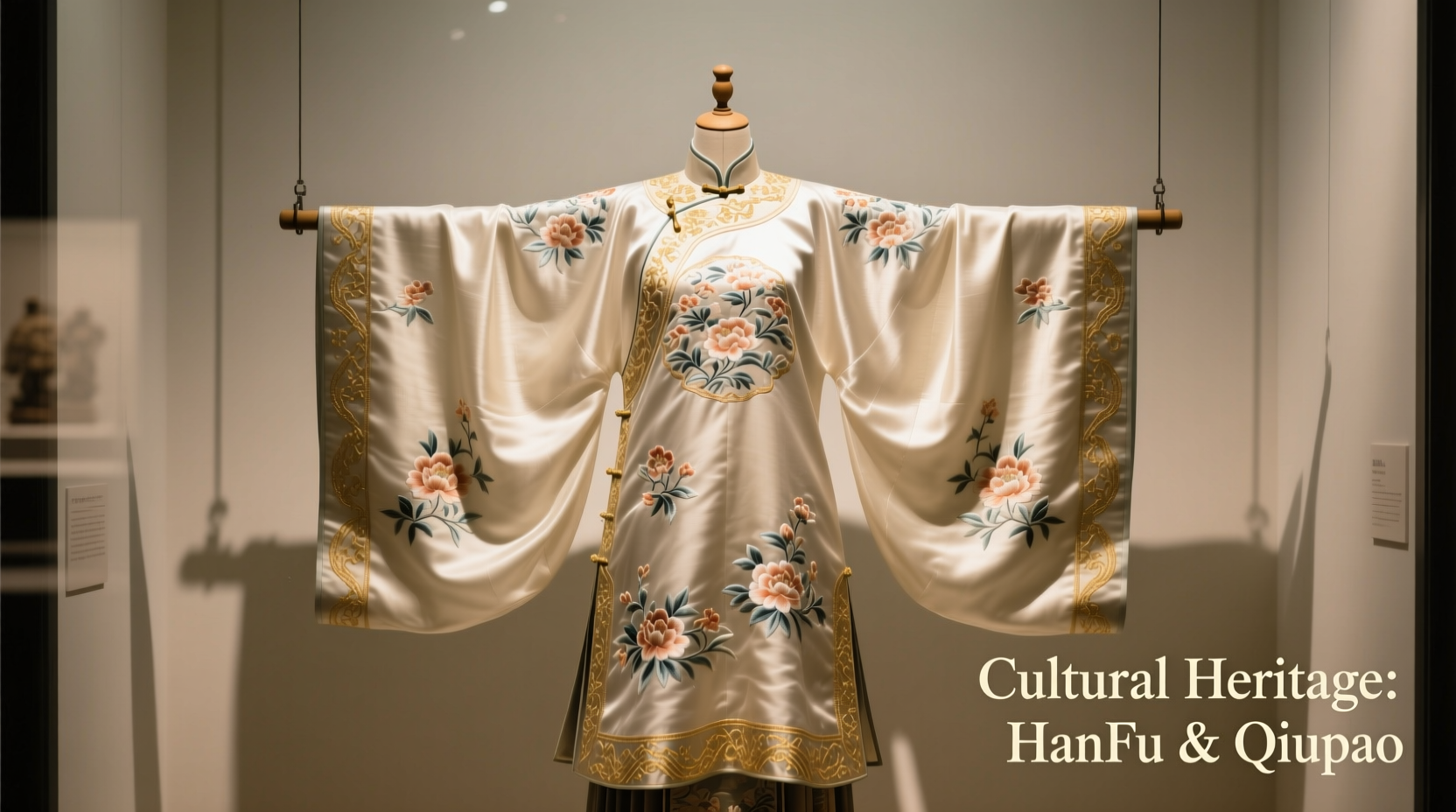
Hanfu refers to the historical clothing of the Han Chinese, spanning from the Yellow Emperor era to the early Qing Dynasty. The most popular styles for modern buyers include the Ruqun (a cross-collared top paired with a high-waisted skirt) and the Mamianqun (horse-face skirt), characterized by its flat front and back panels with intricate side pleats. Authentic Hanfu relies on flat-pattern cutting and tie closures rather than buttons, making it inherently adaptable to various body types. When shopping for Hanfu, look for the defining Jiaoling Youren (crossing collar, right lapel) construction.
Qipao (旗袍) / Cheongsam: The Shanghai Silhouette
Evolving from the loose-fitting garments of Manchu women in the Qing Dynasty, the Qipao was revolutionized in 1920s Shanghai into the figure-hugging, high-collared dress recognized globally today. A high-quality Qipao features Pan Kou (hand-knotted fabric buttons), side slits for mobility, and a continuous bias cut. Buyers should note the difference between the Beijing-style (Jingpai), which is more conservative and heavily embroidered, and the Shanghai-style (Haipai), which embraces Western tailoring techniques and lighter silks.
Tangzhuang (唐装): The Modern Heritage Jacket
Despite its name, the Tangzhuang (Tang Suit) does not originate from the Tang Dynasty. It is a modern hybrid garment developed in the late 20th century, blending the Manchu Magua (riding jacket) with Western shoulder tailoring. Popularized globally during the 2001 APEC Summit, it is characterized by its mandarin collar and symmetrical frog button closures. It remains a staple for festive occasions, particularly Lunar New Year celebrations.
Material Mastery: Fabrics and Embroidery to Seek Out
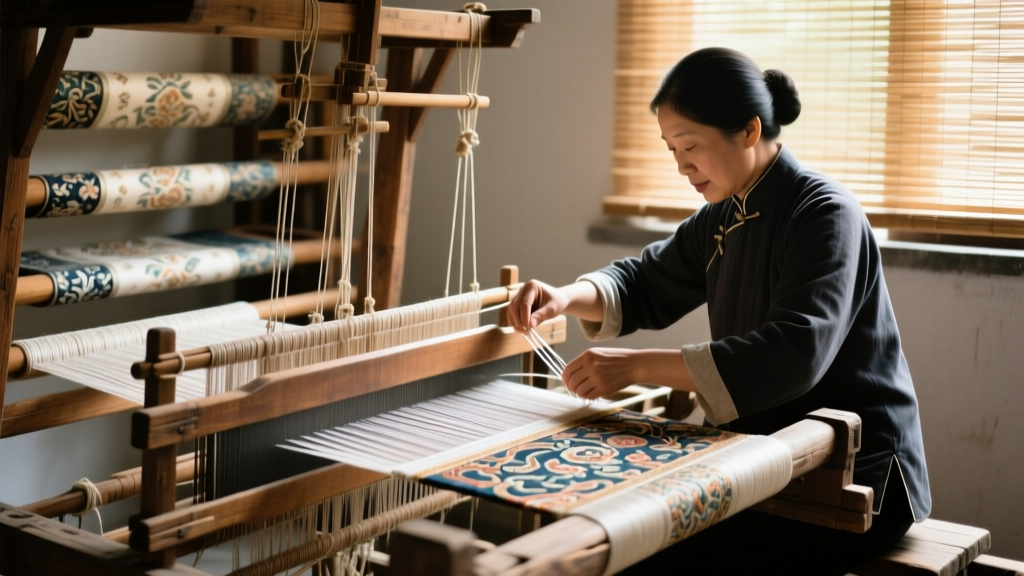
The true value of Chinese traditional wear lies in its textiles. According to the China National Silk Museum, the country's sericulture history spans millennia, and discerning buyers should look for specific heritage weaves.
- Xiangyunsha (Gambiered Canton Gauze): An intangible cultural heritage silk from Guangdong. It is dyed with薯莨 (shoulang) plant juice and coated with iron-rich river mud, resulting in a waterproof, rustling fabric that darkens and softens beautifully with age. Expect to pay a premium for authentic Xiangyunsha Qipaos.
- Songjin and Shujin Brocades: Song brocade (from Suzhou) is prized for its soft, matte finish and intricate geometric patterns, ideal for Hanfu outerwear. Shu brocade (from Sichuan) is known for its vibrant colors and bold motifs, often used in festive Tangzhuang jackets.
- Su Embroidery (Suzhou): The pinnacle of Chinese needlework. Authentic Su embroidery features incredibly fine silk threads (sometimes split into 1/48th of a single strand) to create photorealistic floral and avian motifs. Garments featuring genuine, hand-stitched Su embroidery are investment pieces that can take hundreds of hours to complete.
The Buyer's Matrix: Price Tiers and Expectations
Navigating the market requires understanding what your budget affords. The table below outlines the price tiers for authentic Chinese traditional wear in 2026.
| Garment Type | Entry-Level / Mass Market | Mid-Tier / Artisan Brands | Bespoke / Couture | Best Use Case |
|---|---|---|---|---|
| Hanfu (Full Set) | $60 - $150 (Polyester blends) | $200 - $600 (Mulberry silk, accurate cuts) | $1,000+ (Hand-woven, Su embroidery) | Festivals, cultural events, daily wear |
| Qipao / Cheongsam | $80 - $200 (Factory-made, standard sizing) | $350 - $800 (Xiangyunsha, custom fit) | $1,500 - $5,000+ (Bespoke tailoring) | Weddings, galas, formal dinners |
| Tangzhuang Jacket | $50 - $120 (Cotton-poly, machine frogs) | $180 - $400 (Silk brocade, hand-tied frogs) | $600+ (Custom brocade, artisan lining) | Lunar New Year, family portraits |
Sizing and Tailoring: Navigating the Fit
Shopping for Chinese garments requires a departure from standard Western sizing charts. Hanfu is generally sold in generalized sizes (S, M, L, XL) because its flat-pattern construction and tie-closures allow for significant adjustability. The primary measurement to check for Hanfu tops is the shoulder width and sleeve length, as traditional sleeves (such as the sweeping Pixiu or pipa sleeves) must drape correctly to maintain the historical silhouette.
Conversely, purchasing a traditional Qipao is an exercise in precision. A bespoke tailor will take upwards of 20 to 30 distinct measurements, including the hollow-to-hem length, the exact circumference of the bicep, and the slope of the shoulders. If buying off-the-rack Qipaos online, buyers must meticulously compare their bust, waist, and hip measurements to the garment's exact dimensions, leaving zero to one inch of ease for the signature skin-tight fit. For those investing in high-end silk, made-to-measure is highly recommended to prevent stress on the delicate seams.
Where to Shop: Trusted Retailers and Artisans
Finding authentic Chinese traditional wear outside of mainland China can be challenging, but several avenues offer guaranteed quality and cultural accuracy.
1. Heritage Taobao Brands (Via Shopping Agents)
The most extensive and accurate Hanfu market exists on Taobao and Tmall. Brands like Minghuatang (renowned for museum-grade Ming Dynasty replicas) and Shisanyu (celebrated for accessible, historically inspired Song and Tang styles) are industry leaders. International buyers can utilize trusted proxy shopping agents like Superbuy or CSSBuy to navigate these platforms, handle quality control, and arrange international shipping.
2. Bespoke Qipao Tailors in Hong Kong and Shanghai
For authentic Qipaos, the tailors of Hong Kong remain the gold standard. Establishments like Linva Tailor (established in 1946) and Blanc de Chine offer master-level bespoke services. In Shanghai, the historic Hanart and tailors along Maoming South Road continue to craft garments using traditional steam-molding techniques that shape the fabric to the body without darts.
3. International Boutiques and Museum Archives
For buyers seeking contemporary interpretations of heritage wear, brands like Shanghai Tang offer luxury Tangzhuang and modernized Qipaos with global shipping. Furthermore, studying the Metropolitan Museum of Art's textile archives and the Victoria and Albert Museum's Asian collections online can help buyers train their eyes to recognize authentic historical patterns, weave structures, and color palettes when evaluating vintage or high-end reproduction pieces.
Cultural Protocols: Wearing Garments with Respect
Traditional clothing carries profound cultural weight, and wearing it correctly is a sign of respect. The most critical rule in Hanfu and traditional Chinese dress is the collar orientation: Jiaoling Youren. The left side of the collar must always cross over the right side, forming a 'y' shape from the wearer's perspective. Crossing the right over the left (Zuoren) is historically reserved exclusively for burial garments and the deceased; wearing it this way in daily life is considered highly inauspicious and offensive.
Additionally, buyers should be mindful of color and motif symbolism. While red is universally celebratory and auspicious (ideal for weddings and New Year), stark white and unadorned hemp-like textures are traditionally associated with mourning. However, modern interpretations have softened these rules, and contemporary Hanfu brands frequently utilize white and pastel palettes for elegant, everyday spring wear. When in doubt, consulting with the artisan or brand regarding the intended occasion for a specific motif—such as the peony for wealth or the crane for longevity—ensures your garment aligns perfectly with your celebratory intent.
Final Thoughts on Building Your Collection
Investing in Chinese traditional wear is an investment in living history. By prioritizing heritage fabrics like Xiangyunsha, supporting master artisans who preserve intangible embroidery techniques, and adhering to historical construction protocols, buyers do more than acquire beautiful clothing; they become active participants in the preservation and global appreciation of Asian sartorial heritage.