Male Hanfu Event Guide: Styling for Weddings & Festivals
The global resurgence of traditional Han Chinese clothing, known as the Hanfu Yundong (Hanfu movement), has evolved far beyond historical reenactment. Today, men are increasingly integrating these garments into modern life milestones, from weddings and tea ceremonies to cultural festivals and scholarly gatherings. However, navigating the vast lexicon of historical Chinese menswear requires an understanding of dynasty-specific silhouettes, fabric weights, and strict cultural protocols. This comprehensive occasion guide decodes the male hanfu wardrobe, offering actionable styling frameworks for the modern wearer.
Decoding the Structural Foundations of Menswear
Before selecting a garment for a specific event, one must understand the philosophical and structural bedrock of Han clothing. Unlike Western tailoring, which relies on darts and structured shoulders to follow the body's contours, traditional Hanfu utilizes flat-pattern cutting. The fabric is draped, layered, and tied, creating a fluid silhouette that emphasizes the wearer's movement and moral bearing rather than physical anatomy.
The most critical structural rule is Jiaoling Youren (交领右衽), meaning 'cross-collar, right lapel.' The left side of the collar must always cross over the right side, securing on the wearer's right side. According to historical records and textile archives preserved by institutions like the Metropolitan Museum of Art's Asian Art Department, this rightward closure represents the triumph of Yang (life, light, and order) over Yin. Reversing this collar is strictly reserved for burial garments and is considered highly inauspicious in living contexts.
The Occasion Matrix: Matching Garments to Events
Selecting the correct robe depends on the formality of the event, the season, and the wearer's desired historical aesthetic. The Ming (1368–1644) and Song (960–1279) dynasties provide the most common templates for modern formal menswear.
| Event Type | Recommended Garment | Historical Era | Formality | Est. Price (USD) |
|---|---|---|---|---|
| Weddings & Betrothal | Yuanlingpao (Round Collar Robe) | Ming Dynasty | Black Tie / Formal | $250 - $800+ |
| Lantern Festivals & Parades | Feiyufu (Flying Fish Robe) or Daopao | Ming Dynasty | Festive / Theatrical | $120 - $350 |
| Tea Ceremonies & Academic | Zhu Zi Shenyi (Deep Robe) | Song / Ming | Semi-Formal / Scholarly | $150 - $400 |
| Casual Outings & Archery | Yiku (Jacket and Trousers) / Duanda | Various | Casual / Active | $60 - $180 |
Weddings & Betrothal: The Yuanlingpao
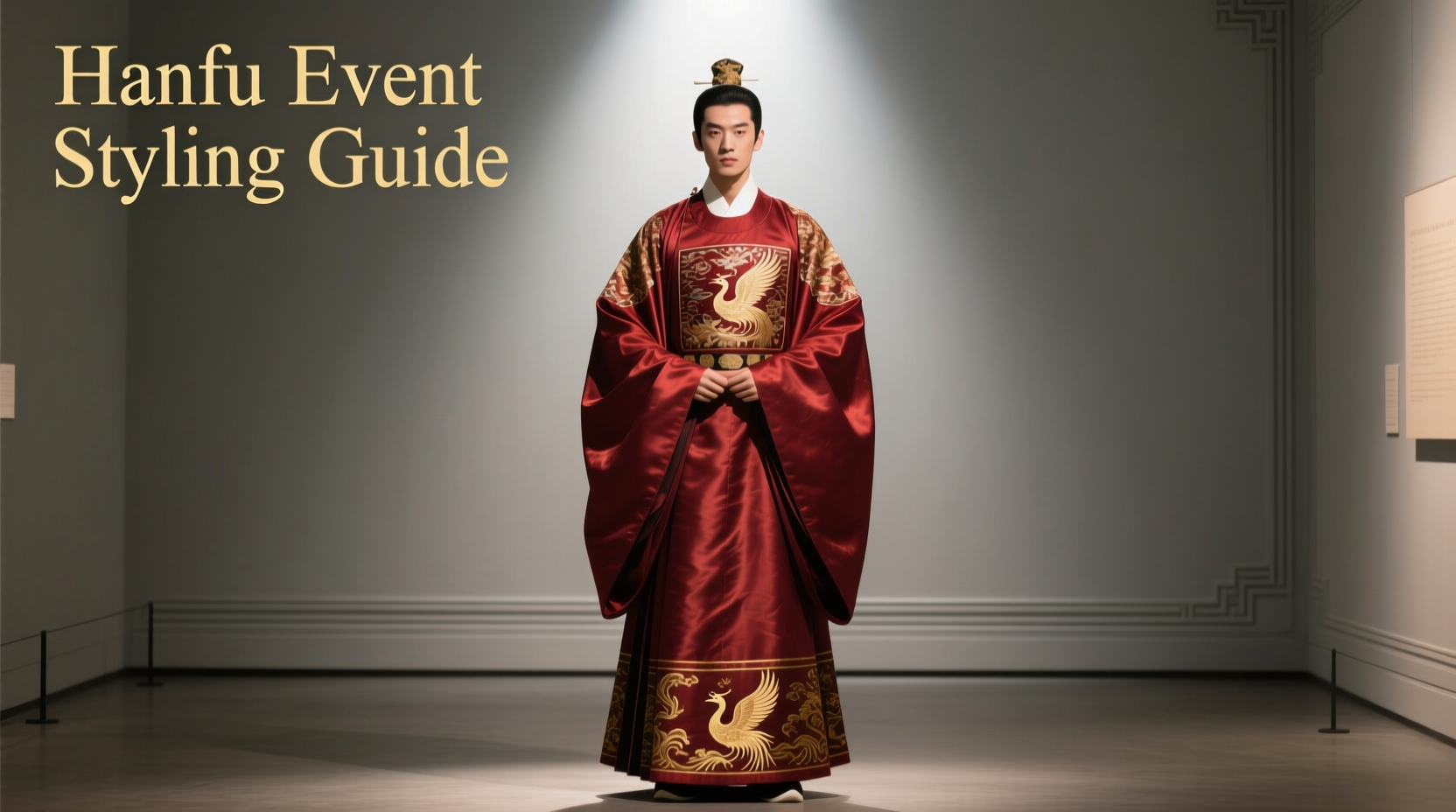
For grooms seeking a majestic, historically grounded aesthetic, the Yuanlingpao (圆领袍) is the premier choice. Characterized by its circular neckline, side slits for mobility, and structured silhouette, this robe was the standard official and formal wear of the Tang, Song, and Ming dynasties. Modern grooms typically opt for Ming-style interpretations, which feature wider sleeves and heavier, more ornate textiles.
Wedding Yuanlingpao are often woven from silk jacquard or brocade in auspicious colors like crimson, deep indigo, or imperial yellow. While historical officials wore Buzi (rank badges) denoting their civil or military grade, modern grooms often substitute these with embroidered motifs of dragons, cranes, or peonies to symbolize marital harmony and longevity. The robe is traditionally paired with a Wushamao (winged hat) or a structured Jinshi cap, and black leather or silk Xue (boots). Bespoke silk sets from heritage weavers can easily exceed $800 USD, while high-quality mass-market silk blends range from $250 to $450 USD.
Cultural Festivals & Parades: The Daopao and Feiyufu
When attending dynamic outdoor events like Lunar New Year parades, Hanfu festivals, or lantern fairs, the garments must balance visual impact with physical mobility. The Daopao (道袍), despite its name translating to 'Daoist robe,' was actually the ubiquitous everyday formal wear for Ming dynasty scholars and gentlemen. It features a cross-collar and distinctive hidden side panels (anbai) that create elegant, structured pleats when the wearer walks, while preventing the legs from being exposed.
For a more martial, dramatic flair, many young men opt for the Feiyufu (飞鱼服), or 'Flying Fish Robe.' Originally an elite guard uniform bestowed by the Ming emperor, it features a fitted waist, flared hem, and dramatic embroidery. Paired with a Yehe (leather belt) and a ceremonial sword, the Feiyufu is a show-stopping choice for festival photography and evening galas. The Smithsonian National Museum of Asian Art houses several exquisite examples of Ming guard textiles, highlighting the intricate gold-couching techniques that modern artisans strive to replicate today.
Scholarly Gatherings & Tea Ceremonies: The Shenyi
For intimate, intellectual, or spiritual events such as traditional tea ceremonies, calligraphy exhibitions, or Guqin (zither) recitals, the Shenyi (深衣) is the most culturally resonant choice. The Shenyi is a 'deep robe' that connects the upper jacket and lower skirt into a single piece, symbolizing the unity of heaven and humanity.
The most revered variation for these events is the Zhu Zi Shenyi, codified by the Song dynasty Neo-Confucian philosopher Zhu Xi. The lower skirt is constructed from exactly 12 panels of fabric, representing the 12 months of the year and the 12 earthly branches. Wearing a Shenyi made of raw silk, washed linen, or lightweight cotton projects an aura of scholarly restraint, modesty, and philosophical depth. It is typically worn with a simple Guan (topknot cap) rather than elaborate headwear.
Casual Outings & Summer Events: The Yiku
Not every occasion demands sweeping robes. For casual museum visits, summer markets, or traditional archery clubs, the Yiku (衣裤) or Duanda (short jacket and trousers) offers historical accuracy without the tripping hazard of floor-length hems. The Yiku consists of a cross-collar or round-collar tunic worn over loose-fitting trousers, often bound at the calf or ankle. This was the practical attire of merchants, artisans, and martial artists. Modern iterations utilize breathable linen-cotton blends, making them ideal for high-heat summer festivals.
Sourcing, Fabrics, and Price Tiers
Acquiring authentic male hanfu requires navigating a market divided between fast-fashion replicas and artisan-crafted heritage wear. Understanding fabric composition is vital for both comfort and historical accuracy.
- Mass-Market / Entry Level ($60 - $150 USD): Brands on platforms like Taobao and AliExpress often use polyester blends. While durable and easy to clean, polyester lacks the drape and breathability of natural fibers, leading to static and discomfort in warmer weather. Look for 'cotton-linen' (棉麻) blends as a budget-friendly alternative.
- Mid-Tier / Enthusiast ($150 - $400 USD): Reputable Hanfu brands (such as Han Shang Hua Tang or Ming Hua Tang) offer historically accurate patterning using synthetic silks, viscose, and high-grade cottons. These garments feature proper inner ties, reinforced collars, and historically inspired woven motifs.
- Bespoke / Heritage (Dingzhi) ($500 - $2,000+ USD): For weddings or lifelong investments, custom tailoring using Xiangyunsha (a rare, mud-dyed silk from Guangdong) or heavy silk brocade is unparalleled. As documented by textile conservationists at the Victoria and Albert Museum, traditional Chinese silk weaving techniques like Kesi (cut silk tapestry) require immense labor, justifying the premium cost of bespoke ceremonial robes.
Cultural Protocol and Etiquette
Wearing male hanfu is an act of cultural participation, demanding respect for the garment's historical weight. Beyond the strict adherence to the right-over-left collar rule, wearers must pay attention to layering and grooming.
A proper Hanfu ensemble always begins with a Zhongyi (inner garment), typically a white or off-white cotton cross-collar shirt and trousers. This layer protects the outer silk from sweat and ensures that the collar and cuffs present a crisp, layered aesthetic. Exposing bare skin beneath a formal robe is considered a breach of traditional modesty.
Footwear is equally important. Modern sneakers break the visual continuity of the drape. Invest in a pair of traditional Yunlu Xue (cloud-head boots) for winter and formal wear, or simple black cloth shoes (Buxie) for summer and scholarly robes. Finally, grooming plays a vital role; while a full historical topknot (Shuofa) is not mandatory for modern wearers, hair should be neatly tied back or styled cleanly, avoiding the disheveled look that contradicts the Confucian ideals of order and self-respect inherent in the clothing.
By matching the correct silhouette to the occasion and respecting the structural integrity of the garments, men can wear Hanfu not as a costume, but as a living, breathing continuation of a millennia-old sartorial legacy.