Male Chinese Costume: 2026 Buying Guide & Where to Shop

While global search engines often categorize traditional menswear under the broad, somewhat Westernized term chinese costume male, cultural enthusiasts, historians, and contemporary practitioners recognize that China’s sartorial heritage is vastly complex. Spanning over three millennia, Chinese menswear is not a monolith but a rich tapestry of dynastic evolution, regional weaving techniques, and philosophical symbolism. Whether you are sourcing garments for a traditional wedding, martial arts practice, cultural festivals, or formal diplomatic events, understanding the distinction between a theatrical costume and an authentic traditional garment is paramount.
This 2026 buying guide bridges the gap between historical accuracy and modern retail, providing you with the terminology, material knowledge, and sourcing strategies required to invest in genuine Chinese menswear.
Decoding the Terminology: Hanfu, Tangzhuang, and Changshan
To shop effectively, you must first abandon the umbrella term 'costume' and adopt the correct native terminology. The market is primarily divided into three distinct categories of male dress, each rooted in different historical epochs and cultural movements.
Hanfu (Han Traditional Clothing)
Hanfu refers to the historical dress of the Han Chinese, spanning from the Huangdi era to the late Ming Dynasty (ending circa 1644). For men, the most iconic and widely available garments include the Daopao (a scholar's robe with side slits and a hidden inner swing structure) and the Shenyi (a deep, one-piece robe). The defining characteristic of authentic Hanfu is the Jiaoling Youren—a cross-collar that wraps left over right. This asymmetrical closure is deeply tied to traditional Chinese cosmology, representing the triumph of life and order over death and chaos.
Tangzhuang (The 'Tang' Jacket)
Despite its name, the Tangzhuang does not originate from the Tang Dynasty. It is a modern adaptation of the Qing Dynasty Manchu Magua (riding jacket). Popularized globally during the 2001 APEC summit in Shanghai, the Tangzhuang is characterized by its mandarin collar and intricate Pankou (frog button) knots. It is the most commercially ubiquitous 'Chinese jacket' found in Western Chinatowns, though purists note its Manchu rather than Han origins.
Changshan (The Long Gown)
The Changshan is a long, tailored shirt or gown that gained immense popularity during the Republic of China era (1912–1949). Often worn beneath a shorter Magua jacket, the Changshan represents a bridge between imperial traditions and early 20th-century modernity. It is heavily favored by practitioners of Tai Chi, Bagua, and traditional Chinese calligraphy due to its fluid drape and unrestricted movement.
Material Composition and Weaving Techniques
The value of a male Chinese garment is inextricably linked to its textile. When evaluating listings or speaking with tailors, look for these specific material markers:
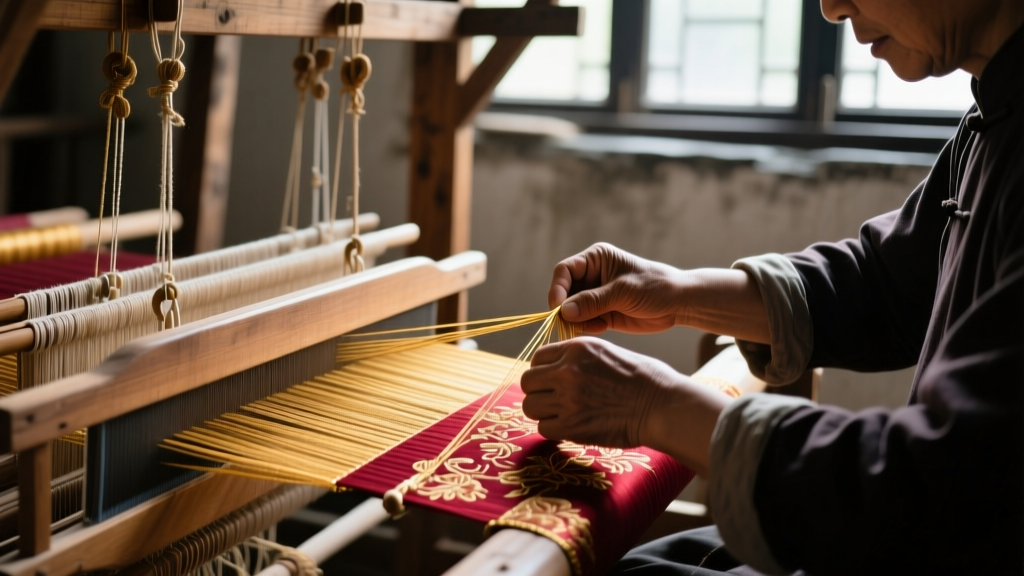
- Xiangyunsha (Canton Gauze): A highly prized, heritage silk from Guangdong. It is dyed using the juice of the Dioscorea cirrhosa tuber and coated in iron-rich river mud, resulting in a distinctive dark, crackled patina that is water-resistant and incredibly cooling in humid climates. Authentic Xiangyunsha commands premium prices.
- Zhuanghua (Nanjing Brocade): Historically reserved for imperial dragon robes, this heavy, opulent silk features metallic threads and complex jacquard weaves. It is primarily used today for high-end wedding Changshan or ceremonial Hanfu.
- Ramie and Raw Linen: For everyday Hanfu or monastic wear, unbleached ramie and linen are historically accurate, breathable, and offer a structured, ascetic silhouette favored by scholars and martial artists.
For deeper insights into historical weaving methods, the China National Silk Museum in Hangzhou maintains extensive archives on regional loom technologies and dyeing practices that continue to inform modern artisan production.
Where to Source Authentic Menswear in 2026
The market is saturated with cheap, synthetic Halloween costumes masquerading as traditional wear. To acquire garments with proper structural integrity and cultural respect, you must target specialized channels.
Online Artisan Marketplaces
For authentic Hanfu, the epicenter of commerce is Taobao and specialized independent studios. Brands like Minghuatang and Zhongling are renowned for their meticulous adherence to Ming Dynasty tailoring proportions, utilizing genuine silk and hand-stitched details. For international buyers, platforms like Etsy host diaspora tailors who specialize in bespoke Changshan and Tangzhuang, offering the advantage of Western sizing adjustments while maintaining traditional construction.
Physical Tailoring Districts in China
If you are traveling or employing a sourcing agent, physical fabric markets offer unparalleled bespoke options:
- Shanghai South Bund Fabric Market: Ideal for bespoke Changshan and Republic-era menswear. Tailors here excel in working with heavy brocades and wool blends for winter wear.
- Beijing Muxiyuan and Silk Street: While Silk Street caters heavily to tourists, the surrounding wholesale districts house serious tailors capable of executing complex Pankou knotting and imperial-style embroidery.
The Metropolitan Museum of Art's Qing Dynasty archives provide excellent visual references for the precise placement of embroidery and the structural cut of historical robes, which you can show to master tailors to ensure historical fidelity in your bespoke commissions.
2026 Pricing and Investment Matrix
Understanding the financial landscape prevents overpaying for mass-produced polyester while helping you identify genuine artisan craftsmanship. Below is the current market matrix for male garments.
| Garment Type | Entry-Level (Mass Market) | Artisan / Bespoke | Best Occasion |
|---|---|---|---|
| Tangzhuang (Jacket) | $35 - $80 USD | $250 - $600 USD | Lunar New Year, Casual Cultural Events |
| Changshan (Long Gown) | $50 - $120 USD | $300 - $800 USD | Martial Arts, Tea Ceremonies, Weddings |
| Hanfu (Daopao / Shenyi) | $60 - $150 USD | $400 - $1,500+ USD | Festivals, Ceremonial Rites, Photography |
| Xiangyunsha Silk Sets | $200 - $400 USD | $1,200 - $3,000+ USD | High-End Formal, Summer Luxury Wear |
Sizing, Proportions, and Cultural Protocols
Traditional Chinese menswear does not follow the Western paradigm of tight tailoring and darting. The beauty of the Daopao or Changshan lies in its flat-pattern cutting, which creates a fluid, architectural drape when the body is in motion. When ordering online, prioritize shoulder width and sleeve length over chest measurements. Historical sleeves often extend past the wrist, designed to be folded back or to cascade elegantly over the hands.
The Crucial Lapel Rule: Life vs. Death
The most critical cultural protocol in wearing Hanfu is the direction of the collar. The left side of the garment must always cross over the right side (Zuo You). In traditional Chinese philosophy, the left represents Yang (life, the sun, the living), while the right represents Yin (death, the moon, the underworld). Wrapping right over left is strictly reserved for dressing the deceased for burial. When buying from fast-fashion retailers or unvetted costume shops, you will frequently find this rule violated due to manufacturing ignorance. Always inspect the collar overlap before wearing your garment in public.
Accessorizing the Silhouette
A traditional garment is incomplete without its accompanying accessories. For Hanfu, invest in a leather or woven Ge Dai (belt) and a traditional Guan (headwear) or hair stick if you have long hair. For the Changshan, a jade or agate thumb ring and a folding fan complete the scholarly aesthetic. For further reading on the evolution of these accessories, the Victoria & Albert Museum's Asian Collections offer profound insights into the status symbols embedded in historical Chinese male adornment.
By moving beyond the search for a mere 'costume' and investing in structurally sound, culturally accurate garments, you participate in the preservation and respectful continuation of one of the world's most profound sartorial traditions.