Chinese Male Clothing: Hanfu Guide
The Anatomy of Male Chinese Clothing: Beyond the Stereotypes
When exploring chinese clothing male traditions, beginners often encounter a confusing mix of cinematic costumes, modern festival wear, and deep historical garments. Traditional Chinese menswear is not a monolith; it is a complex tapestry that shifts dramatically across dynasties, ethnic groups, and social classes. For the modern enthusiast, navigating this landscape requires understanding the distinction between Hanfu (the historical dress of the Han ethnic majority) and Qing/Republic-era garments like the Changshan and Tangzhuang.
This guide deconstructs the silhouettes, construction methods, and cultural protocols of traditional male Chinese garments, providing a practical framework for collectors, cultural practitioners, and those attending traditional ceremonies.
Hanfu (汉服): The Pre-Qing Han Silhouettes
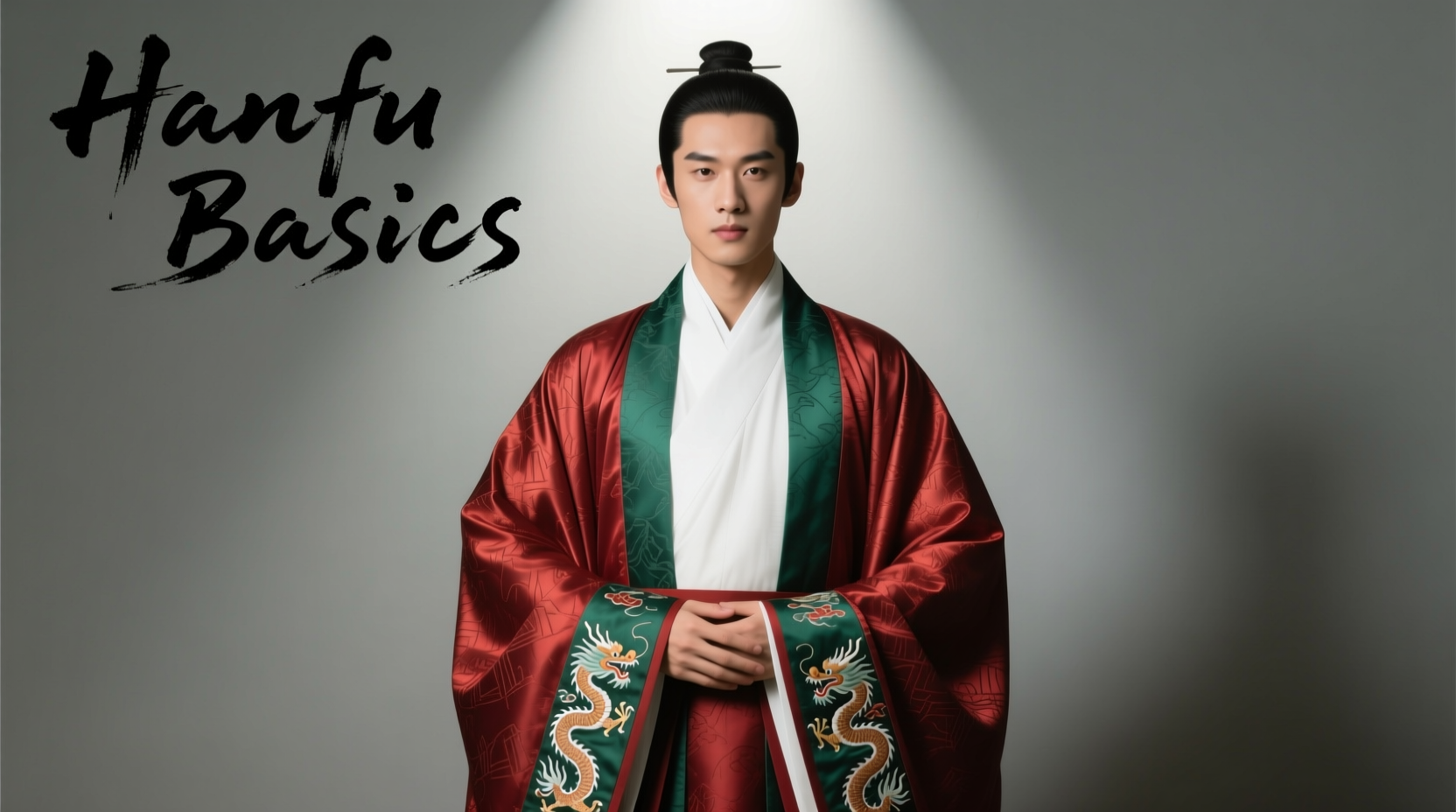
Hanfu encompasses the clothing systems of the Han people from the mythical Yellow Emperor era up to the mid-17th century. Unlike Western tailoring, which relies on darts and shoulder seams to contour the body, traditional Hanfu utilizes a flat-pattern cutting technique. Garments are cut from whole widths of fabric, draped over the shoulders, and tied at the waist, creating a fluid, structural elegance that accommodates various body types.
The Daopao (道袍) and Shenyi (深衣)
For men entering the Hanfu revival movement, two silhouettes dominate the wardrobe:
- The Shenyi (深衣): Originating in the Han Dynasty, this is a one-piece robe where the upper and lower garments are cut separately but sewn together. It represents the Confucian ideal of unity and is heavily pleated at the skirt, offering a dignified, scholarly appearance.
- The Daopao (道袍): Despite translating to 'Taoist robe,' this was the standard daily wear for Ming Dynasty scholars and officials. It features wide sleeves, side slits, and a unique inner-tie system that keeps the robe securely closed without external buttons. According to the Metropolitan Museum of Art's Asian Art archives, the Ming Daopao represents a pinnacle of understated elegance, often utilizing dark, muted colors with intricate, tone-on-tone woven patterns.
The Golden Rule of the Collar: Jiaoling Youren
The most critical rule in wearing Hanfu is the collar orientation, known as Jiaoling Youren (交领右衽). The left lapel must always cross over the right lapel, meaning the right collar is hidden against the chest while the left collar forms a 'y' shape on the outside.
Cultural Warning: Reversing this orientation (right over left) is strictly reserved for dressing the deceased for burial. Wearing a robe right-over-left in daily life is considered highly inauspicious and a fundamental breach of cultural etiquette.
Changshan (长衫) and Tangzhuang (唐装): The Qing and Republican Eras
Following the Manchu conquest in 1644, the Qing Dynasty enforced the Tifa Yifu edict, mandating Manchu dress codes. This birthed the silhouettes most commonly recognized globally today as 'traditional Chinese menswear.'
The Changshan and the Magua
The Changshan (long gown) is a slender, mandarin-collared robe with side slits, designed originally for horseback riding. It is frequently paired with a Magua, a waist-length riding jacket. During the Republican era (1912–1949), the Changshan became the intellectual's uniform, favored by scholars and writers for its blend of Manchu structure and Han scholarly modesty.
Demystifying the 'Tang Suit' (Tangzhuang)
A common beginner mistake is assuming the Tangzhuang originates from the Tang Dynasty (618–907 AD). In reality, the modern Tang Suit is a late-20th-century hybrid based on the Qing Dynasty Magua. It was popularized globally during the 2001 APEC Summit in Shanghai. Its defining feature is the Pankou (盘扣)—intricate frog buttons made from knotted silk cord. The Victoria and Albert Museum notes that Qing-era Pankou were not merely functional fasteners but auspicious symbols, with knots shaped like butterflies, flowers, or the 'longevity' character.
Buyer’s Matrix: Sourcing Authentic Male Chinese Garments
Purchasing authentic Chinese clothing for men requires navigating a market flooded with cheap polyester costumes. Below is a structural guide to help you invest in culturally accurate, high-quality garments.
| Garment Type | Historical Era | Best Use Case | Price Range (USD) | Recommended Fabric |
|---|---|---|---|---|
| Daopao (Ming) | Ming Dynasty | Cultural events, tea ceremonies | $80 - $350 | Raw silk, wool blends, heavy cotton |
| Shenyi (Han) | Han Dynasty | Rites of passage, formal rituals | $120 - $450 | Ramie (xia bu), mulberry silk |
| Changshan | Qing / Republic | Weddings, formal banquets | $60 - $250 | Linen, jacquard weave, shantung |
| Tangzhuang | Modern / Qing-hybrid | Lunar New Year, casual festivals | $40 - $150 | Cotton brocade, velvet (winter) |
Where to Source Authentically
For beginners, mainstream e-commerce sites often sell theatrical approximations. For genuine historical accuracy and natural fibers, look into specialized Hanfu brands like Minghuatang (renowned for museum-grade Ming Dynasty reproductions) or Shisanyu (accessible, durable daily wear). If utilizing sourcing agents for Taobao, always filter for 'original design' (原创) and check the fabric composition tags to avoid 100% polyester brocades, which trap heat and lack the drape of natural fibers.
Fabrics and Weaving Traditions
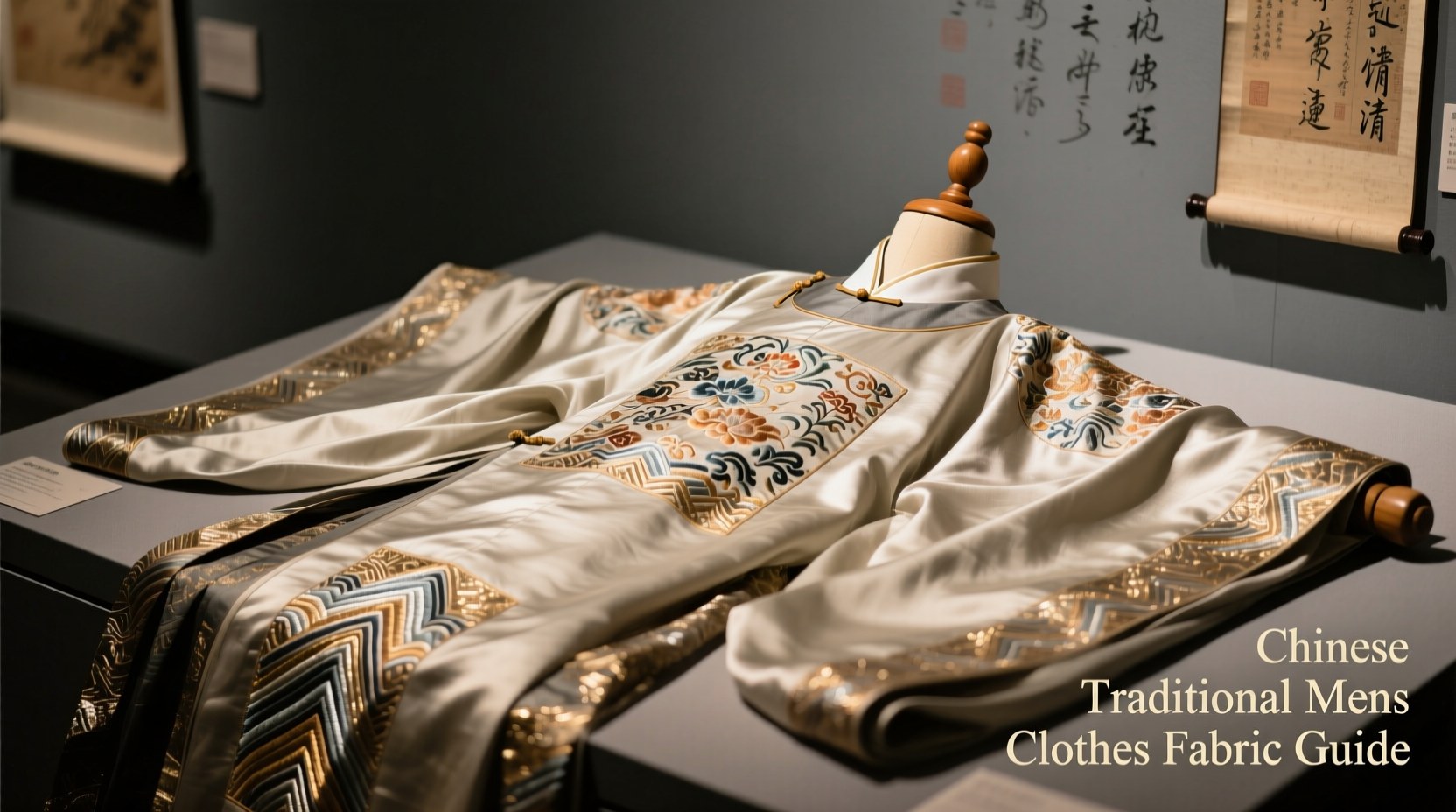
The China National Silk Museum emphasizes that the soul of Chinese garments lies in the textile. When selecting male Chinese clothing, prioritize these traditional fabrics:
- Xiangyunsha (Gambiered Canton Gauze): A luxurious, sweat-resistant silk dyed with river mud and plant tannins. It has a distinct rustling sound and is highly prized for summer Changshan.
- Zhijin (Gold-Weft Brocade): Historically reserved for nobility, this heavy, metallic-threaded fabric is ideal for winter Tangzhuang jackets and wedding garments.
- Summer Ramie: Before silk was widely accessible, commoners wore ramie. Today, high-grade hand-woven ramie offers a breathable, textured, and historically grounded alternative to linen.
Cultural Protocols and Wearing Etiquette
Wearing traditional garments is an act of cultural participation. To wear male Chinese clothing with respect, observe the following protocols:
- The Hemline Rule: Hanfu robes should graze the top of the foot or ankle. Stepping on the hem is considered sloppy and disrespectful to the garment's tailoring.
- Inner Layers (Zhongyi): Never wear a Hanfu robe directly against the skin without a white cotton or linen inner layer (Zhongyi). The white collar of the Zhongyi should peek out slightly beneath the outer robe's collar, creating a crisp, layered aesthetic that signifies cleanliness and propriety.
- Footwear: Avoid modern athletic shoes. Pair Hanfu with traditional cloud shoes (yunxie) or simple black cloth boots. For a Changshan or Tangzhuang, leather loafers or traditional embroidered slippers are appropriate.
By understanding the architectural differences between a Ming Dynasty Daopao and a Republican-era Changshan, you move beyond costume and into the realm of living sartorial heritage. Whether you are sourcing a silk Changshan for a wedding or a cotton Daopao for daily tea practice, respecting the cut, the collar, and the cloth ensures you honor the civilization that wove it.