Korean Hanbok Colors: Symbolism in Dress

Korean Hanbok Colors: Symbolism in Dress
The hanbok, Korea's traditional garment, is instantly recognizable by its vibrant colors and flowing lines. But beyond visual beauty, every hue in a hanbok carries centuries of cultural meaning, rooted in Obangsaek (오방색), the Korean five-color spectrum, and Confucian social hierarchy.
Obangsaek: The Five Cardinal Colors
Korean color theory is built on five primary colors, each associated with a direction, element, and virtue:
- Blue (청): East, wood, benevolence — worn by scholars and in spring ceremonies
- Red (적): South, fire, propriety — used in wedding hanbok and royal garments
- Yellow (황): Center, earth, faith — reserved for royalty and sacred contexts
- White (백): West, metal, righteousness — the color of the common people, symbolizing purity
- Black (흑): North, water, wisdom — associated with winter and scholarly gravitas
Wedding Hanbok Colors
In traditional Korean weddings, the bride wears a wonsam in green with red accents, representing the harmony of yin and yang. The groom wears blue or black. The mother of the bride wears pink, and the mother of the groom wears blue — these color assignments remain observed in many modern Korean weddings.
Social Status and Color
During the Joseon Dynasty, sumptuary laws strictly regulated who could wear which colors. Commoners were limited to white, pale pink, and light blue, while bright reds, deep purples, and gold were reserved for royalty and high-ranking officials. The king alone could wear golden dragon robes (곤룡포).
Modern Hanbok Colors
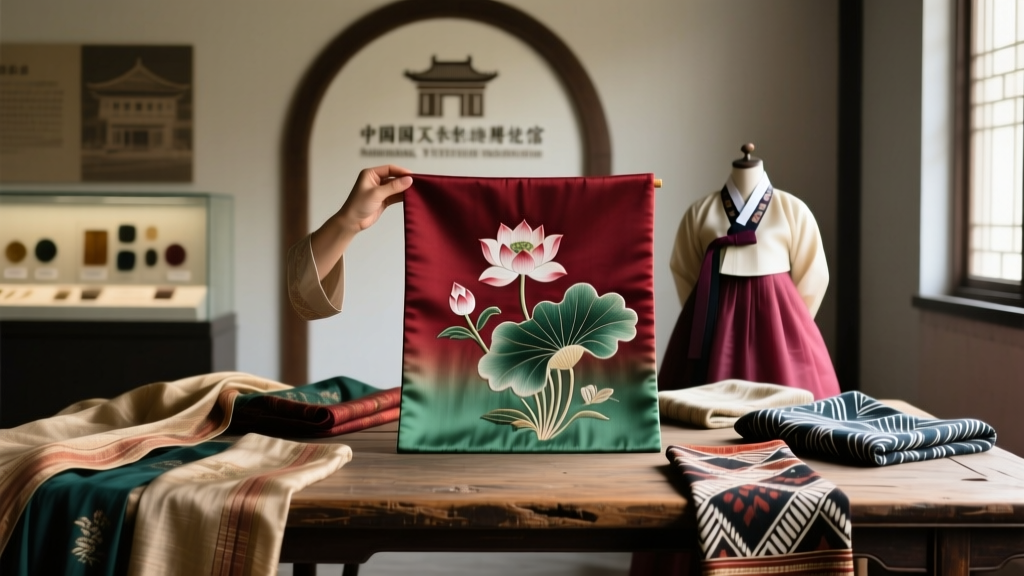
Contemporary hanbok designers freely reinterpret traditional color palettes, introducing pastels, jewel tones, and monochromatic schemes. Yet the symbolic resonance persists — red hanbok at Lunar New Year, white at memorial ceremonies, and the iconic green-and-red combination at weddings continues to honor centuries of tradition.