Kimono vs Yukata vs Hakama: Complete 2026 Styling Guide
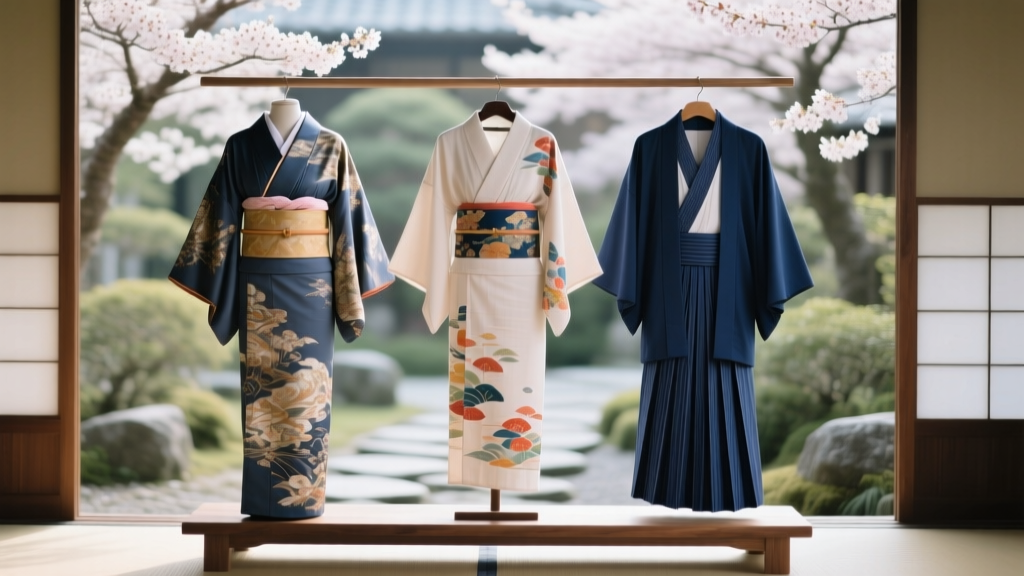
The primary difference between a hakama and a kimono is their structure and placement: a kimono is a full-body, T-shaped wrapped robe, while a hakama is a pleated, skirt-like garment worn over a kimono. For cultural enthusiasts, martial artists, and attendees of Japanese ceremonies navigating traditional dress codes, understanding these distinctions prevents styling errors. This guide compares the kimono, yukata, and hakama to help you select the appropriate garment for any 2026 event.
- A kimono is the foundational full-body robe, while a hakama is an outer skirt-like layer.
- Yukata are informal, lightweight cotton kimonos designed specifically for summer festivals.
- Formal hakama feature exactly 7 pleats representing traditional samurai virtues.
Defining the Garments: Kimono, Yukata, and Hakama
The Kimono
A traditional Japanese T-shaped, straight-lined robe worn so that the hem falls to the ankle, with attached collars and long, wide sleeves. It is wrapped around the body, always with the left side over the right, and secured by a wide sash called an obi.
The Hakama
A pleated, wide-legged outer garment worn over a kimono, resembling a skirt or divided trousers. Historically worn by samurai to protect their legs while riding horses, it now serves as formal wear for men and ceremonial or martial arts attire for women.
The Yukata
A yukata is a casual, unlined summer kimono typically made from lightweight cotton or synthetic blends. Unlike formal silk kimonos, yukata are worn directly over basic undergarments and require less complex obi tying techniques.
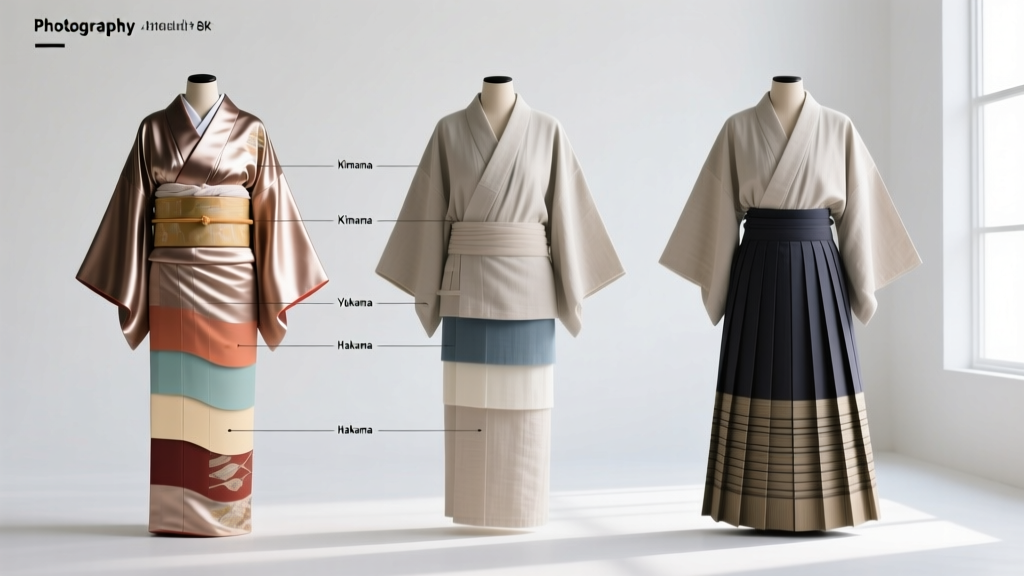
Structural Differences and Comparison Matrix
Choosing between these garments depends on formality, season, and gender norms. The physical construction dictates how each item drapes and functions during movement.
A standard kimono requires a specialized fabric bolt called a tanmono, which measures exactly 14 meters in length. Dressing in a formal kimono takes 15 to 20 minutes and often requires a professional kitsuke stylist to tie the intricate obi knots.
In contrast, a hakama ties securely at the waist over the kimono using four distinct straps, known as himo. The obi worn beneath a women's hakama is significantly smaller, measuring only 10 to 15 centimeters in width compared to the 30-centimeter width of a formal fukuro obi.
According to the Japan Guide traditional clothing overview, the layering system ensures that the outer hakama protects the delicate silk kimono underneath from wear and tear during active movement.
| Feature | Kimono (Formal) | Yukata (Casual) | Hakama (Outer) |
|---|---|---|---|
| Material | Silk, crepe, brocade | Cotton, linen, polyester | Silk, polyester, wool |
| Weight | 800 to 1200 grams | 300 to 500 grams | 400 to 700 grams |
| Footwear | Zori with tabi socks | Geta with bare feet or tabi | Zori or boots with tabi |
| Formality | High (weddings, tea ceremony) | Low (summer festivals, onsen) | High (graduations, martial arts) |
Modern Occasions and Styling in 2026
Modern Japanese fashion integrates these traditional garments into specific contemporary milestones. University graduation ceremonies remain the most prominent event where women wear a hakama over a vibrant kimono.
For martial arts practitioners, the hakama is mandatory in disciplines like Aikido and Kendo. The All Japan Kendo Federation mandates that practitioners wear a dark indigo or black hakama to maintain uniformity and obscure footwork from opponents during matches.
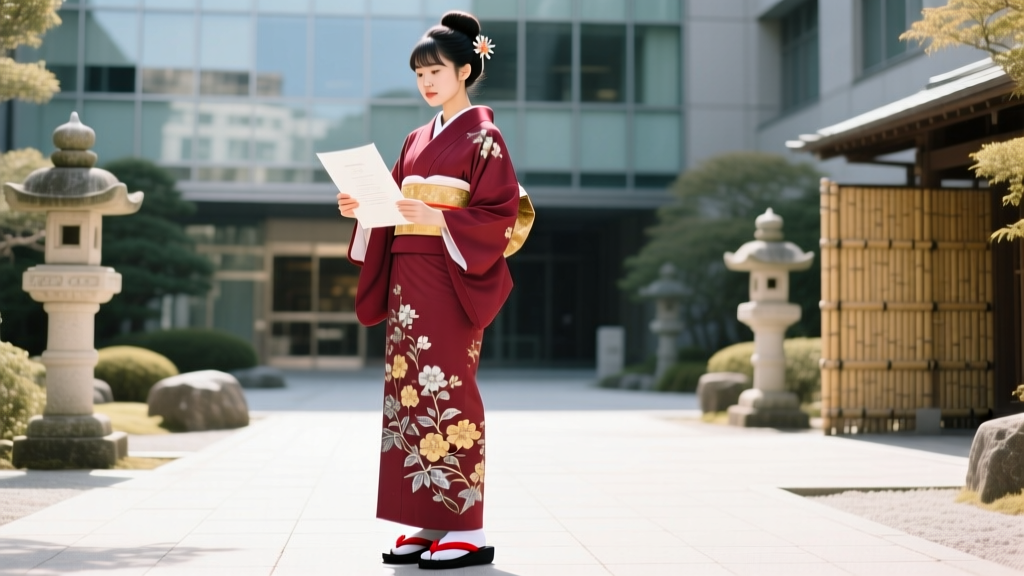
Summer festivals dictate a complete shift toward the yukata. Because a yukata weighs only 300 to 500 grams, it provides necessary breathability in Japan's humid July and August climate, which frequently exceeds 30 degrees Celsius.
Frequently Asked Questions
Can you wear a hakama without a kimono?
Traditionally, no. A hakama is an outer garment designed specifically to be worn over a kimono or a specialized martial arts gi top. However, modern avant-garde fashion in 2026 sometimes pairs hakama with Western blouses, though this breaks traditional kitsuke rules.
What is the difference between a yukata and a kimono?
The main differences are material, lining, and formality. A kimono is typically made of silk, features an inner lining, and requires multiple under-layers. A yukata is an unlined, single-layer cotton garment worn exclusively for casual summer events.
How many pleats does a traditional hakama have?
A standard formal hakama features exactly 7 pleats: 5 in the front and 2 in the back. These 7 pleats historically represent the 7 virtues of the samurai, including courage, justice, and loyalty, as documented by the Japan National Tourism Organization.
Conclusion and Next Steps
Understanding the distinction between a hakama and a kimono ensures you respect Japanese sartorial traditions while selecting the correct attire for your specific event. The kimono serves as the foundational canvas, the yukata offers casual summer comfort, and the hakama provides formal, structured layering.
To proceed, identify your upcoming event's formality level and season. If you are attending a formal ceremony, book a consultation with a certified kitsuke stylist at least four weeks in advance to secure a proper fitting and rental.