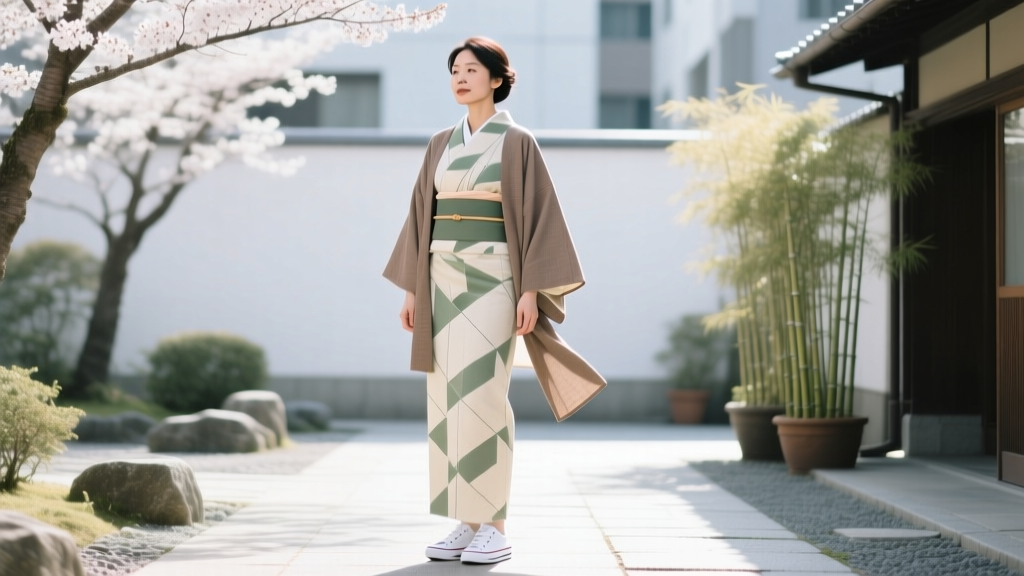
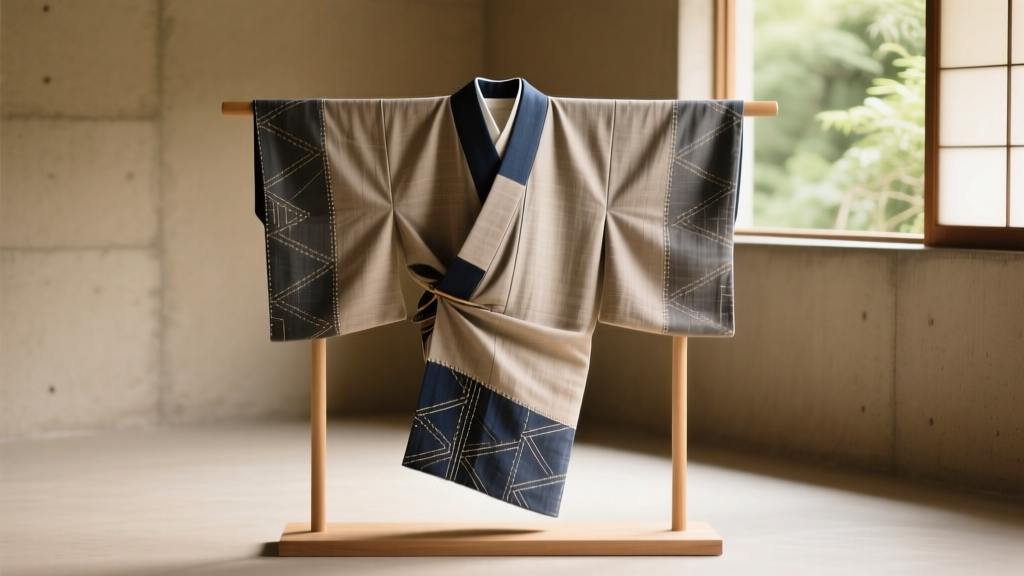
Japanese Kimono History: Eras, Varieties, and Evolution

The Origins of the Silhouette: Understanding Japanese Kimono History
The term kimono translates literally to 'thing to wear' (ki meaning wear, and mono meaning thing). However, when textile scholars and cultural historians discuss Japanese kimono history, they are referring to the iconic T-shaped, straight-lined robe that has served as Japan's national garment for centuries. To truly appreciate the kimono, one must look beyond its modern iteration and explore the profound historical shifts, sumptuary laws, and weaving innovations that transformed it from a simple undergarment into a canvas of unparalleled artistic expression.
Heian Period (794–1185): The Layered Aesthetic and the Jūnihitoe
During the Heian period, the Japanese court severed direct diplomatic ties with Tang Dynasty China, leading to a flourishing of indigenous culture known as kokufū bunka. It was during this era that the predecessor to the modern kimono emerged. For aristocratic women, this took the form of the jūnihitoe, or 'twelve-layer robe.' According to the Kyoto National Museum, these ensembles were not merely clothing but complex indicators of rank, season, and poetic sensibility.
The true artistry of the Heian period lay in kasane no irome—the meticulous color layering of silk robes. The visible edges of the sleeves and hems were layered to evoke seasonal motifs, such as the pale green of budding willows or the deep crimson of autumn maple leaves. The sheer volume of silk used in a formal jūnihitoe could weigh up to 20 kilograms, restricting movement and enforcing a refined, gliding gait among court ladies.
Kamakura and Muromachi Eras (1185–1573): The Rise of the Kosode
As the samurai class rose to power, the cumbersome layers of the Heian court were abandoned in favor of martial practicality. The kosode—literally 'small sleeve,' referring to the narrow wrist opening compared to the wide, open sleeves of earlier court robes—transitioned from an undergarment to the primary outerwear for both men and women. This shift is a pivotal moment in Japanese kimono history, as the kosode established the fundamental T-shaped silhouette recognized today.
During the Muromachi period, women began wearing the kosode without the traditional hakama (pleated trousers). To secure the garment, a narrow, braided cord called an obi was tied at the front or side. The surface of the kosode became a new space for decoration, leading to early developments in shibori (tie-dyeing) and surihaku (gold leaf application).
Edo Period (1603–1867): Sumptuary Laws and the Yūzen Revolution
The Edo period represents the golden age of Japanese kimono history. Under the strict social hierarchy of the Tokugawa shogunate, clothing was heavily regulated by sumptuary laws (ken'yakurei). These laws dictated the fabrics, colors, and patterns permissible for each social class. However, the wealthy merchant class (chōnin) found loopholes to display their wealth, leading to an explosion of covert luxury and innovative dyeing techniques.
The Invention of Yūzen-zome
In the late 17th century, a fan painter named Miyazaki Yuzensai revolutionized textile decoration. Yūzen-zome is a resist-dyeing technique that uses a rice-paste barrier to outline designs, allowing artisans to paint intricate, multi-colored pictorial scenes directly onto the silk. This technique bypassed sumptuary restrictions on woven brocades and tie-dyes, enabling the creation of breathtaking landscapes, flora, and fauna that wrapped around the wearer's body. The Victoria and Albert Museum highlights Edo-period kosode as masterpieces of graphic design, noting how the placement of motifs was calculated to interact with the wide, increasingly elaborate obi sashes that had moved to the back of the body.
Comparative Evolution: Kimono Varieties by Historical Era
The following table illustrates the structural and stylistic evolution of the garment across major historical epochs.
| Historical Era | Primary Garment | Sleeve Style & Silhouette | Fastening & Decoration |
|---|---|---|---|
| Heian (794–1185) | Jūnihitoe / Kariginu | Wide, open sleeves; extreme volume | Layered color combinations; no obi |
| Kamakura (1185–1333) | Kosode | Narrow wrist openings; straight cut | Narrow cord obi; worn with hakama |
| Edo (1603–1867) | Kosode (Outerwear) | Lengthened sleeves (furisode emerges) | Wide brocade obi; Yūzen dyeing |
| Meiji (1868–1912) | Standardized Kimono | Standardized sleeve lengths | Introduction of wool; family crests (mon) |
| Taisho (1912–1926) | Meisen Kimono | Art Deco motifs; shorter sleeves | Ikat weaving; modernized obi knots |
Meiji and Taisho Eras (1868–1926): Westernization and Meisen Silk
The Meiji Restoration opened Japan to the West, bringing yōfuku (Western clothing) to the male elite. However, women largely retained the kimono, leading to a standardization of the garment's dimensions and the formalization of kitsuke (the art of dressing). The most significant innovation of the subsequent Taisho era was the mass production of meisen silk. Using an ikat (pre-dyed thread) technique, manufacturers produced affordable, durable silk kimono featuring bold, Art Deco-inspired geometric patterns. According to archives at the Tokyo National Museum, meisen democratized fashion, allowing working-class women to participate in rapid seasonal trend cycles for the first time.
Modern Varieties: Decoding the Contemporary Kimono
Today, the kimono is categorized by formality, marital status, and age. Understanding these varieties is essential for collectors and wearers alike.
- Furisode: The most formal kimono for unmarried women. Characterized by 'swinging sleeves' (furi) that can measure over 100cm in length. Historically, the swinging sleeves were believed to ward off evil spirits and attract suitors. Modern bespoke furisode crafted from chirimen (silk crepe) with hand-painted yūzen and gold leaf can cost between $4,000 and $12,000 USD.
- Kurotomesode: The highest formality for married women. A black silk kimono featuring five family crests (mon) and a continuous pictorial design restricted to the lower hem. It is traditionally worn by the mothers of the bride and groom at weddings.
- Hōmongi: Translating to 'visiting wear,' this semi-formal kimono features patterns that flow continuously across the seams, creating a unified canvas when the garment is laid flat. It is appropriate for both married and unmarried women attending tea ceremonies or formal parties.
- Tsumugi: A casual, everyday kimono woven from pongee silk (spun from silk waste or wild cocoons). Despite its rustic, textured appearance and high cost of artisanal production, tsumugi is classified as casual wear and is inappropriate for formal ceremonies.
A Collector’s Guide to Sourcing Historical Kimono
For textile enthusiasts and vintage collectors, acquiring historical kimono requires an understanding of construction and fabric composition. Authentic antique kimono are constructed from single bolts of fabric (tanmono), cut in straight lines without wasting material. When examining a vintage piece, look for shitsuke—loose basting stitches along the edges used to keep the silk aligned during cleaning and storage.
"The lining of a kimono often reveals more about its age and origin than the exterior. Edo-period kosode frequently feature contrasting red silk linings, while Taisho-era meisen garments often utilize cotton or synthetic blends as Japan rapidly industrialized its textile sector."
When sourcing authentic pieces, expect to pay between $150 and $400 USD for excellent condition Taisho-era meisen kimono. Rare, authenticated Edo-period kosode with intact surihaku gold leaf or complex shibori can command prices from $2,500 to over $15,000 USD at specialized auction houses in Kyoto and Tokyo. Always verify the presence of natural dyes (like safflower red or indigo) versus early aniline dyes, which can indicate a late Meiji or early Showa production date.
Preserving a Living Tradition
Japanese kimono history is not merely a study of the past; it is a living tradition maintained by master dyers, weavers, and kitsuke instructors. Whether examining the structural ingenuity of the Heian layers or the graphic brilliance of an Edo-period yūzen masterpiece, the kimono remains one of the world's most sophisticated examples of wearable art. By understanding the historical context and regional varieties of these garments, collectors and cultural enthusiasts can ensure that the legacy of Japan's master artisans is preserved for future generations.