Japanese Clothing Types: A Fabric & Craft Guide

Beyond the Silhouette: The Textile Soul of Japanese Dress
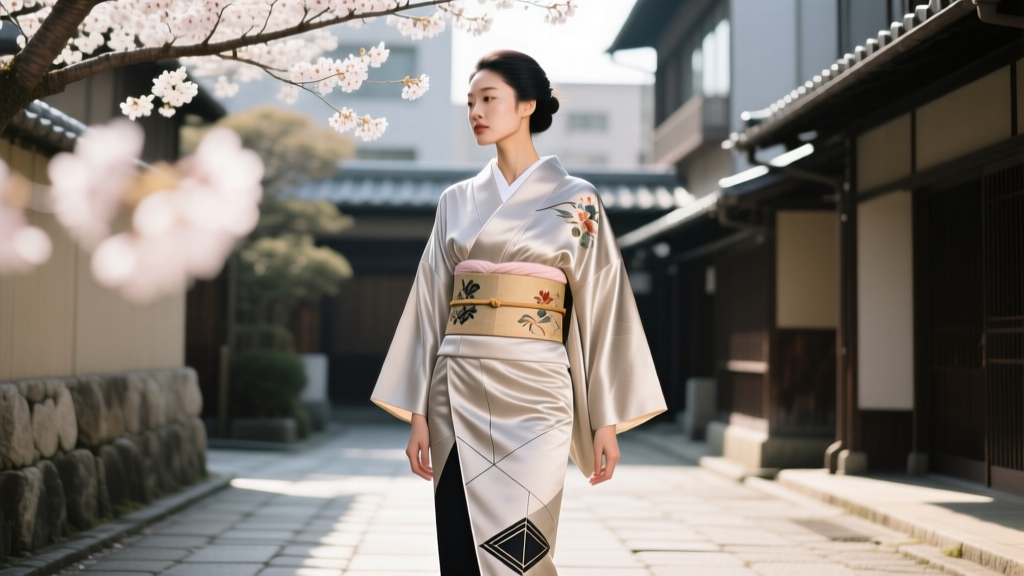
When exploring the types of traditional Japanese clothing, most observers focus on the silhouette—the sweeping sleeves of a furisode, the crisp cotton lines of a yukata, or the formal elegance of a kurotomesode. However, true sartorial appreciation requires looking past the shape and into the loom and the dye vat. The identity of a Japanese garment is inextricably linked to its fabric, the regional artisans who produced it, and the centuries-old craftsmanship that governs its creation.
This guide deconstructs the major types of traditional Japanese clothing through the lens of textile engineering, weaving techniques, and artisanal dyeing. Whether you are a collector, a textile historian, or a cultural enthusiast, understanding the fabric is the key to authenticating and appreciating these living heritage garments.
The Foundation: Tanmono and Zero-Waste Construction
Unlike Western tailoring, which cuts fabric to fit the body’s curves, traditional Japanese clothing is constructed from a standard bolt of fabric known as a tanmono. A typical tanmono measures approximately 36 to 40 centimeters in width and 11 to 12 meters in length. This specific dimension is not arbitrary; it is precisely enough to create one adult-sized kimono.
The kimono is assembled from straight, T-shaped panels sewn together with minimal cutting. This reflects the profound Japanese philosophy of mottainai (avoiding waste). Because the garment is made of straight panels, it can be entirely disassembled, washed, re-dyed, and resewn, effectively giving the textile multiple lifespans. According to archival textile studies preserved by the Kyoto National Museum, this modular construction has remained largely unchanged since the Heian period (794–1185), allowing historians to trace the evolution of Japanese aesthetics purely through textile fragments.
Decoding Garment Types by Textile and Technique
The classification of the types of traditional Japanese clothing is heavily dictated by the fabric’s weight, weave, and surface design. Here is a deep dive into how specific textiles define specific garments.
Formal Silk Masterpieces: Furisode and Tomesode
For the highest levels of formality, artisans rely on chirimen (silk crepe). Chirimen is woven using tightly twisted weft threads that alternate in the direction of their twist. When the fabric is washed and boiled, the threads untwist slightly, creating a distinct pebbled texture. This texture scatters light beautifully and allows the silk to absorb dyes with unparalleled vibrancy.
Garments like the furisode (worn by unmarried women) and kurotomesode (worn by married women) are typically crafted from heavy chirimen and feature Yuzen dyeing. Yuzen is a complex resist-dyeing technique where rice paste is applied to the silk to block out areas before hand-painting intricate motifs like cranes, pine trees, or flowing water. The resulting garments are heavy, drape elegantly, and can cost anywhere from 300,000 JPY to over 2,000,000 JPY ($2,000 to $13,500 USD) depending on the artisan's pedigree.
Everyday Elegance: Komon and the Art of Katagami
The komon is an everyday silk kimono characterized by repeating patterns that cover the entire garment. The pinnacle of this craft is Edo Komon, a technique originating in the Edo period (1603–1867) for the samurai class. Artisans use katagami—intricate stencils hand-carved from mulberry paper hardened with persimmon tannin—to apply microscopic dots of dye. From a distance, an Edo Komon kimono appears to be a solid, muted color. Up close, the eye reveals tens of thousands of perfectly spaced dots forming subtle geometric or natural motifs. The Metropolitan Museum of Art's Asian Art Department frequently highlights katagami stencils as masterpieces of precision engineering in their own right.
Summer Breathability: Yukata and Aizome
The yukata is the most accessible and widely recognized of the types of traditional Japanese clothing, worn during summer festivals and at hot spring resorts. Traditionally, yukata are made from lightweight, unlined cotton. The most historically significant cotton dyeing method is aizome (natural indigo dyeing). Fermented indigo leaves (sukumo) create a living dye vat that not only colors the cotton in deep, rich blues but also imparts natural antibacterial and insect-repellent properties, making it ideal for Japan's humid summers. Modern yukata often utilize synthetic dyes and machine-printing, keeping prices accessible (typically 5,000 to 15,000 JPY), but artisanal shibori (tie-dye) indigo yukata remain highly sought after by collectors.
The Outer Layers: Haori and Michiyuki
Outerwear provides a canvas for some of Japan's most luxurious weaving techniques. The haori (a hip- or thigh-length jacket) and the michiyuki (a square-necked overcoat) are often crafted from Oshima Tsumugi or heavy brocades. Because outerwear does not require the fluid drape of a formal kimono, it can support stiffer, more heavily textured fabrics that showcase structural weaving mastery.
Regional Hubs of Textile Mastery
To truly understand Japanese garments, one must understand the geography of its crafts. Specific regions have guarded their textile secrets for generations, resulting in highly localized fabrics.
- Nishijin-ori (Kyoto): A luxurious brocade weaving technique utilizing gold and silver threads, often woven into the obi (sash) or formal haori. The looms are so complex that some require two operators—one to weave, and one to manage the Jacquard-like punch cards or draw-cords from above.
- Kaga Yuzen (Kanazawa, Ishikawa): Distinguished from Kyoto Yuzen by its use of the kaga gosai (five signature colors: indigo, crimson, ochre, grass green, and purple) and its hyper-realistic, shaded botanical motifs. Kaga Yuzen rarely uses gold leaf or embroidery, relying entirely on the painter's brush.
- Amami Oshima Tsumugi (Kagoshima): A legendary pongee silk from Amami Oshima island. The silk threads are dyed using a decoction of techi (ironwood) leaves and then submerged in the island's iron-rich mud. The tannin and iron react to create a deep, lustrous charcoal-black or rust-brown color. The resulting fabric is remarkably durable, rust-proof, and features meticulous cross-hatch patterns.
Craftsmanship Data Table: Fabric, Technique, and Price Guide
The following table provides a structured framework for identifying and valuing various types of traditional Japanese clothing based on their material composition and artisanal origins.
| Garment Type | Primary Fabric | Signature Technique | Estimated Price Range (JPY / USD) |
|---|---|---|---|
| Furisode (Formal Unmarried) | Heavy Silk Crepe (Chirimen) | Kyoto Yuzen Resist-Dyeing, Gold Leaf | ¥300,000 - ¥1,500,000+ ($2,000 - $10,000+) |
| Kurotomesode (Formal Married) | Silk Crepe or Rinzu (Satin) | Yuzen Dyeing, Embroidery | ¥250,000 - ¥1,000,000 ($1,700 - $6,800) |
| Komon (Everyday Silk) | Light Silk or Silk-Wool Blend | Edo Komon Stencil, Katazome | ¥50,000 - ¥200,000 ($340 - $1,350) |
| Yukata (Summer Casual) | Cotton or Hemp | Aizome (Indigo), Arimatsu Shibori | ¥5,000 - ¥80,000 ($35 - $550) |
| Haori (Jacket/Outerwear) | Oshima Tsumugi, Nishijin Brocade | Mud-Dyeing, Jacquard Weaving | ¥80,000 - ¥500,000 ($550 - $3,400) |
*Note: Prices reflect new, artisan-crafted garments. Vintage or antique markets offer significantly lower entry points, though condition and textile degradation must be carefully assessed.
Sourcing Authentic Garments: A Collector's Framework
When purchasing traditional Japanese clothing, distinguishing between mass-produced tourist souvenirs and authentic artisanal heritage requires a trained eye. The Japan National Tourism Organization actively promotes certified traditional crafts, but buyers should look for specific physical markers of authenticity:
- Inspect the Selvedge (Mimi): Authentic tanmono will have clean, tightly woven selvedge edges. In hand-woven silks like Oshima Tsumugi, you may find the artisan's signature or cooperative stamp woven directly into the selvedge.
- Examine the Lining (Jura): High-end formal kimono are fully lined with high-quality silk or copper-tone habutai. The way the lining is attached at the hem (fukikaeshi) allows for extra fabric to be let out if the wearer's height requires it—a hallmark of bespoke tailoring.
- Verify the Crests (Kamon): Formal garments feature one, three, or five family crests. In authentic craftsmanship, these are not merely printed; they are either intricately dyed using resist techniques or hand-embroidered with silk and metallic threads.
- Check for Jimon (Woven Crests): Many high-quality silks feature a jimon—a subtle, tone-on-tone pattern woven directly into the fabric structure, visible only when the light catches the weave at an angle. This indicates a jacquard or complex loom process, elevating the garment above basic plain-weave silks.
Preserving the Living Heritage of Japanese Textiles
The types of traditional Japanese clothing are not merely historical artifacts; they are the products of a living, breathing ecosystem of artisans. From the indigo farmers of Tokushima to the master weavers of Kyoto's Nishijin district, the creation of a single kimono often involves the collaborative effort of over a dozen specialized craftspeople.
As modernization and shifting fashion trends threaten some of these hyper-specialized crafts, purchasing from recognized artisan cooperatives, supporting heritage weaving towns, and properly maintaining these garments ensures their survival. By understanding the profound craftsmanship woven into every thread, we elevate our appreciation of Japanese dress from mere aesthetic admiration to a deep respect for human ingenuity and cultural endurance.