Hanfu Revival: Authentic Buying Guide

The Cultural Weight of the Hanfu Revival

The modern hanfu revival (Hanfu Yundong) is far more than a fleeting fashion trend; it is a profound cultural reclamation. Originating in the early 2000s among Chinese youth seeking to reconnect with their pre-Qing dynasty sartorial heritage, the movement has evolved into a sophisticated global market. Today, wearing hanfu is a deliberate celebration of Han Chinese identity, aesthetics, and historical continuity. For international buyers and cultural enthusiasts, navigating this expansive market requires an understanding of historical silhouettes, traditional construction methods, and the nuances of modern retail. This comprehensive 2026 buying guide will equip you with the knowledge to invest in authentic, high-quality garments while respecting the deep cultural protocols inherent to each piece.
Decoding Dynasty Silhouettes: What to Buy Based on Your Aesthetic
Hanfu is not a monolith. It encompasses thousands of years of evolution, with modern retailers primarily categorizing garments by their defining dynastic eras. Understanding these silhouettes is the first step in making an informed purchase.
Tang Dynasty (618–907 AD): Opulence and Flow
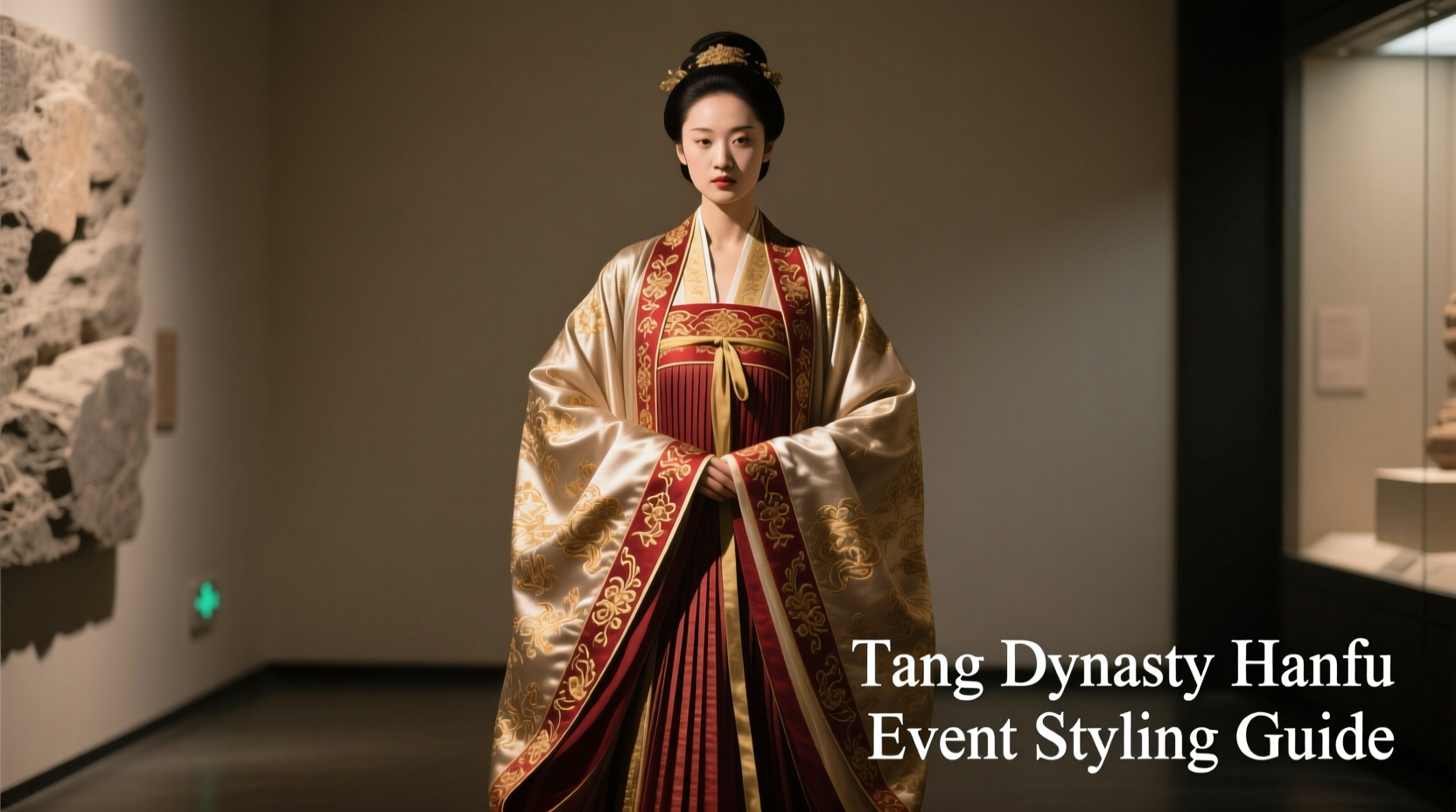
The Tang era was a golden age of cosmopolitan exchange, reflected in its bold, voluminous clothing. The quintessential Tang purchase is the Qixiong ruqun (chest-high skirt), which sits above the bust and is paired with a short-sleeved or long-sleeved jacket (Shan). For a more formal look, buyers often seek the Daxiushan (large-sleeve robe) paired with a Pibo (draped silk shawl). Tang garments rely heavily on lightweight silk organza, crepe de chine, and chiffon to create an ethereal, floating silhouette. When shopping for Tang styles, prioritize vibrant jewel tones, metallic thread accents, and intricate floral embroidery inspired by Central Asian trade routes.
Song Dynasty (960–1279 AD): Minimalist Elegance

In stark contrast to Tang opulence, Song dynasty aesthetics favor intellectual minimalism, clean lines, and subdued elegance. The defining garment is the Beizi, a long, open-front coat with narrow sleeves, worn over a Moxiong (tube top) and a Baizhequn (hundred-pleat skirt). Song hanfu is ideal for everyday wear and modern layering. Fabric composition leans heavily toward natural, breathable textiles like ramie (
Ming Dynasty (1368–1644 AD): Structured Grandeur
The Ming dynasty represents the most heavily researched and meticulously reconstructed era in the hanfu revival. The standard ensemble is the Aoqun, consisting of a cross-collared or standing-collared lined jacket (Ao) and a Mamianqun (horse-face skirt). The Mamianqun is a marvel of textile engineering, featuring flat panels at the front and back with deep, overlapping pleats on the sides. According to archival research from the China National Silk Museum, Ming textiles frequently utilized zhuanghua (heavy silk brocade woven with gold or silver threads) and velvet for winter garments. Ming hanfu is the most expensive tier to buy due to the complex weaving techniques and heavy fabric yardage required, but it offers unparalleled majesty and durability.
Construction Hallmarks: Identifying Authentic Hanfu
The hanfu revival has strict standards for historical accuracy. To ensure you are buying authentic hanfu rather than a modernized 'costume' or 'ancient-style' (gufeng) imitation, inspect the garment's construction. As noted in the structural analyses by the Victoria and Albert Museum's Chinese collections, traditional Eastern tailoring differs fundamentally from Western 3D darting.
- Jiaoling Youren (Crossed Collar, Right Lapel): The collar must cross in a 'y' shape, with the left side crossing over the right. This is the absolute bedrock of Han identity.
- Pingmian (Flat Pattern Cutting): Authentic hanfu is cut from flat planes of fabric. When laid out on a table, the garment should lie completely flat without the curved armholes or shoulder darts found in Western tailoring.
- Jianxian (No Shoulder Seam): In many traditional tops, the front and back panels are cut from a single continuous piece of fabric folded over the shoulder, eliminating the shoulder seam entirely to preserve the fabric's integrity and drape.
- Seam Allowances and Hems: High-end hanfu features wide, flat-felled seams and deep hems, allowing the garment to drape heavily and gracefully.
Where to Shop: Navigating the 2026 Market

The global hanfu market is predominantly anchored in Chinese e-commerce platforms like Taobao and Tmall. While international boutiques are emerging, the most authentic and cost-effective method for global buyers is utilizing shopping agents (such as Superbuy or CSSBuy) to purchase directly from domestic Chinese retailers. Historical textile evolution and modern market adaptations are frequently cross-referenced by scholars at The Metropolitan Museum of Art's Heilbrunn Timeline of Art History, validating the importance of buying from brands that invest in museum-grade research.
| Retailer Tier | Notable Brands | Price Range (USD) | Best For |
|---|---|---|---|
| Heritage & Custom | Minghuatang, Kongyue | $500 - $3,000+ | Museum-grade accuracy, authentic silk brocades, formal events |
| Mid-Tier Commercial | Shisan Yu, Tingyue, Hanshang Huage | $100 - $300 | Everyday wear, reliable construction, accessible sizing |
| Entry-Level Indie | Chuan Dai, various Taobao indie shops | $40 - $90 | Beginners, casual outings, experimental styling |
Pro-Tip for International Buyers: When searching on Taobao, use the Chinese characters for the specific garment (e.g., '明制马面裙' for Ming horse-face skirt) rather than the English word 'hanfu' to filter out low-quality costumes and find dedicated traditional apparel makers.
Sizing and the Traditional Measurement System
One of the most common pitfalls for Western buyers is attempting to map standard S/M/L sizing onto hanfu. Because of the Pingmian (flat-cut) construction, hanfu is highly forgiving in the bust and waist, but relies heavily on vertical and horizontal span measurements. When reviewing size charts, focus on these three critical metrics:
- Tongxiu (Total Sleeve Span): Measured from one cuff, across the back of the neck, to the other cuff. This determines whether the sleeves will elegantly cover your hands (traditional) or sit at your wrists (modernized).
- Yichang (Top Length): Measured from the base of the back neck to the bottom hem. This is crucial for ensuring jackets cover the hips appropriately, especially for Ming dynasty Ao.
- Qunchang (Skirt Length): Measured from the natural waist to the floor. Hanfu skirts are designed to graze the instep or floor; buying a skirt that ends at the ankle disrupts the historical silhouette.
Cultural Protocols and Wearing Etiquette
Participating in the hanfu revival requires adherence to foundational cultural protocols. The most critical rule is Zuoyou (Left over Right). The left lapel of the jacket must always cross over and cover the right lapel. In traditional Han cosmology, the left represents the living, the yang, and the auspicious. Conversely, Youzu (Right over Left) is strictly reserved for dressing the deceased for burial. Wearing a garment right-over-left is considered a severe cultural faux pas and a bad omen.
Additionally, when tying the Mamianqun (horse-face skirt), ensure the flat, unpleated panels sit perfectly centered on your front and back, with the pleated sections hidden on the sides. The waist ties should be secured firmly and tucked away or tied in a traditional flat knot, avoiding bulky modern bows that disrupt the clean lines of the waist. By understanding these structural and cultural nuances, you do more than purchase clothing; you become an active, respectful participant in a living cultural renaissance.