The Hanfu Movement: Symbolism and Revival
The Genesis of a Cultural Awakening
The hanfu movement (汉服运动) is not merely a fashion trend; it is a profound socio-cultural phenomenon that began in the early 2000s. Sparked in 2003 when a man named Wang Letian walked the streets of Zhengzhou in a self-tailored shenyi (deep robe), the movement rapidly grew through online forums like Hanwang. For the Han Chinese majority, who make up over 90% of China's population, the movement represents a reclamation of indigenous sartorial identity that was largely erased during the Qing Dynasty (1644–1912). Today, it has evolved from a niche internet subculture into a mainstream cultural force, with millions of young people integrating historical garments into their daily lives, university graduations, and coming-of-age ceremonies.
Decoding the Architecture of Hanfu: Form as Philosophy
To understand the hanfu movement, one must look past the aesthetic beauty of flowing silks and examine the garment's structural philosophy. Traditional Hanfu is deeply rooted in Confucian ritual propriety (li) and Daoist cosmology. Every seam, pleat, and collar carries specific symbolic weight.
The Rule of Jiaoling Youren (Cross-Collar, Right Lapel)
The most defining characteristic of Hanfu is jiaoling youren (交领右衽)—a cross-collar where the left lapel crosses over the right. In traditional Chinese cosmology, the left represents Yang (life, the sun, and the living), while the right represents Yin (death, the moon, and the underworld). By wrapping the left side over the right, the wearer symbolically honors life and suppresses the forces of death. Conversely, wrapping right-over-left (zuoren) was historically reserved exclusively for the deceased or considered a mark of 'barbarian' tribes. Adhering to this rule is a non-negotiable protocol in the modern hanfu movement.
Cosmology in the Cut: Sleeves, Collars, and Sashes
The classic shenyi (深衣), a one-piece robe popularized during the Han Dynasty, is a masterclass in philosophical tailoring. According to the ancient Liji (Book of Rites), the shenyi must feature round sleeves to symbolize the heavens, and a square collar to symbolize the earth, reflecting the ancient belief in a round heaven and square earth (tian yuan di fang). Furthermore, the lower skirt of the shenyi is traditionally constructed from exactly 12 panels of fabric, representing the 12 months of the year and the 12 earthly branches, harmonizing the wearer with the passage of time.
Dynastic Divergence: What Different Eras Signal Today
The hanfu movement is not monolithic; it is highly stratified by dynasty. Enthusiasts often align with specific historical periods based on the philosophical and aesthetic values those eras represent. Below is a breakdown of the most prominent dynastic styles revived today.
| Dynasty | Key Garment | Aesthetic Profile | Modern Symbolic Meaning |
|---|---|---|---|
| Tang (618–907) | Qixiong Ruqun (Chest-high skirt) | Opulent, vibrant, revealing, wide sleeves. | Confidence, cosmopolitanism, female empowerment, and cultural openness. |
| Song (960–1279) | Beizi (Long outer jacket) & Baidiequn | Restrained, slender, pastel, minimalist. | Intellectualism, Neo-Confucian restraint, elegance, and scholarly refinement. |
| Ming (1368–1644) | Aoqun (Jacket & Skirt) & Mamianqun | Structured, layered, high collars, heavy brocades. | Orthodoxy, dignity, resilience, and the pinnacle of pre-Qing Han statecraft. |
The Socio-Political Meaning: Reclaiming Pre-Qing Identity
A critical component of the hanfu movement's symbolism is its implicit pushback against the Tifa Yifu (shave hair, change dress) edict of 1645. When the Manchu-led Qing Dynasty conquered the Ming, they mandated that Han Chinese men adopt the Manchu queue (shaved front, braided back) and wear Manchu-style clothing (the precursor to the modern Qipao and Tang suit). For many modern enthusiasts, the Qipao—while beautiful and globally recognized as Chinese dress—represents a period of cultural subjugation.
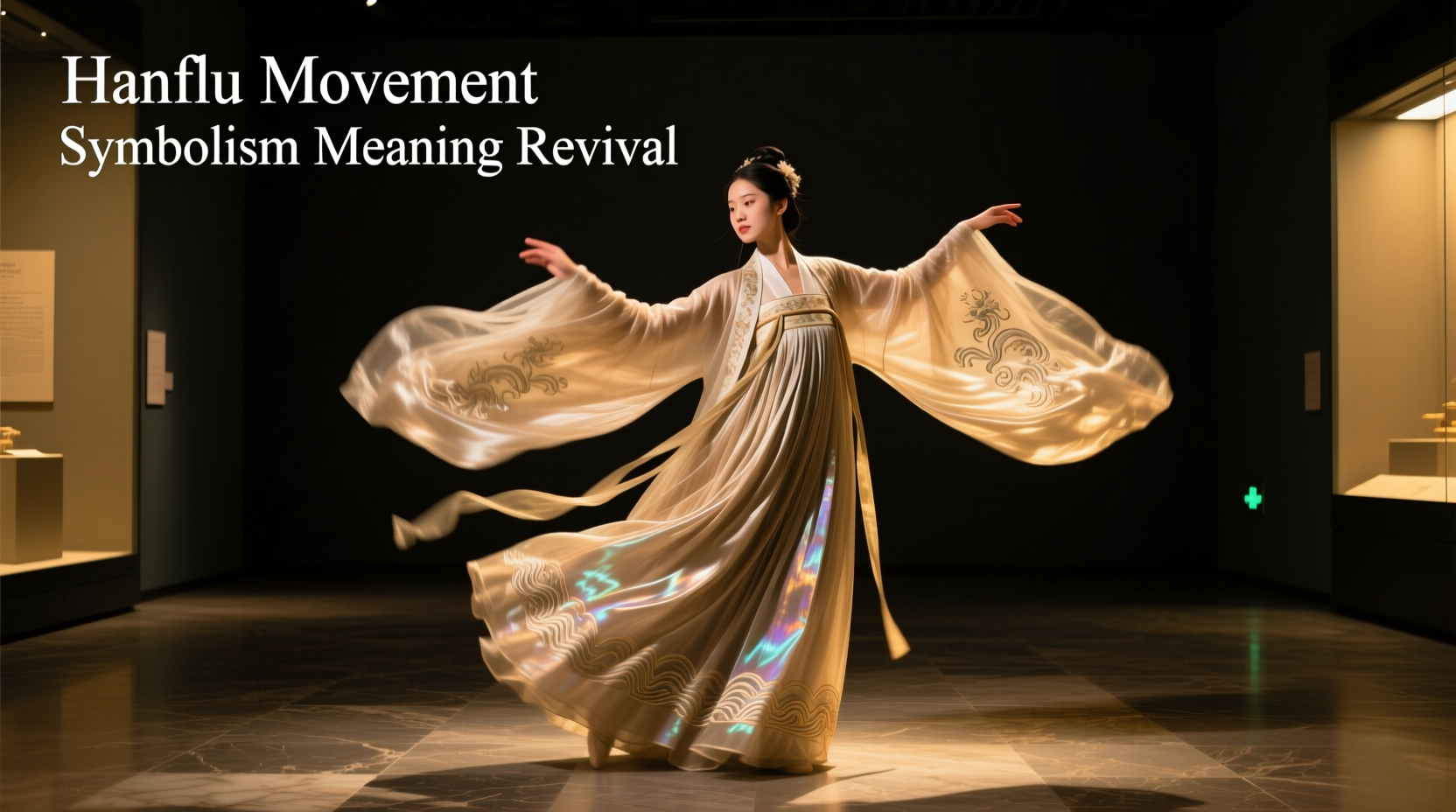
By reviving the Mamianqun (horse-face skirt) and the Yuanlingpao (round-collar robe), participants in the hanfu movement are actively reconstructing a visual lineage that was severed over 350 years ago. As noted by textile historians at the China National Silk Museum, the meticulous study of excavated Ming Dynasty textiles has allowed modern artisans to recreate complex weaving techniques like Zhuanghua (brocade) that were nearly lost to history.
Navigating the Modern Market: Authenticity, Makers, and Cost
For those looking to participate in the hanfu movement respectfully, understanding the market landscape is crucial. The industry has exploded into a multi-billion-dollar sector, but quality and historical accuracy vary wildly. Here is a practical guide to navigating the market, categorized by tier and price range (estimated in USD).
- Entry-Level / Mass Market ($30 – $80 USD): Brands like Chongyang Hanfu or generic Taobao sellers. These garments are typically made of polyester or polyester-blend chiffon. While accessible, they often lack historical accuracy in patterning and use machine-embroidered motifs that can look flat. Best for casual wear or first-time buyers.
- Mid-Tier / Enthusiast ($100 – $300 USD): Brands like Shisanyu and Zhihe Jing. These makers focus on accurate historical silhouettes (especially Song and Tang styles) and use better materials like rayon, cotton-linen blends, and lightweight mulberry silk. The draping is significantly more authentic.
- High-End / Museum-Grade Replicas ($400 – $1,500+ USD): The gold standard of the movement is Minghuatang. Specializing in Ming Dynasty garments, they utilize genuine Xiangyunsha (Canton gauze—an intangible cultural heritage silk dyed with river mud and yam juice) and real gold-leaf brocades. A single authentic Mamianqun from Minghuatang can easily exceed $800 USD, representing an investment in wearable cultural preservation.
The Importance of Fabric Composition
Symbolism in Hanfu is inextricably linked to materiality. Traditional Hanfu relies on flat-pattern cutting, meaning the fabric is rarely darted or tailored to the body's curves; instead, it drapes naturally. Therefore, the weight and fluidity of the fabric are paramount. Authentic practitioners avoid stiff synthetics in favor of Shengchou (raw silk), Lu (gauze), and Qi (crepe). The Victoria and Albert Museum's Asian collections highlight how historical Chinese textiles were engineered to create specific acoustic and visual effects when the wearer moved, a feature entirely lost in modern polyester imitations.
Protocols for Respectful Wear and Cultural Etiquette
As the hanfu movement crosses international borders, non-Chinese enthusiasts often ask how to participate respectfully. The community is generally highly welcoming to global adoption, provided a few core protocols are observed:
- Never Cross Right-Over-Left: As mentioned, this is the mark of the deceased. Always ensure the left lapel is on top.
- Distinguish Hanfu from Cosplay: While Hanfu is often seen at anime conventions, serious practitioners view it as traditional national dress, akin to the Japanese Kimono or Korean Hanbok. Treat the garment with the same respect you would afford a formal suit or traditional cultural attire.
- Mind the Hemlines and Occasions: Tang Dynasty Qixiong Ruqun is highly festive and suited for summer festivals or weddings. Ming Dynasty Aoqun with high collars and heavy brocades is formal and suited for winter, ceremonies, or academic events. Wearing a sheer, heavily embroidered Tang court dress to a solemn memorial or conservative professional setting is considered a breach of sartorial etiquette.
- Hair and Accessories: Traditional Hanfu is rarely worn with hair left completely down. Utilizing traditional hairpins (zanzan) or simple updos completes the silhouette and shows an understanding of the complete aesthetic system, rather than treating the clothing as a mere costume.
Ultimately, the hanfu movement is a living, breathing dialogue between the ancient and the modern. It is a sartorial philosophy that asks the wearer to embody the virtues of the past—harmony, respect, and cosmological alignment—while navigating the complexities of the 21st century. Whether through the structured dignity of a Ming skirt or the flowing grace of a Song jacket, Hanfu offers a profound way to wear history on one's sleeve.