Hanfu Male Garment Care: Preserving Traditional Chinese Menswear
The Resurgence and Responsibility of Male Hanfu
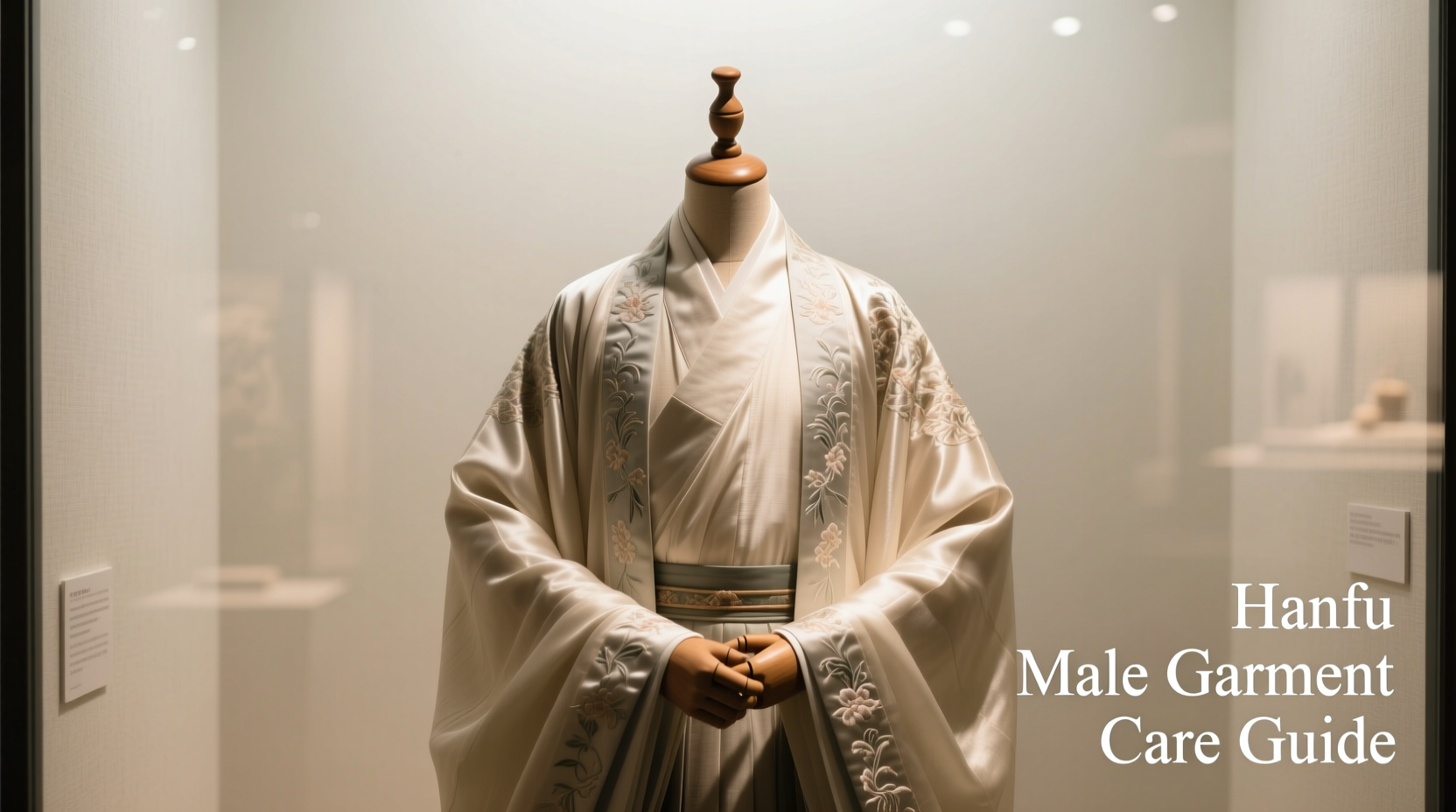
The global resurgence of traditional Chinese clothing has brought the hanfu male wardrobe into the spotlight, moving beyond theatrical costumes into everyday cultural practice and formal ceremonial wear. Unlike modern fast fashion, authentic male hanfu garments—such as the Ming Dynasty Daopao (道袍, Daoist robe), the Tang and Song era Yuanlingpao (圆领袍, round-collar robe), and the scholarly Shenyi (深衣, deep robe)—are constructed using historical tailoring techniques and natural fibers. An authentic, high-quality Daopao crafted from mulberry silk and hand-woven ramie typically ranges from $150 to $450 USD, while bespoke ceremonial Yuanlingpao featuring woven gold threads (Zhijin) can easily exceed $1,200 USD.
Preserving these garments requires a departure from modern laundry habits. According to textile conservation guidelines from the Victoria and Albert Museum, historical garments demand specialized environmental controls and pH-balanced cleaning agents to prevent the degradation of natural protein and cellulose fibers. This comprehensive care guide provides actionable, culturally informed maintenance protocols for the modern hanfu male wardrobe.
Decoding Male Hanfu Fabrics and Their Vulnerabilities
Before applying water or heat, one must understand the material composition of the garment. Traditional Chinese menswear relies heavily on natural fibers, each with distinct structural vulnerabilities. The China National Silk Museum notes that historical dyes—such as indigo, madder root, and pagoda tree bud—are highly sensitive to alkaline environments and heat.
- Mulberry Silk (Sangcan Si): Used for formal outer robes and lining. It is a protein fiber that loses up to 20% of its tensile strength when wet. Highly susceptible to alkaline detergents and UV fading.
- Ramie (Zhu Ma): A bast fiber popular for summer garments and inner layers due to its breathability and natural antibacterial properties. It wrinkles severely and requires high-heat steam to press.
- Linen (Ya Ma): Often used for scholar's robes. More durable than silk but prone to shrinkage if washed in warm water.
- Cotton (Mian): Introduced widely during the Ming Dynasty, used for everyday inner garments and winter padding.
Fabric Care Matrix: Male Hanfu Textiles
| Fabric Type | Washing Temp | Detergent Requirement | Ironing Method | Primary Vulnerability |
|---|---|---|---|---|
| Mulberry Silk | Cold (Max 20°C) | pH-Neutral Silk Wash | Low Heat, Press Cloth | Alkaline degradation, water spotting |
| Ramie (Zhu Ma) | Cool (Max 30°C) | Mild Liquid Detergent | High Heat, Heavy Steam | Severe creasing, fiber snapping |
| Linen (Ya Ma) | Cool (Max 30°C) | Mild Liquid Detergent | Medium Heat, Damp | Thermal shrinkage |
| Cotton (Mian) | Warm (Max 40°C) | Standard Mild Detergent | Medium-High Heat | Color bleeding (natural dyes) |
Washing Protocols for the Daopao and Yuanlingpao
Machine washing is strictly prohibited for authentic hanfu male garments. The aggressive agitation will destroy the delicate Jiaoling Youren (cross-collar right lapel) alignments and cause severe friction damage to silk weaves. Furthermore, the side panels and intricate pleats of the Daopao will become permanently distorted.
The Hand-Washing Technique
- Preparation: Fill a clean basin with cold water (below 20°C). Add a capful of pH-neutral silk wash or baby shampoo. Avoid standard alkaline laundry detergents, which strip the natural sericin from silk fibers and cause historical plant dyes to bleed.
- Submersion: Submerge the garment gently. Do not twist, wring, or scrub the fabric. Instead, use a pressing motion with your palms to push the soapy water through the fibers.
- Stain Treatment: For localized stains on the cuffs or hem, apply a small amount of undiluted silk wash directly to the spot and gently tap with a soft-bristled toothbrush. Never rub vigorously.
- Rinsing: Drain the soapy water and refill with cold water. Repeat until the water runs entirely clear. Adding a tablespoon of white vinegar to the final rinse helps restore the fabric's natural pH and sets the dye.
- Drying: Never wring out a silk Yuanlingpao. Roll the garment in a clean, dry microfiber towel to absorb excess moisture. Lay the robe flat on a mesh drying rack in a shaded, well-ventilated area. Direct sunlight will rapidly degrade silk proteins and fade natural indigo dyes.
Structured Storage Solutions for Heavy Outer Robes
Proper storage is critical for maintaining the structural integrity of voluminous male robes. The Metropolitan Museum of Art emphasizes that historical textiles must be protected from environmental fluctuations, pests, and acid transfer.
Hanging vs. Folding
While modern suits are hung on contoured wooden hangers, heavy silk and brocade hanfu robes should generally be stored flat or folded to prevent shoulder distortion and gravity-induced stress on the warp threads. If you must hang a lightweight linen Shenyi, use a padded, wide-shouldered hanger covered in unbleached cotton muslin.
The Archival Folding Method
For long-term storage of a Ming-style Daopao or a formal Feiyufu (Flying Fish robe):
- Lay the garment face down on a clean, acid-free surface.
- Fold the sleeves inward, aligning them with the central back seam.
- Place rolls of acid-free tissue paper along the fold lines to prevent hard creases from forming over time.
- Fold the garment into thirds, bringing the hem up to the collar.
- Store in an archival-quality, acid-free cardboard box or a breathable cotton canvas garment bag. Never use plastic dry-cleaning bags, as they trap moisture and emit acidic gases that yellow silk.
Maintaining Historical Closures and Hardware
Male hanfu garments utilize distinct closure systems that require specific maintenance. The Yuanlingpao often features Zi mu kou (interlocking metal buttons) made of brass, copper, or silver, while the Daopao relies on Jiedai (fabric ties) or Pankou (knotted buttons).
Caring for Metal Hardware
Metal buttons on historical robes are prone to oxidation and tarnish, especially in humid climates. To clean tarnished brass or copper buttons, create a mild paste of lemon juice and baking soda. Apply it strictly to the metal using a cotton swab, ensuring the acidic mixture does not touch the surrounding silk, which it will permanently stain and weaken. Buff the metal gently with a dry microfiber cloth and apply a microscopic layer of Renaissance Wax to seal it against moisture.
Preserving Fabric Ties and Pankou
Fabric ties (Jiedai) are subjected to high tensile stress during wear. Inspect the stitching at the anchor points regularly. If a tie begins to fray, do not pull the loose threads. Instead, apply a microscopic drop of clear, flexible fabric glue to the base of the fray to halt the unraveling, or consult a textile conservator for a silk-thread reinforcement stitch.
Ironing and Steaming the Jiaoling Youren Collar
The defining characteristic of the cross-collar robe is the Jiaoling Youren (交领右衽), where the left lapel crosses over the right. Maintaining the crisp, geometric lines of this collar without scorching the fabric requires precision.
For silk robes, avoid direct contact with an iron. Use a professional garment steamer, holding the nozzle two inches from the fabric. Allow the steam to penetrate the fibers, then use your hands to gently mold the collar into its proper overlapping alignment while the silk is warm and damp. Let it cool completely on a flat surface before moving it; silk sets its shape as it cools.
For ramie and linen garments, ironing is necessary to remove deep wrinkles. Turn the garment inside out, lay it on a padded ironing board, and mist it lightly with distilled water. Iron on a medium-high setting using a pressing cloth to prevent the iron's metal plate from creating a synthetic shine on the natural fibers. Pay special attention to the side slits and hemlines, ensuring they lie perfectly flat to maintain the garment's dignified drape.
Cultural Preservation Through Mindful Care
Caring for a hanfu male wardrobe is an act of cultural preservation. These garments are not merely clothing; they are woven archives of Chinese history, philosophy, and aesthetic evolution. By adopting these meticulous care and maintenance protocols, modern wearers ensure that the dignity, structure, and material integrity of the Daopao, Yuanlingpao, and Shenyi are preserved for future generations, honoring the artisans and traditions that continue to keep this heritage alive.