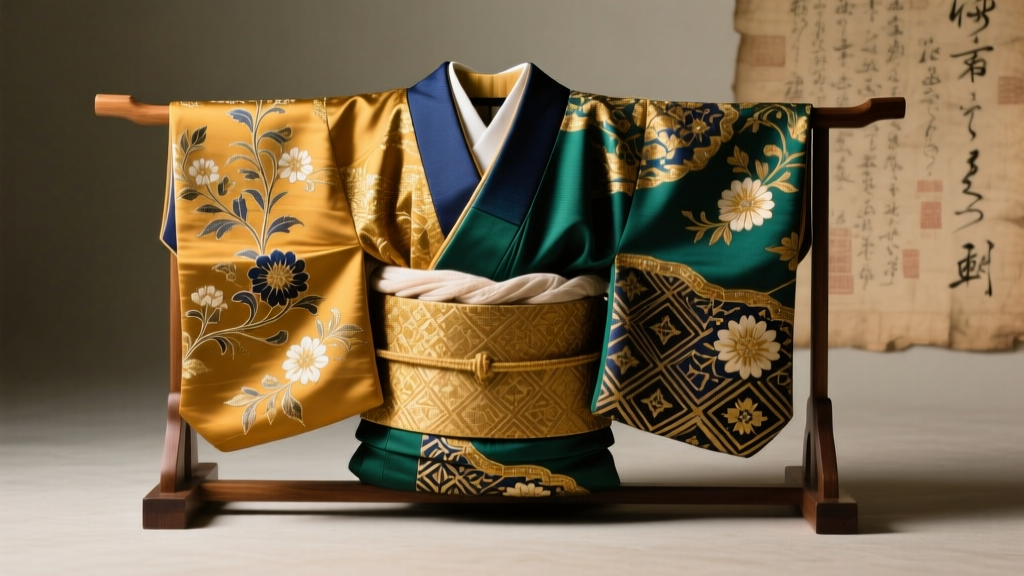
The Hanfu Coat: A Beginner's Guide to Traditional Outerwear

Decoding the 'Hanfu Coat': Bridging Western Terms and Eastern Tradition
When modern enthusiasts and historians search for a 'hanfu coat', they are attempting to map Western sartorial vocabulary onto a deeply nuanced Chinese clothing system. In traditional Han Chinese dress, there is no single word that directly translates to the modern Western concept of a 'coat'. Instead, traditional outerwear is categorized by its construction, lining, sleeve shape, and the specific dynasty it represents. For beginners stepping into the world of Hanfu (汉服), understanding these distinctions is the first step toward wearing these garments with cultural accuracy and historical respect.
Hanfu outerwear evolved significantly over three millennia, but the most recognizable 'coat' styles worn by today's Hanfu revivalists primarily stem from the Ming Dynasty (1368–1644). This era introduced structured, layered outer garments designed for both extreme weather and high-court formality. Whether you are looking for a padded winter jacket or a sweeping silk cloak, understanding the foundational types of Hanfu outerwear will transform how you build your traditional wardrobe.
The Big Three: Essential Hanfu Outerwear Styles
To navigate the market and historical texts, beginners must familiarize themselves with the three primary categories of Hanfu outerwear: the Ao, the Pifeng, and the Bijia.
1. The Ao (袄) – The Lined and Padded Staple
The Ao is the closest equivalent to a traditional winter coat or heavy jacket. Unlike the unlined Shan (衫), which is worn in summer, the Ao features a distinct lining. In colder months, this lining is stuffed with cotton, silk floss, or animal down to create a padded coat known as a Mian Ao (棉袄). The Ao typically falls to the hips or knees and features side slits (kaichang) for ease of movement. During the Ming Dynasty, the Ao frequently featured a standing collar (Liling) fastened with metal or jade buttons, a style that heavily influenced the later Qing Dynasty Qipao.
2. The Pifeng (披风) – The Elegant Open-Front Cloak
If you envision a flowing, dramatic outer layer, you are thinking of the Pifeng. Often mistranslated simply as a cloak, the Pifeng is a structured, open-front coat with long, wide sleeves and a straight collar (Zhilin). It is designed to be worn open, revealing the intricate layers of the Aoqun (jacket and skirt) beneath it. According to textile archives at the Victoria and Albert Museum, Ming Dynasty Pifeng were often woven from luxurious silk brocades and served as a canvas for displaying family wealth and status through elaborate embroidery of cranes, peonies, or auspicious clouds.
3. The Bijia (比甲) – The Versatile Sleeveless Vest
Originating in the Yuan Dynasty and popularized during the Ming, the Bijia is a sleeveless or cap-sleeved outer vest. It is essentially a long, open-front waistcoat that falls below the knees. The Bijia is highly practical for layering, providing core warmth without restricting arm movement. It is frequently worn by both men and women over a base layer Shan and is a favorite among beginners due to its ease of wear and modern styling versatility.
Hanfu Outerwear Comparison Chart
Use this structured guide to determine which Hanfu coat style best suits your climate, occasion, and historical preference.
| Garment Name | Chinese Term | Collar Style | Sleeve Type | Primary Era | Best Season |
|---|---|---|---|---|---|
| Padded Jacket | Ao (袄) | Standing (Liling) or Crossed | Pipa or Straight | Ming / Qing | Winter |
| Open Cloak | Pifeng (披风) | Straight (Zhilin) | Wide / Long | Ming | Spring / Autumn |
| Long Vest | Bijia (比甲) | Round or Square | Sleeveless | Yuan / Ming | Autumn / Layering |
| Scholar's Cloak | Changyi (氅衣) | Crossed (Jiaoling) | Wide / Draped | Song / Ming | Spring / Autumn |
Crucial Construction and Cultural Protocols
Wearing a hanfu coat requires adherence to specific cultural protocols, the most vital of which is the lapel rule. Traditional Hanfu coats almost universally follow the Jiaoling Youren (交领右衽) principle. This means the left side of the garment crosses over and covers the right side, with the right lapel hidden beneath. In Han culture, influenced by Confucian philosophy and historical practicality (allowing the dominant right hand to easily access tools or weapons at the waist), this right-over-left orientation is strictly reserved for dressing the deceased (Zuoren). Wearing a coat with the right lapel over the left as a living person is considered highly inauspicious and culturally offensive.
From a tailoring perspective, traditional Hanfu coats utilize flat pattern cutting. As documented by the China National Silk Museum in Hangzhou, historical garments were cut from narrow loom widths (typically around 60 cm) without shoulder seams. The fabric is folded over the shoulder, creating a distinct T-shape when laid flat. This zero-waste, geometric construction method results in the characteristic dropped shoulder and generous draping that defines the Hanfu silhouette, contrasting sharply with the tailored armholes of Western coats.
Sourcing Authentic Pieces: Price Ranges and Artisans
The Hanfu market has exploded in recent years, offering options for every budget. When shopping for a hanfu coat, it is essential to distinguish between mass-market 'fantasy' Hanfu and historically accurate reproductions.
Entry-Level and Mass Market ($40 – $90 USD)
Brands like Shisanyu (十三余) and various Taobao vendors offer highly accessible, visually striking coats. These pieces often utilize polyester blends, machine embroidery, and modernized zippers for convenience. While they may not be historically accurate in fabric or construction, they are excellent for beginners attending festivals or casual photoshoots. Expect to pay between 250 and 600 RMB.
Mid-Tier Historical Reproductions ($120 – $300 USD)
For enthusiasts seeking historical accuracy, brands like Zhiyi Jin (织衣锦) and Shuangshu offer coats based on extant museum artifacts. These garments feature proper flat-cutting, traditional side fastenings (using fabric ties or knotted buttons), and natural fibers like cotton, linen, and mulberry silk. Prices typically range from 800 to 2,000 RMB.
High-End and Artisan Custom ($400 – $1,500+ USD)
The gold standard for Ming Dynasty Hanfu is Ming Huaxia (明华堂). Their coats are museum-grade reproductions utilizing traditional wooden loom weaving techniques, real gold thread, and luxurious Zhuanghua satin or Xiangyunsha (gambiered Canton gauze). A single padded Ao or silk Pifeng from an artisan cooperative of this caliber can easily exceed 5,000 RMB ($700+ USD) and requires months of lead time. The Metropolitan Museum of Art holds similar extant Ming textiles in its Asian Art collection, showcasing the breathtaking complexity of these high-end weaves.
Styling Your Hanfu Coat for Modern Wear
Integrating a hanfu coat into a modern wardrobe is a popular practice known as 'Hanfu Han-chang' (everyday Hanfu). A Ming-style standing collar Ao pairs beautifully with modern pleated midi skirts or wide-leg trousers. For a transitional autumn look, layer a lightweight silk Bijia over a simple turtleneck sweater and tailored trousers. The key to modern styling is balancing the voluminous, traditional silhouette of the coat with structured, contemporary base layers, ensuring the garment remains practical for urban commuting while honoring its rich cultural lineage.