Chinese Traditional Women Clothing: Hanfu, Qipao & Varieties
Decoding Chinese Traditional Women Clothing: Beyond the Monolith
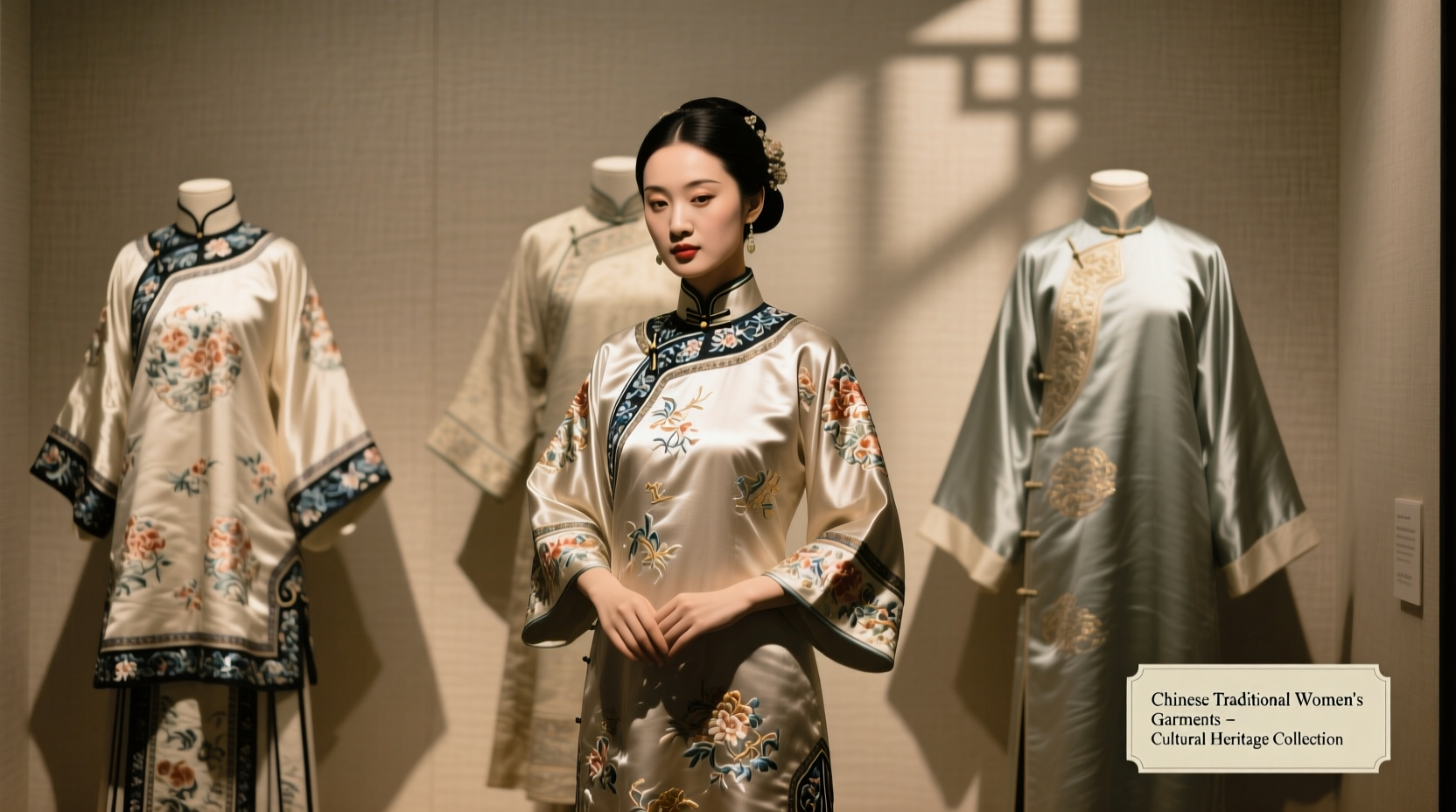
When discussing Chinese traditional women clothing, it is a common misconception to picture a single, monolithic garment. In reality, the sartorial heritage of China is a vast, intricate tapestry woven from thousands of years of dynastic evolution, regional climates, and the distinct cultural practices of its 56 recognized ethnic groups. From the flowing, flat-cut silhouettes of the Han dynasty to the meticulously tailored curves of the 1920s Shanghai Qipao, understanding these garments requires a deep dive into their construction, cultural protocols, and historical contexts.
For collectors, cultural enthusiasts, and modern wearers, distinguishing between these varieties is essential. This guide provides a comprehensive comparison of the primary categories of Chinese traditional women clothing, offering actionable insights into garment construction, authentic fabrics, and market pricing.
The Hanfu Revival: Dynastic Silhouettes and Flat-Cutting Mastery
Hanfu refers to the traditional clothing of the Han Chinese, spanning from the legendary Yellow Emperor to the mid-17th century. Unlike Western historical garments that rely on darts, corsetry, and complex seaming to follow the body's contours, Hanfu utilizes a sophisticated flat-cutting technique (pingmian jiancai). The fabric is woven in narrow widths and pieced together, allowing the garment to drape naturally and accommodate various body types without restrictive tailoring.
Key Hanfu Varieties for Women
- Ruqun (Blouse and Skirt): The most enduring silhouette, consisting of a short top (ru) and a long wrap-around skirt (qun). The defining feature is the jiaoling youren (cross-collar, right lapel), where the left side of the collar crosses over the right, symbolizing the triumph of life over death and civilization over barbarism in ancient cosmology.
- Aoqun (Jacket and Skirt): Popularized during the Ming Dynasty, this style features a longer, lined jacket worn over the skirt. It often utilizes standing collars and metal or jade buttons, reflecting a shift toward more structured, modest layers suited for colder northern climates.
- Mamianqun (Horse-Face Skirt): A marvel of textile engineering, this wrap skirt features flat, unpleated panels at the front and back (the 'horse faces') with deep, symmetrical pleats on the sides. Historically woven with intricate zhuanghua (brocade) motifs, the Mamianqun is currently experiencing a massive resurgence in modern Chinese street fashion.
'The structural integrity of the Mamianqun relies entirely on the tension of the waist ties and the precise calculation of the pleat intervals, allowing for dynamic movement while maintaining a rigid, architectural front profile.' — Curatorial notes on Ming Dynasty textiles.
The Qipao (Cheongsam): Tailoring the Republican Era
While Hanfu represents ancient antiquity, the Qipao (or Cheongsam) is the emblem of 20th-century modernity. Originating from the loose, voluminous qizhuang (banner dress) worn by Manchu women during the Qing Dynasty, the Qipao was radically transformed in the 1920s and 1930s in Shanghai. According to historical archives at the Victoria and Albert Museum, Shanghai socialites and students began tailoring the dress to fit the body closely, incorporating Western construction techniques like bust darts, set-in sleeves, and side slits for mobility.
Anatomy of an Authentic Qipao
A true artisan-crafted Qipao is defined by its meticulous hand-finishing. The two most critical elements are:
- Xianggun (Piping and Binding): The edges of the collar, lapel, and slits are bound with thin strips of bias-cut silk. High-end bespoke Qipaos may feature multiple layers of piping (known as gunbian), requiring days of painstaking hand-stitching to ensure the silk lies perfectly flat without puckering.
- Pankou (Frog Fasteners): These are not merely decorative; they are functional, hand-knotted silk closures. Artisans craft intricate floral or geometric motifs, such as the plum blossom or the endless knot, which secure the garment at the collar and diagonal lapel.
Comparative Analysis: Hanfu vs. Qipao vs. Regional Dress
To navigate the market and understand the appropriate contexts for these garments, refer to the comparative framework below.
| Garment Type | Era / Origin | Silhouette & Fit | Primary Authentic Fabrics | Artisan Price Range (USD) |
|---|---|---|---|---|
| Hanfu (Ming Aoqun) | 14th - 17th Century | Structured, layered, modest, flat-cut | Silk brocade, linen, raw silk | $250 - $800+ |
| Hanfu (Song Ruqun) | 10th - 13th Century | Slender, elegant, lightweight, draped | Gauze, lightweight crepe silk | $150 - $450 |
| Shanghai Qipao | 1920s - 1940s | Form-fitting, high slit, tailored darts | Mulberry silk, velvet, jacquard | $400 - $2,500 (Bespoke) |
| Beijing Qipao | Mid-20th Century | Relaxed fit, wider piping, traditional | Heavier brocades, wool blends | $200 - $600 |
| Miao Pleated Skirt | Indigenous / Antiquity | Voluminous, heavily pleated, embroidered | Indigo-dyed cotton, hemp, silk | $300 - $1,500+ |
Regional and Ethnic Varieties Across China
The concept of Chinese traditional women clothing must extend beyond the Han and Manchu majorities. China's ethnic minorities possess some of the most complex textile traditions in the world, recognized by institutions like the China National Silk Museum for their preservation of ancient weaving techniques.
Miao (Hmong) Silver and Indigo Mastery
Women of the Miao ethnic group in Guizhou and Yunnan provinces are renowned for their indigo-dyed, pleated skirts and extraordinary silver jewelry. The creation of a single festival skirt can take over a year, involving the weaving of hemp, repeated dyeing in natural indigo vats, and the meticulous pressing of hundreds of micro-pleats using the bark of the white oak tree. These garments are heavily adorned with cross-stitch embroidery depicting mythological butterflies and dragons, serving as wearable historical records in a culture that historically lacked a written script.
Uyghur Atlas Silk (Ikat)
In the Xinjiang Uyghur Autonomous Region, women traditionally wear dresses made from Atlas silk. This vibrant, warp-ikat textile is characterized by its bold, blurred geometric patterns in striking colors like emerald green, saffron yellow, and crimson. The dyeing process involves tightly binding sections of the warp threads before dyeing, creating a signature feathered edge to the motifs. Authentic Atlas silk is woven on narrow traditional looms and is highly prized for its breathability in the arid Central Asian climate.
A Buyer’s Guide to Sourcing Authentic Garments
The global popularity of Chinese historical dramas has led to a flood of mass-produced, costume-grade garments on the market. For those seeking authentic Chinese traditional women clothing with cultural integrity, consider the following sourcing guidelines:
1. Evaluating Fabric Composition
Avoid garments labeled as 'silk blends' or 'brocade polyester' if you are seeking heirloom quality. Authentic Hanfu and Qipao should utilize 100% mulberry silk, raw silk (shengchou), or high-grade linen. For the ultimate luxury, seek out Xiangyunsha (gambiered Guangdong silk). This rare fabric is dyed using the juice of the Shuliang plant and coated in iron-rich river mud, resulting in a dark, rustling, water-resistant textile that can cost upwards of $300 per meter before tailoring.
2. Inspecting the Construction
When purchasing a Qipao, examine the xianggun (piping). On mass-produced garments, the piping is often machine-stitched and may ripple or pucker at the curves. On an artisan-made piece, the binding is applied by hand, resulting in a perfectly smooth, razor-sharp edge. Similarly, inspect the pankou (frog buttons); authentic knots should be tightly rolled and firm to the touch, not hollow or glued.
3. Finding Reputable Artisans
For bespoke Qipaos, look for tailors who practice the 'Hongbang' tailoring tradition, a protected intangible cultural heritage in Shanghai. For Hanfu, seek out studios based in Hangzhou, Suzhou, or Chengdu that specialize in historical reproduction (fugu) rather than 'fairy-style' fantasy costumes. These studios reference archaeological reports and museum archives, such as those provided by the Metropolitan Museum of Art's Heilbrunn Timeline of Art History, to ensure accurate collar widths, sleeve lengths, and weaving patterns.
Respecting the Living Heritage
Chinese traditional women clothing is not a relic of the past; it is a living, breathing heritage. The modern Hanfu movement, led largely by young women, has successfully reintegrated these garments into daily life, from subway commutes to university graduations. When purchasing and wearing these garments, understanding the distinction between a Ming Dynasty Aoqun and a 1930s Shanghai Qipao is more than an exercise in fashion history—it is an act of cultural respect. By investing in authentic materials and supporting artisan cooperatives, collectors and wearers help ensure that these profound textile traditions continue to thrive in the modern era.