Chinese Male Costume: Fabric & Craft

The Anatomy of Menswear: Beyond the Silhouette
When exploring the chinese traditional costume male category, collectors, historians, and participants in the modern Hanfu Yundong (Hanfu revival movement) quickly discover that the true luxury of these garments lies not merely in their silhouette, but in their profound structural philosophy and textile engineering. Unlike Western tailoring, which relies on darts, curved seams, and bias cutting to mold fabric to the body's three-dimensional contours, traditional Chinese garment construction is rooted in a deep respect for the integrity of the woven cloth.
The foundational tailoring method is flat-cutting. Garments are constructed from straight lengths of fabric, minimizing waste and preserving the continuous flow of the textile's warp and weft. The quintessential Jiaoling Youren (cross-collar, right lapel) configuration, which dominated male attire from the Han through the Ming dynasties, relies on precise geometric folding rather than complex seaming. The left lapel is always folded over the right, a cultural protocol deeply tied to ancient concepts of yin and yang, where the left (yang, life) honors the right (yin, death).
For male scholars and officials, the Shenyi (deep robe) was a masterclass in symbolic tailoring. According to ancient texts like the Liji (Book of Rites), a formal Shenyi was constructed from exactly 12 panels of fabric, representing the 12 months of the lunar year. The seams were perfectly vertical, demanding absolute precision from the weaver to ensure the fabric's pattern aligned flawlessly across the garment's structural lines. Later, during the Ming Dynasty, the Yisan (a robe with a pleated lower skirt) and the Daopao (a scholar's robe with side slits and hidden swing panels) showcased advanced pleating techniques that allowed for ease of movement on horseback while maintaining a dignified, structured drape when standing.
The Big Three: Historic Silk Weaves in Menswear
The foundation of any high-status Chinese traditional costume male garment is the silk. However, not all silk is created equal. Menswear, particularly outer robes and formal court attire, required heavier, more structured textiles than the delicate, lightweight silks used in female summer garments. While a woman's Ruqun might utilize a 12 to 16 momme silk charmeuse, male ceremonial robes often demanded 19 to 30 momme brocades and heavy satins to provide the necessary architectural drape.
According to the Metropolitan Museum of Art's Heilbrunn Timeline of Art History, China's historic silk weaving centers developed distinct regional specialties that dictated the aesthetic of male fashion for centuries. The "Big Three" brocades remain the pinnacle of this craft.
Comparative Guide: Silk Brocades for Male Garments
| Brocade Type | Origin | Characteristics & Weave | Traditional Male Application | Modern Price Range (Per Meter) |
|---|---|---|---|---|
| Yunjin (Cloud Brocade) | Nanjing | Heavy jacquard weave; incorporates peacock feather yarns and metallic gold/silver threads. Extremely dense. | Imperial dragon robes (Longpao), high-ranking Ming court officials. | $300 - $1,200+ |
| Songjin (Song Brocade) | Suzhou | Matte finish, intricate geometric and floral patterns, softer drape, less ostentatious than Yunjin. | Scholar's robes, literati jackets, formal Shenyi for intellectuals. | $120 - $400 |
| Shujin (Shu Brocade) | Sichuan | Vibrant colors, durable warp-faced weave, historically dyed with local botanical pigments. | Everyday luxury robes, merchant-class outerwear, winter padded jackets. | $80 - $250 |
Embroidery and Motif: The Language of Status
While the weave provided the canvas, embroidery dictated the wearer's social and cosmic alignment. The Victoria and Albert Museum notes that Chinese textile motifs were never merely decorative; they were a visual language of authority, morality, and aspiration. In male garments, this language was strictly codified.
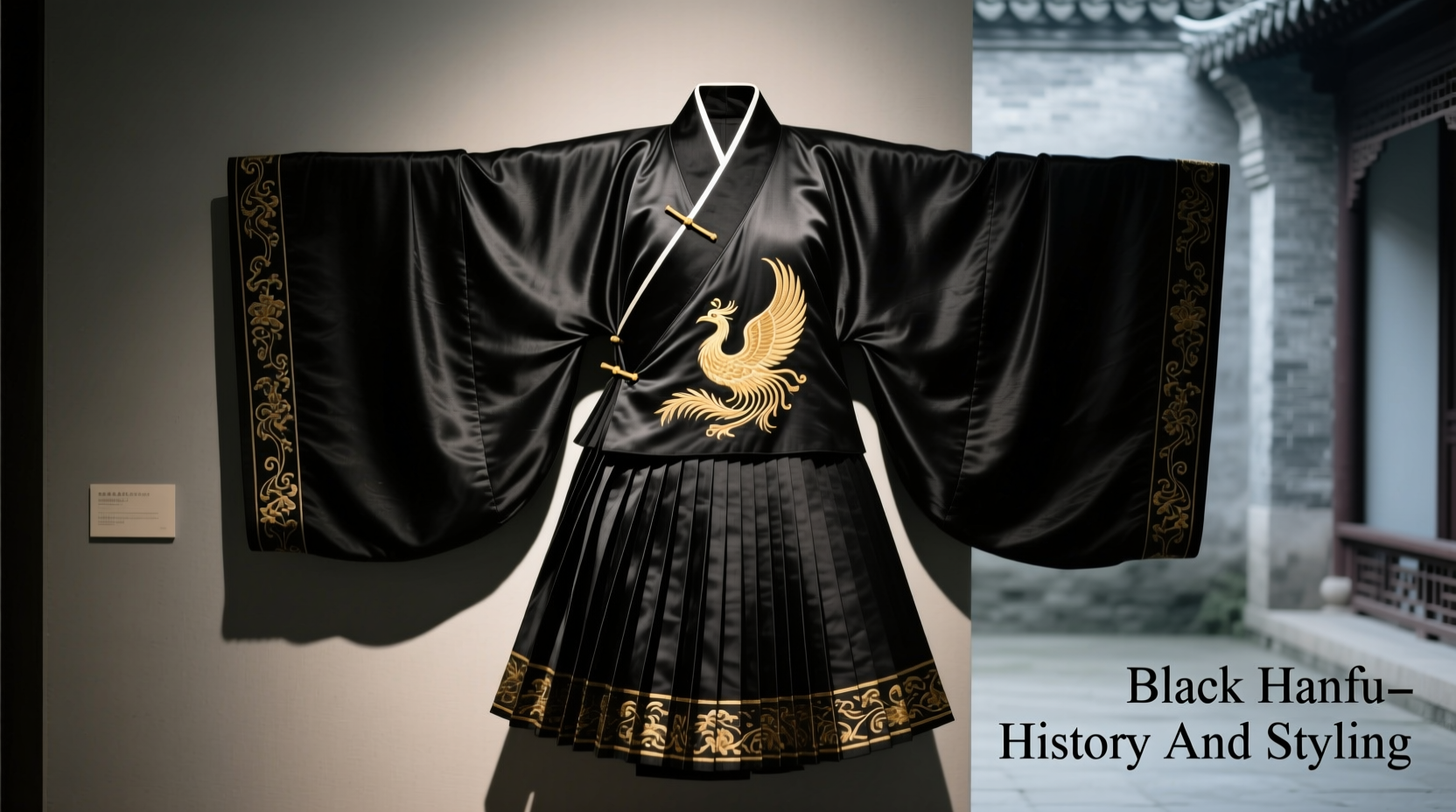
During the Ming and Qing dynasties, the Buzi (rank badge) was sewn onto the front and back of the Bufu (surcoat). Civil officials wore badges featuring specific birds (e.g., the crane for first-rank, the golden pheasant for second-rank), while military officials wore mythical and real beasts (e.g., the qilin for first-rank, the lion for second-rank). The craftsmanship required for these badges was staggering, often utilizing the "Peking Knot" (seed stitch) and couching techniques to lay down metallic threads flat against the silk, creating a raised, textured surface that caught the light in dimly lit court halls.
Outside the strictures of court dress, male scholars favored subtler, woven or embroidered motifs representing the "Four Gentlemen": the plum blossom (resilience), orchid (elegance), bamboo (integrity), and chrysanthemum (longevity). A highly prized Ming dynasty garment for men was the Feiyufu (Flying Fish robe), awarded by the Emperor to the Jinyiwei (secret police). The "flying fish" was actually a mythical dragon-like creature with fins and a fish tail, woven in shimmering gold thread on dark crimson or indigo silk—a masterpiece of aggressive, masculine textile art.
The Qing and Republic Shift: Satin, Velvet, and the Changshan
The transition from the Ming to the Qing dynasty brought a seismic shift in male tailoring, moving from the wide-sleeved, flowing Hanfu to the narrow-sleeved, horse-riding silhouettes of the Manchu. This era introduced the Changshan (long shirt) and the Magua (riding jacket), which would eventually evolve into the modern Tangzhuang.
Craftsmanship during the Qing era saw the rise of silk velvet and heavy satin. The Smithsonian's National Museum of Asian Art highlights how Qing dynasty weavers mastered the art of cut-pile silk velvet, creating sumptuous, light-absorbing textiles that were highly favored for winter Magua. These garments were often lined with sheepskin or fox fur, requiring the tailor to expertly grade and match the pelts so the lining lay perfectly flat against the heavy silk exterior without adding bulk to the armholes.
By the Republican era (1912–1949), the male Changshan became the standard formal wear for intellectuals and diplomats. The craftsmanship shifted toward precision in the collar band and the intricate, hand-knotted Pankou (frog buttons). A master tailor could spend up to three days crafting a single set of five Pankou buttons, rolling and stitching the silk bias tape into complex floral or geometric knots that served as both functional fasteners and subtle displays of wealth.
Sourcing and Pricing: Buying Authentic Menswear Today
For modern enthusiasts looking to acquire an authentic Chinese traditional costume male garment, the market is bifurcated into mass-produced costume wear and heritage-crafted apparel. Understanding the difference in fabric composition and construction is vital for making an informed purchase.
- Entry-Level / Mass Market ($40 - $120): Typically made from polyester jacquard or synthetic blends. While they mimic the visual patterns of Songjin or Yunjin, they lack breathability and the proper heavy drape. The seams are often serged (overlocked) rather than bound or flat-felled.
- Mid-Tier / Artisanal Silk ($250 - $600): Genuine 19mm to 25mm silk charmeuse, crepe de chine, or modern mechanical brocades. These garments feature proper flat-felled seams, hand-finished hems, and authentic Jiaoling Youren proportions. Often produced by dedicated Hanfu studios in Hangzhou or Chengdu.
- Bespoke / Heritage Craft ($1,200 - $5,000+): Hand-loomed Yunjin or Songjin, natural botanical dyeing (such as indigo or madder root), and entirely hand-stitched construction. These are commissioned from master tailors and weaving cooperatives in Nanjing or Suzhou, often requiring months of lead time.
Caring for Heritage Textiles
Maintaining the structural and material integrity of traditional male garments requires specific care protocols. Heavy silk brocades should never be machine washed or aggressively wrung, as this destroys the internal sizing and warps the metallic threads. Spot cleaning with a pH-neutral silk detergent is recommended for minor stains, but full cleaning should be entrusted to a dry cleaner experienced with heritage textiles.
Storage is equally critical. Garments should be folded along their original structural seams to prevent stress on the warp threads. Avoid wire hangers, which will distort the shoulder line of a Daopao or Changshan. Instead, store garments flat in acid-free archival boxes, layered with unbleached cotton muslin. To deter silverfish and moths without introducing harsh chemical odors that can degrade silk proteins, place natural camphor wood blocks or dried mugwort sachets in the storage environment, ensuring they do not directly touch the silk.
"To wear traditional Chinese menswear is to drape oneself in history. Every thread of a Songjin robe or a pleat in a Ming Yisan carries the weight of centuries of philosophical thought, technological innovation, and aesthetic refinement."