Chinese Hanfu: Modern Revival Movement

Hanfu: China's Traditional Dress Renaissance
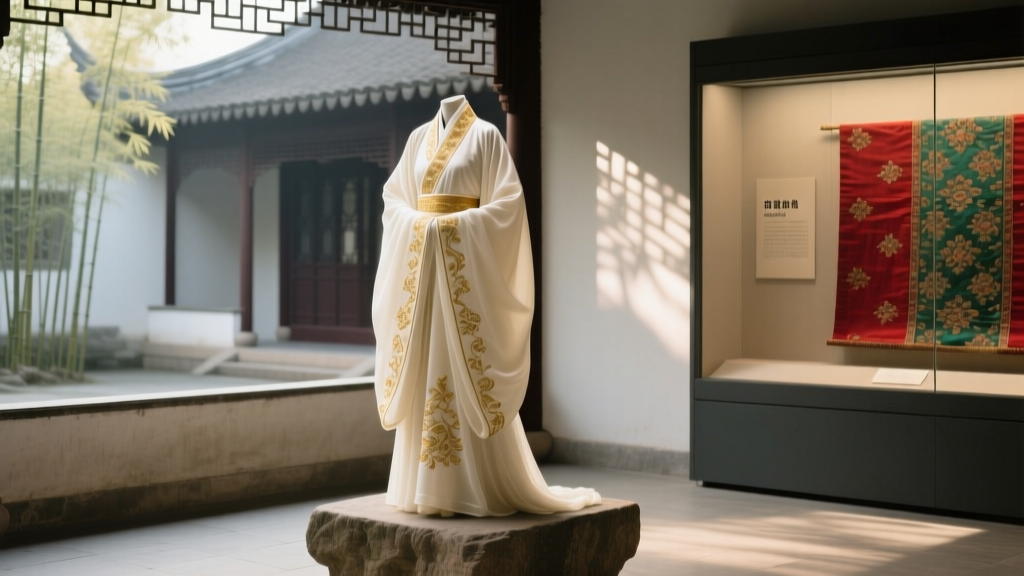
Hanfu (汉服, literally "Han clothing") refers to the traditional dress of China's Han ethnic majority — a flowing, cross-collared robe system that was worn for over 3,000 years before being largely replaced during the Qing Dynasty (1644–1912). Since the early 2000s, a grassroots "hanfu movement" has revived these garments as everyday and ceremonial wear among young Chinese people.
Core Garment Types
- Ruqun (襦裙): A short jacket (ru) paired with a high-waisted skirt (qun). The most popular style for women, available in both qi xiong (chest-level) and gao yao (waist-level) variations.
- Shenyi (深衣): A one-piece robe connecting upper and lower garments, symbolizing the unity of heaven and earth. Favored by scholars and for formal occasions.
- Zhiju (直裾): A straight-hem robe with wide sleeves, worn by men for formal events. Simple, dignified, and historically associated with Confucian scholars.
The Modern Movement
The hanfu revival began around 2003 when Wang Letian walked through Zhengzhou city center wearing a traditional shenyi, sparking widespread online discussion. Today, the movement has millions of participants (tongpao, "fellow robes"), dedicated online communities, and a thriving commercial ecosystem.
Key Brands and Markets
Leading hanfu brands include Han Shang Hua Tang (汉尚华莲), Chong Hui Han Tang (重回汉唐), and Shi San Yu (十三余). The industry was valued at over ¥14 billion ($2 billion) in 2024. Chengdu and Xi'an are the main production hubs, with Xi'an's Tang Paradise park hosting annual hanfu festivals.
Cultural Debates
The movement has sparked discussions about cultural identity, historical accuracy, and the relationship between tradition and modernity. Critics note that many modern "hanfu" designs are creative reinterpretations rather than historically accurate reproductions. Supporters argue that living traditions naturally evolve — what matters is the spirit of cultural connection.